

Pearls of the Caribbean
Cruise Line: Ponant Cruise
Ship: Le-Bougainville
Sailing Dates: Dec 30 2026 | Jan 06 2027 | Jan 20 2027 | Feb 03 2027
Port: Fort-de-France - Fort-de-France
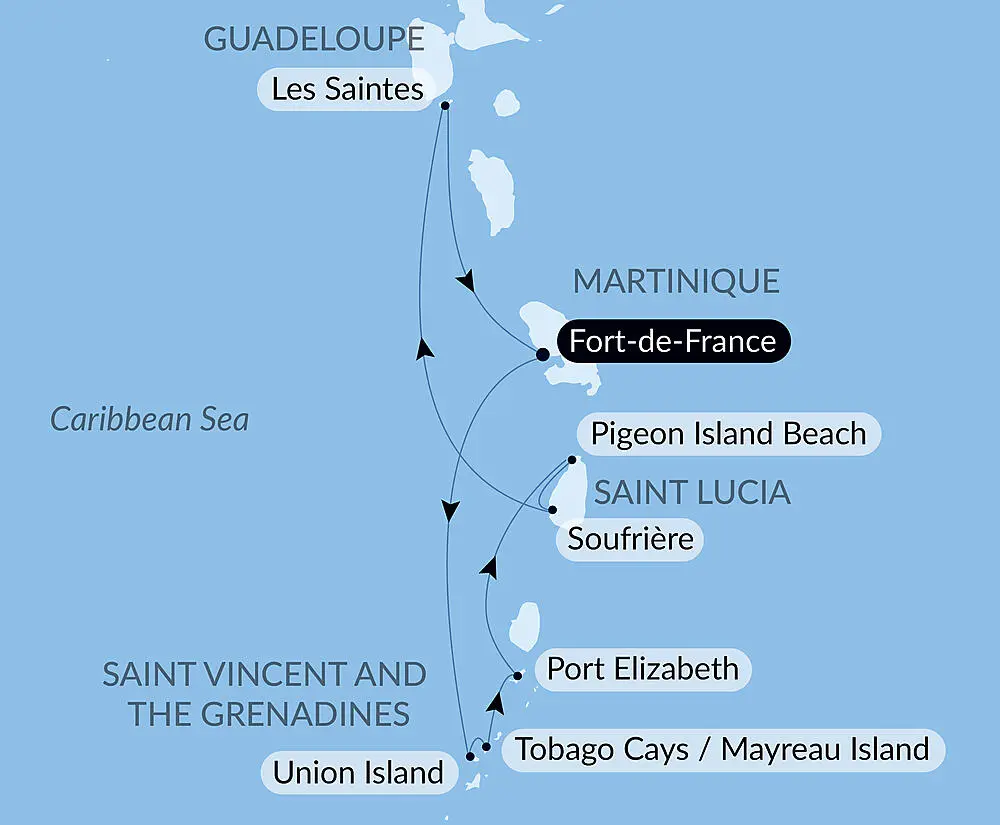
Pearls of the Caribbean
Day 1 - Fort-de-France
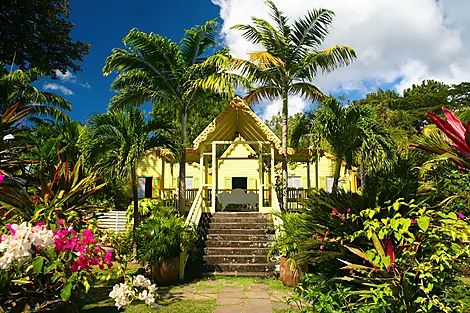
Located on the western coast of Martinique, Fort-de-France will amaze you by the splendour of its bay, a magnificent cut-out in the coastline, considered as one of the most beautiful in the world. At the harbour mouth, on its strip of land, fort Saint-Louis overlooks the capital city of Martinique. If you climb up to it, you can see some breath-taking views. Saint Louis Cathedral and the Schoelcher library bear witness to a secular history, intimately linked to the islandâs story. Why not try some fresh coconut at the colourful Grand Marché. Two really pleasant places you can take a breather in, right in the heart of the city, are the garden of Balata and the Aimé Césaire park.
Day 2 - Port Elizabeth, Bequia Island
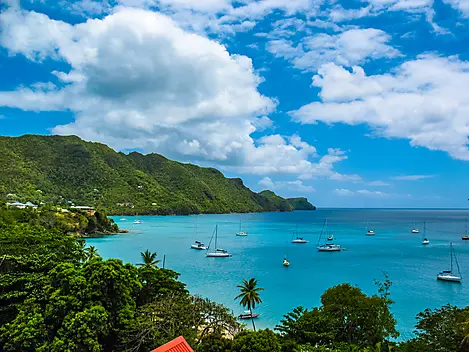
In the heart of the Caribbean, Bequia is the second-largest of 32 islands that make up the country of St Vincent and the Grenadines. You will love the lively and picturesque atmosphere of Port Elizabeth, the islandâs main town. From the port, a promenade lined with beautiful traditional houses, landscaped gardens and small restaurants runs along the shoreline. It leads to Princess Margaret Beach, a wild beach where Princess Margaret herself has stayed and which seems to emerge directly from the tropical forest. From rainforest to lush meadows and long stretches of sand, Bequia will offer you a natural setting that is conducive to lovely walks and to spending time on the beach.
Day 3- Tobago Cays
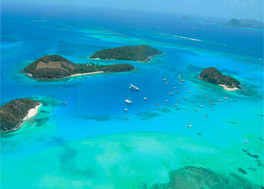
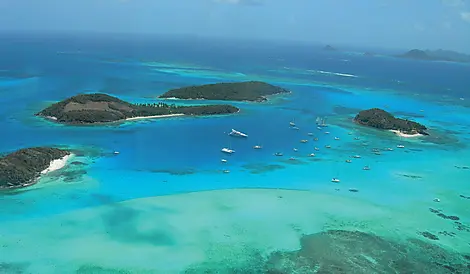
Scattered between St Vincent and Grenada, the Tobago Cays comprises five little islands: Petit Rameau, Petit Bateau, Baradal, Petit Tabac and Jamesby. This rosary of uninhabited cays in the southern West Indies is a marine park whose turquoise lagoons provide a home and safe haven for some outstanding marine fauna, including peaceful green turtles. Girded and united by a coral reef, these secluded islands are a peaceful paradise for divers, swimmers and snorkellers.
2 available excursions
Cadiz: Gateway to Southern Spain, Andalusian Treasures: Seville & Cathedral
Day 4 - Mayreau Island
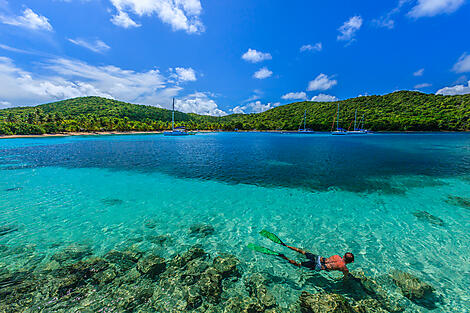
Among the string of paradisiac islands with their sandy beaches that form the Saint Vincent and the Grenadines archipelago, Mayreau is the smallest. Its peaceful and idyllic atmosphere, far from the madding crowd, invites you to relax. On shore, enjoy a shaded and fully equipped beach from which to go snorkelling if youâd like to observe the colourful fish around the coral sitting at the foot of the rocks that stretch across the bay.
1 available excursions
Relaxation and barbecue on Mayreau Island
Day 5 - Union Island
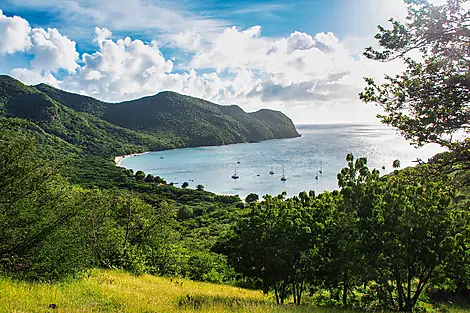
Deserted bays, long stretches of golden sand, turquoise waters and endless coral reefs â Union Island is without a doubt one of the most beautiful islands in the Caribbean. Overlooked by soaring peaks, this strange little strip of land owes its nickname of âthe Tahiti of the West Indiesâ to its volcanic silhouette and its large swathes of greenery. When you call here, you will discover what the locals consider to be âthe best-kept secret in the Grenadinesâ -Chatham Bay. Surrounded by hills and valleys carpeted in tropical rainforest, sheltering many sea turtles, this delightful half-moon of sand is, each day, the setting for the tireless ballet of the numerous pelicans who inhabit the island.
Day 6 - Pigeon Island Beach
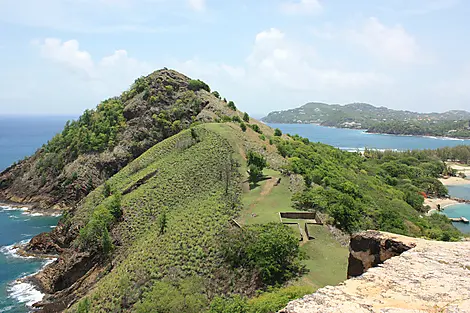
Linked to St Lucia by a sand causeway, Pigeon Island has been a designated National Park since 1979. On this wild and pristine land, you will be inspired to take pleasant walks amid the tropical vegetation and through a magnificent tree-filled garden. You will also be irresistibly drawn to the two pretty little sandy beaches nestling on the southern side and bathed by crystal-clear waters. While snorkelling, be sure to explore the underwater world that is teeming with life, along the rocks lining this peninsulaâs coast. You will thoroughly enjoy the calm and beauty of this place, which is really conducive to simply relaxing.
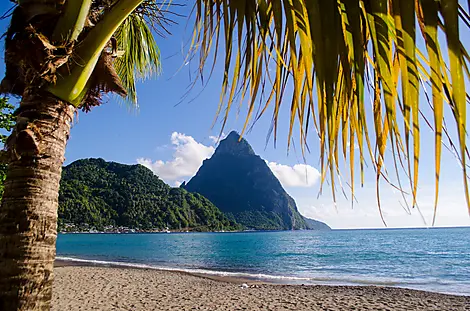
Day 6 - Soufriere
Nestled in the crook of a breath-taking bay, the former capital of St Lucia is brimming with attractions. Soufrière is famous for The Pitons, volcanic spires that tower over the entrance to the town. In the vicinity of the lush botanical gardens, you will be able to enjoy the curative powers of the Diamond Falls mineral baths. From the beach at the north end of the bay, you can set off to explore the reefs that are home to stunning gardens of sea fans at the foot of the cliffs that plunge into the sea.
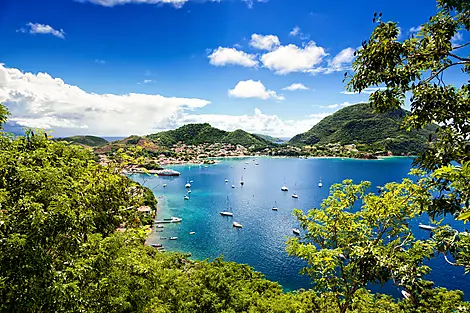
Day 7 - Les Saintes
During the feast of All Saints in 1493, Christopher Columbus discovered this archipelago of nine islands that he named "The Saints". Today, only two of them are inhabited. Terre de Haut, in the east, is dominated by the Morne Mire hill; at the summit stands Fort Napoleon, paying homage to the islands' history. In the heart of the botanical garden, shared by iguanas and cacti, there is an exceptional view of the Baie des Saintes, one of the most beautiful in the world. The long shady beach of Pompierre, where it is forbidden to drop anchor, is a peaceful place for a swim, while Pain de Sucre Beach offers wonderful opportunities for snorkelling. On the island, donât forget to taste the local speciality, the âtourment dâamourâ, a cake made with coconut.
1 available excursions
Les Saintes by boat & swimming
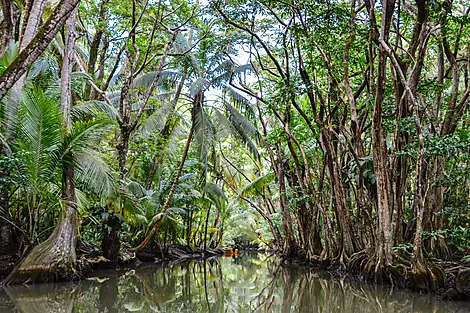
Day 8 - Portsmouth
With its mountainous terrain, vast tropical forest, hot springs, rivers and spectacular waterfalls, Dominica is undoubtedly the wildest island in the Caribbean. Protected by several national parks, this little-known land, located in the heart of the Caribbean Sea, between Guadeloupe and Martinique, will inspire adventure and exploration. During your port of call, do not miss out on discovering the enchanting landscapes of the Indian River: navigating through this dense mangrove, in which creepers, ferns, forest trees and giant roots are interweaved, is a magical experience, a fascinating voyage into the heart of an almost mystical natural universe.
Day 9 - Fort-de-France
Located on the western coast of Martinique, Fort-de-France will amaze you by the splendour of its bay, a magnificent cut-out in the coastline, considered as one of the most beautiful in the world. At the harbour mouth, on its strip of land, fort Saint-Louis overlooks the capital city of Martinique. If you climb up to it, you can see some breath-taking views. Saint Louis Cathedral and the Schoelcher library bear witness to a secular history, intimately linked to the islandâs story. Why not try some fresh coconut at the colourful Grand Marché. Two really pleasant places you can take a breather in, right in the heart of the city, are the garden of Balata and the Aimé Césaire park.
Volcanic islands and historic cities of the North Atlantic
Cruise Line: Ponant Cruise
Ship: L-Austral| Le-Champlain | Le-Lyrial
Sailing Dates: Apr 14 2027
Port: Las Palmas de Gran Canaria, Canary Islands - Lisbon
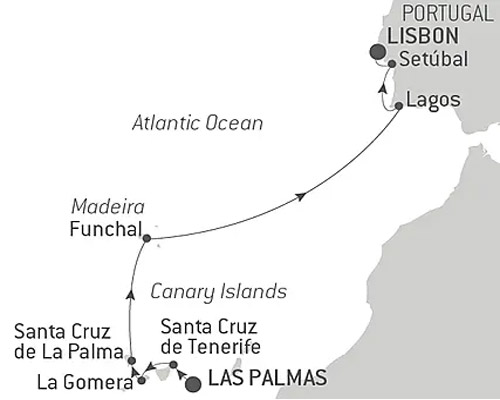
Volcanic islands and historic cities of the North Atlantic
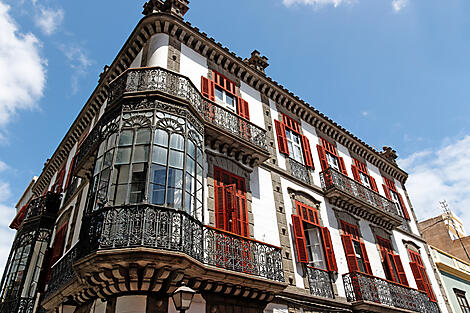
Day 1 - Las Palmas de Gran Canaria, Canary Islands
A stopover of sunny climes, Las Palmas is located on the north-east coast of Gran Canaria. A few streets away from Puerto de la Luz port, youâll discover the vast Las Canteras beach, bordered with the townâs characteristic palms. Youâll find these palms are all over Las Palmas, in the streets and squares, especially on the plaza de Santa Ana in the heart of the historical district. It feels like youâve travelled back in time here, as you stand looking at the tall houses beside the Santa Ana cathedral. Very close by, you can visit the Casa de Colón, a museum dedicated to the famous explorer. The museum is housed in the palace belonging to the islandâs former governor. Chances are, youâll be drawn to the covered Vegueta market to partake in some daily life along with the locals and taste some unfamiliar dishes.
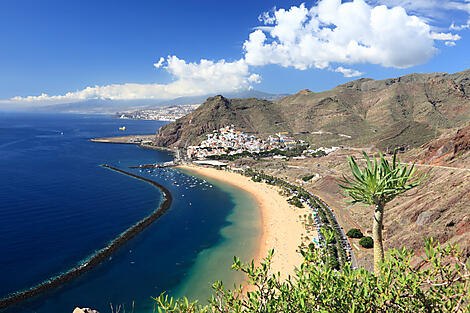
Day 2 - Santa Cruz de Tenerife, Canary Islands
The capital city of Tenerife is located on the north-east coast of the island. Close to the port is the monumental Plaza de España, bedecked with a fountain and plant sculptures. Around the plaza, you can admire the white marble Triunfo de la Candelaria obelisk, the historic casino of Santa Cruz and the majestic Guimerà theatre. Not far from here, the picturesque Iglesia de la Concepción church features the characteristic traits of Canaries architecture.
3 available excursions
Teide National Park, La Laguna and Vineyards, The gardens of Tenerife
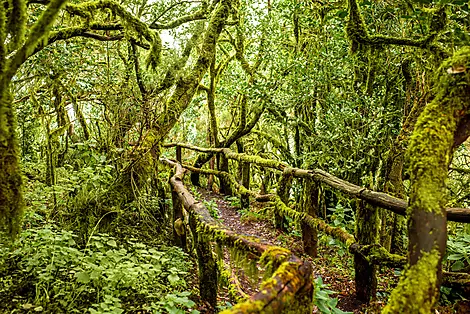
Day 3- San Sebastian de la Gomera, Canary Islands
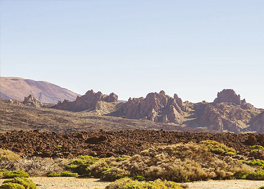
La Gomera rises from the water like a mirage. This volcanic island in the Canaries features jagged cliffs, valleys covered in palm trees, and beaches of black sand bathing in crystal-clear waters. But its greatest treasure lies at its heart: an exceptional laurisilva, a laurel forest whose prehistoric vegetation has been preserved thanks to the microclimate on the island. This unique ecosystem, common a few million years ago in the tropics, forms the Garajonay National Park, listed as a UNESCO World Heritage Site. Like the birds, the Guanches contribute to the poetry of the island too, with their whistled language called Silbo. This magical-sounding, melodious language is also listed as World Heritage by UNESCO.
4 available excursions
Miradors and palm honey, La Gomera, a scenic panoramic journey, Walking in Garajonay National park, Flora and fauna of La Gomera
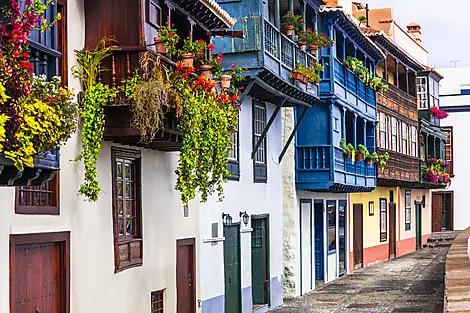
Day 4 - Santa Cruz de La Palma, Canary Islands
The capital of the island of Palma, Santa Cruz de la Palma is the pearl of the Canaries. Founded in 1493 by the conquistador Alonso Fernandez de Lugo, the city has preserved a large and atypical architectural heritage from its colonial past, with its traditional Canarian houses adorned with brightly coloured wooden balconies, its cobbled streets, its sumptuous palaces and its numerous religious buildings. The Santa Catalina Castle is the symbol of the city. This 16th century military fortification helped defend the city from repeated attacks by French privateers.
5 available excursions
Above the clouds of La Palma, Natural and religious sanctuaries of Santa Cruz de la Palma, Natural treasures of northern La Palma, Hiking on the new volcano Tagojaite, EcoTropical Paradise
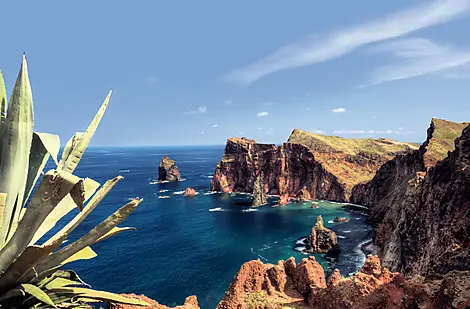
Day 5-6 - Funchal, Madeira
This attractive capital of Madeira is located on the southern coast of the island. The walkways of the old town are lined with azulejos, or multi-coloured mosaics. If you follow these patterns, theyâll lead you to the appetising Mercado dos Lavradores market stands, the Frederico de Freitas museum, and the golden panelling of the Cathedral de la Sé. Along the waterfront, the palm tree-shaded promenade leads you to the teleféricos de Monte, Madeira's cable cars. Its panoramic cabins transport you over the city to top of Monte, where you can see the picturesque botanical garden.
6 available excursions
Botanical Gardens & Monte, Levada walk, Whale and dolphin watching, Tropical gardens and Eira do Serrado, Whale and dolphin watching, Cabo Girão panoramic road
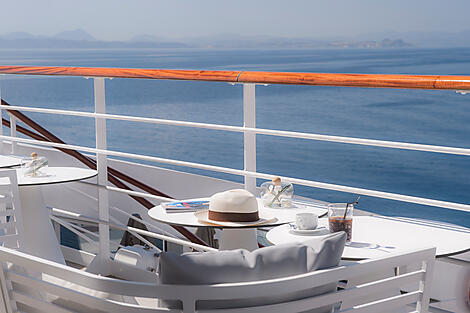
Day 7 - At sea
During your journey at sea, make the most of the many services and activities on board. Treat yourself to a moment of relaxation in the spa or stay in shape in the fitness centre. Depending on the season, let yourself be tempted by the swimming pool or a spot of sunbathing. This journey without a port of call will also be an opportunity to enjoy the conferences or shows proposed on board, depending on the activities offered, or to do some shopping in the boutique or to meet the PONANT photographers in their dedicated space. As for lovers of the open sea, they will be able to visit the shipâs upper deck to admire the spectacle of the waves and perhaps be lucky enough to observe marine species. A truly enchanted interlude, combining comfort, rest and entertainment.
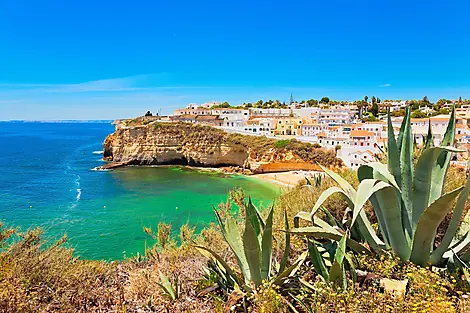
Day 8 - Lagos
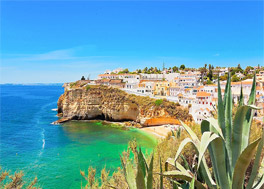
There stands a natural paradise called Lagos, bordered by the Atlantic Ocean, in the Algarve region of southern Portugal. With its picturesque and age-old town centre, and the Ponta da Piedade natural site sheltering paradisiacal beaches protected by captivating limestone cliffs in hues of ochre, Lagos enthrals, fascinates and enchants. In this interesting blend between nature and culture, do not miss the chance to stroll along the small paved streets of its historic centre, surrounded by impressive Moorish ramparts and edged with traditional white houses, with decorations sculpted in the stone. In particular, you will be able to admire the Manuelian-style Governor's Castle, the 17th-century Ponta da Bandeira Fort or the Church of Santo António in Baroque architecture.
3 available excursions
Ponta da Piedade & Sagres, Walking tour, The famous Benagil caves
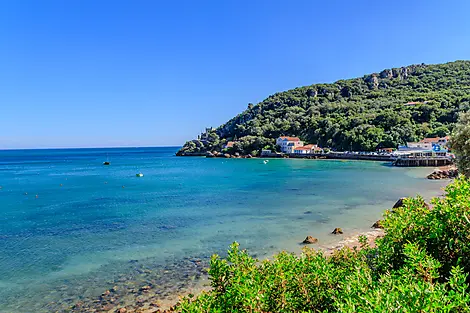
Day 9 - Setubal
A few kilometres south of Lisbon, Setúbal, one of Portugal's most important fishing ports, enjoys an exceptional geographical location. The city is surrounded by vast parks and nature reserves that protect the biodiversity of the Sado estuary and the Arrábida serra. Don't miss the possibility to discover the magnificent wild and unspoilt expanses that border the peninsula and the estuary, whose waters are home to many dolphins, which can easily be observed.
5 available excursions
Palácio da Bacalhôa, Visit of castles and Arrábida Natural Park, Kayaking in Arrábida, Fojo hiking tour, Market visit and cookery class
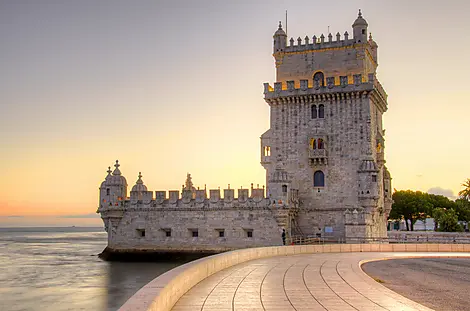
Day 10 - Lisbon
Portugalâs capital city located on the banks of the Tagus, only a few kilometres from the Atlantic coast, is a city of exceptionally rich cultural diversity. At the mouth of the river harbour, impose two UNESCO World Heritage monuments, Jeronimos monastery and Belem tower. The Alfama hillside is also worth visiting: known for its fado bars and its Moorish streets, this district is the oldest one of the city and one of the most typical. Not far from there, Chiadoâs elegant streets are home to big fashion labels and are an invitation to a bit of of luxury shopping.
4 available excursions
Panoramic tour of Lisbon, Palace of Mafra and wine tasting, Lisbon, through your camera, Fronteira Palace
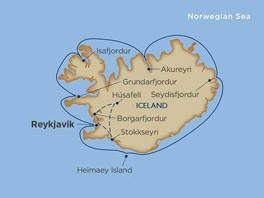
10 Days - Comprehensive Iceland Cruise Tour
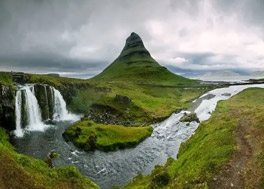
Cruise Line: Windstar Cruise
Ship: Star Pride
Sailing Dates: Jul 12 2027 | Jul 19 2027 | Jul 26 2027 | Aug 09 2027 | Aug 16 2027 | Aug 23 2027
Port: Reykjavik to Reykjavik
Svalbard Circumnavigation: The Ultimate Arctic Quest
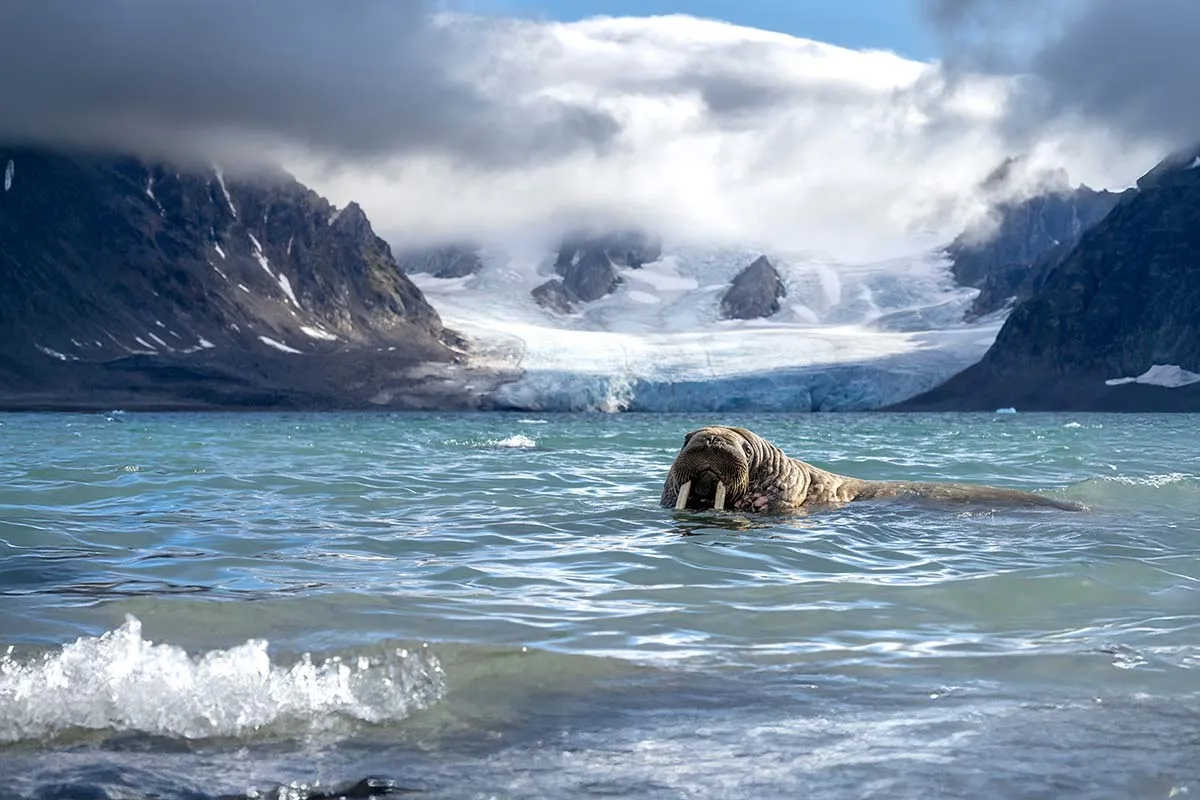
Cruise Line: Polar Latitudes Expeditions
Ship: Ocean Albatros | Mv Discoverer
Sailing Dates: Sep 07 2027 | Aug 12 2028
Port: Longyearbyen to Longyearbyen
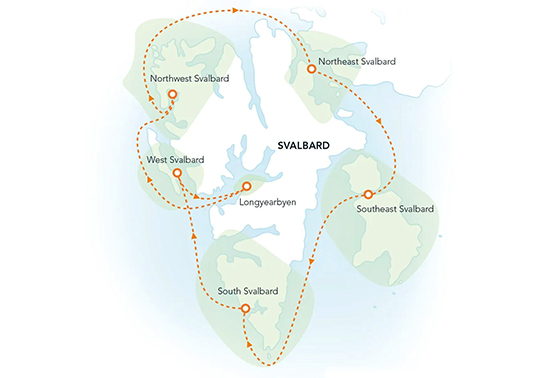
Svalbard Circumnavigation: The Ultimate Arctic Quest
Day 1
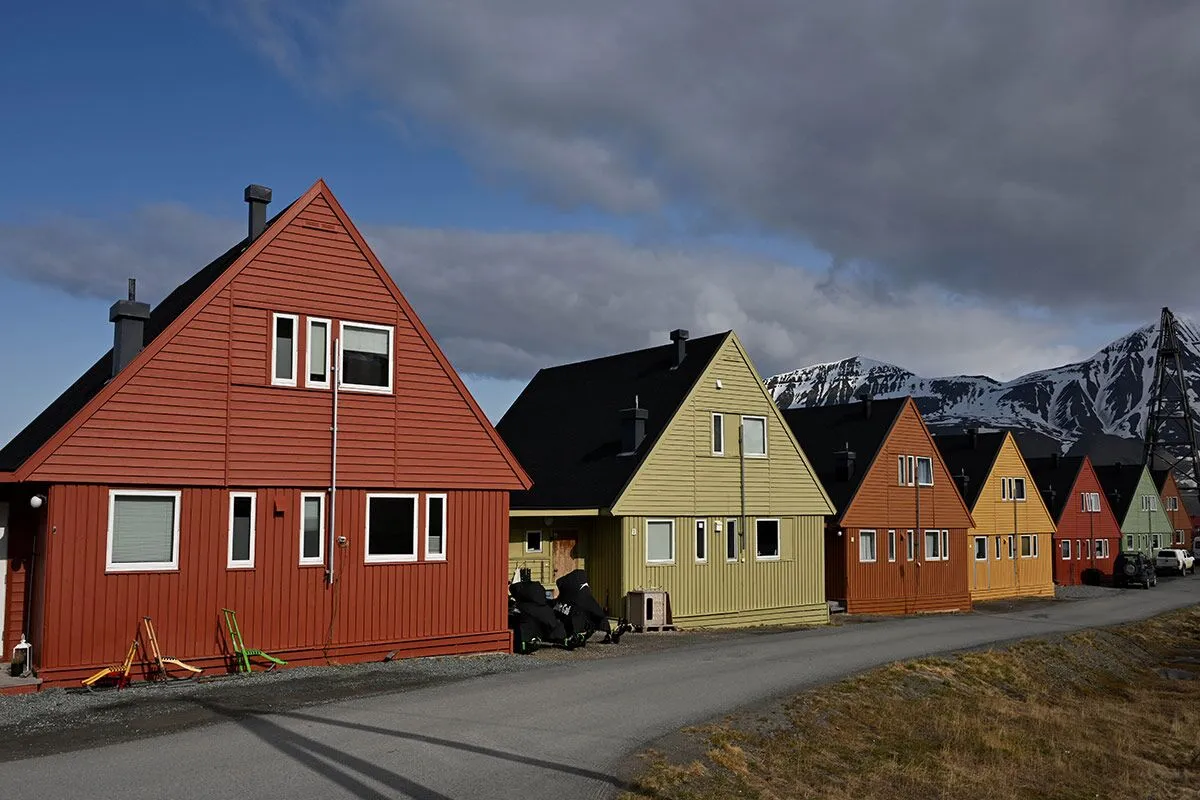 All Aboard in Longyearbyen!
Begin your journey in Norway and arrive in Longyearbyen, Svalbardâthe northernmost town on Earth. Despite its remote Arctic location, Longyearbyen offers warm Nordic hospitality. Upon arrival, youâre greeted by crisp polar air, dramatic mountain views, and a polar bear warning sign reminding visitors of their wild new location. Your expedition ship Ocean Albatros awaits you in the harbor; toast your departure from civilization as you sail into the Arctic wilderness, on course for adventure!
Day 2
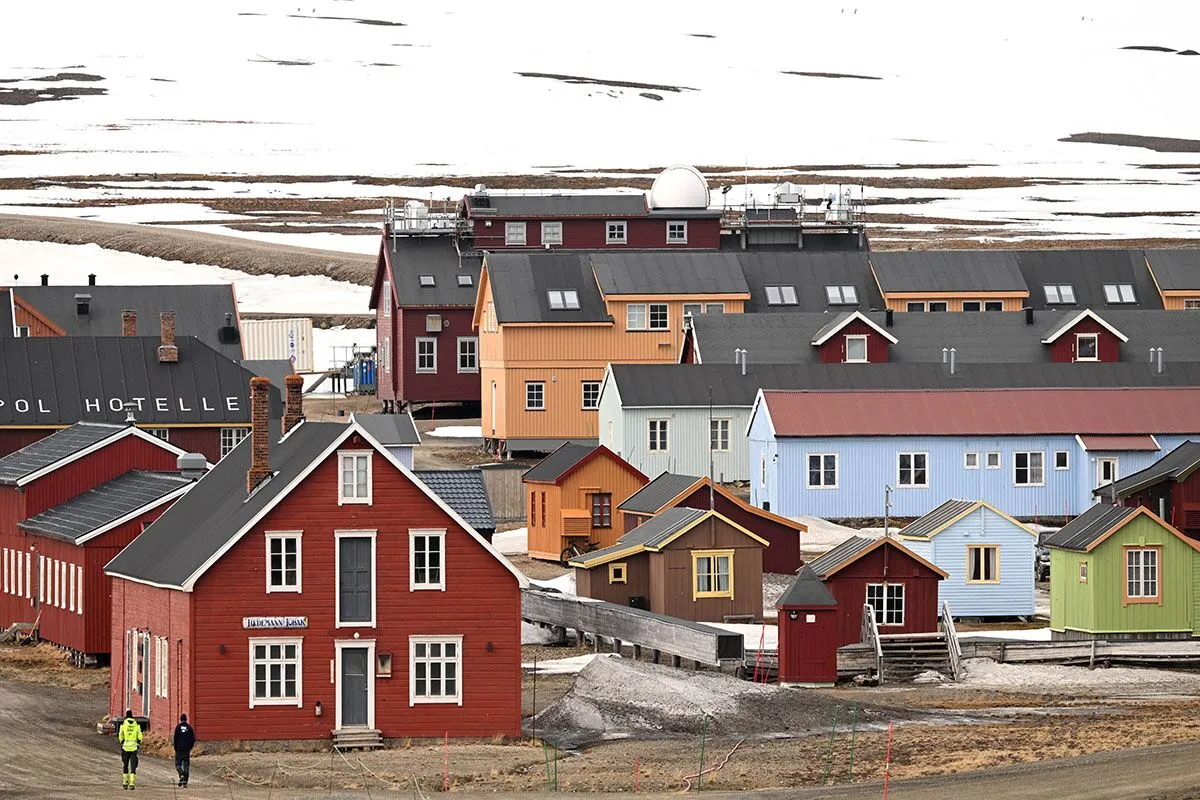 Kongsfjorden Region, Northwest Svalbard
During the Arctic ânight,â we sail past Prins Karls Forland to the stunning Kongsfjord, framed by glaciers and the dramatic Three Crowns mountains. The first stop is Ny-Ã
lesund, Earthâs northernmost settlement, known for its scientific stations and historic role as a base for legendary polar explorers like Amundsen and Nansen. This remote outpost continues to support vital research amid its breathtaking surroundings.
Day 3
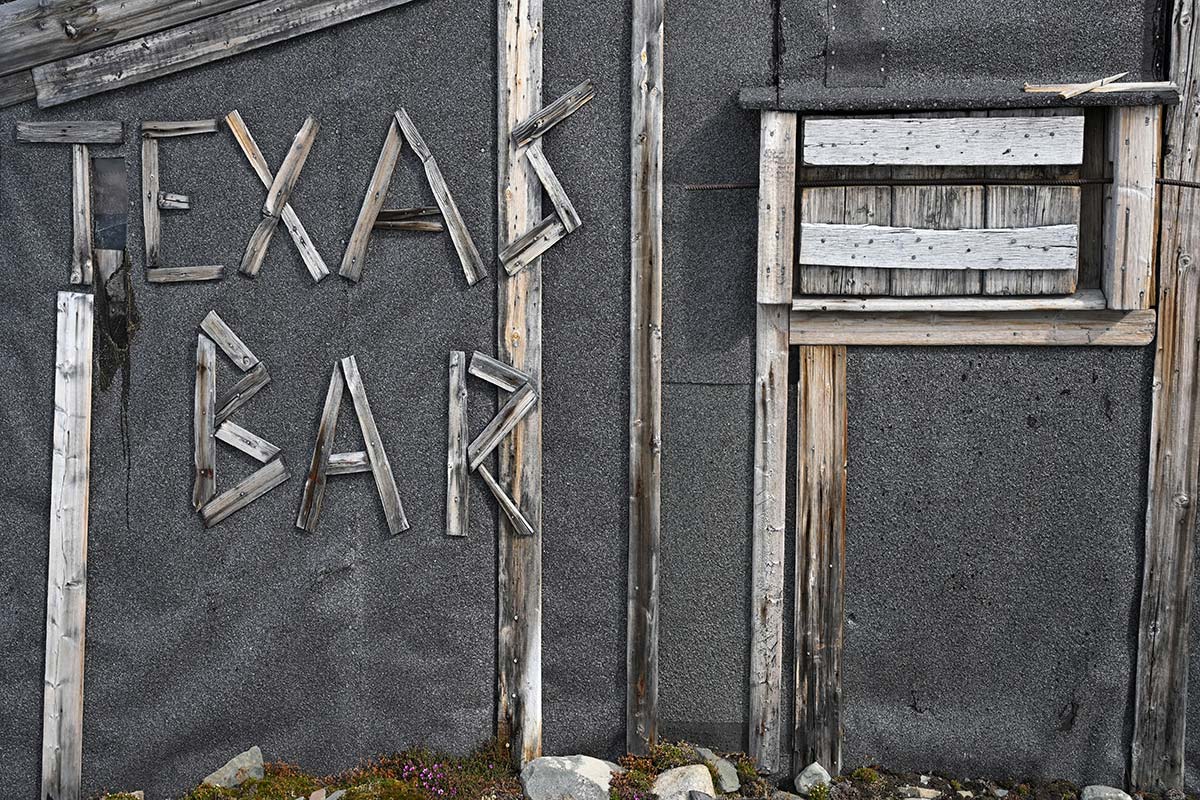 Northwest Svalbard
North West Svalbard, a National Park since 1973, preserves a rich history of early Arctic exploration and whaling. First visited by William Barents in 1596, the area became a hub for Dutch and English whalers. Their haunting remnants, such as the blubber ovens, and graves of young sailors at Smeerenburg, remain visible. Now heavily protected, the region has been reclaimed by nature, hosting Arctic flowers, seabirds, walrus, and polar bears, making it once again a pristine wilderness and haven for wildlife.
Day 4
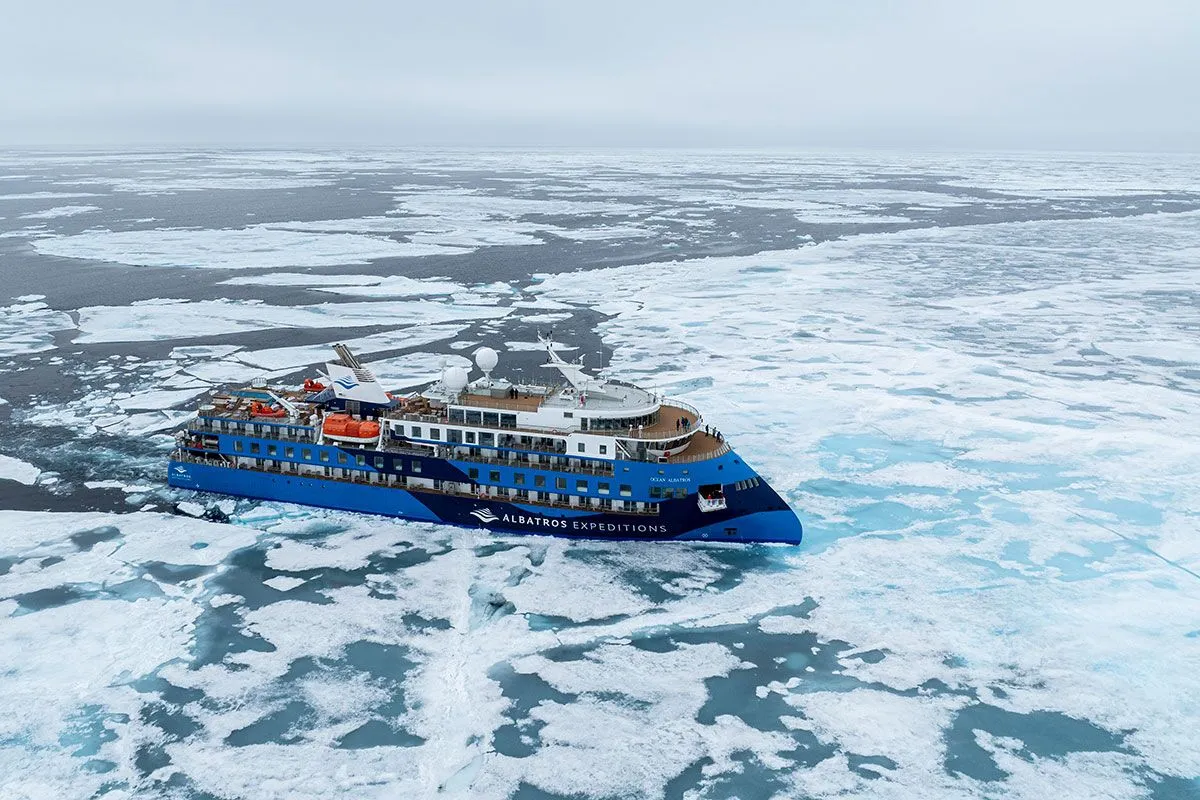 Into the Ice
The Arctic ice pack north of Svalbard is a vast, everchanging wilderness, shifting seasonally and stretching beyond the North Pole to Alaska and Siberia. Though seemingly barren, this icy habitat supports diverse wildlife, from fish and seabirds, to seals, belugas, and bowhead whales, and is the preferred hunting ground of polar bears. The Ocean Albatros navigates through ice channels to explore this remote environment, hunting for wildlife, ending the day cruising toward the Hinlopen Strait between the islands of Spitsbergen and Nordaustlandet.
Day 5
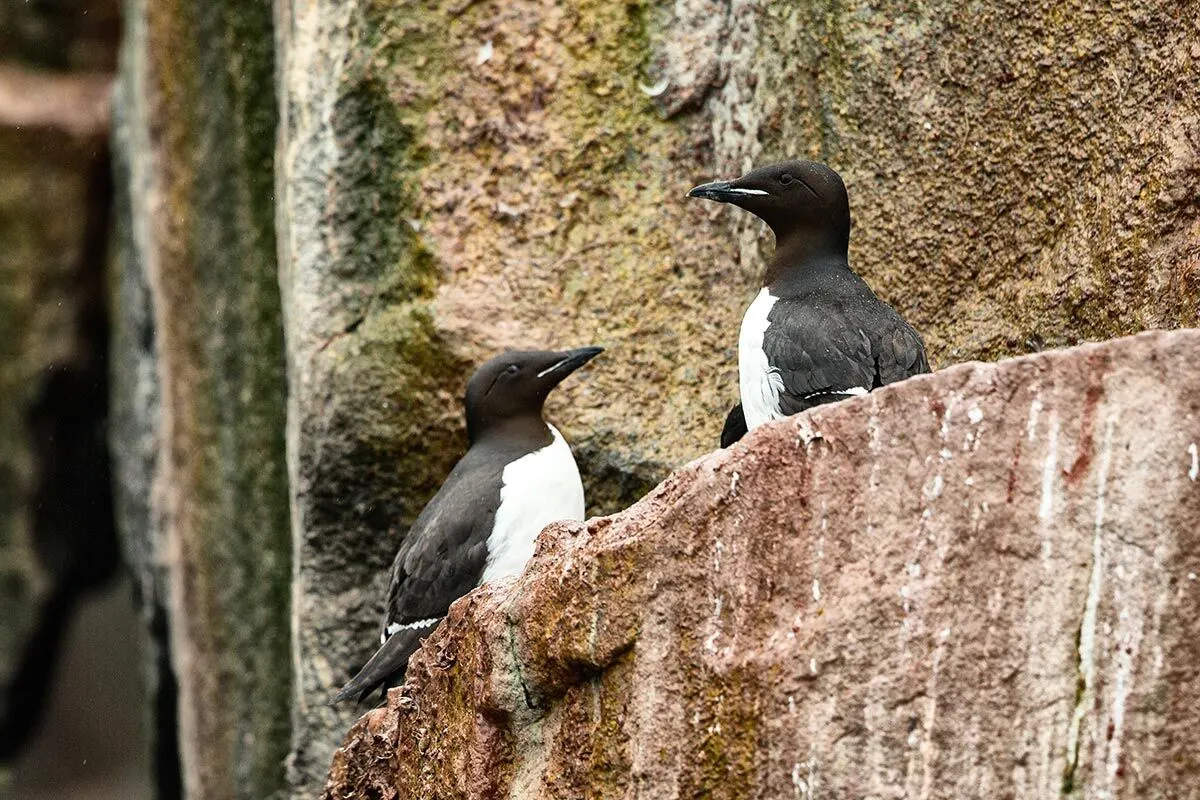 Northeast Svalbard
From the Arctic ice, the journey continues into Hinlopen Strait, where towering cliffs host some of the worldâs largest seabird colonies, crowded with guillemots and fulmars amid predatory skuas and gulls. The unearthly polar deserts of northeast Svalbard are surrounded by iceberg-studded seas, where vibrant marine life thrives. Walruses rest onshore, belugas frolic in pods, and scampering shore birds feast on the beaches, showcasing Svalbardâs rich biodiversity despite the harsh Arctic conditions.
Day 6
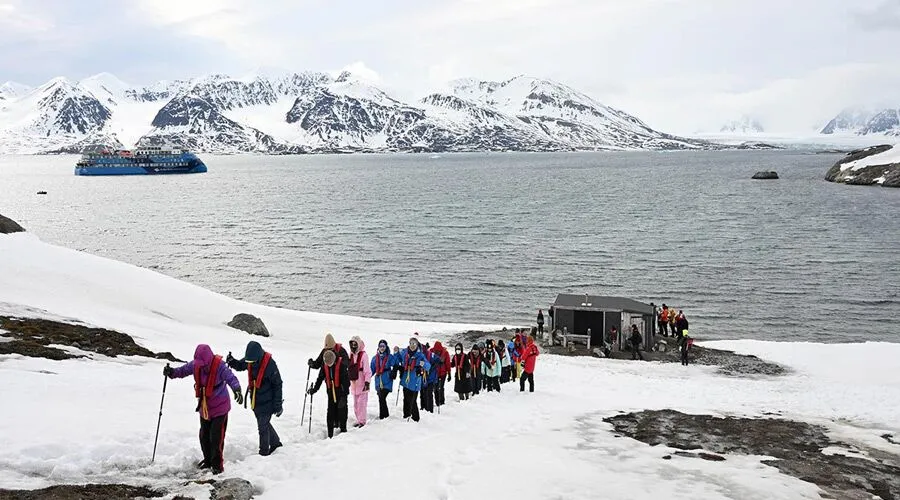 East Svalbard
In Eastern Svalbard, cold polar waters meet the weak last gasp of the Gulf Stream, and the ocean remains icy even under the midnight sun. On Edgeoya, evidence of past large-scale walrus and beluga hunting contrasts with todayâs strict wildlife protections and extensive nature reserves. Highlights we may visit include the geological marvels and walrus colonies at Andreetangen and Kapp Lee, or the vast bird colonies at Sundneset, before we return toward the main island of Spitzbergen via Sorkapp.
Day 7-8
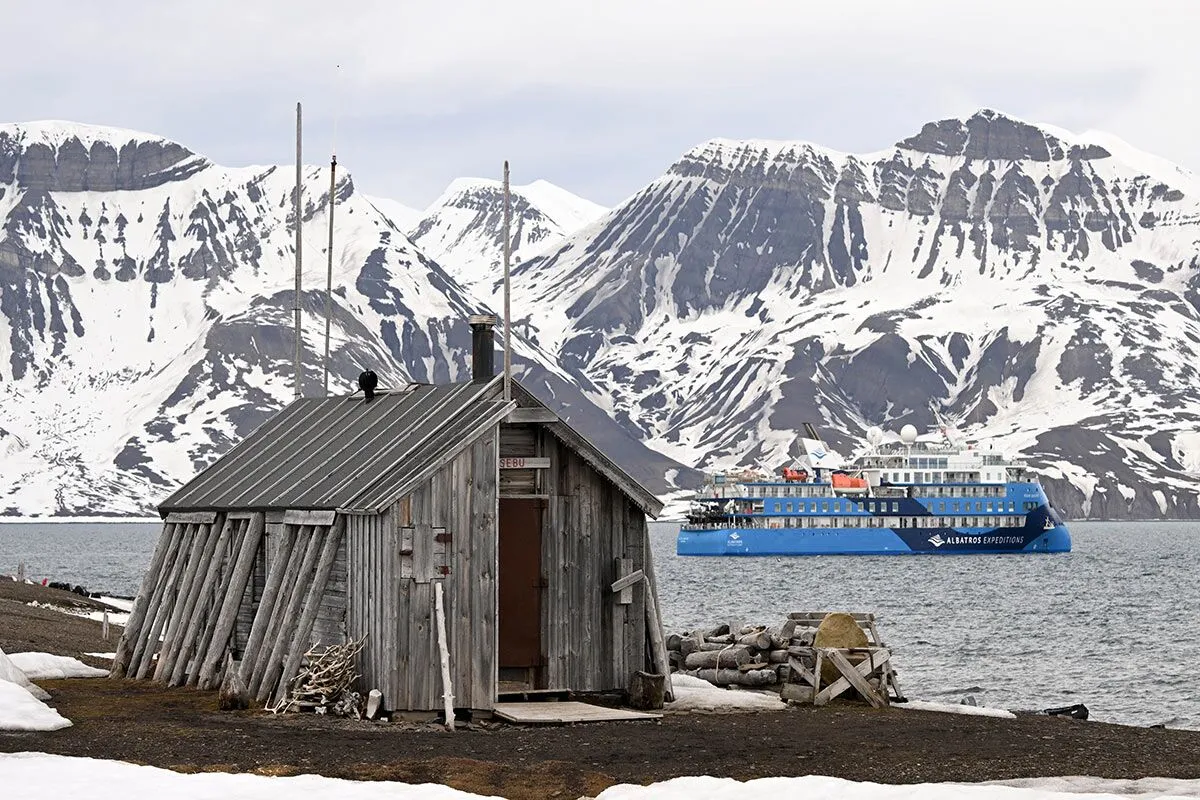 South Svalbard
After rounding the southern tip of Spitsbergen, the expedition enters the greener, warmer fjords of Bellsund and Hornsund, nourished by Atlantic currents. These fertile valleys support reindeer, Arctic foxes, nesting seabirds, and drifting icebergs from nearby glaciers. Rich in wildlife and history, the area offers highlights like the grassy meadows of VÃ¥rsolbukta and the historic sites of Calypsobyen and Bamsebu, making it one of Svalbardâs most diverse and captivating regions.
Day 9
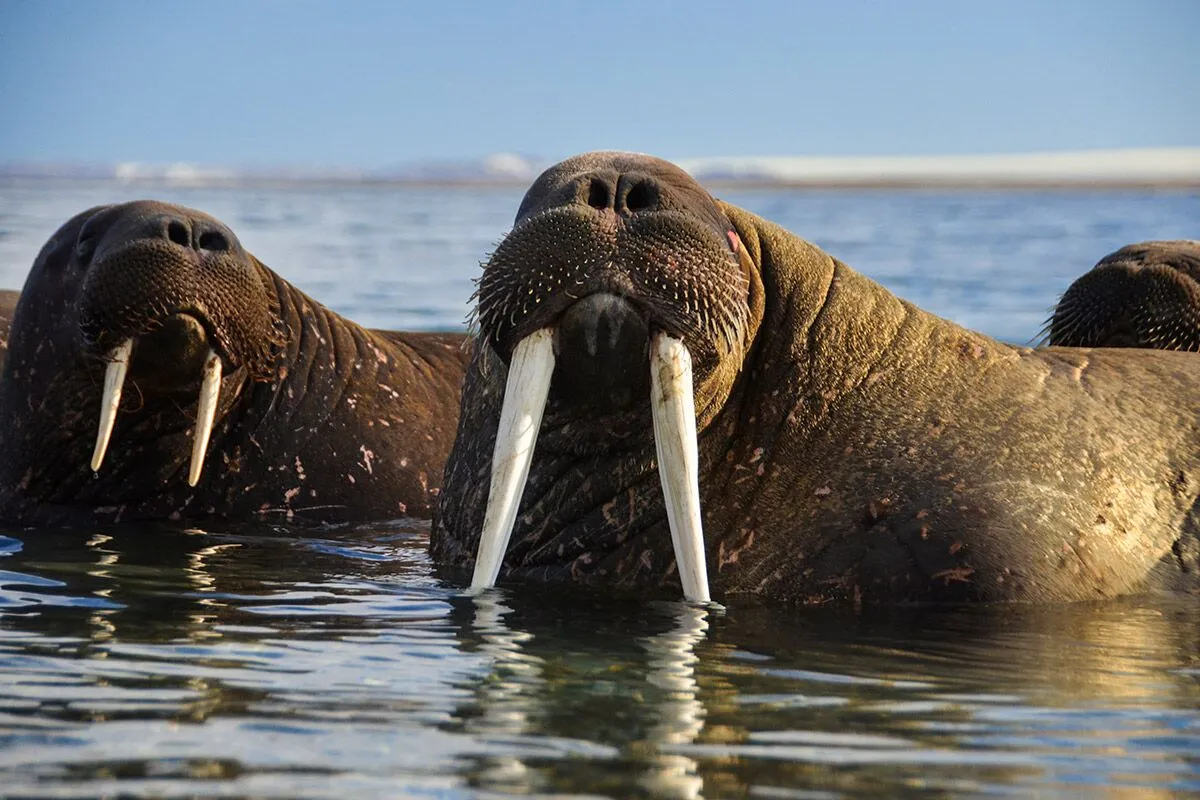 West/Central Spitzbergen
During the night we will enter Forlandssundet, the strait which separates Prince Karls Forland from Spitsbergen. Our destinations may include Poolepynten (Poole Point), a small headland named after the British whaler Jonas Poole. Today the area is inhabited by herds of walruses who can be seen (and smelled!) from a distance. The large mammals flaunt their tusks and whiskers, as well as their considerable bulk. The remote beaches, rugged mountains, and tundra plains of the region positively beg to be explored! From Forlandsundet, we will return southwards during the afternoon into Isfjorden, all the while on the lookout for wildlife and spectacular views as we return to civilization.
Day 10
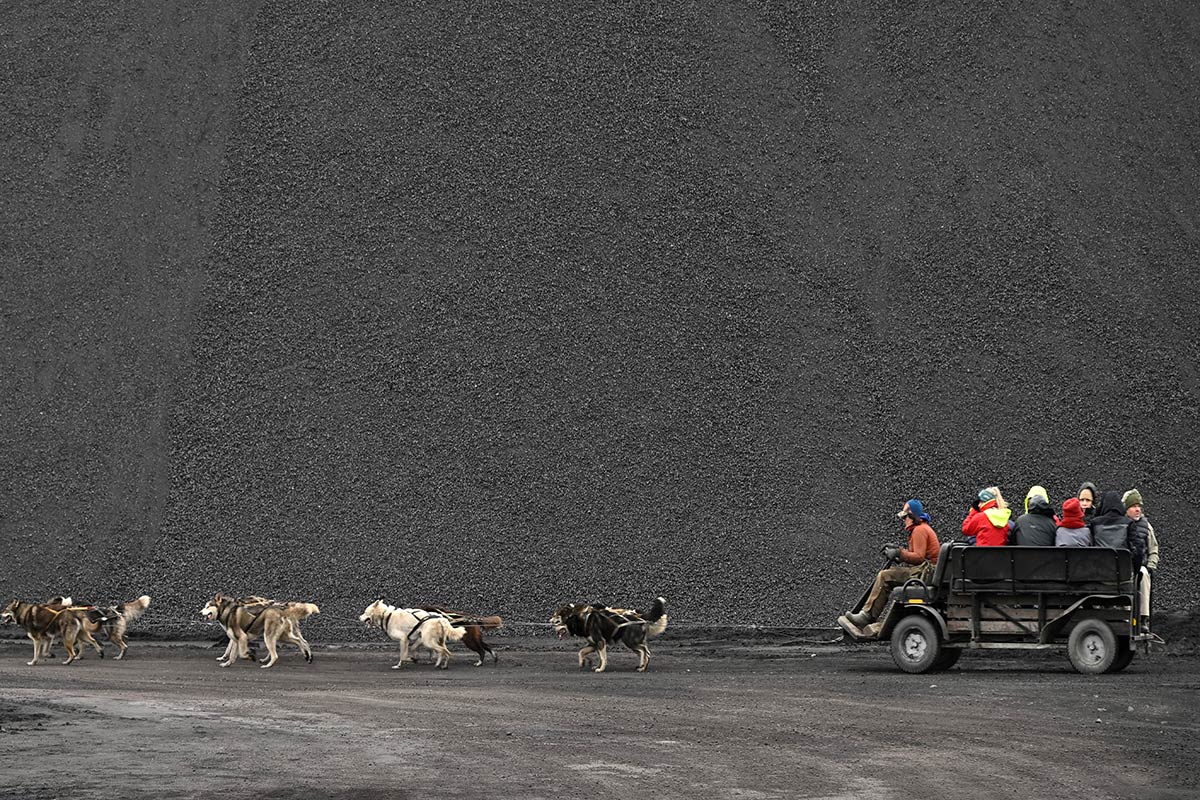 Longyearbyen Disembarkation
On the final morning of our expedition, we arrive back in Longyearbyen. Even this small town will feel like a metropolis after days of isolation in the wilderness of the Arctic!
After exploring Longyearbyen and bidding a fond farewell to the crew of Ocean Albatros and your fellow Arctic explorers, return to Svalbard Airport and join your flight back to the Norwegian mainland- with memories to last a lifetime.
Adventure in the Bissagos Islands
Cruise Line: Ponant Cruise
Ship: Le-Champlain | Le-Laperouse
Sailing Dates: Nov 11 2026 | Nov 19 2026 | Dec 13 2026 | Dec 21 2026 | Dec 29 2026
Port: Dakar - Dakar
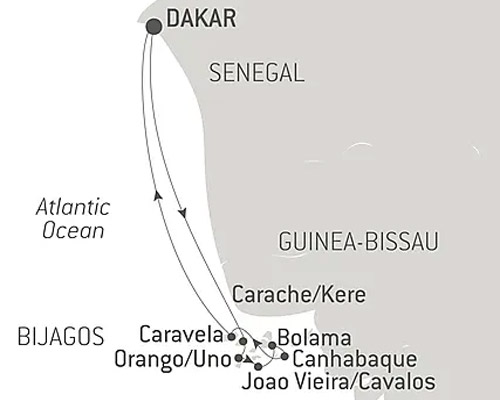
Adventure in the Bissagos Islands
Ports of Call & Excursions
Day 1 - Dakar
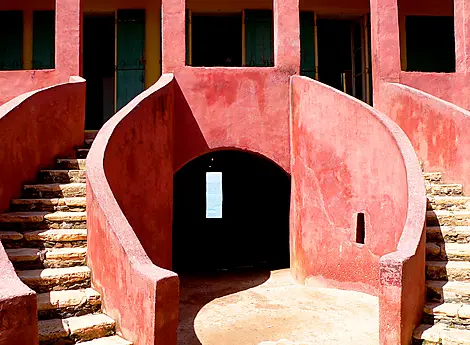
On the tip of the African continent, the buzzing capital of Senegal stretches along the narrow peninsula of Cape Verde. You may be overwhelmed by its sheer size, but Dakar will win you over with its richly diverse districts, appealing cultural scene and rich natural surroundings. In the historic centre, you'll enjoy the pell-mell of colours and tasty delights in Kermel market. Far from the effervescence of the city, Gorée Island, a UNESCO World Heritage Site, is known as a place of remembrance, having once been a slave trade outpost. On the other side of the plateau, the wild Madeleine islands are protected by a national park.
Day 2 - At sea
During your journey at sea, make the most of the many services and activities on board. Treat yourself to a moment of relaxation in the spa or stay in shape in the fitness centre. Depending on the season, let yourself be tempted by the swimming pool or a spot of sunbathing. This journey without a port of call will also be an opportunity to enjoy the conferences or shows proposed on board, depending on the activities offered, or to do some shopping in the boutique or to meet the PONANT photographers in their dedicated space. As for lovers of the open sea, they will be able to visit the shipâs upper deck to admire the spectacle of the waves and perhaps be lucky enough to observe marine species. A truly enchanted interlude, combining comfort, rest and entertainment.
Day 3 - Kere, Bijagos
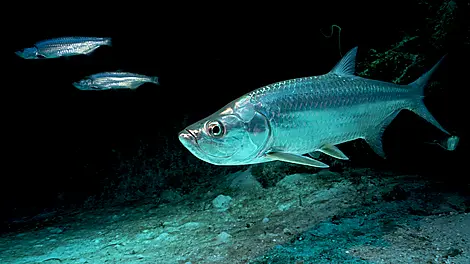
The private island of Kere is an unspoiled Eden, a one-hectare (two-acre) stretch of tropical forest in the heart of the Bissagos Islands. One original feature of this island is that a small, sustainable and fair-trade ecotourism business was developed upon it. On the islandâs magnificent beach, a Frenchman has set up a business to show people around this exceptional natural environment or to take them out for some game fishing, particularly in search of tarpon, a fish weighing over a hundred kilos (220 pounds). The bungalows made from earth and straw blend into the idyllic setting and reflect the mindset of the isletâs owner: authentic and respectful of nature and people.
Day 3 - Carache Island, Bijagos
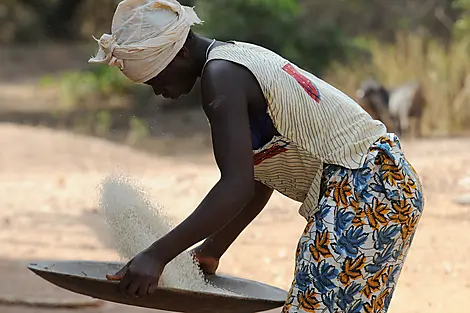
In the midst of a rich natural environment, you will enjoy a fascinating encounter with the Bijagos, who have been successful at taming their environment and preserving their ancestral way of life. Five villages provide a home for the islandâs few thousand inhabitants, who rely on a subsistence economy: they take from nature only what they need, they cultivate rice, breed chickens and pigs, fish on a small scale and use all the parts of the oil palm. Cob huts with thatched roofs are the traditional dwellings. Among other things, you will be able to enjoy a wonderful show of authentic traditional dancing.
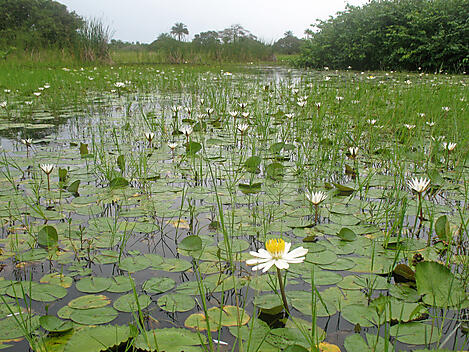
Day 4 - Orango Island, Bijagos
Some 20 kilometres off the coast of west Africa, the Bissau-Guinean archipelago of Bissagos is famous for its abundant biodiversity. The richness of its marine animal and plant life afforded it the status of Biosphere Reserve by UNESCO: dolphins, green tortoises, monkeys, striped antelopes and hundreds of thousands of migrating birds find refuge here. Composed of five islands and several islets, Orango is the largest and most mysterious island in the archipelago. Its national park and marine protected area lie in the heart of the Biosphere Reserve. During your zodiac outings, you will set off to discover this preserved environment, home to the Bijogo people, the true custodians of this sanctuary.
Â
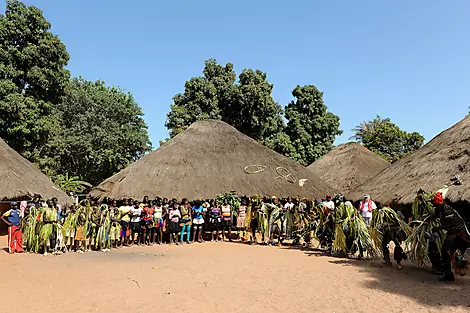
Day 4 - Uno Island, Bijagos
Covered in beautiful savannah, paddy fields and lush forests, the island of Uno, or Ilha de Uno, is one of the most populated in the Bissagos archipelago. In its many villages, life follows the pace of the everyday scenes and traditions of the Bissago people. The lifestyle of these island people remains relatively untouched by colonial domination and external influences, and still honours animist beliefs and rites, such as the fanados, which are coming-of-age initiations for young men and women that involve them spending four months in the forest with the village elders. By sanctifying the natural environment, the islanders are protecting the archipelagoâs unique biodiversity.
Day 5 - Orango Island, Bijagos
Some 20 kilometres off the coast of west Africa, the Bissau-Guinean archipelago of Bissagos is famous for its abundant biodiversity. The richness of its marine animal and plant life afforded it the status of Biosphere Reserve by UNESCO: dolphins, green tortoises, monkeys, striped antelopes and hundreds of thousands of migrating birds find refuge here. Composed of five islands and several islets, Orango is the largest and most mysterious island in the archipelago. Its national park and marine protected area lie in the heart of the Biosphere Reserve. During your zodiac outings, you will set off to discover this preserved environment, home to the Bijogo people, the true custodians of this sanctuary.
Â
Day 5 - Uno Island, Bijagos
Covered in beautiful savannah, paddy fields and lush forests, the island of Uno, or Ilha de Uno, is one of the most populated in the Bissagos archipelago. In its many villages, life follows the pace of the everyday scenes and traditions of the Bissago people. The lifestyle of these island people remains relatively untouched by colonial domination and external influences, and still honours animist beliefs and rites, such as the fanados, which are coming-of-age initiations for young men and women that involve them spending four months in the forest with the village elders. By sanctifying the natural environment, the islanders are protecting the archipelagoâs unique biodiversity.
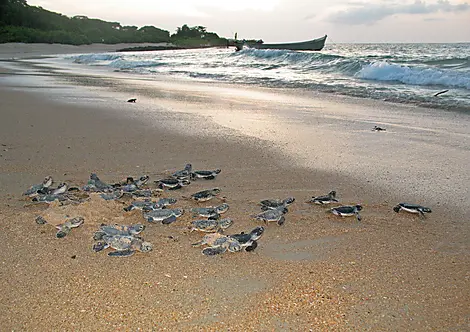
Day 6 - Joao Vieira Island, Bijagos
In the far south-east of the Bissagos Islands, João Vieira is a small unspoiled island in the João Vieira and Poilão Marine National Park. This park, where a number of sacred sites can be found, is home to a wonderful biodiversity. On the practically uninhabited island of João Vieira, the Bijagos have set up temporary camps for fishing or for collecting the fruit of oil palms. Like everywhere else in the archipelago, the local population displays ingenuity to adapt to this incredible environment.
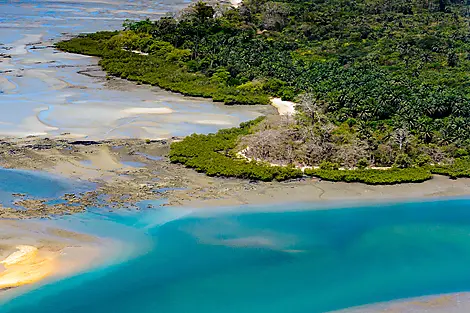
Day 6 - Cavalos Island, Bijagos
A UNESCO Biosphere Reserve, the island of Cavalos is the second-largest nesting site in West Africa. Here you will be able to observe many bird species, including terns, in particular near the freshwater lake. Take a stroll on the beach full of shells, stretching all the way around the islandâs 6-km (3.8-mile) circumference. Some rocks have mango trees growing on them, which just rise above the surface during high tide. The interior of the island, blanketed in palm trees and high grasses, is inhabited by a colony of wild pigs.
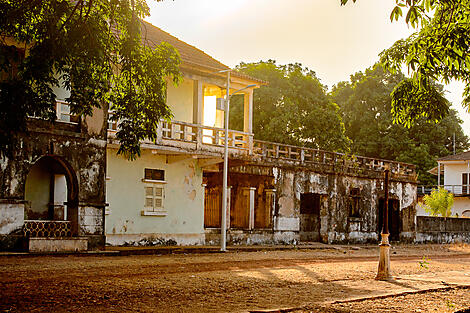
Day 7 - Bolama
Bolama, the capital of Portuguese Guinea from the late 19th century to the end of the 1930s, is shrouded in the surreal and poetic atmosphere of a ghost town forgotten by time. Along the streets covered in ochre earth, the vestiges of neoclassical colonial buildings hint at what was once the sumptuous government palace or the governorâs residence. Now neglected, this hard-to-reach natural harbour surrounded by mangrove swamps once served as an outpost for keeping a close eye on the Guinean population that had come to seek refuge on these remote islands of the Bissagos archipelago to escape their colonisers.
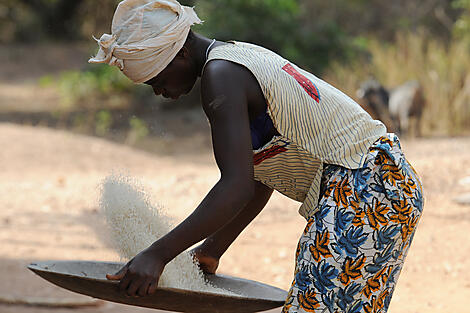
Day 7 - Canhabaque, Bijagos
Canhabaque Island, also known by the name Roxa, is covered in lush vegetation and boasts pretty beaches alternating with rocky formations. The first island in the archipelago to be inhabited, it is today home to a community of around 2,500 inhabitants, spread across various tabancas (rural villages). Long closed to tourism, it is considered the most traditional island in the whole archipelago in terms of customs and lifestyle. It competes with Caravela for the reputation of the most beautiful island. It has an animist and matrilineal society; women are highly predominant in the management and maintenance of balance in the tabancas.
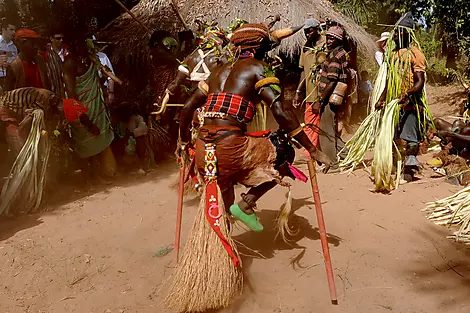
Day 8 - Caravela Island, Bijagos
Dotted with authentic and wild landscapes, the Bissagos archipelago is a constellation of islands covered in savannah, forests of palm trees, mangrove trees, silk-cotton trees, baobabs and, in large part, mangrove swamps. From the island of Caravela, you will be able to set out in a Zodiac® dinghy to explore the mangrove and observe the African grey hornbill, the palm-nut vulture, the kingfisher, the weaverbird and some of the many species that fly to this region each year. It is the second most important site for migratory birds in West Africa, after Banc dâArguin in Mauritania: herons, curlews, red-chested swallows. In full immersion, far from the beaten track, your discovery of the archipelago will take on an air of adventure.
Day 9 - Dakar
On the tip of the African continent, the buzzing capital of Senegal stretches along the narrow peninsula of Cape Verde. You may be overwhelmed by its sheer size, but Dakar will win you over with its richly diverse districts, appealing cultural scene and rich natural surroundings. In the historic centre, you'll enjoy the pell-mell of colours and tasty delights in Kermel market. Far from the effervescence of the city, Gorée Island, a UNESCO World Heritage Site, is known as a place of remembrance, having once been a slave trade outpost. On the other side of the plateau, the wild Madeleine islands are protected by a national park.
Atlantic Odyssey from the Iberian Peninsula to the Canary Islands
Cruise Line: Ponant Cruise
Ship: Le-Bougainville | Le-Dumont-D-Urville | Le-Laperouse | Le Boreal
Sailing Dates: Nov 07 2026 | Nov 25 2026 | Oct 13 2027 | Nov 01 2027 | Nov 15 2027
Port: Las Palmas de Gran Canaria, Canary Islands (Spain)To Malaga (Spain)
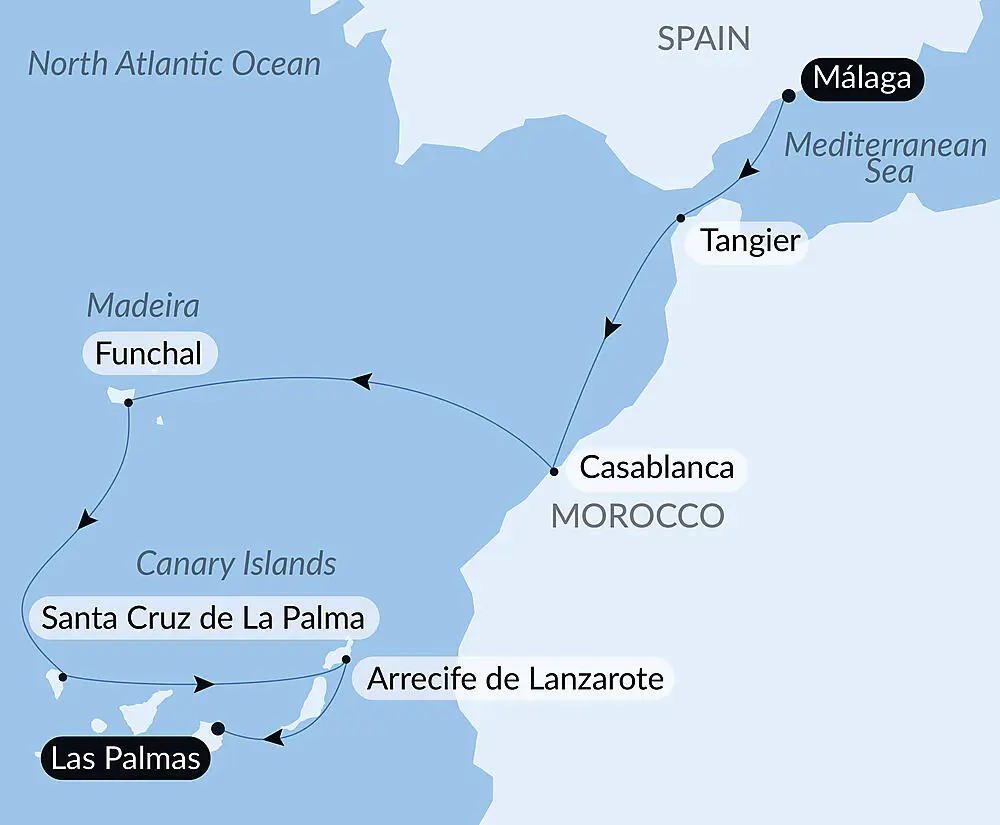
Atlantic Odyssey from the Iberian Peninsula to the Canary Islands
Day 1 - Las Palmas de Gran Canaria, Canary Islands
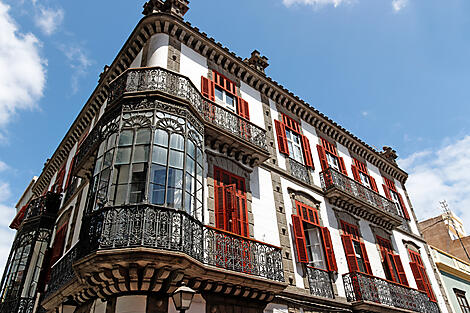
A stopover of sunny climes, Las Palmas is located on the north-east coast of Gran Canaria. A few streets away from Puerto de la Luz port, youâll discover the vast Las Canteras beach, bordered with the townâs characteristic palms. Youâll find these palms are all over Las Palmas, in the streets and squares, especially on the plaza de Santa Ana in the heart of the historical district. It feels like youâve travelled back in time here, as you stand looking at the tall houses beside the Santa Ana cathedral. Very close by, you can visit the Casa de Colón, a museum dedicated to the famous explorer. The museum is housed in the palace belonging to the islandâs former governor. Chances are, youâll be drawn to the covered Vegueta market to partake in some daily life along with the locals and taste some unfamiliar dishes.
Day 2 - Arrecife de Lanzarote, Canary Islands
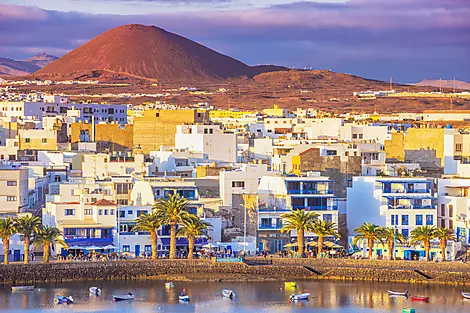
Established on a coast sprinkled with cliffs, Arrecife has a pleasant beach and a lagoon full of charm, Charca of San Ginés, where the fishermen anchor their boats. The city also proposes places fed by history and culture, such as the castle San Gabriel, former fort of defense of the city.
2 available excursions
Cesar Manrique Foundation & Cactus Garden, Jameos del Agua and Mirador del Rio
Day 3- San Sebastian de la Gomera, Canary Islands
La Gomera rises from the water like a mirage. This volcanic island in the Canaries features jagged cliffs, valleys covered in palm trees, and beaches of black sand bathing in crystal-clear waters. But its greatest treasure lies at its heart: an exceptional laurisilva, a laurel forest whose prehistoric vegetation has been preserved thanks to the microclimate on the island. This unique ecosystem, common a few million years ago in the tropics, forms the Garajonay National Park, listed as a UNESCO World Heritage Site. Like the birds, the Guanches contribute to the poetry of the island too, with their whistled language called Silbo. This magical-sounding, melodious language is also listed as World Heritage by UNESCO.
3 available excursions
Walking in Garajonay National park, La Gomera, a scenic panoramic journey, Miradors and palm honey
Day 4 - Santa Cruz de Tenerife, Canary Islands
The capital city of Tenerife is located on the north-east coast of the island. Close to the port is the monumental Plaza de España, bedecked with a fountain and plant sculptures. Around the plaza, you can admire the white marble Triunfo de la Candelaria obelisk, the historic casino of Santa Cruz and the majestic Guimerà theatre. Not far from here, the picturesque Iglesia de la Concepción church features the characteristic traits of Canaries architecture.
3 available excursions
Teide National Park, The gardens of Tenerife, La Laguna and Vineyards
Day 5-6 - Funchal, Madeira
This attractive capital of Madeira is located on the southern coast of the island. The walkways of the old town are lined with azulejos, or multi-coloured mosaics. If you follow these patterns, theyâll lead you to the appetising Mercado dos Lavradores market stands, the Frederico de Freitas museum, and the golden panelling of the Cathedral de la Sé. Along the waterfront, the palm tree-shaded promenade leads you to the teleféricos de Monte, Madeira's cable cars. Its panoramic cabins transport you over the city to top of Monte, where you can see the picturesque botanical garden.
7 available excursions
Levada walk, Funchal & Sacred Art museum, Whale and dolphin watching, The Blandy's Wine Lodge & vineyards, Botanical Gardens & Monte, Whale and dolphin watching, Tropical gardens and Eira do Serrado,
Day 7 - At sea
During your journey at sea, make the most of the many services and activities on board. Treat yourself to a moment of relaxation in the spa or stay in shape in the fitness centre. Depending on the season, let yourself be tempted by the swimming pool or a spot of sunbathing. This journey without a port of call will also be an opportunity to enjoy the conferences or shows proposed on board, depending on the activities offered, or to do some shopping in the boutique or to meet the PONANT photographers in their dedicated space. As for lovers of the open sea, they will be able to visit the shipâs upper deck to admire the spectacle of the waves and perhaps be lucky enough to observe marine species. A truly enchanted interlude, combining comfort, rest and entertainment.
Day 8 - Tangier
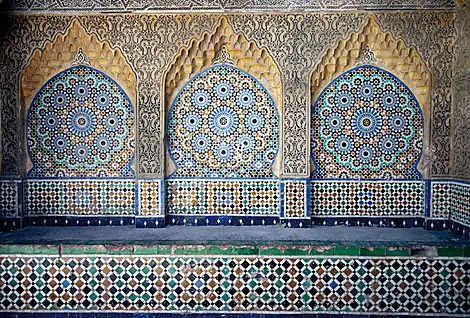
Nestling in the Bay of Tangier, this bewitching Moroccan city lies at the northwestern tip of the country, along the famous Strait of Gibraltar. Following in the footsteps of the writers and artists inspired and seduced by the cityâs climate and setting, youâll love its rich landscapes and multicultural charm. Youâll instantly understand as soon as you set foot in the heart of the Medina. An architectural masterpiece, the Kasbah is your gateway to the Sultanâs Palace and its gardens. If you prefer beaches to museums, you can relax just a few minutes from the city on the beautiful sweep of sand bathed by the Atlantic Ocean.
2 available excursions
Above the clouds of La Palma, Natural treasures of northern La Palma
Day 9 - Malaga
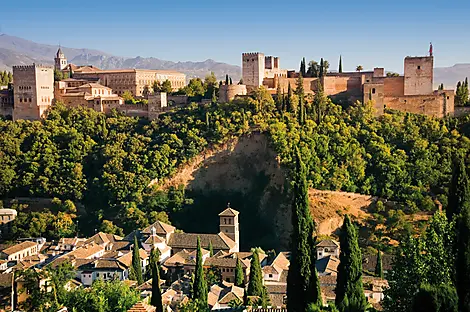
A historical and festive town, Malaga is located in Andalusia, on the Costa del Sol. Between the marina and the beaches, the seaside promenade of La Farola offers an ideal setting for strolling and relaxing. Set slightly further back, the Malagueta bullring is one of the emblematic sites of the city. From the hill overlooking the old town, one can see Gibralfaro castle and the Alcazaba, two fortified ensembles rising out from the cypresses and maritime pines. To visit Pablo Picassoâs birthplace, you will go first to the courtly plaza de la Merced. A few streets back from here, you can explore the museum dedicated to the artist, in the Buenavista palace.
Atlantic Odyssey from the Iberian Peninsula to the Canary Islands
Cruise Line: Ponant Cruise
Ship: Le Boreal | Le-Dumont-D-Urville | Le-Champlain
Sailing Dates: Nov 07 2026 | Nov 25 2026 | Oct 13 2027 | Nov 15 2027
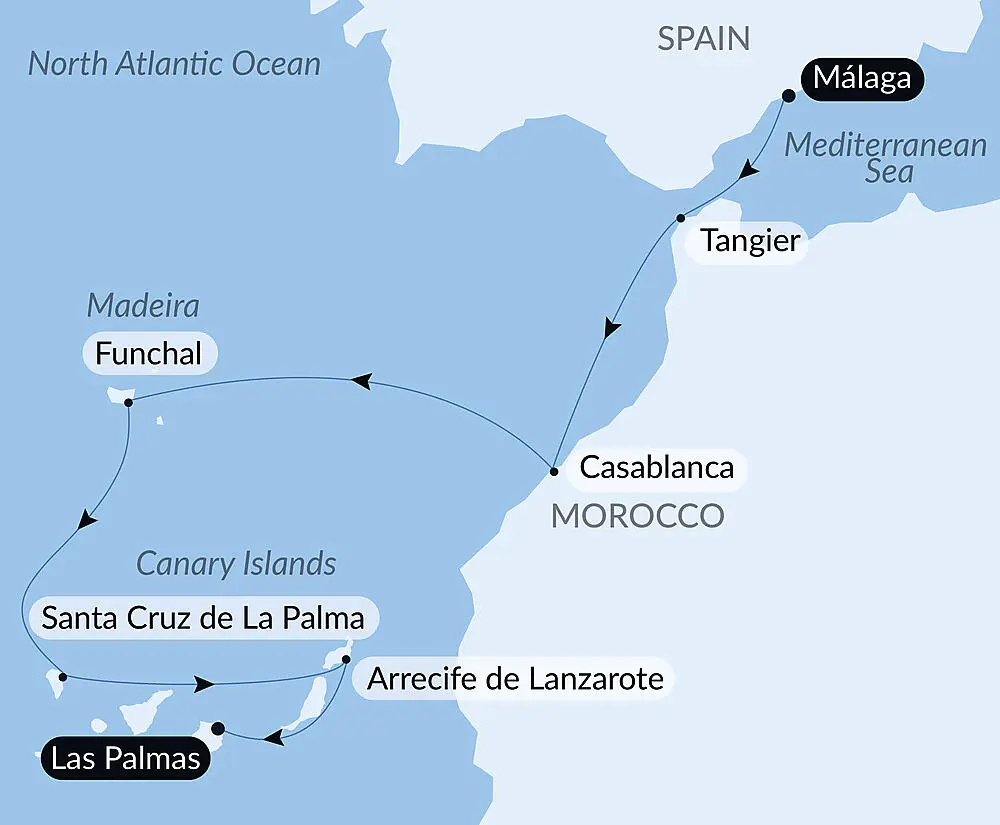
Port: Malaga (Spain) to Las Palmas de Gran Canaria, Canary Islands (Spain)
Atlantic Odyssey from the Iberian Peninsula to the Canary Islands
Day 1 - Malaga
A historical and festive town, Malaga is located in Andalusia, on the Costa del Sol. Between the marina and the beaches, the seaside promenade of La Farola offers an ideal setting for strolling and relaxing. Set slightly further back, the Malagueta bullring is one of the emblematic sites of the city. From the hill overlooking the old town, one can see Gibralfaro castle and the Alcazaba, two fortified ensembles rising out from the cypresses and maritime pines. To visit Pablo Picassoâs birthplace, you will go first to the courtly plaza de la Merced. A few streets back from here, you can explore the museum dedicated to the artist, in the Buenavista palace.
Day 2 -3 - Sevilla
Standing on the banks of the Guadalquivir, Seville is a colourful city with a cosmopolitan charm youâll love. This Spanish city welcomes you with open arms while you stay long enough to explore its traditions and rich heritage passed down from its Arabic history. Strolling around the Andalusian capital, you will be awestruck by magnificent architectural treasures like the Cathedral, the Giralda and the Alcazar. Youâll also love the festive Sevillan atmosphere and the delicious tapas served in the cityâs many bars.
Day 4 - Tangier
Nestling in the Bay of Tangier, this bewitching Moroccan city lies at the northwestern tip of the country, along the famous Strait of Gibraltar. Following in the footsteps of the writers and artists inspired and seduced by the cityâs climate and setting, youâll love its rich landscapes and multicultural charm. Youâll instantly understand as soon as you set foot in the heart of the Medina. An architectural masterpiece, the Kasbah is your gateway to the Sultanâs Palace and its gardens. If you prefer beaches to museums, you can relax just a few minutes from the city on the beautiful sweep of sand bathed by the Atlantic Ocean.
Day 5 - Casablanca
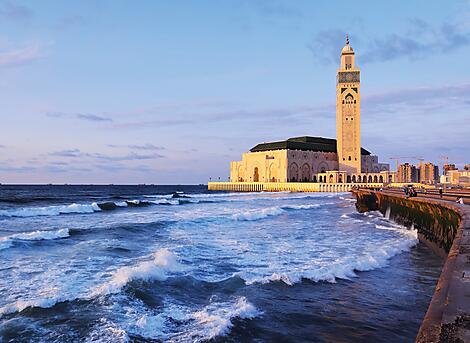
Situated along the Atlantic coast, Casablanca is the very image of contemporary Morocco: Westernised and cosmopolitan. Exploring the architectural heritage of the âWhite Cityâ tells you all you need to know about its cultural and historical diversity. Breathtaking highlights include the majestic Hassan II Mosque, considered to be one of the greatest religious buildings in the world. You can explore the narrow alleys of the old Medina, which stand in sharp contrast to the surrounding modern architecture. To get the most from the seafront, the Ain Diab Corniche provides a pleasant place for strolling with easy access to the beach.
Day 6 - At sea
During your journey at sea, make the most of the many services and activities on board. Treat yourself to a moment of relaxation in the spa or stay in shape in the fitness centre. Depending on the season, let yourself be tempted by the swimming pool or a spot of sunbathing. This journey without a port of call will also be an opportunity to enjoy the conferences or shows proposed on board, depending on the activities offered, or to do some shopping in the boutique or to meet the PONANT photographers in their dedicated space. As for lovers of the open sea, they will be able to visit the shipâs upper deck to admire the spectacle of the waves and perhaps be lucky enough to observe marine species. A truly enchanted interlude, combining comfort, rest and entertainment.
Day 7-8 - Funchal, Madeira
This attractive capital of Madeira is located on the southern coast of the island. The walkways of the old town are lined with azulejos, or multi-coloured mosaics. If you follow these patterns, theyâll lead you to the appetising Mercado dos Lavradores market stands, the Frederico de Freitas museum, and the golden panelling of the Cathedral de la Sé. Along the waterfront, the palm tree-shaded promenade leads you to the teleféricos de Monte, Madeira's cable cars. Its panoramic cabins transport you over the city to top of Monte, where you can see the picturesque botanical garden.
Day 9 - Santa Cruz de La Palma, Canary Islands
The capital of the island of Palma, Santa Cruz de la Palma is the pearl of the Canaries. Founded in 1493 by the conquistador Alonso Fernandez de Lugo, the city has preserved a large and atypical architectural heritage from its colonial past, with its traditional Canarian houses adorned with brightly coloured wooden balconies, its cobbled streets, its sumptuous palaces and its numerous religious buildings. The Santa Catalina Castle is the symbol of the city. This 16th century military fortification helped defend the city from repeated attacks by French privateers.
2 available excursions
Above the clouds of La Palma, Natural treasures of northern La Palma
Day 10 - Arrecife de Lanzarote, Canary Islands
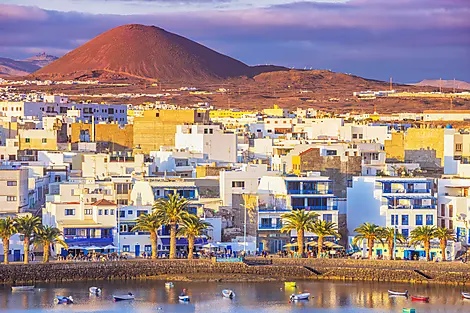
Established on a coast sprinkled with cliffs, Arrecife has a pleasant beach and a lagoon full of charm, Charca of San Ginés, where the fishermen anchor their boats. The city also proposes places fed by history and culture, such as the castle San Gabriel, former fort of defense of the city.
Day 11 - Las Palmas de Gran Canaria, Canary Islands
A stopover of sunny climes, Las Palmas is located on the north-east coast of Gran Canaria. A few streets away from Puerto de la Luz port, youâll discover the vast Las Canteras beach, bordered with the townâs characteristic palms. Youâll find these palms are all over Las Palmas, in the streets and squares, especially on the plaza de Santa Ana in the heart of the historical district. It feels like youâve travelled back in time here, as you stand looking at the tall houses beside the Santa Ana cathedral. Very close by, you can visit the Casa de Colón, a museum dedicated to the famous explorer. The museum is housed in the palace belonging to the islandâs former governor. Chances are, youâll be drawn to the covered Vegueta market to partake in some daily life along with the locals and taste some unfamiliar dishes.
Atlantic Odyssey from the Canary Islands to the Iberian Peninsula
Cruise Line: Ponant Cruise
Ship: Le-Bougainville
Sailing Dates: Nov 07 2026 | Nov 25 2026 | Oct 13 2027 | Nov 01 2027 | Nov 15 2027
Port: Las Palmas de Gran Canaria, Canary Islands - Malaga
Atlantic Odyssey from the Canary Islands to the Iberian Peninsula
Ports of Call & Excursions
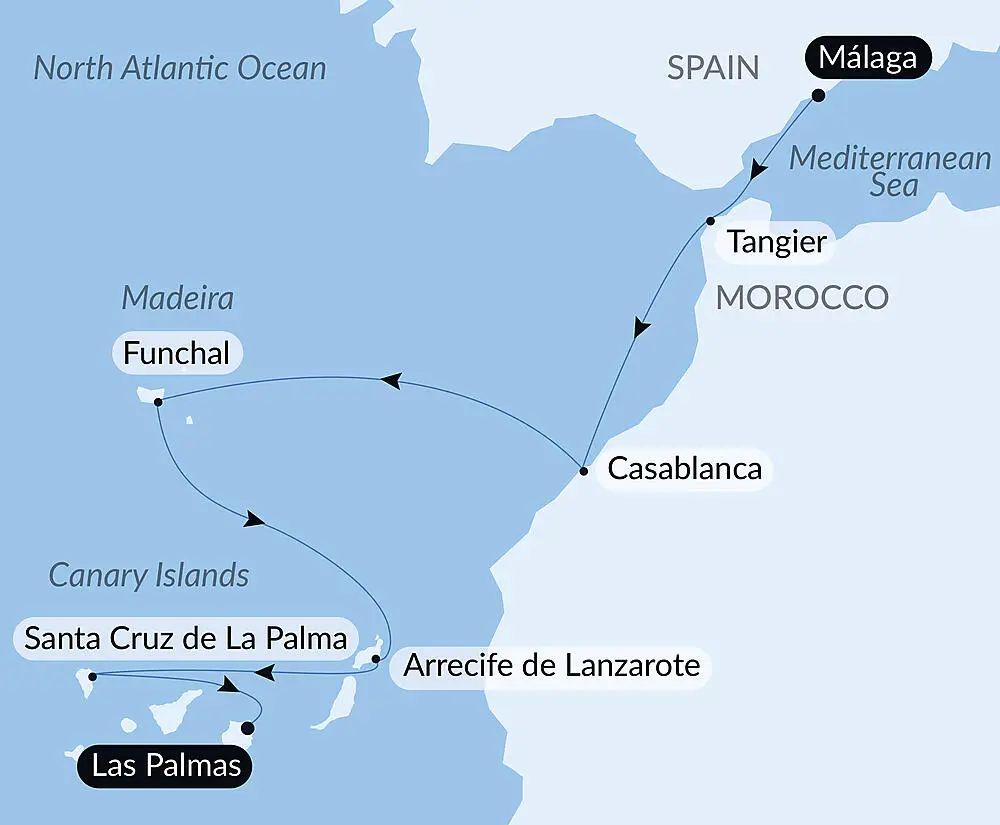
Day 1 - Las Palmas de Gran Canaria, Canary Islands
A stopover of sunny climes, Las Palmas is located on the north-east coast of Gran Canaria. A few streets away from Puerto de la Luz port, youâll discover the vast Las Canteras beach, bordered with the townâs characteristic palms. Youâll find these palms are all over Las Palmas, in the streets and squares, especially on the plaza de Santa Ana in the heart of the historical district. It feels like youâve travelled back in time here, as you stand looking at the tall houses beside the Santa Ana cathedral. Very close by, you can visit the Casa de Colón, a museum dedicated to the famous explorer. The museum is housed in the palace belonging to the islandâs former governor. Chances are, youâll be drawn to the covered Vegueta market to partake in some daily life along with the locals and taste some unfamiliar dishes.
Day 2 - Arrecife de Lanzarote, Canary Islands
Established on a coast sprinkled with cliffs, Arrecife has a pleasant beach and a lagoon full of charm, Charca of San Ginés, where the fishermen anchor their boats. The city also proposes places fed by history and culture, such as the castle San Gabriel, former fort of defense of the city.
Day 3 - San Sebastian de la Gomera, Canary Islands
La Gomera rises from the water like a mirage. This volcanic island in the Canaries features jagged cliffs, valleys covered in palm trees, and beaches of black sand bathing in crystal-clear waters. But its greatest treasure lies at its heart: an exceptional laurisilva, a laurel forest whose prehistoric vegetation has been preserved thanks to the microclimate on the island. This unique ecosystem, common a few million years ago in the tropics, forms the Garajonay National Park, listed as a UNESCO World Heritage Site. Like the birds, the Guanches contribute to the poetry of the island too, with their whistled language called Silbo. This magical-sounding, melodious language is also listed as World Heritage by UNESCO.
Day 4 - Santa Cruz de Tenerife, Canary Islands
The capital city of Tenerife is located on the north-east coast of the island. Close to the port is the monumental Plaza de España, bedecked with a fountain and plant sculptures. Around the plaza, you can admire the white marble Triunfo de la Candelaria obelisk, the historic casino of Santa Cruz and the majestic Guimerà theatre. Not far from here, the picturesque Iglesia de la Concepción church features the characteristic traits of Canaries architecture.
Day 5Â Â - 6 - Funchal, Madeira
This attractive capital of Madeira is located on the southern coast of the island. The walkways of the old town are lined with azulejos, or multi-coloured mosaics. If you follow these patterns, theyâll lead you to the appetising Mercado dos Lavradores market stands, the Frederico de Freitas museum, and the golden panelling of the Cathedral de la Sé. Along the waterfront, the palm tree-shaded promenade leads you to the teleféricos de Monte, Madeira's cable cars. Its panoramic cabins transport you over the city to top of Monte, where you can see the picturesque botanical garden.
Day 7 - At sea
During your journey at sea, make the most of the many services and activities on board. Treat yourself to a moment of relaxation in the spa or stay in shape in the fitness centre. Depending on the season, let yourself be tempted by the swimming pool or a spot of sunbathing. This journey without a port of call will also be an opportunity to enjoy the conferences or shows proposed on board, depending on the activities offered, or to do some shopping in the boutique or to meet the PONANT photographers in their dedicated space. As for lovers of the open sea, they will be able to visit the shipâs upper deck to admire the spectacle of the waves and perhaps be lucky enough to observe marine species. A truly enchanted interlude, combining comfort, rest and entertainment.
Day 8 - Tangier
Nestling in the Bay of Tangier, this bewitching Moroccan city lies at the northwestern tip of the country, along the famous Strait of Gibraltar. Following in the footsteps of the writers and artists inspired and seduced by the cityâs climate and setting, youâll love its rich landscapes and multicultural charm. Youâll instantly understand as soon as you set foot in the heart of the Medina. An architectural masterpiece, the Kasbah is your gateway to the Sultanâs Palace and its gardens. If you prefer beaches to museums, you can relax just a few minutes from the city on the beautiful sweep of sand bathed by the Atlantic Ocean.
Day 9 - Malaga
A historical and festive town, Malaga is located in Andalusia, on the Costa del Sol. Between the marina and the beaches, the seaside promenade of La Farola offers an ideal setting for strolling and relaxing. Set slightly further back, the Malagueta bullring is one of the emblematic sites of the city. From the hill overlooking the old town, one can see Gibralfaro castle and the Alcazaba, two fortified ensembles rising out from the cypresses and maritime pines. To visit Pablo Picassoâs birthplace, you will go first to the courtly plaza de la Merced. A few streets back from here, you can explore the museum dedicated to the artist, in the Buenavista palace.
Cruising the Caribbean's Windward Islands - with Smithsonian Journeys
Cruise Line: Ponant Cruise
Ship: Le-Bougainville| Le-Champlain
Sailing Dates: Feb 17 2027 | Feb 23 2028
Port: Vieux Fort - Vieux Fort
Cruising the Caribbean's Windward Islands - with Smithsonian Journeys
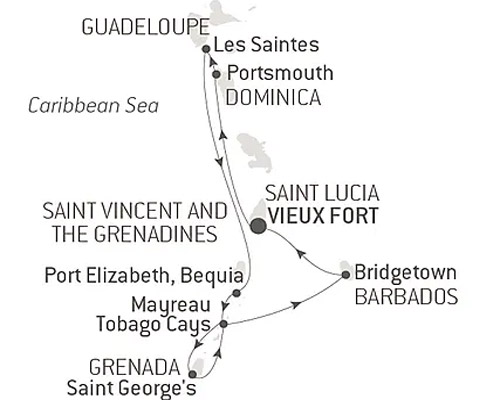
Day 1 - Vieux Fort
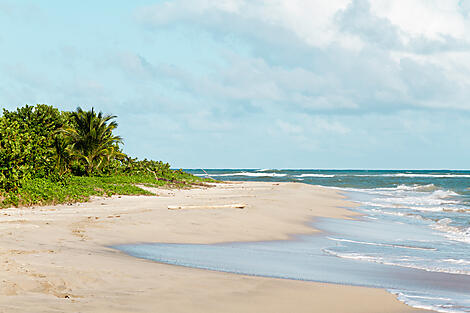
Vieux Fort lies to the far south of the island of Saint Lucia. This town, which was a strategic location in the sugar industry from the 18th to the 19th centuries, derives its authenticity from its rich history. Renowned for its LCVIF and beaches typical of the Caribbean, it is also famous for its mythical Moule-a-Chique Lighthouse. Built in 1912 and standing 200 metres (656 feet) tall, this lighthouse will be visible as soon as you arrive on the Saint Lucian coastlines. The beauty of Vieux Fort is also reflected in the underwater kingdom that surrounds it. It is home to an abundance of marine species, such as eagle rays or leatherback sea turtles. Vieux Fort is most likely to evoke feelings of enchantment and it reserves a soothing welcome, paced by the rhythm of its waves, for each of its visitors.
Day 2 - Portsmouth
With its mountainous terrain, vast tropical forest, hot springs, rivers and spectacular waterfalls, Dominica is undoubtedly the wildest island in the Caribbean. Protected by several national parks, this little-known land, located in the heart of the Caribbean Sea, between Guadeloupe and Martinique, will inspire adventure and exploration. During your port of call, do not miss out on discovering the enchanting landscapes of the Indian River: navigating through this dense mangrove, in which creepers, ferns, forest trees and giant roots are interweaved, is a magical experience, a fascinating voyage into the heart of an almost mystical natural universe.
Day 3- Les Saintes
During the feast of All Saints in 1493, Christopher Columbus discovered this archipelago of nine islands that he named "The Saints". Today, only two of them are inhabited. Terre de Haut, in the east, is dominated by the Morne Mire hill; at the summit stands Fort Napoleon, paying homage to the islands' history. In the heart of the botanical garden, shared by iguanas and cacti, there is an exceptional view of the Baie des Saintes, one of the most beautiful in the world. The long shady beach of Pompierre, where it is forbidden to drop anchor, is a peaceful place for a swim, while Pain de Sucre Beach offers wonderful opportunities for snorkelling. On the island, donât forget to taste the local speciality, the âtourment dâamourâ, a cake made with coconut.
Day 4-5 - Port Elizabeth, Bequia Island
In the heart of the Caribbean, Bequia is the second-largest of 32 islands that make up the country of St Vincent and the Grenadines. You will love the lively and picturesque atmosphere of Port Elizabeth, the islandâs main town. From the port, a promenade lined with beautiful traditional houses, landscaped gardens and small restaurants runs along the shoreline. It leads to Princess Margaret Beach, a wild beach where Princess Margaret herself has stayed and which seems to emerge directly from the tropical forest. From rainforest to lush meadows and long stretches of sand, Bequia will offer you a natural setting that is conducive to lovely walks and to spending time on the beach.
Day 5- Mayreau Island
Among the string of paradisiac islands with their sandy beaches that form the Saint Vincent and the Grenadines archipelago, Mayreau is the smallest. Its peaceful and idyllic atmosphere, far from the madding crowd, invites you to relax. On shore, enjoy a shaded and fully equipped beach from which to go snorkelling if youâd like to observe the colourful fish around the coral sitting at the foot of the rocks that stretch across the bay.
Day 6 - Saint George's, Grenada
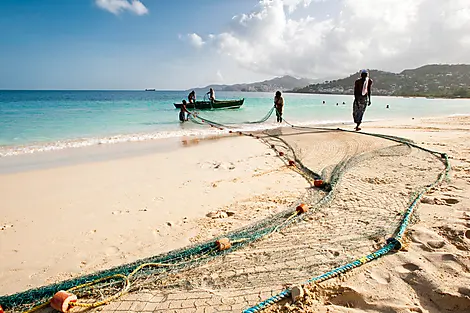
Capital of French Polynesia, the city of Papeete is on the north-west coast of the island of Tahiti. Youâll find a relaxed atmosphere here,where urban buzz combines with the legendary laid-back Polynesian lifestyle. Culture is not lacking. You can enjoy sites narrating the history of the archipelago, including the colonial cathedral and the Maison de la reine Marau. The Vaipahi public gardens will win you over by their abundant plant-life. The large municipal market offers local specialities: fresh fruit, spices and all kinds of fish abound on their stalls.
Day 7 - Tobago Cays
Scattered between St Vincent and Grenada, the Tobago Cays comprises five little islands: Petit Rameau, Petit Bateau, Baradal, Petit Tabac and Jamesby. This rosary of uninhabited cays in the southern West Indies is a marine park whose turquoise lagoons provide a home and safe haven for some outstanding marine fauna, including peaceful green turtles. Girded and united by a coral reef, these secluded islands are a peaceful paradise for divers, swimmers and snorkellers.
Day 8 - Bridgetown
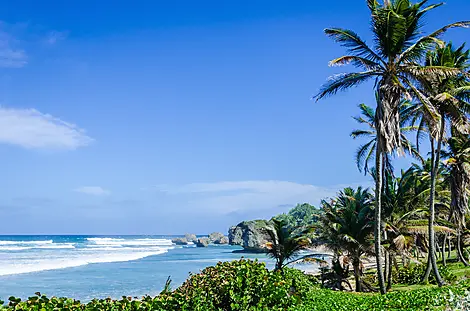
Bridgetown, the bustling capital of Barbados, is located on the island's south-west coast. Its historic quarters are UNESCO World Heritage sites and contain prime examples of British colonial architecture, which you will see between the postcard-perfect fishing harbour and St Ann's Fort. Streets shaded by palms and flamboyant trees lead you to the Anglican cathedral church of St Michael, built from coral stone, the Barbados Museum and George Washington House, a Georgian-style mansion. There'll be plenty of time to relax on the Caribbean beaches of Carlisle Bay, a few paces from the old town centre.
Day 9 - Vieux Fort
Vieux Fort lies to the far south of the island of Saint Lucia. This town, which was a strategic location in the sugar industry from the 18th to the 19th centuries, derives its authenticity from its rich history. Renowned for its LCVIF and beaches typical of the Caribbean, it is also famous for its mythical Moule-a-Chique Lighthouse. Built in 1912 and standing 200 metres (656 feet) tall, this lighthouse will be visible as soon as you arrive on the Saint Lucian coastlines. The beauty of Vieux Fort is also reflected in the underwater kingdom that surrounds it. It is home to an abundance of marine species, such as eagle rays or leatherback sea turtles. Vieux Fort is most likely to evoke feelings of enchantment and it reserves a soothing welcome, paced by the rhythm of its waves, for each of its visitors.
The Canaries, lands of contrast
Cruise Line: Ponant Cruise
Ship: Le-Bellot | Le-Laperouse
Sailing Dates: Oct 25 2026
Port: Las Palmas de Gran Canaria, Canary Islands - Las Palmas de Gran Canaria, Canary Islands
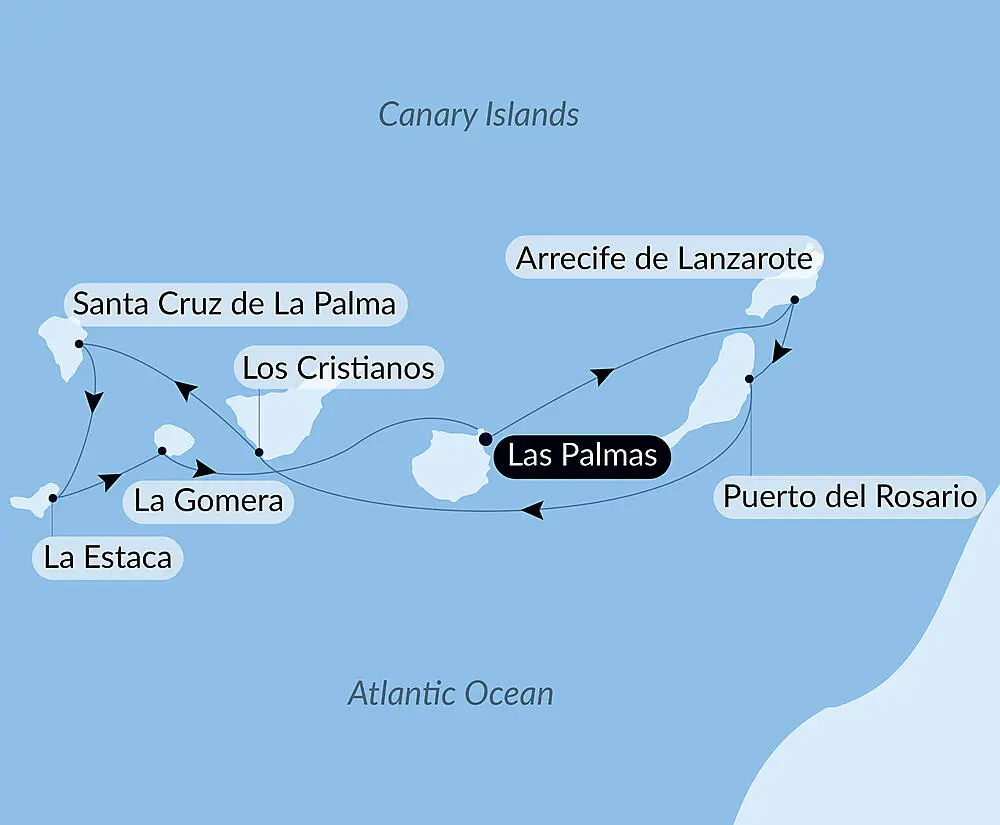
The Canaries, lands of contrast
Ports of Call & Excursions
Day 1 - Las Palmas de Gran Canaria, Canary Islands
A stopover of sunny climes, Las Palmas is located on the north-east coast of Gran Canaria. A few streets away from Puerto de la Luz port, youâll discover the vast Las Canteras beach, bordered with the townâs characteristic palms. Youâll find these palms are all over Las Palmas, in the streets and squares, especially on the plaza de Santa Ana in the heart of the historical district. It feels like youâve travelled back in time here, as you stand looking at the tall houses beside the Santa Ana cathedral. Very close by, you can visit the Casa de Colón, a museum dedicated to the famous explorer. The museum is housed in the palace belonging to the islandâs former governor. Chances are, youâll be drawn to the covered Vegueta market to partake in some daily life along with the locals and taste some unfamiliar dishes.
Day 2 - Arrecife de Lanzarote, Canary Islands
Established on a coast sprinkled with cliffs, Arrecife has a pleasant beach and a lagoon full of charm, Charca of San Ginés, where the fishermen anchor their boats. The city also proposes places fed by history and culture, such as the castle San Gabriel, former fort of defense of the city.
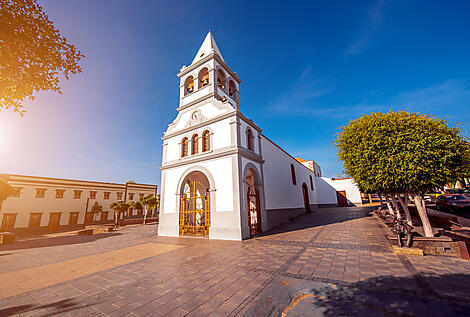
Day 3 - Puerto del Rosario, Canary Islands
Surrounded by turquoise waters of the Atlantic Ocean, the capital of Fuerteventura island is located in the autonomous community of the Canary Islands. Harbour city, Puerto Del Rosario will charm you with its storekeepers, its white houses and picturesque sea front.
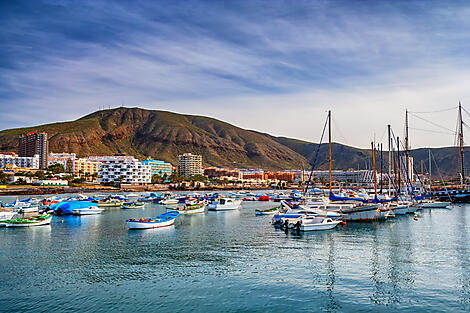
Day 4 - Los Cristianos, Canary Islands
Discover the charming village of Los Cristianos, in the south of the island of Tenerife. While the former fishing town is edged by some beautiful fine-sand beaches, it is also known for the two protected nature reserves that surround it â Mount Chayofita and Mount Guaza. Both are ideal for hiking and for admiring the captivating views, facing the North Atlantic. Authentic and festive, Los Cristianos is also famous for its many water-based activities, ranging from scuba diving to snorkelling and water sports.
Day 5 - Santa Cruz de La Palma, Canary Islands
The capital of the island of Palma, Santa Cruz de la Palma is the pearl of the Canaries. Founded in 1493 by the conquistador Alonso Fernandez de Lugo, the city has preserved a large and atypical architectural heritage from its colonial past, with its traditional Canarian houses adorned with brightly coloured wooden balconies, its cobbled streets, its sumptuous palaces and its numerous religious buildings. The Santa Catalina Castle is the symbol of the city. This 16th century military fortification helped defend the city from repeated attacks by French privateers.
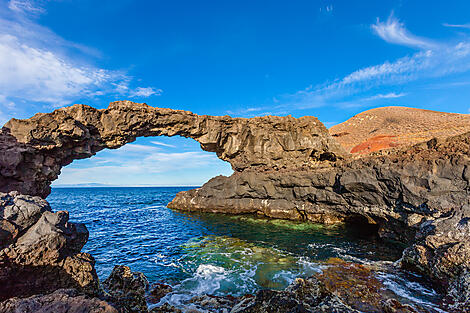
Day 6 - La Estaca, Canary Islands
With its particularly pleasant climate, El Hierro, the youngest of the Canary Islands, invites you to discover enchanting panoramas in an atmosphere of unrivalled calm and serenity. You will be captivated by the untouched natural environment, featuring a majestic volcano, lush forests, sheer cliffs and natural pools. Besides the treasures on land, you will also have the chance to discover its underwater environment. Teeming with life, it is a paradise for diving enthusiasts, since the island is home to the Punta de La Restinga Marine Reserve, its thousands of colourful fish and stunning underwater volcanic landscapes.
Day 7Â Â - 8 - Las Palmas de Gran Canaria, Canary Islands
A stopover of sunny climes, Las Palmas is located on the north-east coast of Gran Canaria. A few streets away from Puerto de la Luz port, youâll discover the vast Las Canteras beach, bordered with the townâs characteristic palms. Youâll find these palms are all over Las Palmas, in the streets and squares, especially on the plaza de Santa Ana in the heart of the historical district. It feels like youâve travelled back in time here, as you stand looking at the tall houses beside the Santa Ana cathedral. Very close by, you can visit the Casa de Colón, a museum dedicated to the famous explorer. The museum is housed in the palace belonging to the islandâs former governor. Chances are, youâll be drawn to the covered Vegueta market to partake in some daily life along with the locals and taste some unfamiliar dishes.
*Prices are per person, based on double occupancy. Prices do not include Government Fees & Taxes. Pricing and availability subject to change without notice. STIC Travel Group reserves the right to refuse or honor any prices / sailings that are erroneously printed or quoted. Terms & Conditions apply.

We Accept: 
Secured By: 
Copyright © STIC GSA Services Pvt. Ltd. All rights reserved