Expert guidance for your cruise vacation!
Let us connect you with our cruise expert to help you to plan the best vacation at the lowest possible price. For fastest service, call us at +91 9920688575
Tahiti 11-Nights
Cruise Line: Variety Cruises
Ship: Panorama II
Sailing Dates: Jan 19 2026 | Mar 02 2026 | Apr 06 2026 | May 11 2026 | Jul 13 2026 | Aug 10 2026 | Sep 14 2026 | Jan 04 2027 | Feb 01 2027 | Mar 08 2027 | Apr 05 2027 | May 03 2027 | May 31 2027 | Jun 21 2027 | Jul 19 2027 | Aug 23 2027 | Sep 13 2027 | Oct 11 2027 | Nov 08 2027 | Dec 27 2027
Port: Papeete to Papeete
Tahiti 11-Nights
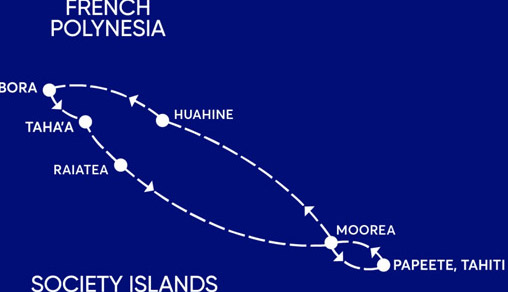
Day 1
PAPEETE PORT/TAHITI, SOCIETY ISLANDS
Papeete,Tahiti (3PM).
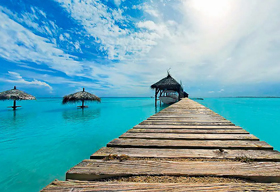
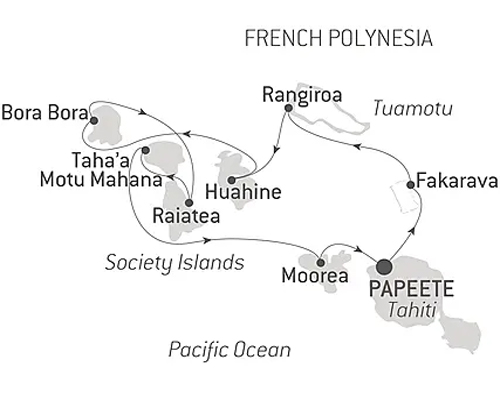
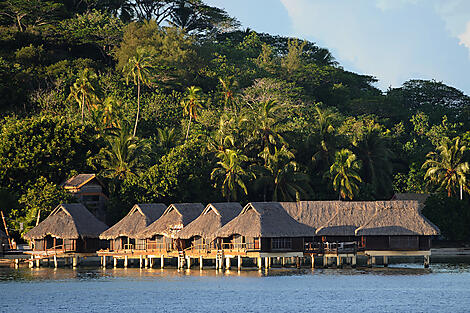
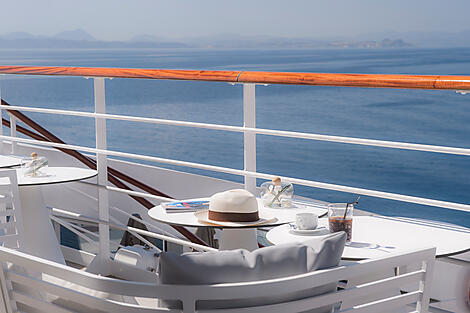
Your adventure begins at the picturesque Papeete port, Society Islands, where you'll board the sleek beauty M/Y Panorama II. Boarding Time: 3pm As you step on board, immerse yourself in a world of ambience and hospitality with a gracious welcome, a refreshing drink, and a delectable Welcome Dinner that sets the perfect tone for your journey ahead. As twilight descends, we'll bid farewell to Papeete and set sail for the enchanting island of Moorea.
Day 2
MO'OREA, SOCIETY ISLANDS
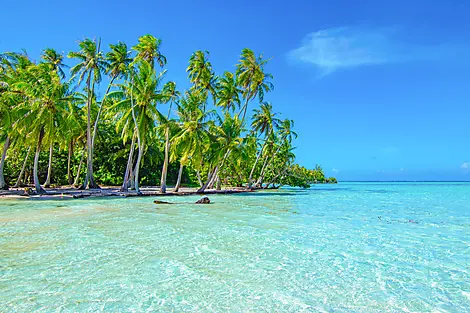
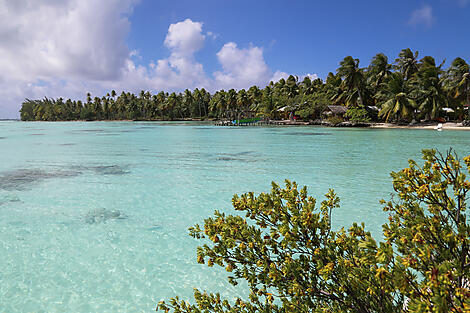
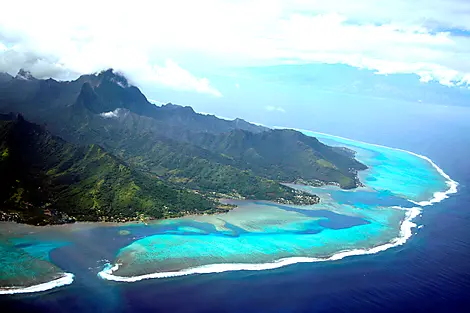
Moorea, often referred to as "The Magical Island," is said to have been the muse behind the mythical Bali Hai from James Michener's Tales of the South Pacific, and it stands as one of the most breathtaking gems in French Polynesia. As we lay at anchor in Moorea, you will enjoy swimming, snorkeling and watersports from our swimming platform in her beautiful sapphire waters! A delicious lunch will boost your energy for your afternoon exploration of the island! Join us on an enchanting 3.5-hour island tour (INCLUDED IN THE CRUISE FARES) where your knowledgeable guide will regale you with captivating tales of Moorea's rich history, vibrant culture, and diverse ecology. Traverse through the lush Opunohu Valley, ascend the slopes of Mt. Tohi'e'a, and meander past the picturesque Cook's and Opunohu Bays. After this delightful and included tour, relish in some free time to explore Moorea at your leisure before we set sail for our next destination,Huahine.
Day 3
HUAHINE, SOCIETY ISLANDS
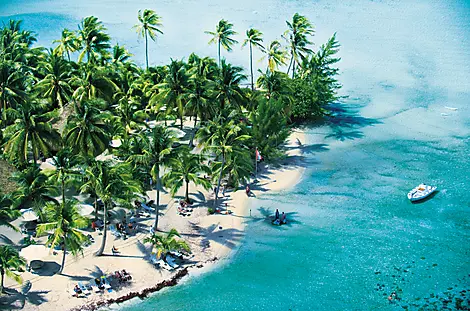
Huahine, often likened to the mythical Garden of Eden, emerges as a vast tropical paradise teeming with life. Its lush expanses are adorned with coconut groves, vanilla orchids, banana plantations, breadfruit trees, and sprawling watermelon fields, creating a tapestry of vibrant colors and fragrant scents Today offers the freedom to explore Huahine at your own pace or partake in our meticulously crafted optional Private Motu Picnic and Snorkeling tour: Board the comfortable, traditional outrigger canoe for a cruise to Huahine. Along the way your guides will share the island`s history, sacred legends and provide insight into island life. Then there is a stop in the coral gardens for snorkeling among the many species of tropical fish. After working up a good appetite, you will enjoy a delectable picnic on a white, sandy motu. On the way back stop at the aquarium to meet the fish and reef sharks. Overnight in Huahine.
Day 4
HUAHINE, SOCIETY ISLANDS
A single day scarcely does justice to the allure of Huahine! Today, you have the freedom to explore Huahine at your leisure or opt for Our optional tour taking us in many of the island's temples and small villages offering a chance to see and feed the sacred blue-eyed eels of Faie Bay, as well as visit a vanilla plantation. If you're a keen cook, we recommend you purchase vanilla beans while here; you wonât find tastier - or cheaper! - versions elsewhere. Overnight at sea to Bora Bora.
Day 5
BORA BORA, SOCIETY ISLANDS
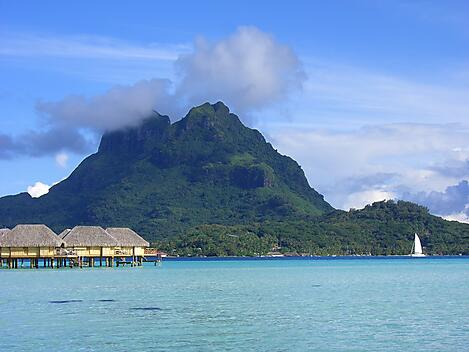
Without a doubt, Bora Bora reigns supreme as the crown jewel of the South Pacific, holding the spotlight as French Polynesia's undisputed star. Today, we've arranged for you to experience the essence of Bora Bora with a unique excursion aboard Le Truck, a vibrant journey lasting approximately 2.5 hours (included in cruise fares). Climb aboard this colorful chariot as it guides you through Bora Bora's picturesque landscapes. Immerse yourself in the rich tapestry of Tahitian history, traditions, and cultures as your knowledgeable guide narrates the 22-mile road encircling this legendary island. Explore the villages of Farepiti, Faanui, and Anau, each adorned with ancient "Marae" shrouded in mystery. And as your adventure unfolds, be captivated by the breathtaking vistas from Matira Point, a vantage point offering unparalleled panoramas of paradise. Overnight in Bora Bora.
Day 6
BORA BORA, SOCIETY ISLANDS
One mere day in Bora Bora simply doesn't suffice! As you descend, camera in hand, prepare for the awe-inspiring moment when the iconic Mount Otemanu graces your view Once Bora Bora captivates your gaze, it's a memory that stays etched in your heart forever. Therefore, ensure your second day in Bora Bora is brimming with unforgettable moments that will linger with you for years to come. Whether you choose to explore at your own pace or join us on one of our meticulously crafted optional Shore Excursions, seize the opportunity to create memories that will last a lifetime. Overnight at sea to Taha'a.
Day 7
TAHA'A, SOCIETY ISLANDS
Taha'a fondly referred to as Vanilla Island, boasts an exquisite natural landscape. Its verdant valleys are adorned with lush banana, watermelon, and coconut plantations. Resembling a flower in shape, the island serves as a sprawling sanctuary for the prized Tahitian vanilla orchid. Taha'a shares a continuous coral reef and crystal-clear lagoon, enhancing its allure as an idyllic retreat. As we lay at anchor in Taha'a, you will enjoy swimming, snorkeling and watersports from our swimming platform in her beautiful sapphire waters! Today, guests can opt for a leisurely exploration or embark on our enticing Vanilla Plantation & Rhumerie optional Shore Excursion, promising a delightful journey into Taha'a's aromatic world. Overnight in Taha'a.
Day 8
RAIATEA, SOCIETY ISLANDS
With its name translating to "faraway heaven," Raiatea once stood as the paramount cultural and religious hub of the Society Islands. Today, Raiatea is believed to be a sacred resting place for the spirits of these ancestors, drawing pilgrims seeking spiritual connection. Embark on our enriching Shore Excursion to the Faaroa River with a Motu Beach Break (included in cruise fares), where you'll journey aboard a traditional Polynesian outrigger canoe. Arriving at a serene motu, or islet, immerse yourself in the warm embrace of the sea and bask in the rejuvenating sun, a perfect interlude to your Raiatea exploration. Overnight in Raiatea.
Day 9
RAIATEA, SOCIETY ISLANDS
Immerse yourself in the captivating tales and ancient legends, beckoning you to uncover its mysteries. Whether you yearn to traverse its verdant jungles or plunge into its sapphire-blue waters, Raiatea promises an enriching journey. Savor the freedom to craft your day at your leisure, or opt to join one of our tailored optional Shore Excursions, curated to offer a deeper immersion into the island's unique ambiance, allowing you to embrace the essence of Mana. After dinner, set sail for Moorea.
Day 10
MO'OREA, SOCIETY ISLANDS
Today, our voyage brings us back to Moorea. It's no wonder that Moorea continues to captivate; it's a true marvel of nature. Today grants you the freedom to explore at your own pace or partake in one of our optional shore excursions. Overnight at sea to Papeete.
Day 11
PAPEETE PORT/TAHITI, SOCIETY ISLANDS
As the morning sun graces Papeete Port. Breakfast on board , before disembarkation at 09:00AM Our dedicated Concierge stands ready to assist with any final arrangements, ensuring your journey concludes seamlessly.
11 Days - Stars of the Greater Antilles
Cruise Line: Windstar Cruise
Ship: Wind Surf
Sailing Dates: Feb 17 2026
Port: Cozumel to St. Maarten
11 Days - Stars of the Greater Antilles
11 Days - Alaskan Coastal Adventures & Denali Discovery Cruise Tour - Star Seeker
Cruise Line: Windstar Cruise
Ship: Star Seeker
Sailing Dates: May 07 2026 | May 11 2026 | Jul 04 2026 | Aug 07 2026 | Jul 02 2026
Port: Vancouver to Juneau
11 Days - Alaskan Coastal Adventures & Denali Discovery Cruise Tour - Star Seeker
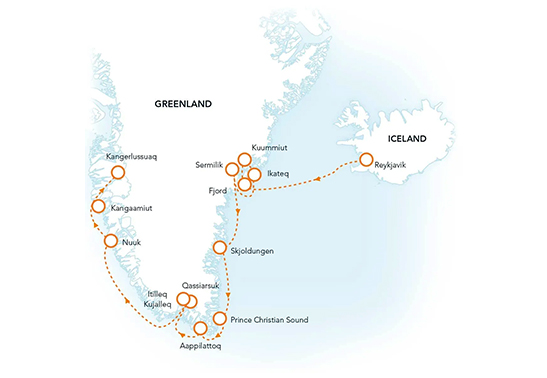
Greenland Aurora Explorer
Cruise Line: Albatros Expeditions
Ship: Ocean Victory
Sailing Dates: Aug 15 2026
Port: Kangerlussuaq to Reykjavik, Iceland
Greenland Aurora Explorer
Day 1
Kangerlussuaq, Embarkation
On the first day of our expedition, we arrive in Kangerlussuaq on the west coast of Greenland, the hub for travel in this vast island.
Situated at the head of a 160km long fjord of the same name, Kangerlussuaq is Greenland's only inland town, and was established as Sondrestrom Air Base/Bluie West-8 by American troops in 1941. Existing largely to service the airport, the town of Kangerlussuaq itself retains a strong 'Cold War' feeling, hinting at its extensive American military use before it was signed over to the Greenlandic Government in 1992. Today Kangerlussuaq is Greenland's largest air hub, with flights arriving daily from Denmark and around the country. It's stable climate and lack of fog makes it ideal as an airport, but it exhibits some of the most varied temperatures in the country, commonly registering the highest summer and lowest winter temperatures due to its inland location.
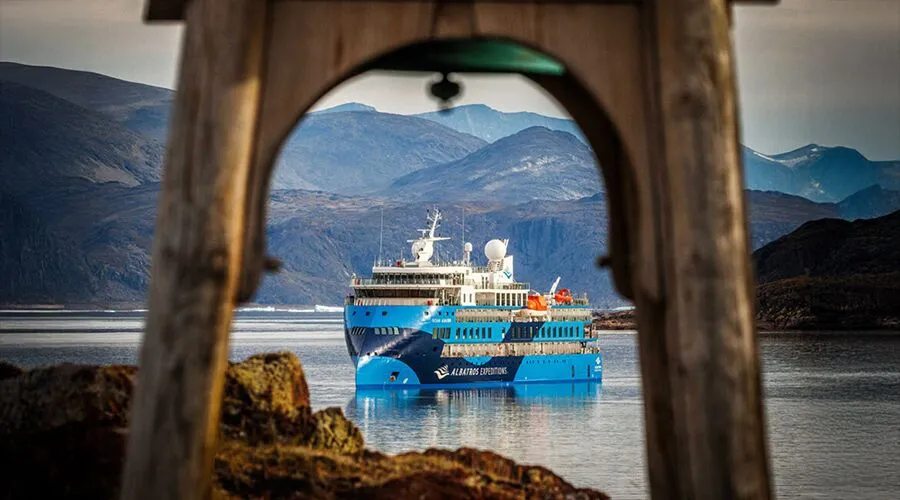
Upon arrival in Kangerlussuaq, you will be transported to the small port located west of the airport, where the Ocean Albatros awaits at anchor. Zodiacs will transfer us the short distance to the ship, where you will be checked in to your stateroom. After the mandatory safety drill, enjoy dinner and a glass of champagne as we set sail a course for adventure through the 160-kilometre Kangerlussuaq fjord.
Day 2
Kangaamiut and Evighedsfjorden
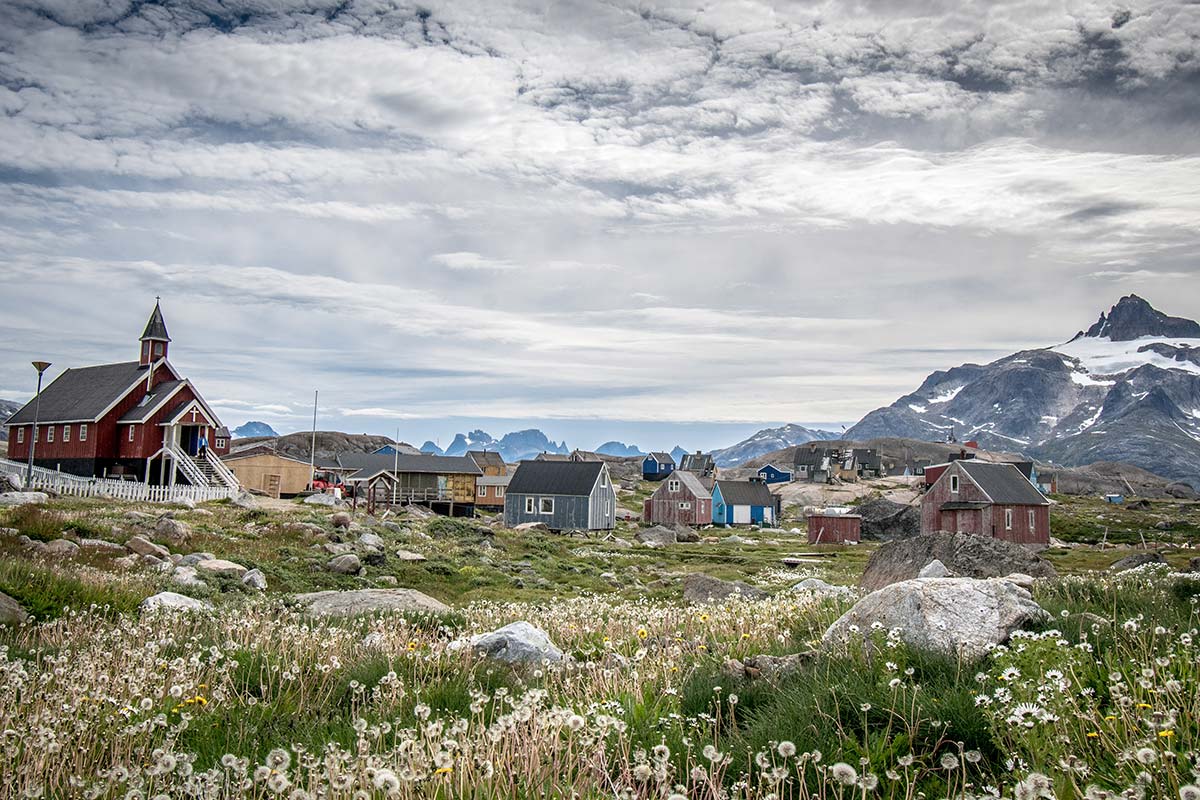
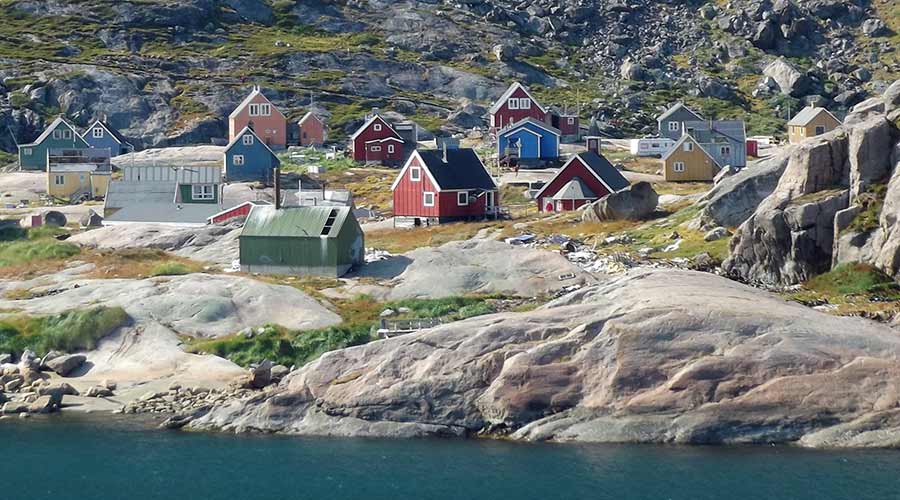
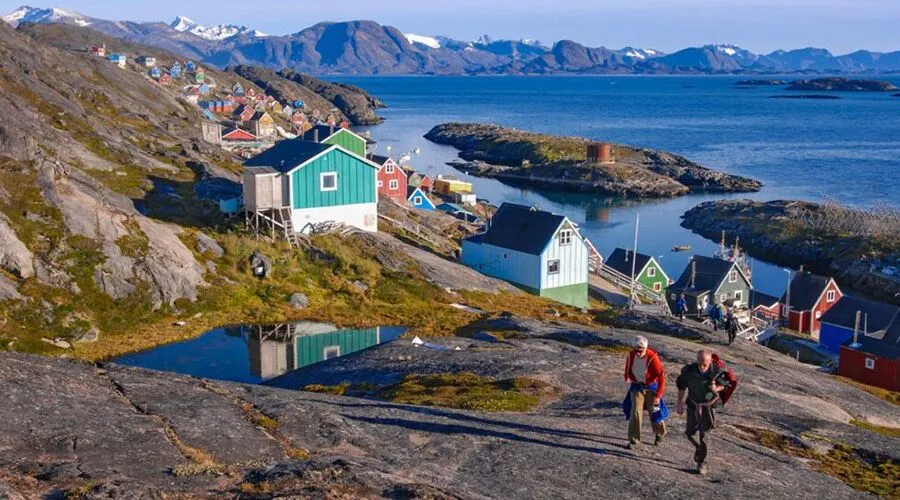
On the first full day of our expedition, we will arrive at the small village of Kangaamiut, an incredibly picturesque settlement in Greenlandâs central Qeqqata region. Surrounded by rich cold waters and a vast back country brimming with game, life in Kangaamiut moves at a slower pace, and locals still live a largely traditional lifestyle, surviving by hunting and fishing. Hike to the heliport atop the hill for stunning views over the town and the surrounding fjordlands, or meet the friendly local people during a display of traditional clothing, foods, and seal-flensing. The artists of Kangaamiut are well-known throughout Greenland, and some of the locals' most splendid work can be viewed in the town's small museum.
In the afternoon, we will sail inland into Evighedsfjorden/Kangerlussuatsiaq, one of the many deep fjords carved between the steep mountains of this region. The Danish name 'Evighedsfjorden' means 'The Eternity Fjord', referring to the vast size of the inlet, while the Greenlandic name 'Kangerlussuatsiaq' translates as 'The Rather Large Fjord' - something of an understatement! Evighedsfjorden stretches around 100km into the glacier-clad mountains, bisecting the large ice cap which overlies much of the land between Nuuk and Sisimiut - Greenland's two largest cities. We will aim to explore on a Zodiac cruise in front of the Evigheds Glacier, which flows into the fjord from the Maniitsoq Ice Cap above. Watch for calvings from the glacier, and guillemots and kittiwakes on the nearby bird cliffs.
DAY 3
Nuuk, Capital of Greenland
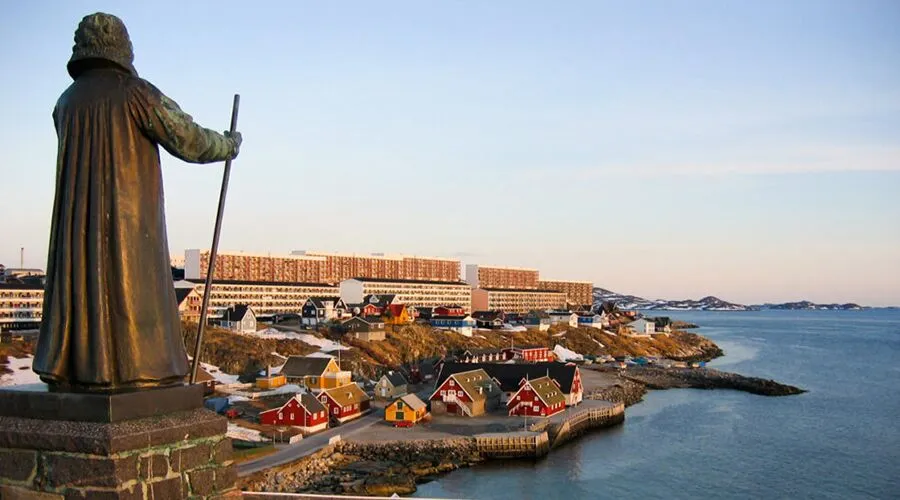
A mixture of skyscrapers and traditional wooden houses, the quaint and the cosmopolitan, Nuuk is a city of contrasts. The vibrant bustling capital of Greenland, Nuuk feels much larger than itâs 19,000 inhabitants, and offers a wealth of experiences to visitors. The calm fjords around Nuuk have been inhabited by Paleo-Inuit cultures since at least 2200BCE, and archaeological evidnece indicates waves of migration through the area as ancient hunters followed migrating prey. Around the year 100CE, Norse colonist from Iceland etablished the Western Settlement in the green meadows of Nuuk Fjord; these settlers mysteriously disappeared several hundred years later leaving the island to the Inuit, who were far better equipped to live in Greenland's harsh environment.
The next Scandinavian to visit the area was Hans Egede, the controversial Danish missionary who 'rediscovered' Greenland, founding Nuuk as Godthåb ("Good Hope") in 1728. Danish initiatives to modernise Greenland in the 1950s left a significant mark on Nuuk. While they brought significant improvements to the city's infrastructure, the many large apartment blocks in the city attest to rapid (and sometimes haphazard) urbanisation. In 1979, the Home Rule Act created the Greenlandic Parliament (Inatsisartut), and proclaimed Nuuk the capital. The city's population continues to rapidly grow, with new suburbs being constructed beneath Ukkusissat, the mountain which looms to the east of the city.
Nuuk offers a huge amount to the discerning visitor; larger than any other city in Greenland, Nuuk has a bustling cosmopolitan vibe, and hosts some of Greenland's best attractions. Swing by Kolonihavn district to visit the Greenlandic National Museum, a treasure trove of history stretching back to the first inhabitants of this icy island - including artefacts from the Paleo-Inuit and Norse periods, as well as the spellbinding Qilakistoq mummies. Explore Greenlandic culture at Katuaq, the city's cultural centre and an architectural marvel; shop for authentic Greenlandic artworks in the city's many boutique shops, or simply relax at a hip curbside café with a Greenlandic coffee and watch this vibrant city in action. Nuuk York (as proud locals call it) is unlike any other city in Greenland, or indeed the world.
DAY 4
At Sea, En Route to South Greenland
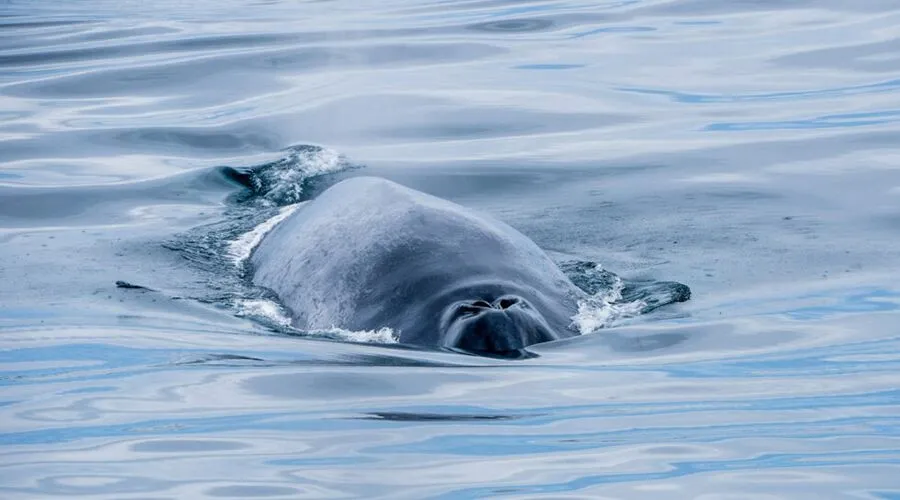
From Nuuk, Ocean Albatros will follow the rugged coast of Greenland southwards. All settlements in Greenland (with the exception of Kangerlussuaq) are situated directly on the ocean coast of the country, and the vast majority of residents (some 50,000 or so) live on the narrow strip of coast on the west of the country, facing the Davis Strait. Ocean currents bring warm water up from the Atlantic to the west coast, enriching these wildlife-filled waters. During our day at sea, keep your eyes on the sea! Whales, seals and a huge variety of seabirds are common in these rich waters.
Days at sea are never dull. We will arrange a variety of activities onboard for our guests to enjoy to engage the mind, body and soul. Join your knowledgeable Expedition Team lecturers in the Theatre to hear specially-crafted lectures on local history, wildlife, geology, culture and more, unwind with a massage in the Albatros Polar Spa, or simply watch the seabirds gliding along the ship from our hot tubs as the Ocean Albatros cruises along the coast of Greenland.
Day 5
Qassiarsuk and Itilleq Kujalleq
During the early morning, Ocean Albatros will sail through the majestic mountains of Tunulliarfik Fjord towards the small sheep-farming village of Qassiarsuk. While the modern village was founded in 1924, the location has a fascinating and much longer history; it was here that legendary Norse explorer Eric the Red settled after being banished from Iceland. He named the land he discovered 'Greenland' to encourage other settlers to follow him - a marketing ploy that has stood for over a thousand years!
Erik the Red settled in this green landscape and set up a small farmstead in typical Norse style, naming his new home 'BrattahlÃð'. Erik himself kept fiercely to the Norse gods, but his wife Thjodhild was a Christian. Legend has it, she refused to join his bed until he built her a church, which he eventually did, constructing a tiny hut (Ãjóðhildarkirkja) which was nevertheless the first church in the Americas (although he refused to have it within view of his house).
The southern fjords of Greenland offer a very different environment to the chilly north and east of the country. Situated at roughly 60°N, this region is level with northern Scotland or southern Scandinavia, with a climate to match. Here, the weather is calm, stable and humid, with much warmer summers and milder winters than the rest of the country. In place of rocky hillsides, the fjords here are lined with lush green meadows and dotted with small sheep-farming settlements, of which Qassiarsuk and Igaliku are perhaps the best known.
Over lunchtime, we will repositon to the sheltered bay of Itilleq, where a farm trail beckons us inland. During the afternoon, we will trek through the lush green hills to see the remains of the Norse Bishop's palace at Garðar - once a place of great power and influence in this remote corner of the Norse world, now surrounded by the charming modern farming village of Igaliku.
The Norse settlers in Greenland stayed for almost 500 years, but disappeared from all historical records in the early 1400s. Whether some plague or famine struck them, or whether deteriorating climate simply forced them to return to Scandinavia remains a topic of lively debate. Today the outlines of buildings (including Erik's house, Thjodhild's church and the Bishop's palace) can be seen, along with stunningly accurate reconstructions of Eric's farm, where modern Inuit farmers continue to raise sheep to this day. A statue of Erik now overlooks the area, commemorating the first European to reach the Americas, and whose son Leif would be the first European to reach Baffin Island and Newfoundland. Sites rich in fascinating history and culture old and new, the settlements of BrattahlÃð and Garðar are today part of the Kujataa UNESCO World Heritage Site.
Day 6
Prins Christian Sund and Aappilattoq
South of Skjoldungen lies Kap Farvel, or Cape Farewell, which is renowned not only as Greenland's southernmost point, but also for its infamously challenging weather, which commonly features large swells and gale-force winds.
With this in mind, we deliberately opt for a far more comfortable but also more spectacular route, cruising via the inside passage of Prins Christian Sund. Known in Greenlandic by it's typically descriptive name of Ikerasassuaq ('the Big Strait'), this 60 km long waterway reaches from Aappilattoq to the southeastern coast of Greenland, connecting the Labrador and Irminger Seas.
In the morning, we will approach the small village of Aappilattoq, which sits hunkered beneath the towering mountains at the end of Prins Christians Sund. The village is a world away from busy Nuuk or even Kangaamiut; life here moves at a slower pace, following the rhythms of the wind, waves and tides. Aappilattoq (meaning 'Red' in Greenlandic, referring to the stark granite bluffs above) offers excellent hiking opportunities, and the local choir is renowned throughout Greenland.
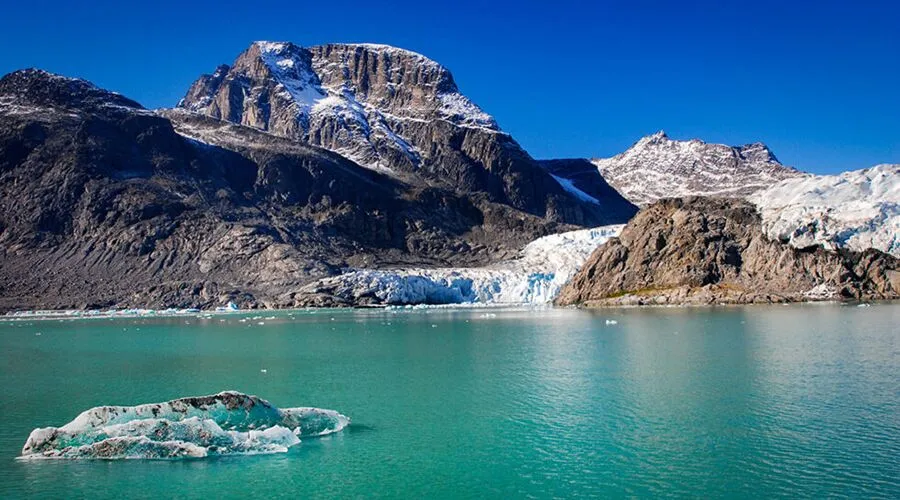
Prins Christian Sund is one of the most spectacular waterways anywhere on Earth. Kept free of ice year round by strong tidal currents, the strait is hemmed in on either side by mountains which rise straight out of the water some reaching over 2,000m in height. Large glaciers flow from the ice sheet into the sea on the northern side of the strait, while sapphire blue mountain glaciers loom over the water from the southern side, and vast icebergs stud the glassy waters. Join your Expedition Team on deck to experience the staggering beauty of this legendary waterway.
Day 7
Skjoldungen, Southeast Greenland
Today's adventure begins as we sail into magnificent Skjoldungen, a staggeringly beautiful fjord on the southeastern coast of Greenland. The fjord is named for Skjold, an ancient Danish King of legend, while the Greenlandic name, Saqqisikuik, references the sunny climate of the area. Various archaeological finds on the island which sits in the middle of the fjord suggests nomadic Inuit groups visited and stayed in the area in years gone by; more recently, settlers were brought from Tasiilaq to settle the island in the 1930s, but returned there thirty years later;some houses can still be seen on the southern side of the fjord. A small weather station was also operated on the island by the Allies during WWII.
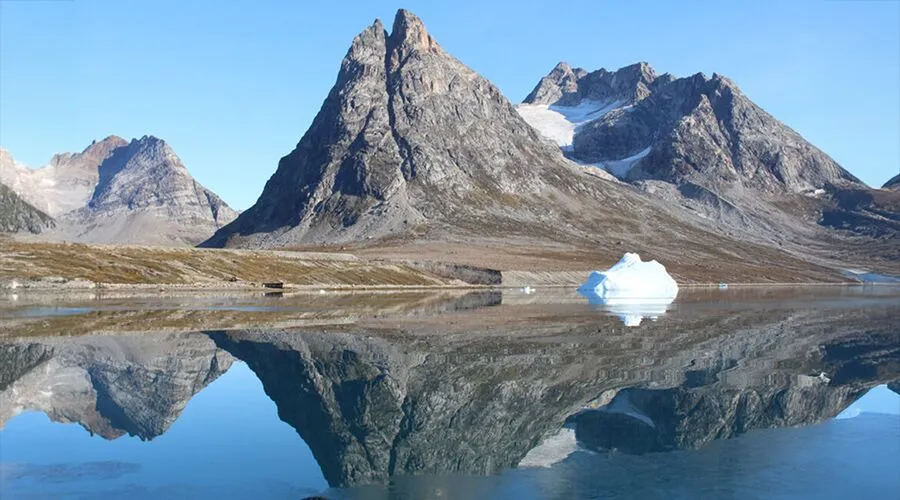
Today uninhabited, Skjoldungen sits almost 300km from the nearest village, with Mother Nature its only ruler. Vast saw-toothed mountains lined with opalescent glaciers line the deep chilly waters of the fjord, which can freeze even in summer. At the head of the fjord lies the magnificent Thryms Glacier, a magnificent river of ice flowing down from the ice sheet. On the southern side of Thryms Glacier lies the sweeping U-shaped glacial valley of Dronning Maries Dal - a textbook example of a glacially-produced landscape. Join your expedition team for a walk on the flower-lined floor of this valley, and marvel at the stunning scenery. Ensure you are on the outer decks on our approach and departure from this magnificent fjord too: you will not be disappointed!
Day 8
Sermilik, East Greenland
As the sun rises on the crystaline waters, join your Expedition Team on deck to watch for the abundant whales which frolic in these frigid waters. We are now arriving in East Greenland, a land steeped in myths, legends and ancient Inuit tradition.
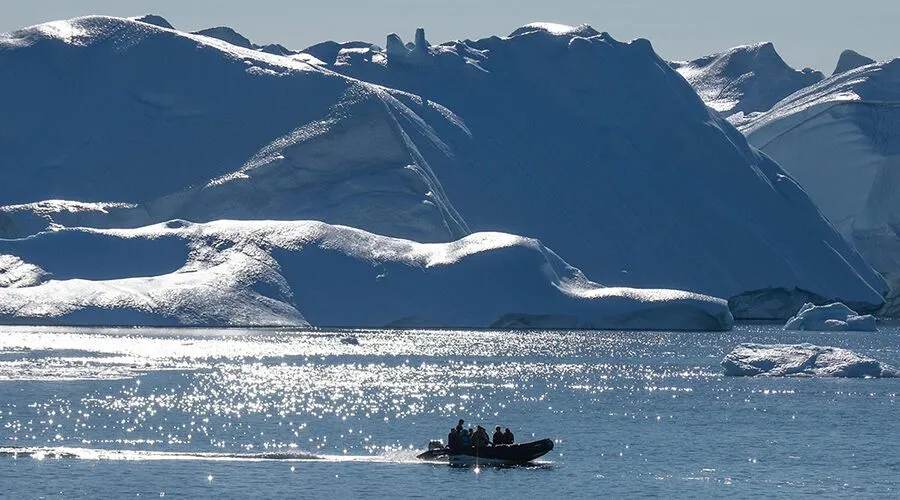
Separating Ammassalik Island from the Greenlandic mainland lies the vast Sermilik Fjord. Sermilik is a typically descriptive Greenlandic placename, roughly meaning 'the Glacial Fjord' and it is no mystery why: this waterway is choked with vast icebergs, and surely ranks among the most spectacular natural wonders of the region. The icebergs here mostly originate at the vast Helheim Glacier, one of the largest glaciers in this icy country. The Helheim and other glaciers which empty into the fjord pour directly off the Greenland Ice Sheet, the edges of which can be seen to the east, rising thousands of metres towards the frozen core of this vast island.
The volume of ice will dictate our precise activities in Sermilikfjord, although options include coming ashore to marvel at the spectacular scenery and untouched nature of the area, or exploring on the water and marvelling at the natural ice sculptures of the area on a Zodiac cruise through the icebergs. Whatever we do, prepare to be amazed by the jaw-dropping beauty of this otherwordly place.
Day 9
Ikateq and Kuummiut, East Greenland
In the morning, Ocean Albatros will visit the village of Kuummiut, which sits in breathtaking surroundings in the calm reaches of Ammassalik Fjord. Kuummiut - meaning 'People who Live by the River' - is one of the larger villages in the area, and one of the most prosperous. Sitting upon some of East Greenland's richest fishing grounds, Kuummiut holds the only fish factory in the region, and fishermen from miles around come through Ammassalik Fjord (which is wide enough to stay mostly ice-free year-round) to sell their catch here.
Kuummiut is an ideal place to experience life in an East Greenlandic settlement. Where other towns have traffic, Kuummiut has the yowling of sled dogs and the sigh of the wind through the grass. No roads lead in or out of this isolated village, and the sea is the highway for local transport - although motorboats have replaced the skin boats which brought people to these shores long ago. It is a perfect place to simply sit, watch the icebergs pass, and perhaps see the whales which often frolic in the calm waters offshore, or chat with the friendly locals, who are rightly proud of their spectacular home.
During the afternoon we will slightly eastwards towards Ikateq, a spectacular fjord with a fascinating history. During the darkest days of the Second World War, American forces established an airbase here (one of the network of air bases which includes Kangerlussuaq on the west coast) to serve as a stepping stone for aircraft transiting between Europe and North America. The rugged landscape of East Greenland meant the approach into the airport was hazardous, with frequent fog masking the treacherous mountains. Huge recources were invested into Ikateq Airbase (also known as Bluie 2 East), with a 5,000ft runway, hangar, barracks and port constructed. A fleet of military vehicles and thousands of barrels of fuel were also brought to this remote region. With Germany defeated, improvements to intercontinental aircraft, and increasing tensions with the Soviet Union, the United States Military abandoned the base in 1947, leaving almost everything behind.
The air base has been a bone of contention between Nuuk, Copenhagen and Washington for many years. Many in the Greenlandic government wanted the site cleaned up and the ruins removed; an expensive and logistically challenging task. Eventually, the Danish Government agreed to remove hazardous waste from the site (mainly decaying fuel drums), but leaving the rest of the equipment in place as an important part of regional history. Over 75 years later however, almost everything remains as it was on the day the Americans left. Ikateq is a truly unique place, a time warp to the Second World War: eerie, fascinating and surrounded by staggering natural beauty.
Spending the night in the calm waters of Ammassalik Fjord, be sure to keep an eye on the sky - conditions are often excellent to spot the northern lights!
Day 10
Tasiilaq, East Greenland
Our final port of call in Greenland is Tasiilaq, the largest settlement in East Greenland. Unlike the west coast, which has had uninterrupted contact with Europe since the 1700s, the coast of East Greenland remained more or less uncontacted until around 1894, when a Danish trading post was established at Tasiilaq. The vast distances involved in Arctic travel meant that the people of East Greenland (Tunumiit) were isolated from their cousins to the west, and the language, traditions and culture here therefore differ significantly to those in other parts of the country.
Ancient traditions are strong here. This region of Greenland was the home of the last Angakkuit (Shamans) of Greenland, and is the home of the tupilak - a monster fashioned from animal (and sometimes human) body parts and animated by the power of an Angakkuq to wreak havoc on enemies. Creating such a monster was dangerous, as it could be turned back by a more powerful magic user to attack its creator. The first Europeans were curious as to what these dark beasts looked like, and locals carved facsimiles in bone or horn, beginning one of Greenland's finest artistic traditions. The tupilaat made by artisans in Tasiilaq are considered among the best in the country, and can be purchased directly from the artist at the Stunk Workshop in the middle o town.
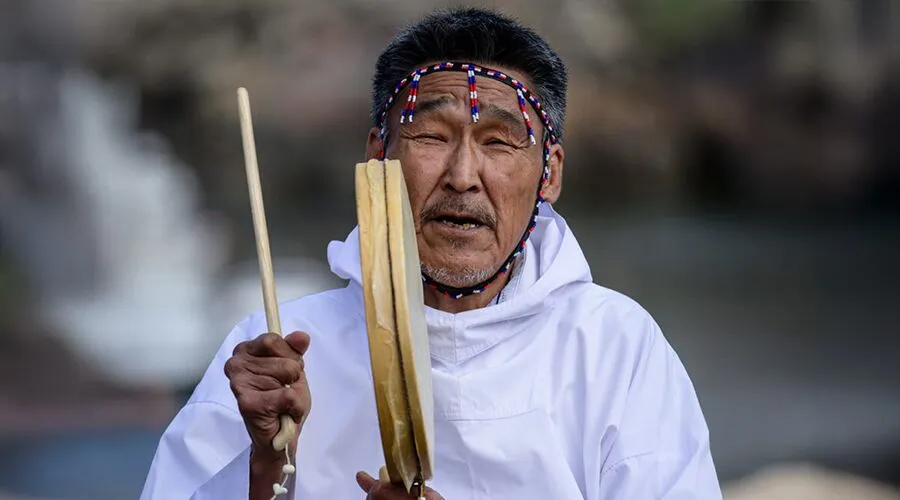
Tasiilaq sits in a perfect natural harbour on Ammassalik Island (meaning 'the Place of Many Capelin'). While superficially similar to towns on the West Coast, the landscape here is much more rugged, the people fewer, and the sled dogs much more numerous. Tasiilaq offers excellent opportunities to explore, with excellent hiking routes such as the Flower Valley easily accessible from town. For those wishing to delve into Tunumiit culture, visit the museum, located in the city's old church, hear the city's exquisite choir perform in the modern church, or watch a drum dancer in traditional East Greenlandic costume perform a millennia-old spiritual tradition. Otherwise, hike up the hill towards the hotel to enjoy some of the best views anywhere in the country, or join your Expedition Team for a trek through Tasiilaq's famous Flower Valley.
Day 11
At sea, en route to Reykjavik, Iceland
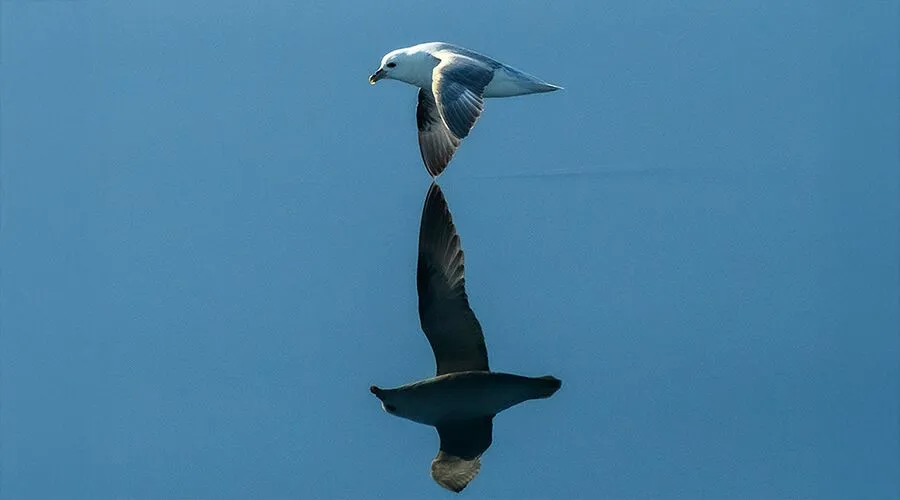
During our time at sea approaching Reykjavik, a variety of activities will be arranged on board to provide our guests with the chance to reflect on their voyage. Relax with an expertly crafted cocktail in the Nordic Bar in the company of new friends, soak up the knowledge and passion of our Expedition Team during lectures, or simply enjoy the flight of the fulmars which accompany us towards Iceland. Remember to take in the crisp ocean air and keep a look out for wildlife in this rich marine environment.
During your last evening onboard, join the Captain and Officers for the Farewell Cocktail Party, followed by a presentation of photos and video by our onboard photographer - the ideal opportunity to re-live your Arctic adventure. Skal!
Day 12
Reykjavik, Iceland
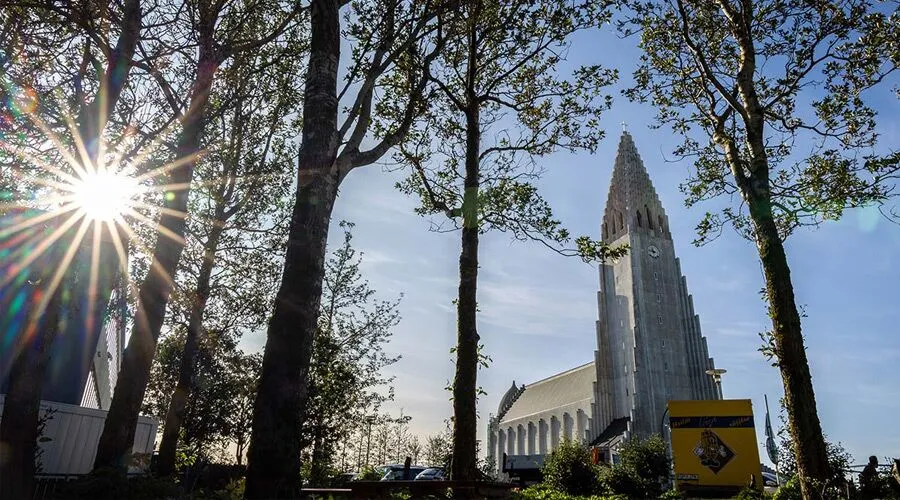
The rock-like columns of HallgrÃmskirkja Church loom over the city of Reykjavik, a hip Scandinavian capital which needs little introduction. With new Nordic cuisine, excellent shopping, fantastic excursions and an easy relaxed vibe, Reykjavik is one of Scandinavia's most welcoming and exciting cities. Such a bustling capital may feel strange after the remote wilderness of the Arctic!
After a hearty breakfast, it is time to bid a fond farewell to the Crew and Expedition Team of Ocean Albatros, and descend the gangway back to dry land with memories of the voyage of a lifetime.
Greenland Explorer
Cruise Line: Polar Latitudes Expeditions
Ship: Ocean Victory
Sailing Dates: Aug 15 2026
Port: Reykjavik to Kangerlussuaq
Greenland Explorer
Day 1
All Aboard in Kangerlussuaq!
HallgrÃmskirkja Church towers over Reykjavik, a vibrant city known for Nordic cuisine, unique museums, and lively shopping. After safety briefings, we set sail towards East Greenland.
Day 2
At Sea, Crossing the Denmark Strait
The Denmark Strait, a narrow passage between Iceland and Greenland, teems with rich marine life. Join your Expedition Team on the outer decks to watch for wildlife. Nearing Greenland, the team shares insights on ecology, geology, and wildlife, as well as briefings preparing guests for Zodiac operations and polar bear safety in the wilderness of Greenland.
Day 3
Tasiilaq, East Greenland
Tasiilaq is East Greenlandâs largest settlement, sitting on rugged Ammassalik Island. Isolated from European contact until its founding as a trading post in 1894, it preserves the unique culture of the Tunumiit people. Once home to Greenlandâs last shamans, Tasiilaq is the origin of the tupilak, a feared magical creature â now a celebrated art form. Visitors can meet sled dogs (with ownersâ permission), experience drum dancing, hike tundra meadows, and visit the famous Stunk Artistâs Workshop.
Day 4
Ikateq and Kuummiit
During the morning, we approach Ikateq, also known as Bluie Two East â a haunting remnant of the American military presence on Greenland during the Second World War. Marvel at the remains of this vital airbase, untouched since it was abandoned in 1947.
In the afternoon we reposition to Kuummiit â a small village deep in the calm waters of Ammassalik Fjord. Here we will have a chance to connect with the friendly locals and experience East Greenlandic culture in one of countryâs most beautiful and welcoming villages.
Day 5
Sermilikfjord
Our next stop is the breathtaking Sermilikfjord â a vast ice-choked fjord which drains the colossal Helheim Glacier. Armadas of vast icebergs drift from the Greenland Ice Sheet out into the North Atlantic, creating one of the most spectacular natural sights on Earth. Join your Expedition Team on a Zodiac cruise and marvel at the gigantic icebergs, natural ice sculptures tens of thousands of years in the making!
Day 6
Skjoldungen/Saqqisikuik
Today, we explore Skjoldungen, a stunning fjord on Greenlandâs southeast coast, known to locals as Saqqisikuik. Once visited by Inuit and briefly settled in the 20th century, it is now remote and uninhabited. Surrounded by breathtaking peaks, highlights include Thryms Glacier and the valley of Dronning Marie Dal. Weather permitting, we may land to explore or cruise by the glacier.
Day 7
Prins Christian Sund and Appilaattoq
In the morning, we sail through spectacular Prins Christian Sund, a 60 km iceberg-filled strait linking East and West Greenland. Surrounded by mountains, glaciers, and valleys, itâs one of the worldâs most spectacular waterways. By afternoon, we reach Aappilattoq, a small, remote village beneath granite cliffs, known for its traditional lifestyle, scenic hiking, and famous local choir.
Day 8
Qassiarsuk and Itilleq Kujalleq
Next, we cruise through Tunulliarfik Fjord to Qassiarsuk, a lush village known for sheep farming and its rich Norse history. Founded in 1924, the modern village sits on the site of Erik the Redâs 10th-century farm, BrattahlÃð. Legend has it that his wife Thjodhild refused to join her pagan husbandâs bed until he built her a church â the first in the Americas. In the afternoon, we hike from nearby Itilleq through lush green fields to Igaliku and the ruins of Garðar, the seat of Norse Greenlandic power.
Day 9
At Sea, En Route to Nuuk
From South Greenland, we sail north along the rugged coast. Nearly all of Greenlandâs settlements lie on the western coast, facing the Davis Strait. Warm Atlantic currents enrich these waters, attracting whales, seals, human hunters, and many seabirdsâso keep an eye out during our day at sea!
Day 10
Nuuk, Capital of Greenland
Home to 20,000 residents, Nuuk, Greenlandâs capital, offers culture, history, and stunning natural beauty. Inhabited since 2200 B.C. by Paleo-Inuit and later by Norse settlers, Nuuk is now Greenlandâs cultural and political center, featuring the Parliament, National Museum (home of the Qilakitsoq mummies), Katuaq cultural center, local art shops, and cozy cafés. Affectionately known as âNuuk Yorkâ by locals, it stands as a singular blend of the ancient and the contemporary.
Day 11
Kangaamiut and Evighedsfjorden
On the final full day of our voyage, we arrive in Kangaamiut, a village where traditional hunting, fishing, and weather shape daily life. Guests can hike for panoramic views, and enjoy a warm cultural welcome with local crafts, food, and performance. In the afternoon, we venture into EvighedsfjordenââThe Eternity Fjordââby Zodiac, cruising past majestic glaciers and dramatic bird cliffs, a thrilling and unforgettable finale to our Arctic voyage.
Day 12
Kangerlussuaq Disembarkation
As our journey concludes, we sail up the 160 km Kangerlussuaq Fjord and disembark by Zodiac. Though Kangerlussuaq is more known for its Cold War-era military roots and role as a transport hub than cultural heritage, its surrounding wilderness offers striking natural beauty â the perfect place to end our thrilling expedition.
11 Days - Tantalizing Thailand & Sparkling Singapore - Star Seeker
Cruise Line: Windstar cruises
Ship: Star Seeker
Sailing Dates: Nov 25 2026 | Dec 06 2026 | Jan 06 2027 | Jan 27 2027 | Jan 28 2027 | Feb 08 2027 | Feb 19 2027
Port: Phuket, Thailand to Klong Toei (Bangkok), Thailand
11 Days - Tantalizing Thailand & Sparkling Singapore - Star Seeker
Madagascar & South Africa
Cruise Line: Ponant Cruises
Ship: Le-Bougainville | Le-Dumont-D-Urville
Sailing Dates: Dec 17 2026
Port: Durban - Nosy Be
Madagascar & South Africa
Ports of Call & Excursions
Day 1 - Durban
Situated in the Kwazulu-Natal region, the cradle of Zulu culture, Durban is the third largest city in South Africa and one of Africa's major ports. Between long beaches rocked by the rollers of the Indian Ocean and the skyscrapers dominating the avenues lined with jacarandas, in this multicultural city with African, Indian and colonial influences, the term "rainbow nation" takes on its full dimension. With a rich cultural and historical heritage, with its museums, colonial buildings and picturesque neighbourhoods, it is also known for the fauna and flora that surrounds it.
Day 2Â Â - 3 - Richards Bay
A simple fishing village in the past, Richards Bay is now South Africaâs second port. Despite the significant development of industrial activity, particularly in terms of mineral extraction, Richards Bay is one of the countryâs cleanest and most environmentally responsible towns. Bordering the Indian Ocean, the town is a haunt for water sport enthusiasts. In the heart of the Hluhluwe Game Reserve, nature lovers will be able to observe the wild fauna, made up of crocodiles, hippos and different bird species, as well as rich subtropical flora. Richards Bay is the departure point for many excursions heading off to discover Zulu country.
Day 4Â Â - 5 - At sea
During your journey at sea, make the most of the many services and activities on board. Treat yourself to a moment of relaxation in the spa or stay in shape in the fitness centre. Depending on the season, let yourself be tempted by the swimming pool or a spot of sunbathing. This journey without a port of call will also be an opportunity to enjoy the conferences or shows proposed on board, depending on the activities offered, or to do some shopping in the boutique or to meet the PONANT photographers in their dedicated space. As for lovers of the open sea, they will be able to visit the shipâs upper deck to admire the spectacle of the waves and perhaps be lucky enough to observe marine species. A truly enchanted interlude, combining comfort, rest and entertainment.
Day 6 - Toliara
Located to the south-west of the island of Madagascar, near the mouth of the River Onilahy, Toliara is a port town that opens onto the Mozambique Channel. Inhabited for several centuries, becoming prosperous during the colonial period in the 19th century, Toliara is a cheerful town with unspoilt nature and exceptional flora that will certainly appeal to fans of botany. The Antsokay Arboretum botanical garden with nearly 1,000 Madagascar plant species, 90% of which are endemic, is worth a fragrant and charming detour. Cultural heritage will not be outdone, with the interesting museums of Mahafaly ethnology and the Museum of the Sea.
Day 7 - Morondava
To the south-west of Antananarivo lies a peaceful city on the Mozambique Channel: Morondava, capital of the kingdom of Menabe, and departure point for many discoveries in the surrounding area. Bordered by the Mozambique Channel, the city is crossed by two rivers: the Mangoky and the Manambolo. Its many forests are full of abundant fauna and flora, especially the Kirindy Mitea National Park and its famous baobab alley.
Day 8 - At sea
During your journey at sea, make the most of the many services and activities on board. Treat yourself to a moment of relaxation in the spa or stay in shape in the fitness centre. Depending on the season, let yourself be tempted by the swimming pool or a spot of sunbathing. This journey without a port of call will also be an opportunity to enjoy the conferences or shows proposed on board, depending on the activities offered, or to do some shopping in the boutique or to meet the PONANT photographers in their dedicated space. As for lovers of the open sea, they will be able to visit the shipâs upper deck to admire the spectacle of the waves and perhaps be lucky enough to observe marine species. A truly enchanted interlude, combining comfort, rest and entertainment.
Day 9 - Majunga
A lively and cosmopolitan town on the west coast of Madagascar, Majunga, also called Mahajanga, will be a port of call rich in discoveries. The former capital of the Sakalava kingdom, then a significant interchange due to its prime position between Africa and the Middle East, the city displays an interesting cultural patchwork. Also renowned for its outstanding natural sites, this port of call will provide you with the opportunity to discover the Cirque Rouge, immense red sandstone formations classified as national heritage.
Day 10 - Nosy Komba
During your cruise, your ship will stop in Nosy Komba, otherwise known as âlemur islandâ. Not far from the Madagascar mainland, this volcanic island shaped like a gigantic turtle shell is covered in dense tropical rainforest. This vegetation is home to amusing black lemurs â furry orange-brown and black creatures that are surprisingly agile and call to each other from amongst the trees. The many small beaches and the emerald-coloured water make Nosy Komba a natural gem that only a select few visit.
Day 11 - Nosy Hara
Its limestone rock formations rising from the waters, or marine âtsingiesâ typical of Madagascar, make Nosy Hara both exceptional and immediately recognisable. Located to the north-west of Madagascar, the island is a protected area due to its incredible biodiversity. It is a veritable open-air aquarium inhabited by around 280 marine species. The rocky columns edged with gorgeous white-sand and pebble beaches fading into shades of deep blue make an idyllic place cut off from the world. Succumb to the charms of this untouched jewel that will welcome you into its stunning decor for a special experience. This is an ideal location for snorkelling.
Day 12 - Nosy Be
Nosy Be (from the Malagasy: Nosy meaning island and Be meaning large), in the Mozambique Channel, is located near the north-eastern coastlines of Madagascar. A former French protectorate, known under the promising name of âthe scented islandâ, of volcanic origin, it is located on a maritime route with access to India and Asia. Cosmopolitan, a boulevard of encounters, its mixed-race and multicultural population still remembers its past as a significant trading post. Today, its 321 km² enchant lovers of nature and idyllic beaches. Its sumptuous primary forest is home to animals that are endemic to the island as well as surprising flora.
Complete East Greenland
Cruise Line: Polar Latitudes Expeditions
Ship: Ocean Albatros
Sailing Dates: Sep 17 2027
Port: Reykjavik, Iceland to Reykjavik, Iceland
Complete East Greenland
Day 1
Reykjavik, Iceland
The rock-like columns of HallgrÃmskirkja Church loom over the city of ReykjavÃk, a hip Scandi capital which needs little introduction. With new Nordic cuisine, excellent shopping, fantastic excursions and an easy relaxed vibe, ReykjavÃk is one of Scandinavia's most welcoming and exciting cities.
In the afternoon, we await to welcome our guests onboard Ocean Albatros. After our mandatory safety drill, enjoy dinner and a glass of champagne as we set sail a course for adventure as we set out across the Denmark Strait, bound for Greenland.
Day 2
At sea, Crossing the Denmark Strait
The Denmark Strait is the narrow section of the North Atlantic separating Iceland from Greenland. This body of water is among the most productive in the world, where the cold polar East Greenland Current collides with the warm northbound Gulf Stream. These nutrient-rich waters support vast stocks of fish, and the humans, seals, whales and seabirds which rely on them.
Days at sea are never dull. We will arrange a variety of activities onboard for our guests to enjoy to engage the mind, body and soul. Join your knowledgeable Expedition Team lecturers in the Theatre to hear specially-crafted lectures on Greenlandic history, wildlife, geology, culture and more, unwind with a massage in the Albatros Polar Spa, or simply watch the seabirds gliding along the ship from our hot tubs as the Ocean Albatros flies across the Denmark Strait.
Day 3
Kuummiut and Ikateq
We will spend the morning in the small village of Kuummiut, which sits in breathtaking surroundings in the calm reaches of Ammassalik Fjord. Kuummiut - meaning 'People who Live by the River' - is one of the larger villages in the area, and one of the most prosperous. Sitting upon some of East Greenland's richest fishing grounds, Kuummiut holds the only fish factory in the region, and fishermen from miles around come through Ammassalik Fjord (which is wide enough to stay mostly ice-free year-round) to sell their catch here.
Kuummiut is an ideal place to experience life in an East Greenlandic settlement. Where other towns have traffic, Kuummiut has the yowling of sled dogs and the sigh of the wind through the grass. No roads lead in or out of this isolated village, and the sea is the highway for local transport - although motorboats have replaced the skin boats which brought people to these shores long ago. It is a perfect place to simply sit, watch the icebergs pass, and perhaps see the whales which often frolic in the calm waters offshore.
In the afternoon, we will sail slightly eastward from Kuummiut to Ikateq, a spectacular fjord with a fascinating history. During the darkest days of the Second World War, American forces established an airbase here (one of the network of air bases which includes Kangerlussuaq on the west coast) to serve as a stepping stone for aircraft transiting between Europe and North America. The rugged landscape of East Greenland meant the approach into the airport was hazardous, with frequent fog masking the treacherous mountains. Huge recources were invested into Ikateq Airbase (also known as Bluie 2 East), with a 5,000ft runway, hangar, barracks and port constructed. A fleet of military vehicles and thousands of barrels of fuel were also brought to this remote region. With Germany defeated, improvements to intercontinental aircraft, and increasing tensions with the Soviet Union, the United States Military abandoned the base in 1947, leaving almost everything behind.
The air base has been a bone of contention between Nuuk, Copenhagen and Washington for many years. Many in the Greenlandic government wanted the site cleaned up and the ruins removed; an expensive and logistically challenging task. Eventually, the Danish Government agreed to remove hazardous waste from the site (mainly decaying fuel drums), leaving the rest of the equipment in place as an important part of regional history. Over 75 years later however, almost everything remains as it was on the day the Americans left. Ikateq is a truly unique place, a time warp to the Second World War: eerie, fascinating and surrounded by staggering natural beauty.
Day 4
Tasiilaq
In the morning we arrive in Tasiilaq, the largest settlement in East Greenland. Unlike the west coast, which has had uninterrupted contact with Europe since the 1700s, the coast of East Greenland remained more or less uncontacted until around 1894, when a Danish trading post was established at Tasiilaq. The vast distances involved in Arctic travel meant that the people of East Greenland (Tunumiit) were isolated from their cousins to the west, and the language, traditions and culture of East Greenland therefore differ significantly to those in other parts of the country.
Ancient traditions are strong here. This region of Greenland was the home of the last Angakkuit (Shamans) of Greenland, and is the home of the tupilak - a monster fashioned from animal (and sometimes human) body parts and animated by the power of an Angakkuq to wreak havoc on enemies. Creating such a monster was dangerous, as it could be turned back by a more powerful magic user to attack its creator. The first Europeans were curious as to what these dark beasts looked like, and locals carved facsimiles in bone or horn, beginning one of Greenland's finest artistic traditions. The tupilaat made by artisans in Tasiilaq are considered among the best in the country.
Tasiilaq sits in a perfect natural harbour on Ammassalik Island (meaning 'the Place of Many Capelin'). While superficially similar to towns on the West Coast, visitors will quickly notice differences; the landscape here is much more rugged, the people fewer, and the sled dogs much more numerous. Tasiilaq offers excellent opportunities to explore, with excellent hiking routes such as the Flower Valley easily accessible from town. For those wishing to delve into Tunumiit culture, visit the museum, located in the city's old church, hear the city's exquisite choir perform in the modern church, or watch a drum dancer in traditional East Greenlandic costume perform a millennia-old spiritual tradition. For those wishing to indulge in some retail therapy, visit the Stunk Artist's Workshop, where skilled craftsmen create beautiful pieces from natural local materials.
Day 5
At sea, en route to Ittoqqortoormiit
Sailing along the coastline of this vast island (where reaching the next-closest town takes two nights and a day of sailing), it can be difficult to comprehend the scale of this huge country.
Measuring roughly four times the size of France, Greenland dominates the Atlantic portion of the Arctic, covering latitudes from 59-83°N, and 11-74°W. Around 80% of Greenland is covered by the Greenland Ice Sheet (known as Sermersuaq or 'The Great Ice' in Greenlandic), the largest body of ice on earth outside Antarctica. The Greenland Ice Sheet is so vast that it governs the weather patterns of the region, with summer meltwater and winter ice largely driving ocean currents in this part of the North Atlantic.
Despite the lack of towns, the stretch of coastline between the Ammassalik and Scorsesbysund region is of vital importance to the residents of the area. During the summer, locals hunt whales, seals and other game by boat along the coast of this vast wilderness, as their ancestors have done since time immemorial. Some skilled hunters still choose to use kayaks to sneak up on skittish prey like narwhals - continuing a millennia-old hunting tradition. While some choose to use snowmobiles in winter to traverse the sea ice which hugs the coast, most hunters choose to use dogsleds, which are more reliable, rugged, and do not rely on fuel. In this challenging country, ancestral traditions are still superior to the trappings of modern life.
Day 6
Ittoqqortoormiit
Entering Scoresbysund, Earth's largest and longest fjord system, one could be forgiven for not realising this huge 35km inlet is a fjord at all! Scoresbysund is named for English whaler and explorer William Scoresby, one of the first Europeans to map this region; the local name for this vast fjord system, Kangertittivaq, is a typical Greenlandic understatement, roughly meaning 'The Rather Large Fjord'.
The only settlement in this region is Ittoqqortoormiit (meaning 'the People who Live in Big Houses), which surely ranks among the most remote communities on Earth. As the name suggests, the town is relatively new, having been established by Danish authorities in 1925. Colonists were relocated from the Ammassalik region further south in response to what were seen as poor living conditions in the area, as well to establish Danish sovereignty in the region during a territorial dispute with Norway. While the establishment of the town was challenging, the settlers soon realised the region was hugely rich in game, with excellent hunting and trapping opportunities. This tradition continues to this day - the majority of residents continue to live a subsistence hunting lifestyle, essential in a town where supply ships arrive only once or twice each summer. The only access to the outside world is via the heliport to the nearby airport, from where small aircraft depart for Iceland.
Ittoqqortoormiit is a town with a strong sense of community and traditional culture, where foreigners are welcomed warmly. The town hosts an excellent museum, a beautiful traditional Greenlandic church, and locals often welcome visitors to their community wearing colourful traditional costumes. The town represents a wonderful introduction to the culture and lifestyle of Northeast Greenland, in one of the most spectacular natural locations anywhere in the world.
Day 7-9
Northeast Greenland National Park
During the night we cruise past the rugged peaks of the Liverpool Land peninsula and reach the mouth of King Oscar Fjord. We are now in the vast Northeast Greenland National Park; measuring almost a million square kilometers (almost twice the size of France), this is the largest National Park and the largest area of protected land on Earth and includes the northernmost land on the planet.
There are no permanent settlements in the area, but up to the middle of the 19th Century various nomadic Inuit hunters lived in this spectacular region, harvesting the natural riches of the area.
The program for our days in the National Park depends on wind, sea, weather and ice conditions. In such a remote region so far north, Mother Nature dictates all human activity. Our exact route and activities will be determined by the Captain and the Expedition Leader jointly and are typically announced the night before.
Some of the interesting landings we may visit include the 1300-meter-high rock wall Bastionen on the coast of Ella Island. Further north we may pass pass the small Maria Island, where the Germans had a camp during World War II. The Germans' attempt to gain a foothold in Greenland during World War II is a fascinating story in itself. Past Ruth Island, we hope to make a landing on Ymer Island at Blomsterbugten, a small oasis in the national park. From the tiny hunting lodge Varghytten we can enjoy the formidable view of the characteristic, flat mountain Teufelsschloss, where the multicoloured rock layers testify to the area's exciting geological development. From here, we may aim to sail by the mighty iceberg-producing Waltershausen Glacier before entering beautiful Moskusokse Fjord. On our way back towards open sea we might aim for landings on Jameson Land, which is a breeding ground for polar bears.
Wherever we go in this vast wilderness, our guests can be sure of encountering excitement, adventure, and mind-boggling natural beauty. Our experienced Expedition Team will be on hand to provide guests with as much knowledge of the region as possible; either in hand-crafted lectures, evening recaps, onshore, or over a cup of coffee on deck. Throughout our time in the National Park, our skilled Expedition Team members will be constant lookout for the charismatic wildlife of the region - keep your binoculars handy!
Day 10
Blosseville Coast
Possibly the most dramatic coast outside of Antarctica, the Blosseville is guarded by Greenlandâs highest mountains and steepest fjords â and a belt of pack ice which was once able to ward off explorers, sometimes for years at a time!
The Blosseville Coast is named for French Explorer Jules de Blosseville, the first European to sight this formidable coastline. While attempting to survey the coast in 1833 onboard the vessel La Lilloise, the vessel and all onboard were lost without a trace. Subsequent expeditions failed to find any trace of the vessel, and its fate remains a mystery to this day.
The recent decades have also had warmer summers and reduced sea ice cover, which enables purpose-built ice-strengthened vessels such as the Ocean Albatros to venture along the coast, on lookout for polar wildlife, abandoned Inuit settlements and otherworldly landscapes.
Day 11
At sea, en route to Reykjavik, Iceland
During our time at sea approaching Reykjavik, a variety of activities will be arranged on board to provide our guests with the chance to reflect on their voyage. Relax with an expertly crafted cocktail in the Nordic Bar in the company of new friends, soak up the knowledge and passion of our Expedition Team during lectures, or simply enjoy the flight of the fulmars which accompany us towards Iceland.
During your last evening onboard, join the Captain and Officers for the Farewell Cocktail Party, followed by a presentation of photos and video by our onboard photographer - the ideal opportunity to re-live your Arctic adventure. Skal!
Day 12
Reykjavik, Iceland
As the Icelandic capital comes into view on the horizon, strange objects appear; trees larger than ankle height, glassy skyscrapers and streets full of cars, busses and people... Such a bustling capital may feel strange after the remote wilderness of Greenland!
After a hearty breakfast, it is time to bid a fond farewell to the Crew and Expedition Team of Ocean Albatros, and descend the gangway back to dry land with memories of the voyage of a lifetime.
12 Days - Kyoto & East Asia Dreams Cruise Tour - Star Seeker
Cruise Line: Windstar Cruise
Ship: Star Seeker
Sailing Dates: Nov 03 2026 | Mar 01 2027
Port: Osaka to Halong Bay (Hanoi)
12 Days - Kyoto & East Asia Dreams Cruise Tour - Star Seeker
Crossing the Circle
Cruise Line: Polar Latitudes Expeditions
Ship: Ms Seaventure
Sailing Dates: Feb 04 2026
Port: Ushuaia to Ushuaia
Crossing the Circle
Day 1
Arrive and explore in Ushuaia
After a friendly welcome at the airport and a transfer to the luxurious Arakur Ushuaia Resort & Spa, take some time to unwind or explore the southernmost city in the world, Ushuaia. (In the unlikely event that you can't be accommodated at the Arakur, you'll unwind at another of Ushuaia's top luxury hotels.)
Our optional evening briefing is your opportunity to ask questions and meet some of your fellow explorers.
Day 2
All Aboard!
Spend your morning relaxing at the hotel, visiting a museum, or exploring the shops in Ushuaia, before our mid-afternoon escort to the ship. Our Expedition Team and ship staff will welcome you on board and get you settled in, followed by a safety and orientation briefing and our Captainâs welcome dinner. Weâre on our way to Antarctica!
Day 3-4
Drake Passage
Join our Polar Experts as they share their vast knowledge of Antarctica, from its enchanting wildlife to its bold history. Participate in our pioneering Citizen Science program or sit back and take in this fabled journey while catching glimpses of rarely seen wildlife. Keep your binoculars handy to identify the many seabirds that escort our ship as we cross the Antarctic Convergence into Antarcticaâs waters and noticeably cooler temperatures.
Day 5
South Shetland Islands
Over time, the volcanic activity of the South Shetland Islands has created a geology unlike any other. Here, you can expect a spectacular display of mountains, glaciers, and wildlife including Chinstrap and Gentoo penguins; and itâs not uncommon to share the waterâs edge with Elephant and Fur seals. Whales are often spotted as well. So, weâll settle into our Zodiacs and spend most of our day exploring. And kayakers, itâs time to get your first taste of gliding just inches off the pristine Antarctic water. Whether on land or sea, in Zodiac or kayak, be prepared for a fully immersive introduction to this incomparable part of the world.
Day 6-8
Antarctic Circle
Heading south across the Bransfield Strait, we begin to see the breathtaking outline of the Antarctic Peninsula. Wildlife sightings, including penguins, whales, and fur seals, become more frequent, as do dramatic ice sculptures. Should Antarcticaâs unpredictable weather and ice permit, you will be among the lucky few to cross the Antarctic Circle, where the sun remains in the sky for 20 hours a day. Following a tradition first established by sailors crossing the equator, weâll celebrate the occasion by⦠(Sorry, you just have to be there), before heading onward toward any number of historic and rarely visited British Survey bases, after which we turn back north.
Day 09-11
Antarctic Peninsula
Heading north into warmer climes, weâll see less sea ice and more open channels, offering access to islands where we can anticipate any number of wildlife sightings, which could include a variety of seal species, as well as penguin rookeries where the locals will be taking advantage of the rocky shore to build their nesting sites. You can anticipate more whale sightings, as well, as Humpbacks feast on the plentiful krill in these warmer waters. As always, we will seek out opportunities to stop at several active scientific bases and historic landing sites along the way, as we leave no opportunity unseized-upon in our quest to explore the very best of this magical place.
Day 12-13
Drake Passage
We leave this magical place and make our way north, once again heading across the Antarctic Convergence and the Drake Passage. We have one last hurrah as we celebrate the conclusion of our expedition with a special slideshow and a final meal together.
Day 14
Ushuaia Disembarkation
With huge smiles on weary, content faces, we disembark in the morning, letting you catch a flight to Buenos Aires or stay in Ushuaia for more sights and adventure.
*Prices are per person, based on double occupancy. Prices do not include Government Fees & Taxes. Pricing and availability subject to change without notice. STIC Travel Group reserves the right to refuse or honor any prices / sailings that are erroneously printed or quoted. Terms & Conditions apply.

Contact
2nd Floor, Tower C, Cyber Greens, DLF Phase-III, Gurgaon - 122002, Haryana, India. Phone: +91-124-4595300 E-mail: info@sticgroup.com International Cruise Tour: +91 9920688575
We Accept: 
Secured By: 
Copyright © STIC GSA Services Pvt. Ltd. All rights reserved