Expert guidance for your cruise vacation!
Let us connect you with our cruise expert to help you to plan the best vacation at the lowest possible price. For fastest service, call us at +91 9920688575
Disko Bay
Cruise Line: Albatros Expeditions
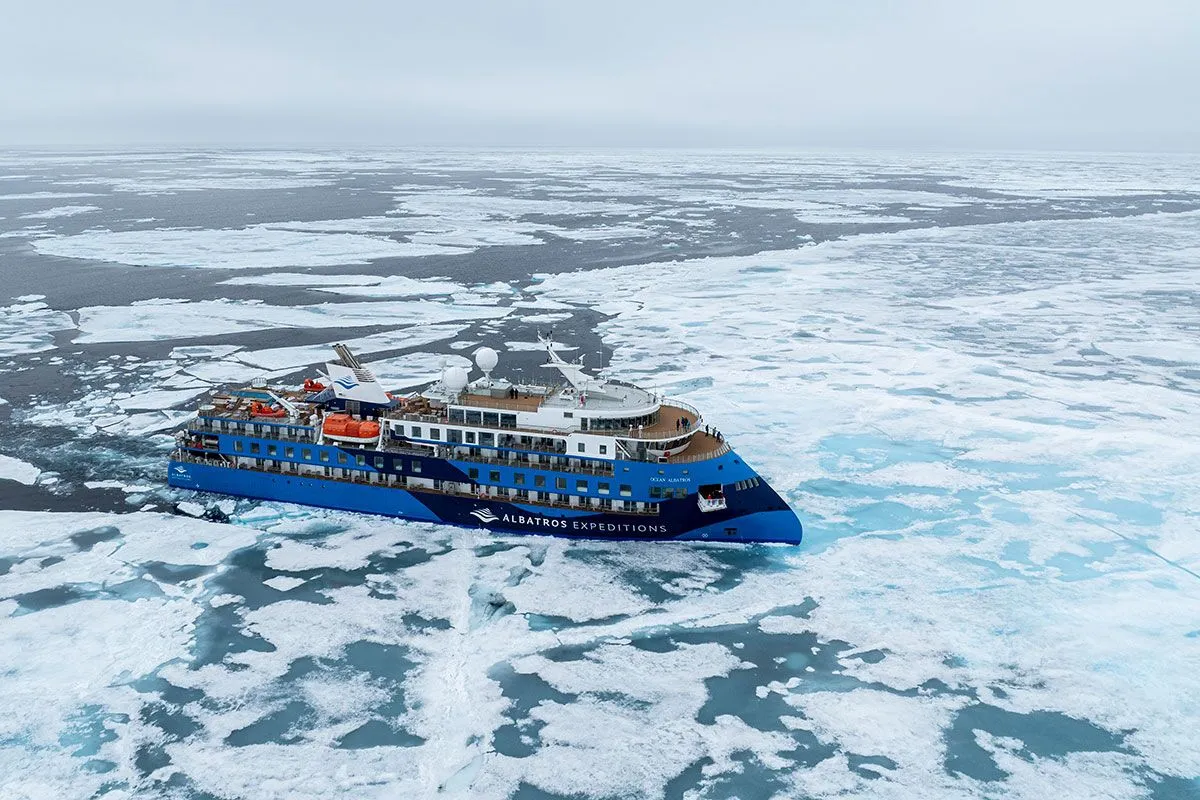
Ship: Ocean Albatros
Sailing Dates: Aug 22 2026 | Aug 29 2026 | Sep 05 2026 | Sep 12 2026
Port: Kangerlussuaq, Greenland to Kangerlussuaq, Greenland
Disko Bay
Day 1
Kangerlussuaq, Greenland - Embarkation
On the first day of our expedition, we board our chartered flights in Keflavik, Iceland or Copenhagen, Denmark, bound for Kangerlussuaq on the west coast of Greenland (both flight options are available, please contact us for more information).
Situated at the head of a 160km long fjord of the same name, Kangerlussuaq is Greenland's only inland town, and was established as Sondrestrom Air Base/Bluie West-8 by American troops in 1941. Existing largely to service the airport, the town of Kangerlussuaq itself retains a strong 'Cold War' feeling, hinting at its extensive American military use before it was signed over to the Greenlandic Government in 1992. Today Kangerlussuaq is Greenland's largest air hub, with flights arriving daily from Denmark and around the country. It's stable climate and lack of fog makes it ideal as an airport, but it exhibits some of the most varied temperatures in the country, commonly registering the highest summer and lowest winter temperatures due to its inland location.
Upon arrival in Kangerlussuaq, you will be transported to the small port located west of the airport, where the Ocean Albatros awaits at anchor. Zodiacs will transfer us the short distance to the ship, where you will be checked in to your stateroom. After the mandatory safety drill, enjoy dinner and a glass of champagne as we set sail a course for adventure through the 160-kilometre Kangerlussuaq fjord.
Day 2
Sisimiut - Greenland's Second City
After breakfast, Ocean Albatros will arrive in the colourful city of Sisimiut. With around 5,400 inhabitants, it is Greenlandâs second largest city, and one of the most interesting to explore. Paleo-Inuit people have lived around Sisimiut on and off since 2,500 BC, arriving in waves of migration from Arctic Canada. Remnants of turf huts and tent camps from this time can be found thorughout the vast back country which surrounds Sisimiut, including on Tele Island, a short pleasant walk from the harbour.
In 1756, Count Johan Ludvig Holstein established a colony here and called it âHolsteinsborgâ. The oldest part of Sisimiut features town houses from this era, and the oldest dates back to 1756. One of the most culturally significant buildings is the Blue Church, built in 1775, now a landmark in the cityâs historical museum district, arguably the best preserved in Greenland, and the perfect place to discover the Greenland of old.
Nowadays, Sisimiut is an important hub of education and industry, and local factories process the bulk of fish caught in the country (Greenlandâs largest export). The fish processing plant in the harbour is one of the largest in Greenland, and among the most modern in the world. Just beyond the harbour sits the headquarters of KNI, the government-operated company which resupplies the many small settlements throughout Greenland - a vital service in a country with so many remote communties.
The busy city centre of Sisimiut offers a glimpse of what daily life is like in 21st-century Greenland, where seal hunts and smartphones collide. Take a refreshing stroll around Spedjesø and take in an exhibition at the city's cultural centre, explore the region's fascinating heritage at the city museum, or visit the Artists Workshop, where savvy shoppers can purchase traditional artworks direct from the artist. As evening falls, we will leave Sisimiut and set a course for the iceberg studded waters of Disko Bay (Qeqertarsuup Tunua) as Ocean Albatros sails for Qeqertarsuaq.
Day 3
Qeqertarsuaq, Disko Island
Nestled below Disko Islandâs 1,000-metre mountains, we pull into port in a beautifully sheltered natural harbour. The place was aptly named Godhavn (âGood Harbourâ) in Danish, while its Greenlandic name âQeqertarsuaqâ simply means âThe Big Islandâ.
For most of Greenlandâs modern history, Godhavn was the political and economic capital of North Greenland (while GodthÃ¥b, now Nuuk, served this role in Southern Greenland). Its importance was due to the vast economic activity generated by whaling in Disko Bay, the preeminent Arctic industry since the 16th Century. As the whaling industry collapsed in the early 1900s, Godhavn lost its political status as all government functions moved south to GodthÃ¥b/Nuuk, and the town was forced to reinvent itself, changing its name to Qeqertarsuaq in 1979 . Today, hunting and fishing are the main industries in Qeqertarsuaq, while tourism is becoming increasingly important. Ferries arrive in the town daily in summer from around Disko Bay, while in winter, access is only by helicopter from nearby Ilulissat.
Qeqertarsuaqâs sweeping red-and-black basalt mountains are radically different to the rolling granite hills which characterize much of Greenland, and provide a much richer soil. Despite being situated well above the Arctic Circle, this rich volcanic soil and the areaâs mild microclimate make it much more green and lush compared to the rest of the country. Locals from all over Disko Bay come to the island in summer to hunt and collect angelica, herbs and mushrooms, and the stunning rock formations and black sand beaches attract visitors from all over the world. The town itself is typically Greenlandic, with quaint multicoloured homes, a splendid museum, and the unique octagonal church nicknamed 'God's Inkpot' (built in the Norwegian stave style). With excellent hiking opportunities, friendly locals, and a fascinating place in regional history, Qeqertarsuaq has a lot to offer. From here, we set sail along the edge of Disko Bay towards Uummannaq.
Day 4
Uummannaq - the Greenlandic Riviera
The small city of Uummannaq sits perched precariously at the foot of a massive mountain. Like the rest of the area, here the mountain reaches vertically out of the icy depths, punching 1170m into the clear blue sky. Uummannaq mountain (translated from Greenlandic as âheart shapedâ) is a true Greenlandic icon, and is a mecca for climbers who visit from all over the world. The city itself occupies a small area of flatter ground at the foot of the mountain, founded by Danish colonists in 1763 â some of the original buildings from this era can still be visited in the harbour-front area. More recently, Uummannaq has become famous in Scandinavia as the home of Santa Claus â the small turf house belonging to the festive hero himself can be reached via a pleasant (if challenging) 2-3h hike out of town.
As for many towns in Greenland however, the Inuit history of the area reaches back much further. At some point around the year 1600, a group of Inuit women and children died in the area (possibly in a boating accident). They were lovingly laid to rest in a rocky cairn under a cliff on the mainland overlooking Uummannaq at a site called Qilakitsoq, protected from the rain and snow, but exposed to the dry Arctic wind which mummified their bodies. They were rediscovered in 1972 by two brothers from Uummannaq (possibly on the advice of elders in Uummannaq, who had preserved rumours of the site for centuries). The mummies were taken to Denmark for analysis before being returned to Greenland, where today they rest in the National Museum in Nuuk. The small museum in Uummannaq did not have the facilities to house such an important find, but several artefacts such as clothing from the archaeological site (as well as a plethora of finds from before, during and after the Qilakitsoq period) are displayed, along with a cabinet of curiosities from the cityâs brief mining boom.
Uummannaq itself is a lively little town. Expect to see enterprising locals selling handicrafts in the grassy town square, while others sell their catch in the local fish market - always a fascinating sight. Watch fishermen bait their long lines as they head out in search of halibut, or load up with provisions for hunting trips deep into the vast fjordlands outside town.
Ensure you are on Ocean Albatrosâ outer decks during our sail-out from Uummannaq â the deep clear blue iceberg-studded waters of the fjord and the dramatic vertical mountains around the city offer some of the best views in Greenland. With a calm microclimate and round-the-clock summer sunshine, not for nothing is this staggeringly beautiful area nicknamed the Greenlandic Riviera!
Day 5
Eqip Sermia Glacier
From Uummannaq, we return to the heart of Disko Bay, setting sail towards Eqip Sermia.
Eqip Sermia (a typically descriptive Greenlandic name meaning 'the Glacier at the End of the Fjord') is a relatively small glacier compared to many in Greenland, although it is still a truly vast river of ice, flowing directly from the Greenland Ice Sheet. It is also one of the most active, and ice tumbles off the vast glacier-front almost constantly. Watching the vast cataracts of ice fall into the ocean is a sight which has to be seen to be believed - and the comfortable viewing decks of Ocean Albatros offer the best possible platform to do so... Perhaps with a specially crafted cocktail in hand!
From Eqip Sermia, we will reposition slightly southwards during the evening towards Ilulissat, the largest city in Disko Bay and the Iceberg Capital of the World. Depending on the local sea and ice conditions, we may arrive in Ilulissat in time to come ashore and see the Icefjord at sunset - one of Greenland's greatest spectacles.
Day 6
Ilulissat - optional Airzafari ride or boat trip to the Ice Fjord
This is it. This is why visitors from all over the world come to Greenland. Translated from Kalaallisut simply as âicebergsâ, Ilulissat is rightly known the world over as âthe Iceberg Capital of the Worldâ. Surely no other city on Earth occupies such a spectacular natural setting.
Situated within a short walk of the harbour lies Ilulissat Icefjord, Greenlandâs most famous site. Choked with city-sized icebergs so closely packed one could almost walk across to the other side, Ilulissat Icefjord stretches 70 km from its outlet in Disko Bay near the city of Ilulissat back to the Sermeq Kujalleq glacier. This is the single largest glacier on Earth outside Antarctica, draining 13% of the Greenland Ice Sheet, and producing 10% of all the ice in the Northern Hemisphere (enough water to supply the annual needs of the entire United States). These mind-blowing statistics, together with the indescribably beautiful scenery, have secured the Ilulissat Icefjord designation as a UNESCO World Heritage Site.
While archaeological finds detail the long Inuit habitation of the area, the modern town has steadily flourished in the 280 years since its establishment; legendary Arctic explorer, Knud Rasmussen was born in Ilulissat, and his childhood home now houses the city museum. Today, Ilulissat is Greenlandâs third largest town, with more than 4,500 inhabitants, and is undoubtedly Greenlandâs tourism capital, with more hotel rooms than even Nuuk. The city offers excellent amenities to visitors, with fresh locally caught seafood served in the cityâs cafes and restaurants, and excellent shopping â look out especially for the Artistâs Workshop above the harbour, where you can buy handmade artworks direct from the artist. The city typically experiences dry sunny weather throughout the summer, and there are a variety of well-marked hiking routes around the Icefjord, with options to suit all abilities.
During the visit you will have the opportunity to join a boat trip with a local captain to the Icefjord (optional excursion â charge applies). The journey takes about two and a half hours and is considered the best way to experience the magic of Ilulissat Icefjord up close. If a hike or a trip by boat does not present enough excitement, there is also the opportunity to join a flightseeing excursion in fixed-wing aircraft over the Icefjord (optional excursion â charge applies).
Please note the boat and flight excursions to the Ice fjord are not included in the general tour price. Refer to Price Information for further details.
Day 7
The settlement of Itilleq
The settlement of Itilleq, which translates roughly as "the Crossing Place from the Seaâ nestles at the foothills of the mountains and and fjords which line central Greenland's backcountry. Situated just north of the Arctic Circle, Itilleq is one of the many tiny villages dotting the coast of Greenland. The settlement is situated in the heart of the Aassivisuit-Nipisat UNESCO World Heritage Site, which was inscribed due to its ancient Inuit hunting heritage, documenting the entire habitation history of Greenland.
While the turf houses and hide tents have been replaced by colourful modern houses, the lifestyle here has changes little since the Inuit first arrived in Greenland. The local highways are the water and the ice, and the sea and tundra continue to nourish the locals, as they has for thousands of years. Arctic char, reindeer and muskoxen are typical catches, and are all plentiful in the area.
Despite this ancient heritage, locals in Itilleq are still firmly in the modern world, with smartphones, speedy wifi and satellite TV. However, the people of Itilleq remain justly proud of their ancient heritage, and continue to move their culture forward in a modern fast paced world. Locals are pleased to show off their picturesque town, and visitors are greeted with typical warm Greenlandic hospitality.
After departing Itilleq, we will head slightly south and enter the 160km-long Kangerlussuaq Fjord.
Day 8
Kangerlussuaq, Greenland - Disembarkation
During the night, we will sail up the 160-kilometer/100 mile Kangerlussuaq Fjord. After breakfast aboard the ship, we will bid a fond farewell to the ship's crew, Expedition Team and fellow travellers before shuttling ashore by Zodiac.
Due to Kangerlussuaqâs military history and present-day role as an important air travel hub, Kangerlussuaq remains fairly isolated from Greenlandâs rich cultural traditions, in comparison to other regions. While you still find cultural experiences when visiting Kangerlussuaq, the most impressive attraction is the surrounding nature, which is just beckoning to be explored. The town itself was largely constructed by the American military in the 1950s, and this small airport town has retained something of its Cold War atmosphere. Your Arctic adventure and time in Greenland concludes as we board the flight from Kangerlussuaq back to Reykjavik, Iceland or Copenhagen, Denmark.
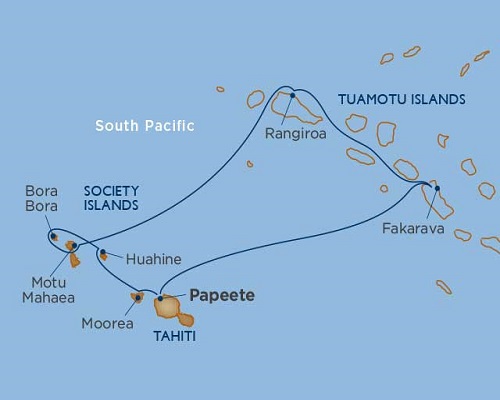
14 Days - Tahiti & the Tuamotu Islands Air + Hotel Package from LAX
Cruise Line: Windstar Cruise
Ship: Star Breeze
Sailing Dates: Dec 16 2025 | Feb 21 2026 | Apr 28 2026 | May 09 2026 | Nov 21 2026 | Dec 26 2026 | Feb 16 2027 | Mar 16 2027 | May 18 2027 | Jun 15 2027 | Jun 25 2027 | Sep 21 2027
Port: Papeete to Papeete
14 Days - Tahiti & the Tuamotu Islands Air + Hotel Package from LAX
Secrets of the Iberian Peninsula
Cruise Line: Ponant Cruises
Ship: L-Austral
Sailing Dates: Apr 26 2026
Port: Lisbon - Barcelona
Secrets of the Iberian Peninsula
Day 1 - Lisbon
Portugalâs capital city located on the banks of the Tagus, only a few kilometres from the Atlantic coast, is a city of exceptionally rich cultural diversity. At the mouth of the river harbour, impose two UNESCO World Heritage monuments, Jeronimos monastery and Belem tower. The Alfama hillside is also worth visiting: known for its fado bars and its Moorish streets, this district is the oldest one of the city and one of the most typical. Not far from there, Chiadoâs elegant streets are home to big fashion labels and are an invitation to a bit of of luxury shopping.
Day 2 - Lagos
There stands a natural paradise called Lagos, bordered by the Atlantic Ocean, in the Algarve region of southern Portugal. With its picturesque and age-old town centre, and the Ponta da Piedade natural site sheltering paradisiacal beaches protected by captivating limestone cliffs in hues of ochre, Lagos enthrals, fascinates and enchants. In this interesting blend between nature and culture, do not miss the chance to stroll along the small paved streets of its historic centre, surrounded by impressive Moorish ramparts and edged with traditional white houses, with decorations sculpted in the stone. In particular, you will be able to admire the Manuelian-style Governor's Castle, the 17th-century Ponta da Bandeira Fort or the Church of Santo António in Baroque architecture.
3 available excursions
Ponta da Piedade & Sagres, Walking tour, The famous Benagil caves
Day 3- Tangier
Nestling in the Bay of Tangier, this bewitching Moroccan city lies at the northwestern tip of the country, along the famous Strait of Gibraltar. Following in the footsteps of the writers and artists inspired and seduced by the cityâs climate and setting, youâll love its rich landscapes and multicultural charm. Youâll instantly understand as soon as you set foot in the heart of the Medina. An architectural masterpiece, the Kasbah is your gateway to the Sultanâs Palace and its gardens. If you prefer beaches to museums, you can relax just a few minutes from the city on the beautiful sweep of sand bathed by the Atlantic Ocean.
3 available excursions
Discovering Tangier, Tetouanâs traditional handicrafts, Religions of Morocco
Day 4 - At sea
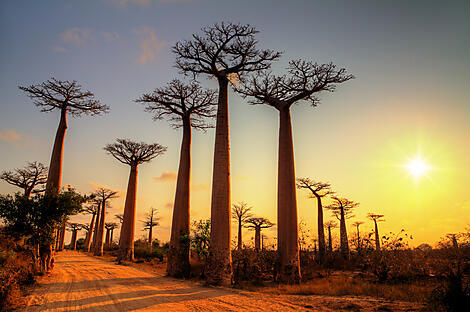
During your journey at sea, make the most of the many services and activities on board. Treat yourself to a moment of relaxation in the spa or stay in shape in the fitness centre. Depending on the season, let yourself be tempted by the swimming pool or a spot of sunbathing. This journey without a port of call will also be an opportunity to enjoy the conferences or shows proposed on board, depending on the activities offered, or to do some shopping in the boutique or to meet the PONANT photographers in their dedicated space. As for lovers of the open sea, they will be able to visit the shipâs upper deck to admire the spectacle of the waves and perhaps be lucky enough to observe marine species. A truly enchanted interlude, combining comfort, rest and entertainment.
Day 5- Cartagena
Surrounded by hills, the natural site of the Bay of Carthagena presided over the fate of this former fortress which has been home to the greatest European civilisations. Today, these Phoenician, Roman, Carthaginian, Moorish and Christian influences form a rich architectural heritage. Its Roman theatre is one of the most significant and best conserved in Spain. You will also be able to cross the landscapes of vines and citrus groves stretching endlessly towards Murcia, to visit this dynamic regional capital.
4 available excursions
Horses of Spain, Cartagena and Roman theater, Discovering Murcia, Cartagena colourful market and tasting
Day 6 - Valencia
Valencia - the city of Art and Sciences. Two hearts beat in this Spanish city: one is modern, avantgarde and almost futuristic; the other is more provincial, more traditional and nostalgic. Valencia has the temperament of a great Mediterranean city whose wide avenues form a border around the old town. The city has an abundance of architectural styles that coexist harmoniously, but above all it resolutely embraces the 21st Century with the futuristic structures of its Agora congress centre and City of Arts and Sciences, emerging from a crystal blue pool.
5 available excursions
Palau de les Arts & Science Museum, Albufera natural park, Highlights of Valencia, Treasures of Valencia, Visit of the historic centre and tasting
Day 7 - Palma de Mallorca, Balearic Islands
Palma de Mallorca will reveal its many treasures: idyllic coves, majestic limestone cliffs that plunge into the clear sapphire- and turquoise-coloured waters of the Mediterranean, and vast plains planted with almond trees, olive trees and vineyards. When your ship calls at the capital of the Balearic Islands, take a walk to discover its emblematic monuments, such as its famous cathedral, and amble through its old streets. Here, like a painting, the islandâs historical heritage forms a backdrop to the lively and warm cosmopolitan atmosphere of the Mediterranean.
4 available excursions
Marivent Gardens & Majorcan Flavours, Valldemossa, Miro Foundation & Palma City, A taste of Mallorcan countryside
Day 8 - Rosas
Lying between sea and mountains, the seaside resort of Rosas is part of the province of Girona in Spain, in central Costa Brava. You will be charmed by the historic Renaissance citadel, as well as the wide sandy beaches and coves with their crystal-clear waters on the edge of the town. Restaurants serving typical Catalan cuisine and numerous bars all make Rosas a lively tourist destination.
3 available excursions
Ancient history of Empùries and Sant MartÃ, Cadaques, fishing village, Dali, musuem theater
Day 9 - Barcelona
Located on the seashore between the mountains of Montjuïc and Tibidabo, Barcelona offers its many visitors a perfect blend of tradition and modernism. Truly an open-air museum, the âprodigious townâ reveals an astonishing range of artistic treasures and museums, combining Roman ruins, medieval districts and a number of avant-garde elements from the 20th Century. Over the years, it has been marked by some of the greatest artists, such as Picasso, Miró or GaudÃ, most of whose work has been listed as World Heritage Sites by UNESCO. Take the time to stroll along the Ramblas and enjoy the gentle, typically Mediterranean lifestyle of the capital of Catalonia.
Greenland Aurora Explorer
Cruise Line: Albatros Expeditions
Ship: Ocean Victory
Sailing Dates: Aug 15 2026
Port: Kangerlussuaq to Reykjavik, Iceland
Greenland Aurora Explorer
Day 1
Kangerlussuaq, Embarkation
On the first day of our expedition, we arrive in Kangerlussuaq on the west coast of Greenland, the hub for travel in this vast island.
Situated at the head of a 160km long fjord of the same name, Kangerlussuaq is Greenland's only inland town, and was established as Sondrestrom Air Base/Bluie West-8 by American troops in 1941. Existing largely to service the airport, the town of Kangerlussuaq itself retains a strong 'Cold War' feeling, hinting at its extensive American military use before it was signed over to the Greenlandic Government in 1992. Today Kangerlussuaq is Greenland's largest air hub, with flights arriving daily from Denmark and around the country. It's stable climate and lack of fog makes it ideal as an airport, but it exhibits some of the most varied temperatures in the country, commonly registering the highest summer and lowest winter temperatures due to its inland location.
Upon arrival in Kangerlussuaq, you will be transported to the small port located west of the airport, where the Ocean Albatros awaits at anchor. Zodiacs will transfer us the short distance to the ship, where you will be checked in to your stateroom. After the mandatory safety drill, enjoy dinner and a glass of champagne as we set sail a course for adventure through the 160-kilometre Kangerlussuaq fjord.
Day 2
Kangaamiut and Evighedsfjorden
On the first full day of our expedition, we will arrive at the small village of Kangaamiut, an incredibly picturesque settlement in Greenlandâs central Qeqqata region. Surrounded by rich cold waters and a vast back country brimming with game, life in Kangaamiut moves at a slower pace, and locals still live a largely traditional lifestyle, surviving by hunting and fishing. Hike to the heliport atop the hill for stunning views over the town and the surrounding fjordlands, or meet the friendly local people during a display of traditional clothing, foods, and seal-flensing. The artists of Kangaamiut are well-known throughout Greenland, and some of the locals' most splendid work can be viewed in the town's small museum.
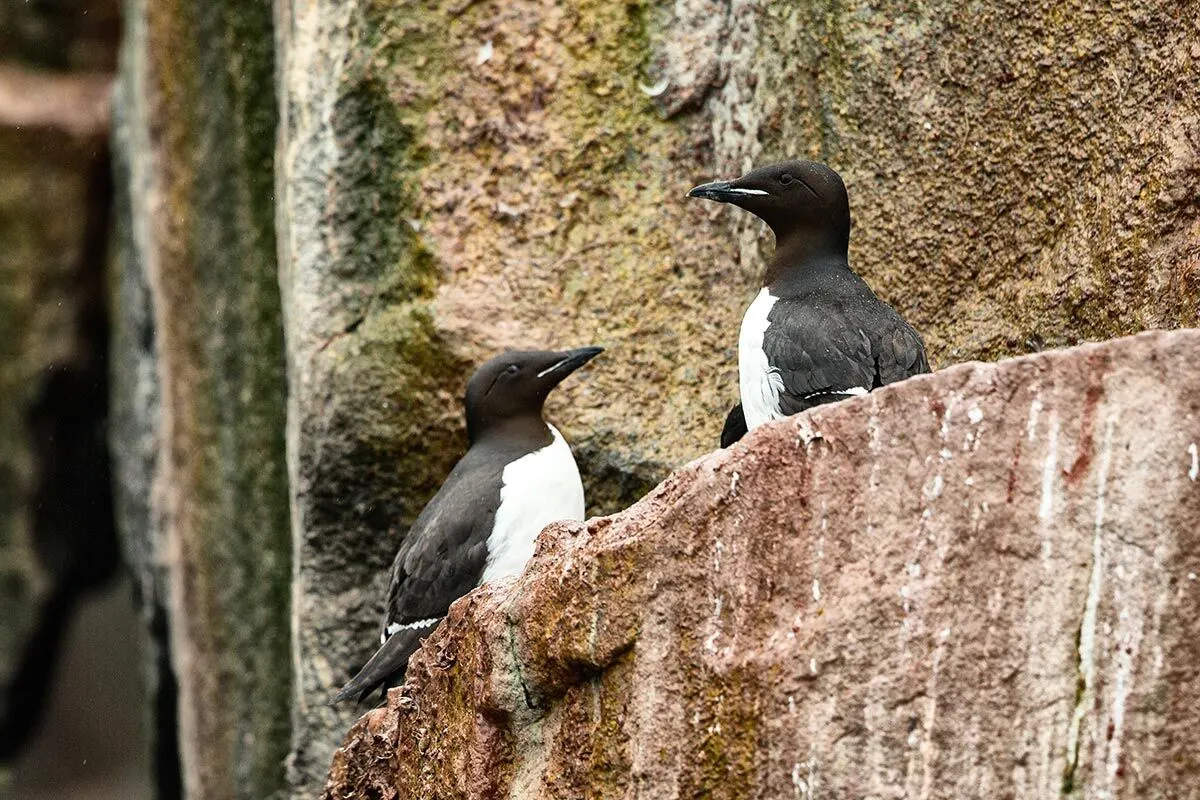
In the afternoon, we will sail inland into Evighedsfjorden/Kangerlussuatsiaq, one of the many deep fjords carved between the steep mountains of this region. The Danish name 'Evighedsfjorden' means 'The Eternity Fjord', referring to the vast size of the inlet, while the Greenlandic name 'Kangerlussuatsiaq' translates as 'The Rather Large Fjord' - something of an understatement! Evighedsfjorden stretches around 100km into the glacier-clad mountains, bisecting the large ice cap which overlies much of the land between Nuuk and Sisimiut - Greenland's two largest cities. We will aim to explore on a Zodiac cruise in front of the Evigheds Glacier, which flows into the fjord from the Maniitsoq Ice Cap above. Watch for calvings from the glacier, and guillemots and kittiwakes on the nearby bird cliffs.
DAY 3
Nuuk, Capital of Greenland
A mixture of skyscrapers and traditional wooden houses, the quaint and the cosmopolitan, Nuuk is a city of contrasts. The vibrant bustling capital of Greenland, Nuuk feels much larger than itâs 19,000 inhabitants, and offers a wealth of experiences to visitors. The calm fjords around Nuuk have been inhabited by Paleo-Inuit cultures since at least 2200BCE, and archaeological evidnece indicates waves of migration through the area as ancient hunters followed migrating prey. Around the year 100CE, Norse colonist from Iceland etablished the Western Settlement in the green meadows of Nuuk Fjord; these settlers mysteriously disappeared several hundred years later leaving the island to the Inuit, who were far better equipped to live in Greenland's harsh environment.
The next Scandinavian to visit the area was Hans Egede, the controversial Danish missionary who 'rediscovered' Greenland, founding Nuuk as Godthåb ("Good Hope") in 1728. Danish initiatives to modernise Greenland in the 1950s left a significant mark on Nuuk. While they brought significant improvements to the city's infrastructure, the many large apartment blocks in the city attest to rapid (and sometimes haphazard) urbanisation. In 1979, the Home Rule Act created the Greenlandic Parliament (Inatsisartut), and proclaimed Nuuk the capital. The city's population continues to rapidly grow, with new suburbs being constructed beneath Ukkusissat, the mountain which looms to the east of the city.
Nuuk offers a huge amount to the discerning visitor; larger than any other city in Greenland, Nuuk has a bustling cosmopolitan vibe, and hosts some of Greenland's best attractions. Swing by Kolonihavn district to visit the Greenlandic National Museum, a treasure trove of history stretching back to the first inhabitants of this icy island - including artefacts from the Paleo-Inuit and Norse periods, as well as the spellbinding Qilakistoq mummies. Explore Greenlandic culture at Katuaq, the city's cultural centre and an architectural marvel; shop for authentic Greenlandic artworks in the city's many boutique shops, or simply relax at a hip curbside café with a Greenlandic coffee and watch this vibrant city in action. Nuuk York (as proud locals call it) is unlike any other city in Greenland, or indeed the world.
DAY 4
At Sea, En Route to South Greenland
From Nuuk, Ocean Albatros will follow the rugged coast of Greenland southwards. All settlements in Greenland (with the exception of Kangerlussuaq) are situated directly on the ocean coast of the country, and the vast majority of residents (some 50,000 or so) live on the narrow strip of coast on the west of the country, facing the Davis Strait. Ocean currents bring warm water up from the Atlantic to the west coast, enriching these wildlife-filled waters. During our day at sea, keep your eyes on the sea! Whales, seals and a huge variety of seabirds are common in these rich waters.
Days at sea are never dull. We will arrange a variety of activities onboard for our guests to enjoy to engage the mind, body and soul. Join your knowledgeable Expedition Team lecturers in the Theatre to hear specially-crafted lectures on local history, wildlife, geology, culture and more, unwind with a massage in the Albatros Polar Spa, or simply watch the seabirds gliding along the ship from our hot tubs as the Ocean Albatros cruises along the coast of Greenland.
Day 5
Qassiarsuk and Itilleq Kujalleq
During the early morning, Ocean Albatros will sail through the majestic mountains of Tunulliarfik Fjord towards the small sheep-farming village of Qassiarsuk. While the modern village was founded in 1924, the location has a fascinating and much longer history; it was here that legendary Norse explorer Eric the Red settled after being banished from Iceland. He named the land he discovered 'Greenland' to encourage other settlers to follow him - a marketing ploy that has stood for over a thousand years!
Erik the Red settled in this green landscape and set up a small farmstead in typical Norse style, naming his new home 'BrattahlÃð'. Erik himself kept fiercely to the Norse gods, but his wife Thjodhild was a Christian. Legend has it, she refused to join his bed until he built her a church, which he eventually did, constructing a tiny hut (Ãjóðhildarkirkja) which was nevertheless the first church in the Americas (although he refused to have it within view of his house).
The southern fjords of Greenland offer a very different environment to the chilly north and east of the country. Situated at roughly 60°N, this region is level with northern Scotland or southern Scandinavia, with a climate to match. Here, the weather is calm, stable and humid, with much warmer summers and milder winters than the rest of the country. In place of rocky hillsides, the fjords here are lined with lush green meadows and dotted with small sheep-farming settlements, of which Qassiarsuk and Igaliku are perhaps the best known.
Over lunchtime, we will repositon to the sheltered bay of Itilleq, where a farm trail beckons us inland. During the afternoon, we will trek through the lush green hills to see the remains of the Norse Bishop's palace at Garðar - once a place of great power and influence in this remote corner of the Norse world, now surrounded by the charming modern farming village of Igaliku.
The Norse settlers in Greenland stayed for almost 500 years, but disappeared from all historical records in the early 1400s. Whether some plague or famine struck them, or whether deteriorating climate simply forced them to return to Scandinavia remains a topic of lively debate. Today the outlines of buildings (including Erik's house, Thjodhild's church and the Bishop's palace) can be seen, along with stunningly accurate reconstructions of Eric's farm, where modern Inuit farmers continue to raise sheep to this day. A statue of Erik now overlooks the area, commemorating the first European to reach the Americas, and whose son Leif would be the first European to reach Baffin Island and Newfoundland. Sites rich in fascinating history and culture old and new, the settlements of BrattahlÃð and Garðar are today part of the Kujataa UNESCO World Heritage Site.
Day 6
Prins Christian Sund and Aappilattoq
South of Skjoldungen lies Kap Farvel, or Cape Farewell, which is renowned not only as Greenland's southernmost point, but also for its infamously challenging weather, which commonly features large swells and gale-force winds.
With this in mind, we deliberately opt for a far more comfortable but also more spectacular route, cruising via the inside passage of Prins Christian Sund. Known in Greenlandic by it's typically descriptive name of Ikerasassuaq ('the Big Strait'), this 60 km long waterway reaches from Aappilattoq to the southeastern coast of Greenland, connecting the Labrador and Irminger Seas.
In the morning, we will approach the small village of Aappilattoq, which sits hunkered beneath the towering mountains at the end of Prins Christians Sund. The village is a world away from busy Nuuk or even Kangaamiut; life here moves at a slower pace, following the rhythms of the wind, waves and tides. Aappilattoq (meaning 'Red' in Greenlandic, referring to the stark granite bluffs above) offers excellent hiking opportunities, and the local choir is renowned throughout Greenland.
Prins Christian Sund is one of the most spectacular waterways anywhere on Earth. Kept free of ice year round by strong tidal currents, the strait is hemmed in on either side by mountains which rise straight out of the water some reaching over 2,000m in height. Large glaciers flow from the ice sheet into the sea on the northern side of the strait, while sapphire blue mountain glaciers loom over the water from the southern side, and vast icebergs stud the glassy waters. Join your Expedition Team on deck to experience the staggering beauty of this legendary waterway.
Day 7
Skjoldungen, Southeast Greenland
Today's adventure begins as we sail into magnificent Skjoldungen, a staggeringly beautiful fjord on the southeastern coast of Greenland. The fjord is named for Skjold, an ancient Danish King of legend, while the Greenlandic name, Saqqisikuik, references the sunny climate of the area. Various archaeological finds on the island which sits in the middle of the fjord suggests nomadic Inuit groups visited and stayed in the area in years gone by; more recently, settlers were brought from Tasiilaq to settle the island in the 1930s, but returned there thirty years later;some houses can still be seen on the southern side of the fjord. A small weather station was also operated on the island by the Allies during WWII.
Today uninhabited, Skjoldungen sits almost 300km from the nearest village, with Mother Nature its only ruler. Vast saw-toothed mountains lined with opalescent glaciers line the deep chilly waters of the fjord, which can freeze even in summer. At the head of the fjord lies the magnificent Thryms Glacier, a magnificent river of ice flowing down from the ice sheet. On the southern side of Thryms Glacier lies the sweeping U-shaped glacial valley of Dronning Maries Dal - a textbook example of a glacially-produced landscape. Join your expedition team for a walk on the flower-lined floor of this valley, and marvel at the stunning scenery. Ensure you are on the outer decks on our approach and departure from this magnificent fjord too: you will not be disappointed!
Day 8
Sermilik, East Greenland
As the sun rises on the crystaline waters, join your Expedition Team on deck to watch for the abundant whales which frolic in these frigid waters. We are now arriving in East Greenland, a land steeped in myths, legends and ancient Inuit tradition.
Separating Ammassalik Island from the Greenlandic mainland lies the vast Sermilik Fjord. Sermilik is a typically descriptive Greenlandic placename, roughly meaning 'the Glacial Fjord' and it is no mystery why: this waterway is choked with vast icebergs, and surely ranks among the most spectacular natural wonders of the region. The icebergs here mostly originate at the vast Helheim Glacier, one of the largest glaciers in this icy country. The Helheim and other glaciers which empty into the fjord pour directly off the Greenland Ice Sheet, the edges of which can be seen to the east, rising thousands of metres towards the frozen core of this vast island.
The volume of ice will dictate our precise activities in Sermilikfjord, although options include coming ashore to marvel at the spectacular scenery and untouched nature of the area, or exploring on the water and marvelling at the natural ice sculptures of the area on a Zodiac cruise through the icebergs. Whatever we do, prepare to be amazed by the jaw-dropping beauty of this otherwordly place.
Day 9
Ikateq and Kuummiut, East Greenland
In the morning, Ocean Albatros will visit the village of Kuummiut, which sits in breathtaking surroundings in the calm reaches of Ammassalik Fjord. Kuummiut - meaning 'People who Live by the River' - is one of the larger villages in the area, and one of the most prosperous. Sitting upon some of East Greenland's richest fishing grounds, Kuummiut holds the only fish factory in the region, and fishermen from miles around come through Ammassalik Fjord (which is wide enough to stay mostly ice-free year-round) to sell their catch here.
Kuummiut is an ideal place to experience life in an East Greenlandic settlement. Where other towns have traffic, Kuummiut has the yowling of sled dogs and the sigh of the wind through the grass. No roads lead in or out of this isolated village, and the sea is the highway for local transport - although motorboats have replaced the skin boats which brought people to these shores long ago. It is a perfect place to simply sit, watch the icebergs pass, and perhaps see the whales which often frolic in the calm waters offshore, or chat with the friendly locals, who are rightly proud of their spectacular home.
During the afternoon we will slightly eastwards towards Ikateq, a spectacular fjord with a fascinating history. During the darkest days of the Second World War, American forces established an airbase here (one of the network of air bases which includes Kangerlussuaq on the west coast) to serve as a stepping stone for aircraft transiting between Europe and North America. The rugged landscape of East Greenland meant the approach into the airport was hazardous, with frequent fog masking the treacherous mountains. Huge recources were invested into Ikateq Airbase (also known as Bluie 2 East), with a 5,000ft runway, hangar, barracks and port constructed. A fleet of military vehicles and thousands of barrels of fuel were also brought to this remote region. With Germany defeated, improvements to intercontinental aircraft, and increasing tensions with the Soviet Union, the United States Military abandoned the base in 1947, leaving almost everything behind.
The air base has been a bone of contention between Nuuk, Copenhagen and Washington for many years. Many in the Greenlandic government wanted the site cleaned up and the ruins removed; an expensive and logistically challenging task. Eventually, the Danish Government agreed to remove hazardous waste from the site (mainly decaying fuel drums), but leaving the rest of the equipment in place as an important part of regional history. Over 75 years later however, almost everything remains as it was on the day the Americans left. Ikateq is a truly unique place, a time warp to the Second World War: eerie, fascinating and surrounded by staggering natural beauty.
Spending the night in the calm waters of Ammassalik Fjord, be sure to keep an eye on the sky - conditions are often excellent to spot the northern lights!
Day 10
Tasiilaq, East Greenland
Our final port of call in Greenland is Tasiilaq, the largest settlement in East Greenland. Unlike the west coast, which has had uninterrupted contact with Europe since the 1700s, the coast of East Greenland remained more or less uncontacted until around 1894, when a Danish trading post was established at Tasiilaq. The vast distances involved in Arctic travel meant that the people of East Greenland (Tunumiit) were isolated from their cousins to the west, and the language, traditions and culture here therefore differ significantly to those in other parts of the country.
Ancient traditions are strong here. This region of Greenland was the home of the last Angakkuit (Shamans) of Greenland, and is the home of the tupilak - a monster fashioned from animal (and sometimes human) body parts and animated by the power of an Angakkuq to wreak havoc on enemies. Creating such a monster was dangerous, as it could be turned back by a more powerful magic user to attack its creator. The first Europeans were curious as to what these dark beasts looked like, and locals carved facsimiles in bone or horn, beginning one of Greenland's finest artistic traditions. The tupilaat made by artisans in Tasiilaq are considered among the best in the country, and can be purchased directly from the artist at the Stunk Workshop in the middle o town.
Tasiilaq sits in a perfect natural harbour on Ammassalik Island (meaning 'the Place of Many Capelin'). While superficially similar to towns on the West Coast, the landscape here is much more rugged, the people fewer, and the sled dogs much more numerous. Tasiilaq offers excellent opportunities to explore, with excellent hiking routes such as the Flower Valley easily accessible from town. For those wishing to delve into Tunumiit culture, visit the museum, located in the city's old church, hear the city's exquisite choir perform in the modern church, or watch a drum dancer in traditional East Greenlandic costume perform a millennia-old spiritual tradition. Otherwise, hike up the hill towards the hotel to enjoy some of the best views anywhere in the country, or join your Expedition Team for a trek through Tasiilaq's famous Flower Valley.
Day 11
At sea, en route to Reykjavik, Iceland
During our time at sea approaching Reykjavik, a variety of activities will be arranged on board to provide our guests with the chance to reflect on their voyage. Relax with an expertly crafted cocktail in the Nordic Bar in the company of new friends, soak up the knowledge and passion of our Expedition Team during lectures, or simply enjoy the flight of the fulmars which accompany us towards Iceland. Remember to take in the crisp ocean air and keep a look out for wildlife in this rich marine environment.
During your last evening onboard, join the Captain and Officers for the Farewell Cocktail Party, followed by a presentation of photos and video by our onboard photographer - the ideal opportunity to re-live your Arctic adventure. Skal!
Day 12
Reykjavik, Iceland
The rock-like columns of HallgrÃmskirkja Church loom over the city of Reykjavik, a hip Scandinavian capital which needs little introduction. With new Nordic cuisine, excellent shopping, fantastic excursions and an easy relaxed vibe, Reykjavik is one of Scandinavia's most welcoming and exciting cities. Such a bustling capital may feel strange after the remote wilderness of the Arctic!
After a hearty breakfast, it is time to bid a fond farewell to the Crew and Expedition Team of Ocean Albatros, and descend the gangway back to dry land with memories of the voyage of a lifetime.
Greenland Explorer
Cruise Line: Polar Latitudes Expeditions
Ship: Ocean Victory
Sailing Dates: Aug 15 2026
Port: Reykjavik to Kangerlussuaq
Greenland Explorer
Day 1
All Aboard in Kangerlussuaq!
HallgrÃmskirkja Church towers over Reykjavik, a vibrant city known for Nordic cuisine, unique museums, and lively shopping. After safety briefings, we set sail towards East Greenland.
Day 2
At Sea, Crossing the Denmark Strait
The Denmark Strait, a narrow passage between Iceland and Greenland, teems with rich marine life. Join your Expedition Team on the outer decks to watch for wildlife. Nearing Greenland, the team shares insights on ecology, geology, and wildlife, as well as briefings preparing guests for Zodiac operations and polar bear safety in the wilderness of Greenland.
Day 3
Tasiilaq, East Greenland
Tasiilaq is East Greenlandâs largest settlement, sitting on rugged Ammassalik Island. Isolated from European contact until its founding as a trading post in 1894, it preserves the unique culture of the Tunumiit people. Once home to Greenlandâs last shamans, Tasiilaq is the origin of the tupilak, a feared magical creature â now a celebrated art form. Visitors can meet sled dogs (with ownersâ permission), experience drum dancing, hike tundra meadows, and visit the famous Stunk Artistâs Workshop.
Day 4
Ikateq and Kuummiit
During the morning, we approach Ikateq, also known as Bluie Two East â a haunting remnant of the American military presence on Greenland during the Second World War. Marvel at the remains of this vital airbase, untouched since it was abandoned in 1947.
In the afternoon we reposition to Kuummiit â a small village deep in the calm waters of Ammassalik Fjord. Here we will have a chance to connect with the friendly locals and experience East Greenlandic culture in one of countryâs most beautiful and welcoming villages.
Day 5
Sermilikfjord
Our next stop is the breathtaking Sermilikfjord â a vast ice-choked fjord which drains the colossal Helheim Glacier. Armadas of vast icebergs drift from the Greenland Ice Sheet out into the North Atlantic, creating one of the most spectacular natural sights on Earth. Join your Expedition Team on a Zodiac cruise and marvel at the gigantic icebergs, natural ice sculptures tens of thousands of years in the making!
Day 6
Skjoldungen/Saqqisikuik
Today, we explore Skjoldungen, a stunning fjord on Greenlandâs southeast coast, known to locals as Saqqisikuik. Once visited by Inuit and briefly settled in the 20th century, it is now remote and uninhabited. Surrounded by breathtaking peaks, highlights include Thryms Glacier and the valley of Dronning Marie Dal. Weather permitting, we may land to explore or cruise by the glacier.
Day 7
Prins Christian Sund and Appilaattoq
In the morning, we sail through spectacular Prins Christian Sund, a 60 km iceberg-filled strait linking East and West Greenland. Surrounded by mountains, glaciers, and valleys, itâs one of the worldâs most spectacular waterways. By afternoon, we reach Aappilattoq, a small, remote village beneath granite cliffs, known for its traditional lifestyle, scenic hiking, and famous local choir.
Day 8
Qassiarsuk and Itilleq Kujalleq
Next, we cruise through Tunulliarfik Fjord to Qassiarsuk, a lush village known for sheep farming and its rich Norse history. Founded in 1924, the modern village sits on the site of Erik the Redâs 10th-century farm, BrattahlÃð. Legend has it that his wife Thjodhild refused to join her pagan husbandâs bed until he built her a church â the first in the Americas. In the afternoon, we hike from nearby Itilleq through lush green fields to Igaliku and the ruins of Garðar, the seat of Norse Greenlandic power.
Day 9
At Sea, En Route to Nuuk
From South Greenland, we sail north along the rugged coast. Nearly all of Greenlandâs settlements lie on the western coast, facing the Davis Strait. Warm Atlantic currents enrich these waters, attracting whales, seals, human hunters, and many seabirdsâso keep an eye out during our day at sea!
Day 10
Nuuk, Capital of Greenland
Home to 20,000 residents, Nuuk, Greenlandâs capital, offers culture, history, and stunning natural beauty. Inhabited since 2200 B.C. by Paleo-Inuit and later by Norse settlers, Nuuk is now Greenlandâs cultural and political center, featuring the Parliament, National Museum (home of the Qilakitsoq mummies), Katuaq cultural center, local art shops, and cozy cafés. Affectionately known as âNuuk Yorkâ by locals, it stands as a singular blend of the ancient and the contemporary.
Day 11
Kangaamiut and Evighedsfjorden
On the final full day of our voyage, we arrive in Kangaamiut, a village where traditional hunting, fishing, and weather shape daily life. Guests can hike for panoramic views, and enjoy a warm cultural welcome with local crafts, food, and performance. In the afternoon, we venture into EvighedsfjordenââThe Eternity Fjordââby Zodiac, cruising past majestic glaciers and dramatic bird cliffs, a thrilling and unforgettable finale to our Arctic voyage.
Day 12
Kangerlussuaq Disembarkation
As our journey concludes, we sail up the 160 km Kangerlussuaq Fjord and disembark by Zodiac. Though Kangerlussuaq is more known for its Cold War-era military roots and role as a transport hub than cultural heritage, its surrounding wilderness offers striking natural beauty â the perfect place to end our thrilling expedition.
Secrets of Central America
Cruise Line: Ponant Cruises
Ship: Le-Champlain | Le-Bellot | Le-Laperouse
Sailing Dates: Mar 15 2026 | Dec 08 2026 | Jan 04 2027 | Jan 05 2027 | Mar 29 2027
Port: Puntarenas - Colon
Secrets of Central America
Day 1-2 - Puntarenas
The capital of the eponymous province, Puntarenas is sometimes called âthe pearl of the Pacificâ, for its unique charm. It sits on the Pacific coast of Costa Rica, along the Gulf of Nicoya, lined with long expanses of wild natural environments. Further inland, among the countless natural wonders to be found in the generous rainforest of the Costa Ricaâs national parks, Poas and Arena volcanoes towers up in all their majestic glory. In this luxuriant natural setting, Costa Rica protects one of the planetâs richest biodiversity: monkeys, sloths, tropical birds, iguanas, crocodiles, waterfalls, canyons, and more than ten thousand species of tropical plants.
Day 2-3 - Curu Wildlife Refuge
On the southern part of the Nicoya Peninsula, the small Curú Wildlife Refuge is the oldest protected park in Costa Rica. This refuge is an exemplary site in terms of ecotourism as well as a research centre for scientists from all over the world. It has been at the heart of an original conservation and sustainable development project since the 1930s. After a short zodiac trip, you will discover, via the paths that criss-cross the tropical forest and lead to magnificent beaches, the most emblematic species of Costa Rica: monkeys, iguanas and over 200 bird species. Since their recent reintroduction, the scarlet macaw and the spider monkey have thrived in this preserved environment.
Day 3- Drake Bay
Located on Costa Ricaâs remote Osa Peninsula, Corcovado National Park covers 164 square miles, making it the countryâs largest national park, the largest primary forest on the American Pacific coast, and one of the few remaining large areas of lowland tropical rain forests in the world.
Day 4 - Rio Esquinas
The beauty of Costa Rica and the richness of its biodiversity reveal themselves at this port of call in the heart of the mangrove. In the meanders of Rio Esquinas, a tropical corner of paradise, you will discover an incredibly dense ecosystem. Aboard your Zodiac dinghy, you will brush past the tangled arms formed by the roots of the mangrove trees. This green and lush gallery forest and its inhabitants welcome you. Watch closely: common squirrel monkeys, white ibis, Eurasian whimbrels, ospreys, toucans, snowy egrets and great blue herons can be found hiding here.
Day 5- Cebaco Island
Off the Pacific coast of Panama, at the entrance to the Gulf of Montijo, Cebaco Island conjures visions of paradise lost. Covered in tropical rainforest, edged by white sandy beaches, home to exceptionally rich plant and wildlife, the island offers a number of hiking routes along which to discover its pristine natural environment. Its magnificent coral reefs, located in the outlying regions of the Coiba National Park, a UNESCO World Heritage site, are the refuge for many marine species and offer stunning underwater landscapes.
Day 6 - Playa Muerto, Darien National Park
The most remote and least developed region of Panama, the province of Darien is an unspoilt land with an extremely rich variety of flora and fauna. Listed by UNESCO as World Heritage, Darien National Park offers its extraordinary scenery of rocky coastlines, mountain ranges, mangroves, rivers and creeks. Discover Playa Muerto, a tiny coastal village home to the Emberas Amerindian community. You will visit the village, attend traditional songs and dances of the locals, and admire beautiful local craft.
Day 7 - Pearls Islands
The Pearl Islands archipelago, formed by over 220 islands and islets, is named in memory of the pearl oysters present in the Gulf of Panama. In colonial times, the pearls were extracted and used as ornaments or currency. âLa Peregrinaâ was discovered in this archipelago: this pearl is famous for its perfection and for belonging to several royals and, more recently, Elizabeth Taylor. While the pearls have now disappeared from the azure waters of this paradise with its history of adventures and piracy, you can still swim from the sandy white beaches and observe shoals of multi-coloured fish performing their gracious ballet.
Day 7 - Pacheca Island
Isla Pacheca lies in the far north of the maze of more than two hundred islands composing the Pearl Islands. This small piece of uninhabited land is a special place for the numerous bird species that have taken up residence there. Among these is the unusual-looking blue-footed booby, which you might spot wandering along one of the islandâs beaches. The shore visit in a Zodiac dinghy holds the promise of an unforgettable moment spent in lush nature between white-sand beaches and verdant rainforest.
Day 8 - Crossing the Panama Canal
Aboard your ship, experience something unique, that has inspired the imagination of numerous adventurers in the 20th century: sailing the Panama Canal. Its construction started in 1880 under the direction of Ferdinand de Lesseps. Abandoned then resumed, this marvel of engineering was completed by the United States and opened in 1914. The canal crosses the Isthmus of Panama and links the Atlantic to the Pacific. Including three levels of locks and by raising ships to the level of Lake Gatun, almost as if the water was a lift, it allows them to avoid having to round Cape Horn.
Day 9 - San Blas Islands
Located on the north-east coast of Panama, the San Blas archipelago is a string of coral islands in the heart of the Caribbean Sea. More than 300 islands and cays cover an area of 300 square kilometres offering travellers a multitude of treasures. Sheltered behind a long coral reef, the San Blas Islands are full of enchanting anchorages. The long sandy white beaches bound by crystal-clear waters will allow you to relax and enjoy incredible marine fauna before engaging with the Kunas Indian community. Still subsisting on hunting and fishing, they will welcome you in their villages of bamboo houses gathered near the beaches.
Day 10 - Fort San Lorenzo (Colon)
In the Colón District, Fort San Lorenzo faces the sea, its canons pointing towards the horizon as they used to under the Spanish Crown. This construction is part of a group of buildings exemplifying the military architecture of the 17th and 18th centuries along the Caribbean coast of Panama, hence its status as a UNESCO World Heritage Site. Wander along the fortâs alleyways accompanied by the melodious singing of the birds that have made the surrounding forest their home. Enjoy an unforgettable port of call combining history and walking in nature.
Day 11 - Colon
Colón is the second largest city in Panama, at the Caribbean entrance of the Panama Canal. Colón is today an important port, and the free trade zone created in 1953 contributed greatly to the development of the city. Colón was founded in 1850 by Americans working on the Panama railroad connecting the Atlantic and Pacific coasts through the isthmus of Panama; the city rapidly overshadowed the older Caribbean ports of Panama when the canal opened.
Gliding the Waters of the Windward Islands
Cruise Line: Ponant Cruises
Ship: Leponant
Sailing Dates: Jan 03 2026 | Jan 31 2026 | Feb 28 2026 | Mar 28 2026 | Jan 02 2027 | Jan 30 2027 | Feb 27 2027 | Mar 27 2027
Port: Pointe-a-Pitre - Pointe-a-Pitre
Gliding the Waters of the Windward Islands
Day 1 - Pointe-a-Pitre
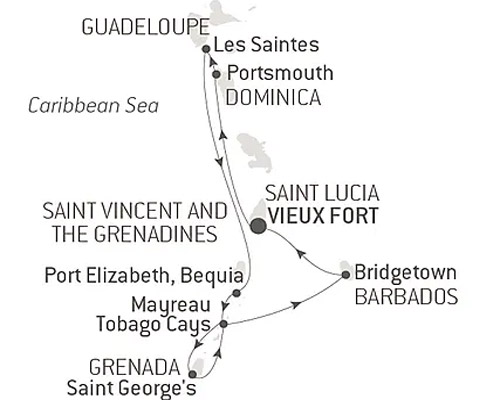
At the crossroads of cultures, where European influence mingles with the richness of the Caribbean and the diversity of indigenous traditions, Pointe-Ã -Pitre promises a unique experience. Here, nestled on the southern coast of the island of Grande-Terre in Guadeloupe, in the heart of the Caribbean Sea, you will fall in love with the heavenly landscapes that reveal themselves to you, including white-sand beaches, verdant mountains, and lush tropical forests. Along the bustling streets of the city, you will discover Creole authenticity through the colourful markets, the traditional wooden houses, and the warm hospitality of the locals.
Day 2 - Portsmouth
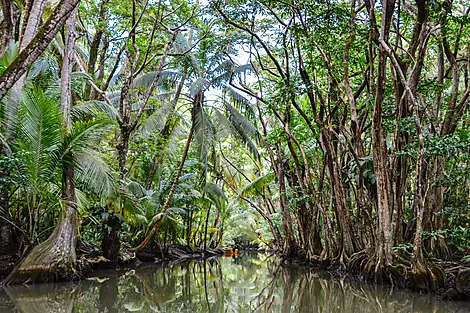
With its mountainous terrain, vast tropical forest, hot springs, rivers and spectacular waterfalls, Dominica is undoubtedly the wildest island in the Caribbean. Protected by several national parks, this little-known land, located in the heart of the Caribbean Sea, between Guadeloupe and Martinique, will inspire adventure and exploration. During your port of call, do not miss out on discovering the enchanting landscapes of the Indian River: navigating through this dense mangrove, in which creepers, ferns, forest trees and giant roots are interweaved, is a magical experience, a fascinating voyage into the heart of an almost mystical natural universe.
1 available excursions
Traditional Kalinago cultural experience
Day 3- Port Elizabeth, Bequia Island
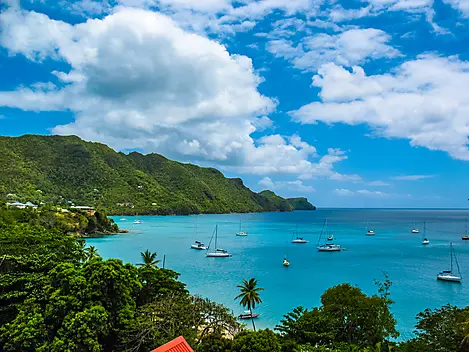
In the heart of the Caribbean, Bequia is the second-largest of 32 islands that make up the country of St Vincent and the Grenadines. You will love the lively and picturesque atmosphere of Port Elizabeth, the islandâs main town. From the port, a promenade lined with beautiful traditional houses, landscaped gardens and small restaurants runs along the shoreline. It leads to Princess Margaret Beach, a wild beach where Princess Margaret herself has stayed and which seems to emerge directly from the tropical forest. From rainforest to lush meadows and long stretches of sand, Bequia will offer you a natural setting that is conducive to lovely walks and to spending time on the beach.
1 available excursions
Discover Bequia
Day 4 - Tobago Cays
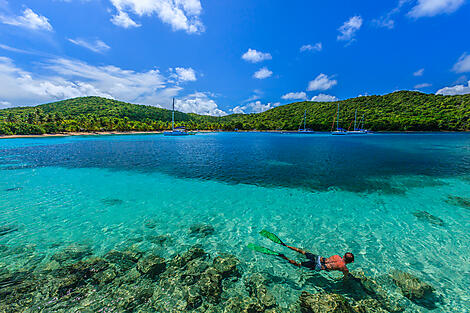
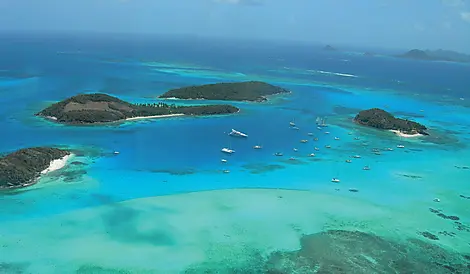
Scattered between St Vincent and Grenada, the Tobago Cays comprises five little islands: Petit Rameau, Petit Bateau, Baradal, Petit Tabac and Jamesby. This rosary of uninhabited cays in the southern West Indies is a marine park whose turquoise lagoons provide a home and safe haven for some outstanding marine fauna, including peaceful green turtles. Girded and united by a coral reef, these secluded islands are a peaceful paradise for divers, swimmers and snorkellers.
2 available excursions
Petit Rameau with a local naturalist, Relax and swim at Mopion,
Day 5 - Sandy Island, Carriacou
West of Carriacou, the northernmost island in the state of Grenada, is Sandy Island, a spit of sand set in the bewitching Caribbean waters. Known for its powdery white sand and small lagoon with crystal clear waters, this wild islet, dotted with coconut trees, offers a natural setting for swimming and snorkelling. The abundant and colourful marine life promises memorable and thrilling encounters. Listed as a marine protected area, the site is also a hunting ground for numerous pelicans. Enjoy a fascinating show as they circle above the water before diving suddenly to catch their prey.
Day 6 - Sailing along the Pitons
You will sail off the coast of the Pitons in Soufrière Bay. The Pitons are two volcanic spires, covered in tropical rainforest, rising side by side from the sea â they are a UNESCO World Heritage Site. The areaâs volcanic complex includes a geothermal field with sulphurous fumaroles and hot springs. In the marine area, coral reefs are home to very diverse fauna, including hawksbill sea turtles, pilot whales and whale sharks, these harmless gentle giants that you will perhaps be lucky enough to observe by diving in the sea behind the ship.
Day 6 - At sea aboard Le Ponant
During your day at sea on board Le Ponant, make the most of your free time and the comfort of your ship for a moment of rest or conviviality. If the weather is right, let yourself be tempted by a spot of sunbathing. This day without a port of call will also be an opportunity to do some shopping in the boutique and share the highlights of your cruise with the other passengers. As for lovers of the open sea, they will be able to visit the shipâs upper deck to admire the spectacle of the waves and perhaps be lucky enough to observe marine species. A truly enchanted interlude, combining relaxation, sharing and the pleasure of sailing on a yacht.
Day 6 - Les Anses-d'Arlet
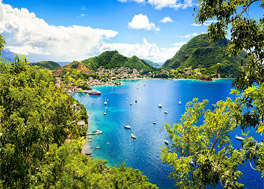
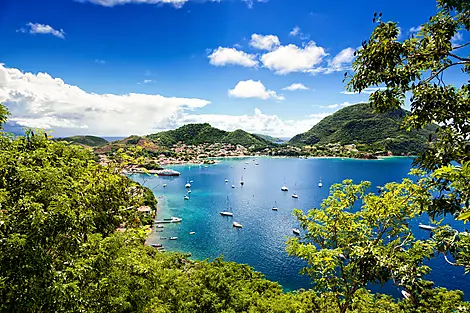
Lying on the south-western end of Martinique, the charming town of Les Anses-dâArlet reveals all the colours of the West Indies: from the azure blue of the Caribbean Sea and the emerald green of the surrounding vegetation to the reds, yellows and purples of the traditional Creole houses. This former fishing village, with its picture-postcard appearance and its typical and peaceful atmosphere, promises a unique interlude during which you will be able to spend moments relaxing on long white sandy beaches, discover local culture and explore the lush nature with its singular biodiversity.
Day 7 - Marie-Galante
It is undoubtedly because Marie-Galante concentrates all the charms of the Caribbean into one island that it is today one of the most in-demand destinations in the region. âThe island of 100 millsâ or the âgreat galetteâ as it is sometimes known, in reference to the form of its 15 km diameter limestone plateau, is surrounded by white sandy beaches that are some of the most beautiful in the Caribbean In Saint-Louis, you can take the time to bathe in its turquoise waters, relax under the palm trees and almond trees or stroll along the colourful streets of the village.
Day 8 - Pointe-a-Pitre
At the crossroads of cultures, where European influence mingles with the richness of the Caribbean and the diversity of indigenous traditions, Pointe-Ã -Pitre promises a unique experience. Here, nestled on the southern coast of the island of Grande-Terre in Guadeloupe, in the heart of the Caribbean Sea, you will fall in love with the heavenly landscapes that reveal themselves to you, including white-sand beaches, verdant mountains, and lush tropical forests. Along the bustling streets of the city, you will discover Creole authenticity through the colourful markets, the traditional wooden houses, and the warm hospitality of the locals.
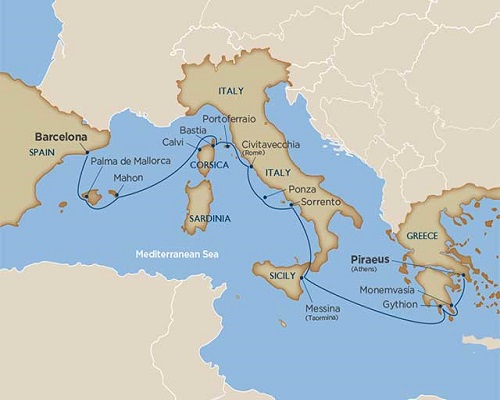
10 Days - Vatican & Croatian Coastlines Cruise Tour - Star Explorer
Cruise Line: Windstar Cruise
Ship: Star Explorer
Sailing Dates: Jan 20 2027 | Jan 30 2027 | Mar 09 2027 | Mar 19 2027 | Apr 20 2027 | Sep 21 2027 | Oct 01 2027 | Oct 07 2027 | Oct 17 2027
Port: Venice to Rome
10 Days - Vatican & Croatian Coastlines Cruise Tour - Star Explorer
Secrets of Central America
Cruise Line: Ponant Cruises
Ship: Le-Champlain | Le-Bellot | Le-Laperouse
Sailing Dates: Jan 19 2026 | Mar 05 2026 | Nov 21 2026 | Dec 18 2026 | Dec 19 2026 | Jan 14 2027
Port: Colon - Puntarenas
Secrets of Central America
Day 1-2 - Colon
Colon is the second largest city in Panama, at the Caribbean entrance of the Panama Canal. Colón is today an important port, and the free trade zone created in 1953 contributed greatly to the development of the city. Colón was founded in 1850 by Americans working on the Panama railroad connecting the Atlantic and Pacific coasts through the isthmus of Panama; the city rapidly overshadowed the older Caribbean ports of Panama when the canal opened.
Day 2 - Fort San Lorenzo (Colon)
In the Colón District, Fort San Lorenzo faces the sea, its canons pointing towards the horizon as they used to under the Spanish Crown. This construction is part of a group of buildings exemplifying the military architecture of the 17th and 18th centuries along the Caribbean coast of Panama, hence its status as a UNESCO World Heritage Site. Wander along the fortâs alleyways accompanied by the melodious singing of the birds that have made the surrounding forest their home. Enjoy an unforgettable port of call combining history and walking in nature.
Day 3- San Blas Islands
Located on the north-east coast of Panama, the San Blas archipelago is a string of coral islands in the heart of the Caribbean Sea. More than 300 islands and cays cover an area of 300 square kilometres offering travellers a multitude of treasures. Sheltered behind a long coral reef, the San Blas Islands are full of enchanting anchorages. The long sandy white beaches bound by crystal-clear waters will allow you to relax and enjoy incredible marine fauna before engaging with the Kunas Indian community. Still subsisting on hunting and fishing, they will welcome you in their villages of bamboo houses gathered near the beaches.
Day 4- Crossing the Panama Canal
Aboard your ship, experience something unique, that has inspired the imagination of numerous adventurers in the 20th century: sailing the Panama Canal. Its construction started in 1880 under the direction of Ferdinand de Lesseps. Abandoned then resumed, this marvel of engineering was completed by the United States and opened in 1914. The canal crosses the Isthmus of Panama and links the Atlantic to the Pacific. Including three levels of locks and by raising ships to the level of Lake Gatun, almost as if the water was a lift, it allows them to avoid having to round Cape Horn.
Day 5 - Pearls Islands
The Pearl Islands archipelago, formed by over 220 islands and islets, is named in memory of the pearl oysters present in the Gulf of Panama. In colonial times, the pearls were extracted and used as ornaments or currency. âLa Peregrinaâ was discovered in this archipelago: this pearl is famous for its perfection and for belonging to several royals and, more recently, Elizabeth Taylor. While the pearls have now disappeared from the azure waters of this paradise with its history of adventures and piracy, you can still swim from the sandy white beaches and observe shoals of multi-coloured fish performing their gracious ballet.
Day 5 - Pacheca Island
Isla Pacheca lies in the far north of the maze of more than two hundred islands composing the Pearl Islands. This small piece of uninhabited land is a special place for the numerous bird species that have taken up residence there. Among these is the unusual-looking blue-footed booby, which you might spot wandering along one of the islandâs beaches. The shore visit in a Zodiac dinghy holds the promise of an unforgettable moment spent in lush nature between white-sand beaches and verdant rainforest.
Day 6 - Playa Muerto, Darien National Park
The most remote and least developed region of Panama, the province of Darien is an unspoilt land with an extremely rich variety of flora and fauna. Listed by UNESCO as World Heritage, Darien National Park offers its extraordinary scenery of rocky coastlines, mountain ranges, mangroves, rivers and creeks. Discover Playa Muerto, a tiny coastal village home to the Emberas Amerindian community. You will visit the village, attend traditional songs and dances of the locals, and admire beautiful local craft.
Day 7 - Cebaco Island
Off the Pacific coast of Panama, at the entrance to the Gulf of Montijo, Cebaco Island conjures visions of paradise lost. Covered in tropical rainforest, edged by white sandy beaches, home to exceptionally rich plant and wildlife, the island offers a number of hiking routes along which to discover its pristine natural environment. Its magnificent coral reefs, located in the outlying regions of the Coiba National Park, a UNESCO World Heritage site, are the refuge for many marine species and offer stunning underwater landscapes.
Day 8 - Rio Esquinas
The beauty of Costa Rica and the richness of its biodiversity reveal themselves at this port of call in the heart of the mangrove. In the meanders of Rio Esquinas, a tropical corner of paradise, you will discover an incredibly dense ecosystem. Aboard your Zodiac dinghy, you will brush past the tangled arms formed by the roots of the mangrove trees. This green and lush gallery forest and its inhabitants welcome you. Watch closely: common squirrel monkeys, white ibis, Eurasian whimbrels, ospreys, toucans, snowy egrets and great blue herons can be found hiding here.
Day 9 - Drake Bay
Located on Costa Ricaâs remote Osa Peninsula, Corcovado National Park covers 164 square miles, making it the countryâs largest national park, the largest primary forest on the American Pacific coast, and one of the few remaining large areas of lowland tropical rain forests in the world.
Day 10 - Curu Wildlife Refuge
On the southern part of the Nicoya Peninsula, the small Curú Wildlife Refuge is the oldest protected park in Costa Rica. This refuge is an exemplary site in terms of ecotourism as well as a research centre for scientists from all over the world. It has been at the heart of an original conservation and sustainable development project since the 1930s. After a short zodiac trip, you will discover, via the paths that criss-cross the tropical forest and lead to magnificent beaches, the most emblematic species of Costa Rica: monkeys, iguanas and over 200 bird species. Since their recent reintroduction, the scarlet macaw and the spider monkey have thrived in this preserved environment.
Day 11 - Puntarenas
The capital of the eponymous province, Puntarenas is sometimes called âthe pearl of the Pacificâ, for its unique charm. It sits on the Pacific coast of Costa Rica, along the Gulf of Nicoya, lined with long expanses of wild natural environments. Further inland, among the countless natural wonders to be found in the generous rainforest of the Costa Ricaâs national parks, Poas and Arena volcanoes towers up in all their majestic glory. In this luxuriant natural setting, Costa Rica protects one of the planetâs richest biodiversity: monkeys, sloths, tropical birds, iguanas, crocodiles, waterfalls, canyons, and more than ten thousand species of tropical plants.
South Africa and Namibia by Sea: Around the Cape of Good Hope - with Smithsonian Journeys
Cruise Line: Ponant Cruises
Ship: Le-Bougainville | Le-Dumont-D-Urville
Sailing Dates: Mar 19 2026 | Feb 21 2027
Port: Durban - Walvis Bay
South Africa and Namibia by Sea: Around the Cape of Good Hope - with Smithsonian Journeys
Ports of Call & Excursions
Day 1 - Durban
Situated in the Kwazulu-Natal region, the cradle of Zulu culture, Durban is the third largest city in South Africa and one of Africa's major ports. Between long beaches rocked by the rollers of the Indian Ocean and the skyscrapers dominating the avenues lined with jacarandas, in this multicultural city with African, Indian and colonial influences, the term "rainbow nation" takes on its full dimension. With a rich cultural and historical heritage, with its museums, colonial buildings and picturesque neighbourhoods, it is also known for the fauna and flora that surrounds it.
Day 2 - At sea
During your journey at sea, make the most of the many services and activities on board. Treat yourself to a moment of relaxation in the spa or stay in shape in the fitness centre. Depending on the season, let yourself be tempted by the swimming pool or a spot of sunbathing. This journey without a port of call will also be an opportunity to enjoy the conferences or shows proposed on board, depending on the activities offered, or to do some shopping in the boutique or to meet the PONANT photographers in their dedicated space. As for lovers of the open sea, they will be able to visit the shipâs upper deck to admire the spectacle of the waves and perhaps be lucky enough to observe marine species. A truly enchanted interlude, combining comfort, rest and entertainment.
Day 3 - East London
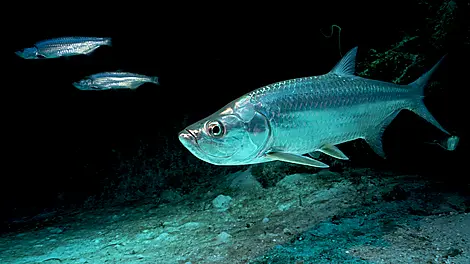
Situated on South Africaâs Sunshine Coast, about 1,000 km (620 miles) from Cape Town, East London is now the countryâs largest river port. Affectionately known as âBuffalo Cityâ, it is bathed in the warm waters of the Indian Ocean and is bordered by the Nahoon River to the north and the Buffalo River to the south. It enjoys an incredible subtropical climate. But its sun-drenched coastline is not its only attraction. The city also boasts a number of cultural treasures, including the type specimen of the coelacanth, a fish thought to have disappeared 80 million years ago, and the world's only dodo egg. Both are on display at the East London Museum. The city is also a gateway to the Xhosa culture and their villages. In the Nahoon Point Nature Reserve, important archaeological remains await you along the dunes, including one of the oldest footprints in the world.
Day 4Â Â - 5 - Port Elizabeth
Discover Port Elizabeth, one of South Africaâs major cities. Located in the province of Eastern Cape, Port Elizabeth is nicknamed âThe Friendly Cityâ, in reference to the hospitality of its inhabitants. Renowned for the beauty of its beaches, Port Elizabeth is also home to rich wild life, particularly in the Addo National Park, famous for its elephants. Another key site in the city, the Donkin reserve is a public space home to numerous historic monuments. Port Elizabeth also reflects an important aspect of South African history, through both its colonial heritage and its contemporary history marked by the end of apartheid.
Day 6 - At sea
During your journey at sea, make the most of the many services and activities on board. Treat yourself to a moment of relaxation in the spa or stay in shape in the fitness centre. Depending on the season, let yourself be tempted by the swimming pool or a spot of sunbathing. This journey without a port of call will also be an opportunity to enjoy the conferences or shows proposed on board, depending on the activities offered, or to do some shopping in the boutique or to meet the PONANT photographers in their dedicated space. As for lovers of the open sea, they will be able to visit the shipâs upper deck to admire the spectacle of the waves and perhaps be lucky enough to observe marine species. A truly enchanted interlude, combining comfort, rest and entertainment.
Day 7Â Â - 8 - Cape Town
Dynamic and peaceful, cosmopolitan and hip, Cape Town offers its visitors a most unique mix. Here, the locals like to say that their city is âthe quintessential melting pot of South Africaâ. Located in the heart of one of the most beautiful bays in the world and dominated by the famous Table Mountain, it is graced with extraordinary landscapes including sheer cliffs that plunge into the Atlantic Ocean and vast whitesand beaches. We invite you to discover this incredible city, the South African capital of fashion, the art of living, and gastronomy. Further on, the Cape of Good Hope Nature Reserve awaits you and is home to a wide variety of endemic fauna and flora.
Day 9 - At sea
During your journey at sea, make the most of the many services and activities on board. Treat yourself to a moment of relaxation in the spa or stay in shape in the fitness centre. Depending on the season, let yourself be tempted by the swimming pool or a spot of sunbathing. This journey without a port of call will also be an opportunity to enjoy the conferences or shows proposed on board, depending on the activities offered, or to do some shopping in the boutique or to meet the PONANT photographers in their dedicated space. As for lovers of the open sea, they will be able to visit the shipâs upper deck to admire the spectacle of the waves and perhaps be lucky enough to observe marine species. A truly enchanted interlude, combining comfort, rest and entertainment.
Day 10 - Luderitz
Located in Namibia, in southern Africa, Luderitz is a coastal town in the Karas region. A former German colony at the gates of the Namib desert, this singular town has houses featuring occasionally extravagant colonial architecture. With its sandy streets overlooking the ocean, the small port town gives off a particular atmosphere that will not leave you indifferent. Perched on a granite promontory, the Felsenkirche Lutheran church is well worth a visit, as are the Deutsche Afrika Bank building and the Goerke Haus monument. The Kolmanskop ghost town, with its hospital and abandoned colonial houses invaded by the desert sands , looks like itâs come straight off a film set.
Day 11 - Walvis Bay
On the wild coastlines of Namibia, you will feel the force of the encounter between the infinite dunes of the oldest desert in the world and the tempestuous waves of the Atlantic Ocean. A natural port in the curve of a bay formed by an old river delta, Walvis Bay is protected from the whims of the ocean by the natural barrier of Pelican Point. It is a real refuge for migratory birds, where thousands of pink flamingos and Cape cormorants mix with one of the largest Cape fur seal colonies in the world. On the Namibian coastline, the seals make the most of the Benguela Current, cold and full of fish, which comes up from the Antarctic.
*Prices are per person, based on double occupancy. Prices do not include Government Fees & Taxes. Pricing and availability subject to change without notice. STIC Travel Group reserves the right to refuse or honor any prices / sailings that are erroneously printed or quoted. Terms & Conditions apply.

Contact
2nd Floor, Tower C, Cyber Greens, DLF Phase-III, Gurgaon - 122002, Haryana, India. Phone: +91-124-4595300 E-mail: info@sticgroup.com International Cruise Tour: +91 9920688575
We Accept: 
Secured By: 
Copyright © STIC GSA Services Pvt. Ltd. All rights reserved