

Odyssey in the heart of Japan's subtropical islands[Keelung- Osaka]
![Odyssey in the heart of Japan's subtropical islands[Keelung- Osaka]](/images/packages/Odyssey-in-the-heart-of-Japan.jpg "Odyssey in the heart of Japan's subtropical islands[Keelung- Osaka]")
Cruise Line: Ponant Cruise
Ship: Le-Jacques-Cartier
Travel Period: Sep 20 2027
Port: Keelung (Chilung) (Taiwan) to Osaka (Japan)
Duration: 10 Days
![Odyssey in the heart of Japan's subtropical islands[Keelung- Osaka]](/images/packages/extraimages/9836_Osaka-Keelung.jpg "Odyssey in the heart of Japan's subtropical islands[Keelung- Osaka]")
Odyssey in the heart of Japan's subtropical islands[Keelung- Osaka]
Ports of Call & Excursions
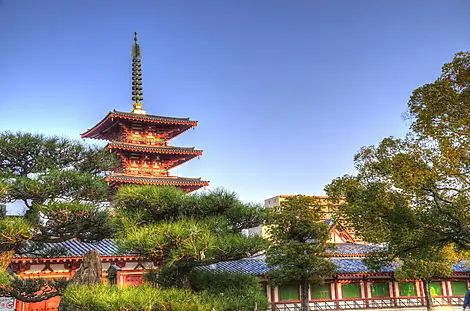
Day 1 - Keelung (Chilung)
On the north-east tip of Taiwan, the harbour city of Keelung stands on one of the most beautiful coasts on the island. Nearby is the spectacular natural park of Yehliu, famed for its striking rock formations. It's easy to tour the city's historical sites on trails that cross the lush green hills surrounding the harbour from Chung Cheng Park to Fort Ershawan, you can enjoy superb views of Keelung and the coastline. But the main attraction is the Miaokou night market, where you can taste some typically Taiwanese culinary delights.
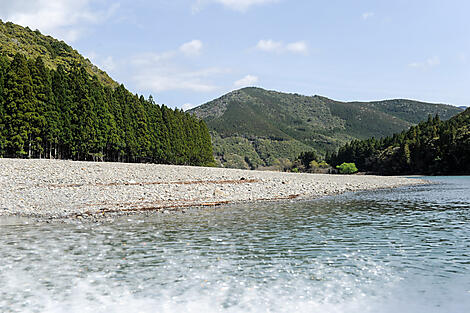
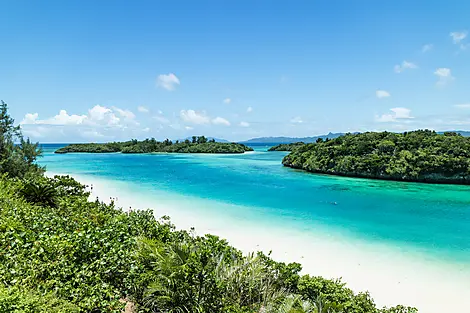
Day 2 - Ishigaki
Located to the south of the main island of the Yaeyama archipelago, Ishigaki boasts all the aspects of an authentic piece of paradise. You have guessed it, you do not come here for its skyscrapers but for its pure emerald waters and idyllic beaches. The waters off Shiraho, on the island's south-west coast, have one of the largest areas of blue coral in the world.
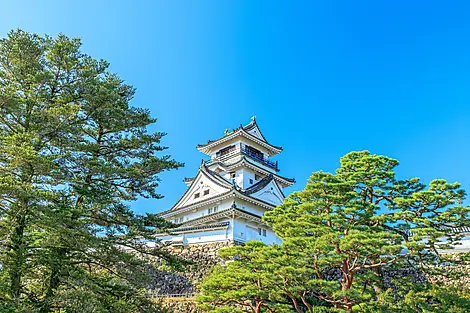
Day 3 - Miyakojima
Situated between the East China Sea and the Philippine Sea, Miyakojima is the main island of the Miyako Islands, in the Sakishima archipelago. The fourth largest island in the Okinawa prefecture, it is known for its many sugar cane plantations and some of Japanâs most beautiful beaches.
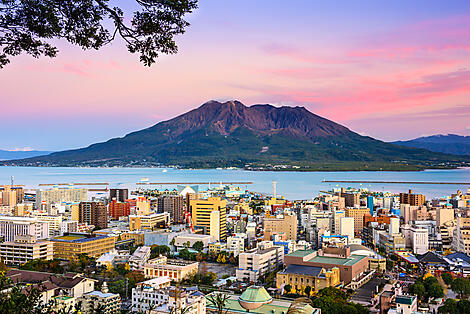
Day 4 - Naha, Okinawa
Capital of Okinawa Prefecture, the town of Naha is located on the south-west of the island. You will love its lively atmosphere, particularly along Kokusai Dori, otherwise known as 'international street'. The picturesque Makishi Public Market, nicknamed 'Naha's kitchen' offers a profusion of colourful fish, Okinawan foodstuffs and local spices and you can sample delicacies cooked on the spot.
Day 5 - Motobu, Okinawa
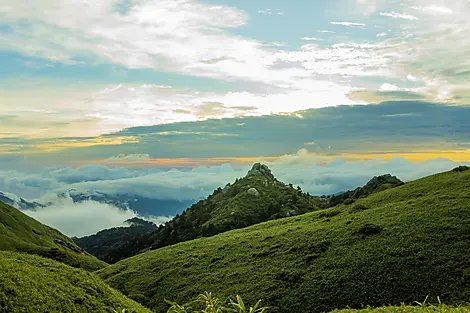
To the north of the island of Okinawa, lying between the azure ocean and lush hills, Motobu inspires contemplation. This Japanese paradise, far off the beaten track, unveils landscapes steeped in poetry. A setting of pristine nature, with Mount Yae as a backdrop, Motobu reveals itself through its white sandy beaches and its wild and preserved Yambaru forest, home to a rare wealth of fauna and flora. Travel back into Okinawaâs fascinating past by discovering the Nakijin Castle site, a UNESCO World Heritage Site, followed by a walk through the historic district of Bise, renowned for its impressive green tunnels.
Day 6 - Miyanoura, Yakushima
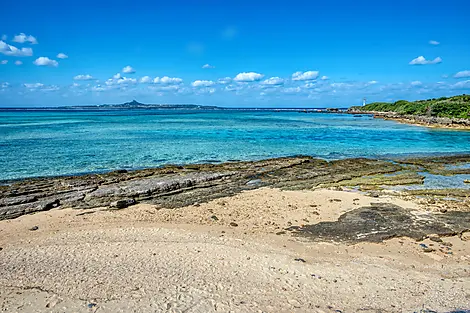
Yakushima is a striking island in the South of Japan, covered in forest and listed as a UNESCO World Heritage Site. Hikers are very fond of this destination because of the lush vegetation, Mount Miyanoura, the waterfalls and cascades. But without a doubt, the symbol of the island remains its many age-old cedar trees which is said to have inspired some of the scenes in the animated film Princess Mononoke. On this island, you will also find wildlife including the Japanese macaque, the sika deer, and green sea turtles which lay their eggs on the magnificent sandy beaches here.
Day 7 - Kagoshima
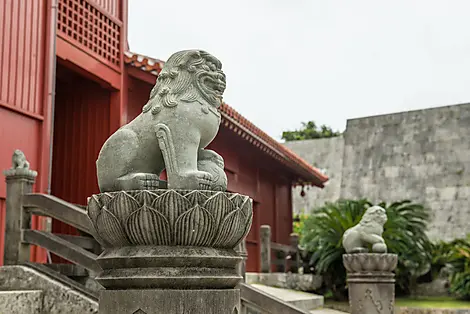
The seaside city of Kagoshima, at the south of Kyushu Island, ï¾ is best known for Sakurajima, an active volcano that faces Kinko Bay. A visit to this busy metropolis will remind you just how much the volcano is part of the inhabitants' everyday life: in the wake of the almost daily eruptions, a delicate layer of ash settles on everything. The top of a buried torii (traditional Japanese gate) measuring three metres that was 'swallowed up' by a giant lava flow in 1914 can still be seen. The power of nature will send a shiver down your spine.
Day 8 - Kochi
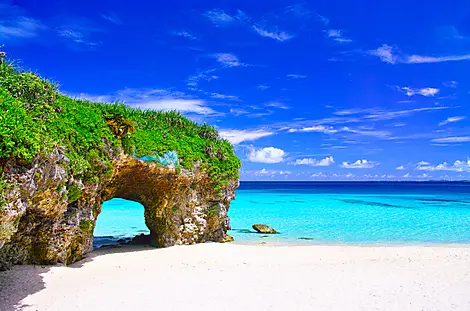
The fourth largest island in the Nippon archipelago, Shikoku, is also the best preserved. Here, forests and oceans stretch as far as the eye can see. On the southern coast of the island, Kochi, the tranquil metropolis will quietly welcome you. You can enjoy a lively town, with many commercial centres and restaurants. On the menu, katsuo tataki, a local speciality with delicately grilled fish. But Kochi, overlooked by the benevolent shadow of its castle, also invites you to explore its magnificent Katsurahama beach, its museums and Buddhist temples, the site of a famous annual pilgrimage.
Day 9 - Shingu
To the south-west of the Japanese archipelago, Shingu is a port town in the Kansai region. Founded in 1933, it belongs to the peninsula of Kii, the countryï¾s largest. Take a trip around the Kumano Sanzan religious complex dedicated to three sacred mountains and home to two Shinto temples, Kumano Hong? Taisha and Kumano Hayatama Taisha.ï¾ The latter features the famous sacred nagi tree, said to have been planted around 1159. Pilgrims flock to these two sanctuaries that feature on UNESCO's World Heritage list. Hop on a boat and journey to the Dorokyo Gorge, a natural beauty spot carved out by the emerald waters of the Kumano river.
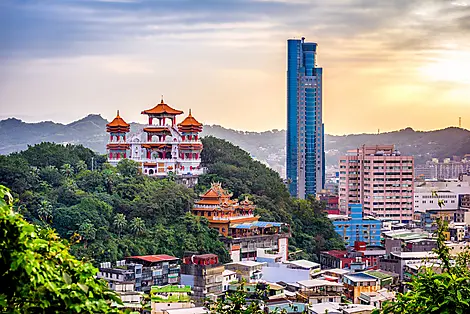
Day 10 - Osaka
Like its big sister Tokyo, Osaka is the product of ancestral traditions and amazing technological innovations. And despite its size, its location on the Pacific Ocean give it a sense of serenity. The main historic landmark is the 16th century Osaka Castle, which stands proud in the midst of majestic skyscrapers. The lively streets of Dotomburi and the bizarre Shinsekai district attract thousands of locals and visitors. A multitude of restaurants offer menus full of regional specialities: takoyaki, made with octopus, and other succulent dishes such as kushikatsu kebabs.
Christmas Season in Antarctica

Cruise Line: Polar Latitudes Expeditions
Ship: Ocean Victory
Travel Period: Dec 18 2026
Port: Ushuaia to Ushuaia
Duration: 11 Days

Christmas Season in Antarctica
Day 1
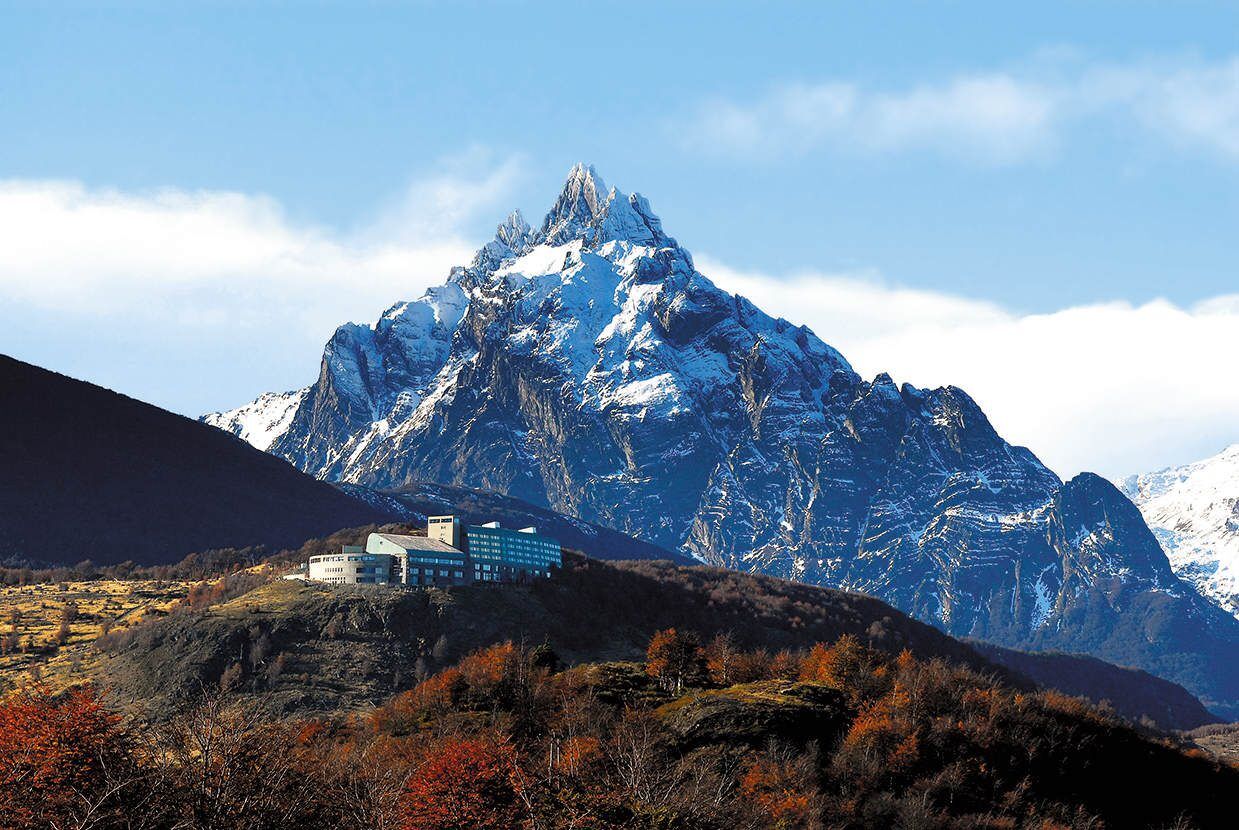 Arrive and explore in Ushuaia
After a friendly welcome at the airport and a transfer to the luxurious Arakur Ushuaia Resort & Spa, take some time to unwind or explore the southernmost city in the world, Ushuaia. (In the unlikely event that you can't be accommodated at the Arakur, you'll unwind at another of Ushuaia's top luxury hotels.)
Our optional evening briefing is your opportunity to ask questions and meet some of your fellow explorers.
Day 2
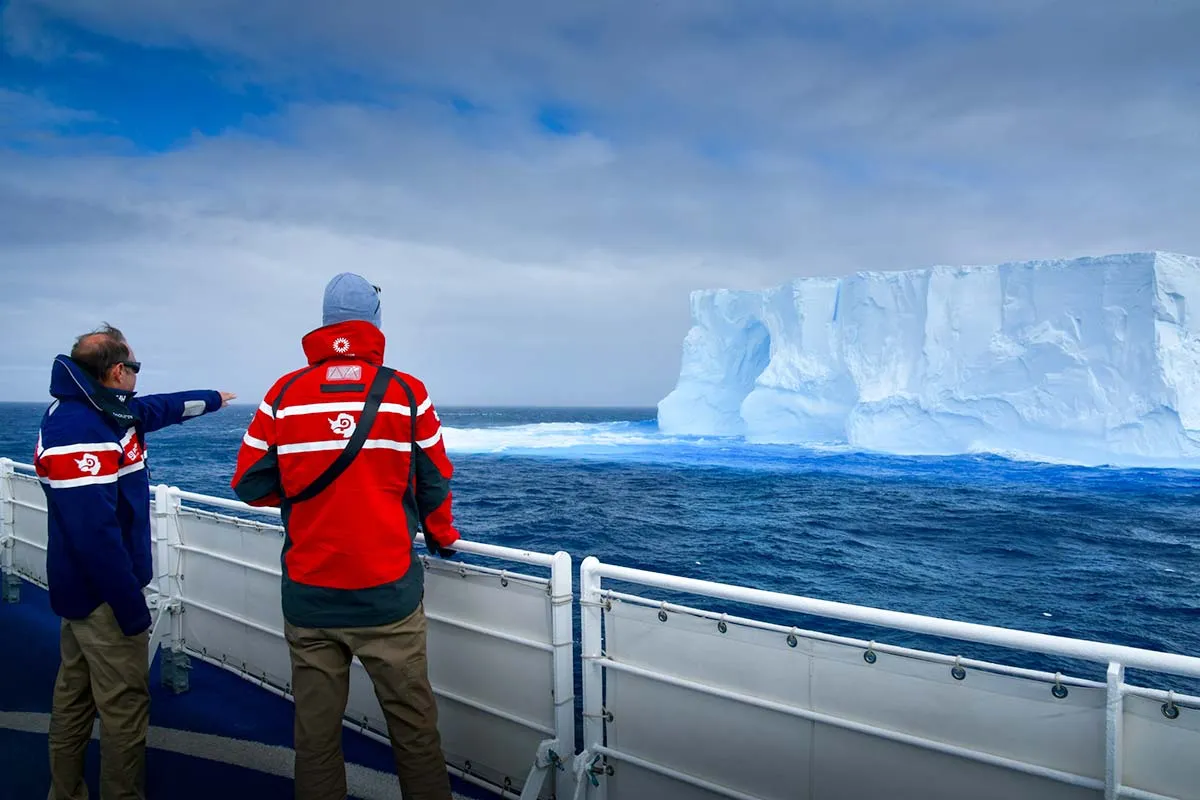 All Aboard!
Spend your morning relaxing at the hotel, visiting a museum, or exploring the shops in Ushuaia, before our mid-afternoon escort to the ship. Our Expedition Team and ship staff will welcome you on board and get you settled in, followed by a safety and orientation briefing and our Captainâs welcome dinner. Weâre on our way to Antarctica!
Day 3-4
Drake Passage
Join our Polar Experts as they share their vast knowledge of Antarctica, from its enchanting wildlife to its bold history. Participate in our pioneering Citizen Science program or sit back and take in this fabled journey while catching glimpses of rarely seen wildlife. Keep your binoculars handy to identify the many seabirds that escort our ship as we cross the Antarctic Convergence into Antarcticaâs waters and noticeably cooler temperatures.
Day 5-7
 Merry Christmas, Antarctica!
Time to put our explorerâs spirit to full use. Antarctica offers astounding landscapes and wildlife encounters at every turn, as the last truly unspoiled place on earth, populated only by its original wild inhabitants. Prepare yourself to encounter numerous species of penguins, seals, and whales, who will be there to share the holidays with us along the rugged coastlines and in the sea. Weâll also take full advantage of every opportunity to visit some of the several active scientific bases and historic landing sites on the peninsula. This voyage promises to be a holiday memory youâll cherish forever. Our team always has something fun planned for Christmas Day.
Day 8
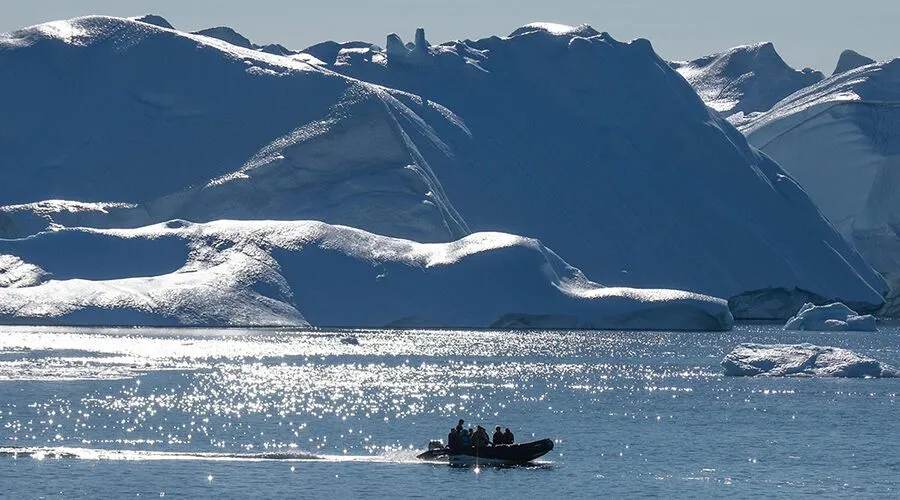 South Shetland Islands
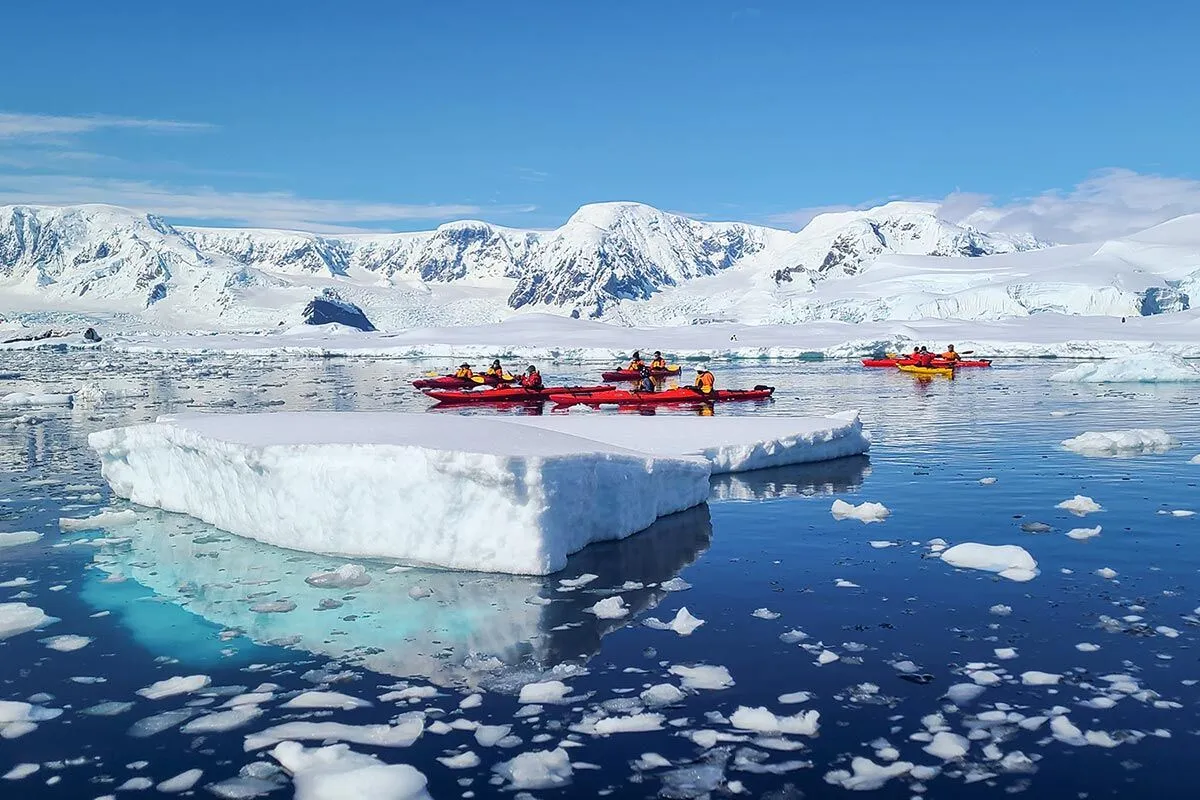
Over time, the volcanic activity of the South Shetland Islands has created a geology unlike any other. Here, you can expect a spectacular display of mountains, glaciers, and wildlife including Chinstrap and Gentoo penguins; and itâs not uncommon to share the waterâs edge with Elephant and Fur seals. Whales are often spotted as well. So, weâll settle into our Zodiacs and spend most of our day exploring. And kayakers, itâs time to get your first taste of gliding just inches off the pristine Antarctic water. Whether on land or sea, in Zodiac or kayak, be prepared for a fully immersive introduction to this incomparable part of the world.
Day 09-10
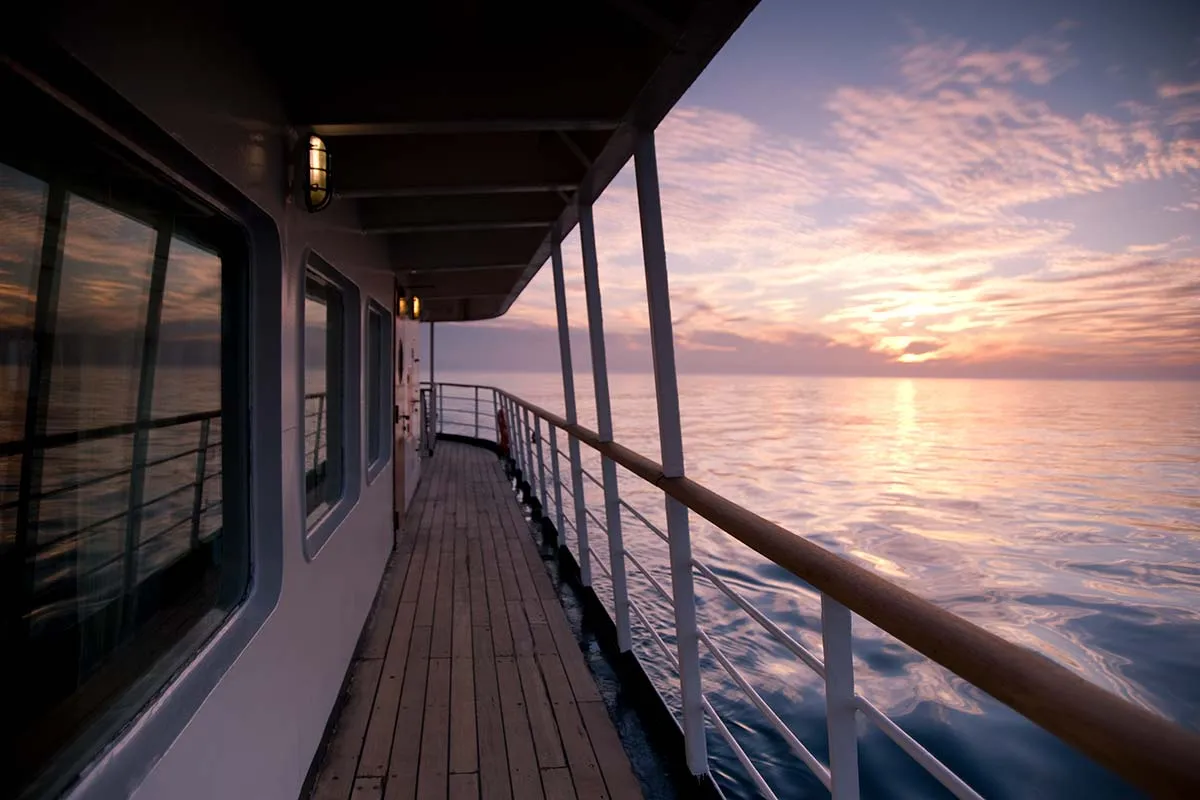 Drake Passage
We leave this magical place and make our way north, once again heading across the Antarctic Convergence and the Drake Passage. We have one last hurrah as we celebrate the conclusion of our expedition with a special slideshow and a final meal together.
Day 11
Ushuaia Disembarkation
With huge smiles on weary, content faces, we disembark in the morning, letting you catch a flight to Buenos Aires or stay in Ushuaia for more sights and adventure.
In the Wake of the Vikings, from Iceland to Canada
Cruise Line: Ponant Cruise
Ship: Le-Bellot
Travel Period: Jul 29 2027 - Aug 03 2028
Port: ReykjavÃk (Iceland) to Toronto (Canada)
Duration: 16 Days
toToronto.webp "In the Wake of the Vikings, from Iceland to Canada")
In the Wake of the Vikings, from Iceland to Canada
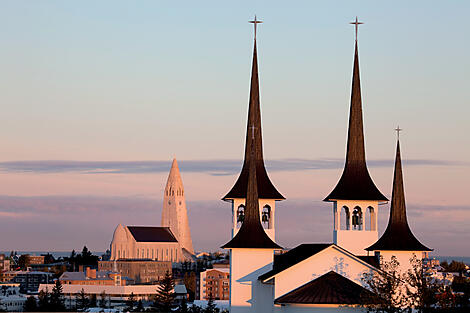
Day 1 - ReykjavÃk
Icelandâs capital stretches along the edge of a vast bay in the west of the country. Perlan, the âPearl of ReykjavÃkâ, a museum located on âOskjuhlið hill, offers a panoramic view of the lush, green landscapes. A little further, one can easily spot the signpost showing the way to the evangelical HallgrÃmskirkja church, and to the historical centre where one can stroll along the SkólavördustÃgur and the Laugavegur, two lively streets with charming small shops. For some relaxation just outside of the city, visitors have the opportunity to visit the Reykjanes peninsula and its famous thermal lagoons of the Blue Lagoon.
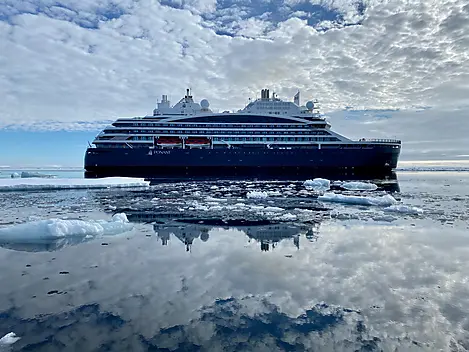
Day 2 - At sea
During your journey at sea, make the most of the many services and activities on board. Treat yourself to a moment of relaxation in the spa or stay in shape in the fitness centre. Depending on the season, let yourself be tempted by the swimming pool or a spot of sunbathing. This journey without a port of call will also be an opportunity to enjoy the conferences or shows proposed on board, depending on the activities offered, or to do some shopping in the boutique or to meet the PONANT photographers in their dedicated space. As for lovers of the open sea, they will be able to visit the shipâs upper deck to admire the spectacle of the waves and perhaps be lucky enough to observe marine species. A truly enchanted interlude, combining comfort, rest and entertainment.
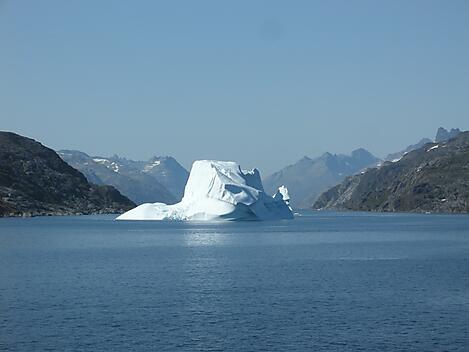
Day 3-4 - Prins Christian Sund
Your ship glides silently towards the Greenland coast, in a setting punctuated by pointed peaks and majestic glaciers⦠You are on the verge of crossing the Prins Christian Sund, a narrow channel that stretches out and zigzags over some one hundred kilometres between Greenlandâs south-east and south-west. Fall under the spell of the primitive beauty of these unique landscapes, including rocky cliffs and waterfalls that are fed by the ice sheet and plunge into the icy waters. Here, bearded seals love to lie on the floating ice to soak up the sunshine.
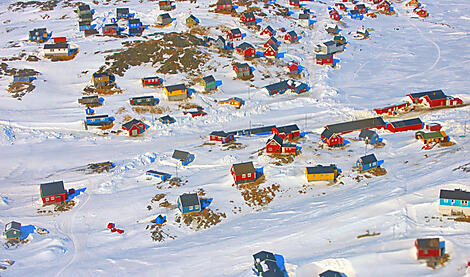
Day 4 - Qaqortoq
Follow the Davis Strait currents and Qaqortoq, the largest town in southern Greenland, reveals itself in a rocky setting covered in immaculate white in winter and enchanting green in summer. From the moment your ship enters the fjord edging the town, off in the distance you will be able to glimpse the delightful, brightly-coloured houses built upon the hillsides surrounding this charming fishing port, the most southerly in Greenland. You will have the opportunity to wander around the streets of the town centre which have distinct Danish influences and are home to numerous historical buildings and landmarks, such as the countryâs famous and oldest fountain, topped with whales. Not far from there, you will also have the chance to discover the townâs open-air fish market, where fishermen come to sell the dayâs catch.
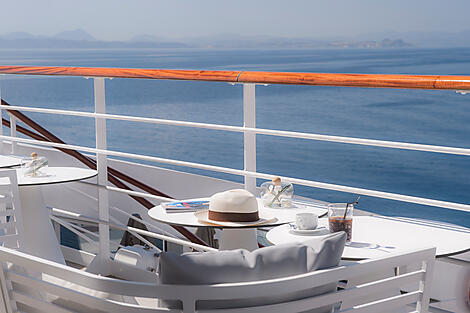
Day 5-6 - At sea
During your journey at sea, make the most of the many services and activities on board. Treat yourself to a moment of relaxation in the spa or stay in shape in the fitness centre. Depending on the season, let yourself be tempted by the swimming pool or a spot of sunbathing. This journey without a port of call will also be an opportunity to enjoy the conferences or shows proposed on board, depending on the activities offered, or to do some shopping in the boutique or to meet the PONANT photographers in their dedicated space. As for lovers of the open sea, they will be able to visit the shipâs upper deck to admire the spectacle of the waves and perhaps be lucky enough to observe marine species. A truly enchanted interlude, combining comfort, rest and entertainment.
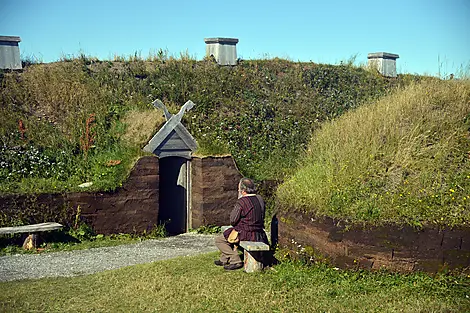
Day 7 - L'Anse aux Meadows, Newfoundland
Located at the Northern extremity of the island of Newfoundland, LâAnse aux Meadows is listed as a UNESCO World Heritage Site and is the only site known to have been established by the Vikings in North America. Its ancient vestiges provide the very first traces of European presence in the new world. The remains found on this splendid 11th century Scandinavian archaeological site are identical to those found in Iceland. Aboard your ship, cruise in the wake of those first Vikings who discovered the tip of North America 500 years before Christopher Columbus arrived on the shores of the American continent. A memorable adventure in a setting punctuated with coastal peat bogs, grass and many varieties of shrubs and lichen.
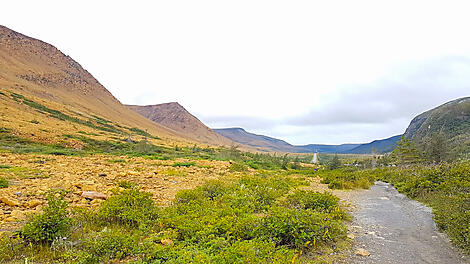
Day 8 - Woody Point, Gros Morne National Park
Located in the heart of Gros Morne National Park, the small town of Woody Point has the typical charm of territories found at the end of the world. From there, you will set off to discover the national park, listed as a UNESCO World Heritage Site because of the beauty of its landscapes, whose geology unveils the evolution of continental drift through its extraordinary rock formations. Sculpted by glacial activity, the park is home to coastal lowlands, alpine plateaux, hemmed-in fjords, immense valleys, jagged cliffs and several preserved lakes: you will marvel at every moment!
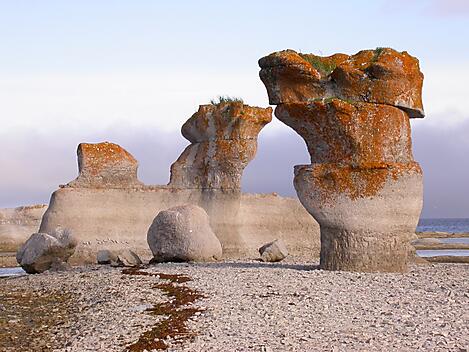
Day 9 - Havre-Saint-Pierre
Located on the Northern Shore of Quebec, Havre St Pierre is the gateway to the amazing natural heritage that surrounds it. This Quebecois town provides an excellent base for exploring the string of islands sprinkled off the coast. From Havre St Pierre, you can visit the Mingan Archipelago National Park Reserve. This is a land forged by the sea and elements, where nature still rules. This chain of islands is renowned for its spectacular limestone formations.
Day 10 - At sea
During your journey at sea, make the most of the many services and activities on board. Treat yourself to a moment of relaxation in the spa or stay in shape in the fitness centre. Depending on the season, let yourself be tempted by the swimming pool or a spot of sunbathing. This journey without a port of call will also be an opportunity to enjoy the conferences or shows proposed on board, depending on the activities offered, or to do some shopping in the boutique or to meet the PONANT photographers in their dedicated space. As for lovers of the open sea, they will be able to visit the shipâs upper deck to admire the spectacle of the waves and perhaps be lucky enough to observe marine species. A truly enchanted interlude, combining comfort, rest and entertainment.
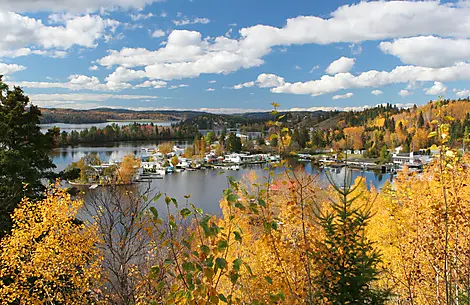
Day 11 - Saguenay
The Saguenay metropolitan area lies in the hollow of a valley crossed by the famous river from which it gets its name and which is one of the regionâs treasures: in fact, as it joins the St. Lawrence, the Saguenay River forms a spectacular fjord that will surprise you with the extreme diversity of its landscapes. From Saguenay, you will be able to travel around the attractive region of Saguenay-Lac-Saint-Jean, a veritable paradise for outdoor activity enthusiasts. You will be able to partake in various winter activities (including dog sledding in the boreal forest) and experience warm moments of connection with the inhabitants.
3 available excursions
The Craftsman Road, Trail on Mars River banks, EXTENSION: Seaplane flight over Saguenay
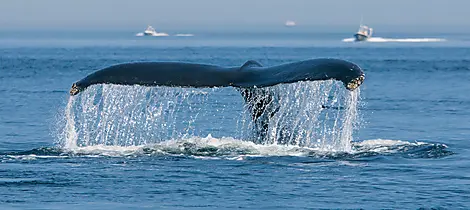
Day 12 - Tadoussac
The Quebec village of Tadoussac stands at the confluence of the Saguenay River and the Gulf of Saint-Lawrence, in south-east Canada. The village is bright with multicoloured houses nestling in an emerald-green pine forest. From the waterfront, itâs easy to spy out Tadoussac Chapel, thanks to its bright red roof. Not far from this church built of wood, one of the oldest in North America, stands a century-old village holiday resort, Hotel Tadoussac. Treat yourself to tea on the terrace overlooking the shoreline. In addition, at the marine mammal interpretation centre, you can hone your knowledge of the cetaceans that regularly frequent Tadoussac bay.
2 available excursions
Encounter with whales, Exploring Tadoussac on foot
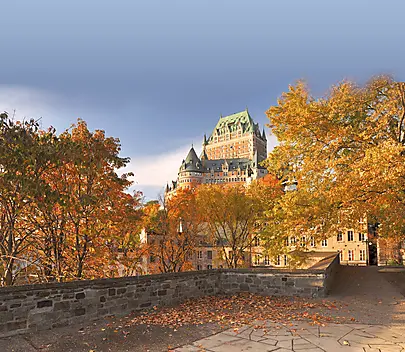
Day 13 - Quebec
The capital of "La Belle Province" sits at the confluence of the St Charles River and the Gulf of St Lawrence in south-east Canada. Founded in the 17th century, the city still has an encircling wall, a historic civil engineering work and the only one of its kind remaining in North America. You will love the postcard-perfect stone houses of Old Quebec, the historic district listed as a UNESCO World Heritage site. Shopping is a pleasure in pedestrian streets such as Petit-Champlain Street, or you can relax over a spruce beer, seasoned with pine buds.
1 available excursions
Old Quebec and Montmorency Falls
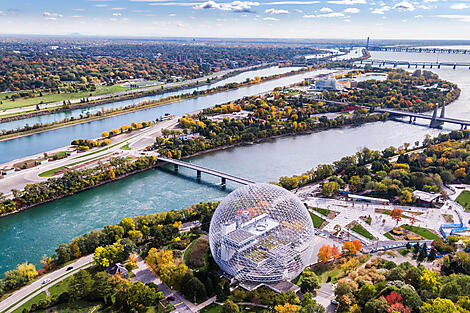
Day 14 - Montréal
Famous for its gentle way of life, Montréal, Canadaâs second-largest city, is a warm and cosmopolitan metropolis. Situated on the eponymous river island, it is home to a multitude of districts, each as unique as the other. Set off to discover Old Montréal, most of which is declared a historic area, Little Italy, where youâll be able to stroll around the largest open-air market in North America, or the Golden Square Mile, the luxurious district located on one of the hills of Mount Royal and which has sumptuous Victorian-style residences. Simultaneously marked by the influences of the Old Continent and North-American gigantism, Montréal will never cease to amaze you.
1 available excursion
Walking tour & visit of Notre Dame
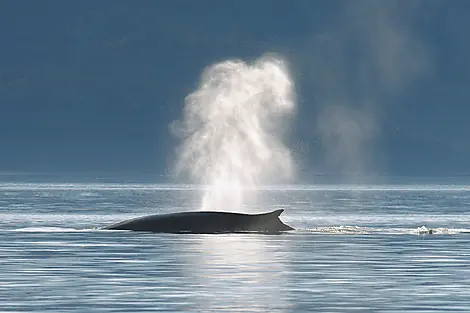
Day 15 - Sailing River Saint Lawrence and going through its locks
Linking the Atlantic Ocean to the Great Lakes region inland, the Saint Lawrence Seaway was inaugurated in 1959, more than 250 years after the initial construction aiming to avoid the rapids obstructing navigation in these parts. This large engineering project, which required four years of huge work, offers a unique sailing experience, punctuated by the passage of the different locks marking out this corridor, which is almost 4,000 km long.
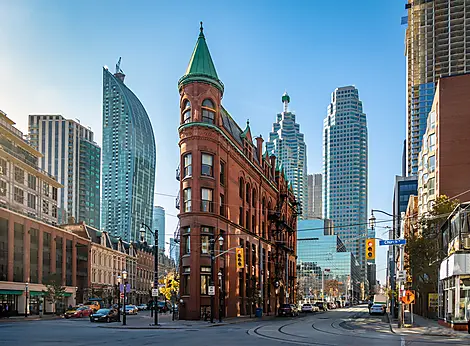
Day 16 - Toronto
The largest city in Canada and capital of the province of Ontario, Toronto fascinates as much by its incredible diversity as by its size. Make sure you visit the CN Tower, the tallest tower in the western hemisphere, as well as the St. Lawrence Market whose stalls reflect the multicultural wealth of this city known as the global city. Not far from there, the historic Distillery District unveils its brick-paved streets imbued with romantic charm and its myriad of small restaurants, cafés, boutiques, theatres and art galleries. The Royal Ontario Museum and its impressive collections devoted to the worldâs natural and cultural history will also be an unmissable stop during this port of call.
Four Arctic Islands
Cruise Line: Polar Latitudes Expeditions
Ship: Ocean Albatros
Travel Period: Aug 29 2027
Port: Longyearbyen to Reykjavik
Duration: 13 Days

Four Arctic Islands
Day 1
All Aboard in Longyearbyen!
Arrive in Longyearbyen, Svalbardâthe northernmost town on Earth. Despite its remote Arctic location, Longyearbyen offers warm Nordic hospitality. Upon arrival, youâre greeted by crisp polar air, dramatic mountain views, and a polar bear warning sign reminding visitors of their wild new location. Your expedition ship Ocean Albatros awaits you in the harbor; toast your departure from civilization as you sail into the Arctic wilderness, on course for adventure!
Day 2
Kongsfjorden Area
During the Arctic ânight,â we sail past Prins Karls Forland to the stunning Kongsfjord, framed by glaciers and the dramatic Three Crowns mountains. The first stop is Ny-Ã
lesund, Earthâs northernmost settlement, known for its scientific stations and historic role as a base for legendary polar explorers like Amundsen and Nansen. This remote outpost continues to support vital research amid its breathtaking surroundings.
Day 3
 Expedition Northwest Spitzbergen
Northwest Svalbard, a National Park since 1973, preserves a rich history of early Arctic exploration and whaling. First visited by William Barents in 1596, the area became a hub for Dutch and English whalers, whose haunting remnants, such as the blubber ovens and graves of young sailors at Smeerenburg, remain visible. Now heavily protected, the region has been reclaimed by nature, hosting Arctic flowers, seabirds, walrus, and polar bears, making it once again a pristine wilderness and haven for wildlife.
Day 4
 Expedition South Svalbard
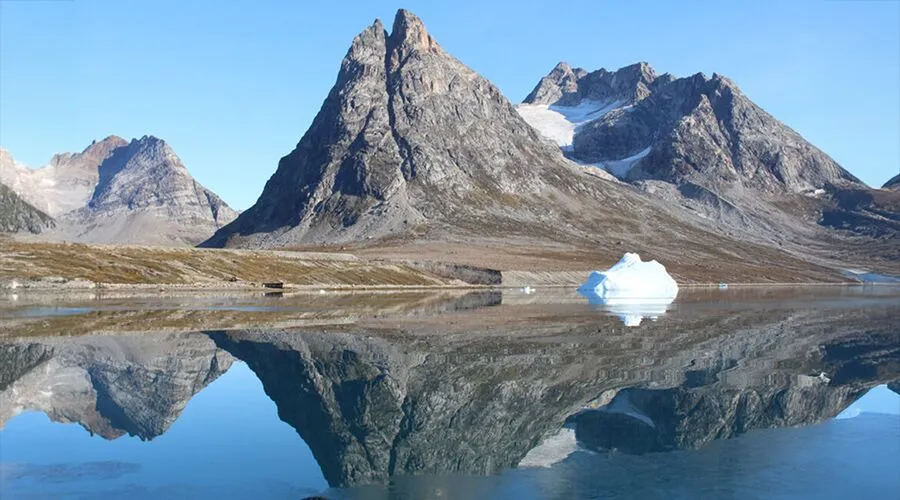
On our final day on Svalbard, our expedition enters the greener, warmer fjords of Bellsund and Hornsund, nourished by Atlantic currents. These fertile valleys support reindeer, Arctic foxes, nesting seabirds, and drifting icebergs from nearby glaciers. Rich in wildlife and history, the area offers highlights like Alkhjornetâs bird cliffs and the historic sites of Calypsobyen and Bamsebu, making it one of Svalbardâs most diverse and captivating regions.
Day 5 & 6
At Sea, En Route to Jan Mayen
Departing Svalbard, Ocean Albatros heads southwest across the Greenland Sea towards Jan Mayen. Cold currents drifting down from the Arctic Ocean mix with the last gasp of the Gulf Stream, creating vast biological productivity. During sea days, guests can enjoy fascinating lectures, indulgent spa treatments, or simply relax and watch seabirds from the shipâs hot tubs.
Day 7
 Jan Mayen
The active volcanic island of Jan Mayen is on the Mid-Atlantic Ridge, the âspineâ of the Atlantic Ocean. This enigmatic and isolated island is the only active volcano in Norway, and the northernmost active volcano on Earth. Jan Mayen is inhabited by only around 18 people, a mixture of scientists and Norwegian troops. The volcanic origin is visible all over with cinder cones, lava flows, and the Fuji-esque peak of Beerenberg looming above, while creeping tundra plants and squabbling seabirds eek out a living in the rugged cliffs.
Day 8
At Sea, En Route to Scoresbysund
From Jan Mayen, Ocean Albatros will sail on towards the coast of the largest island on Earth. The sea ice in East Greenland is some of the most persistent in the Arctic; even in midsummer, the coast can be icebound, creating the perfect habitat for ice-loving species such as polar bears and belugas. If we are lucky, we will catch a glimpse of this vast icy wilderness during our passage towards Scoresbysund.
Day 9
 Tasermiut and Uunartoq
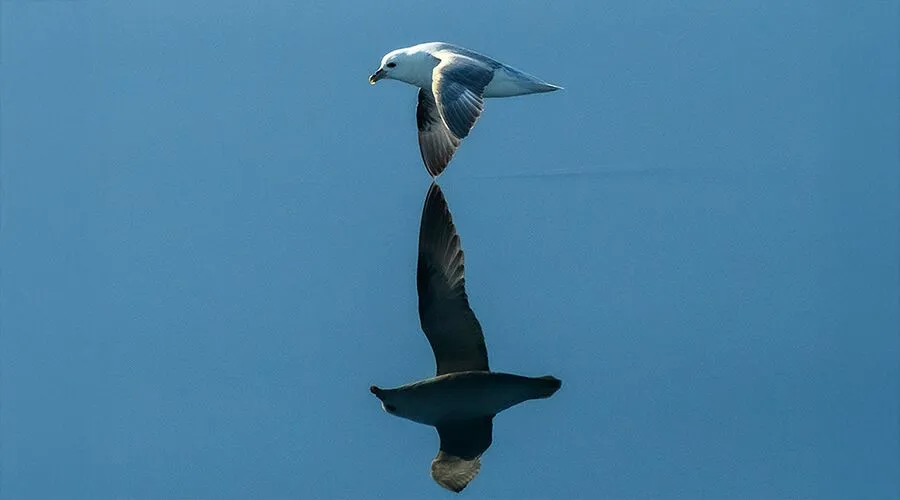
Tasermiut Fjord is known for its towering granite cliffs and fertile valleys. Once called Ketilâs Fjord by Norse settlers, itâs now popular with elite climbers and hikers. Later, we sail to Uunartoq Island to relax in geothermal springs with views of drifting icebergs â an experience unmatched even by Icelandâs legendary spas!
Day 9
Ittoqqortoormiit
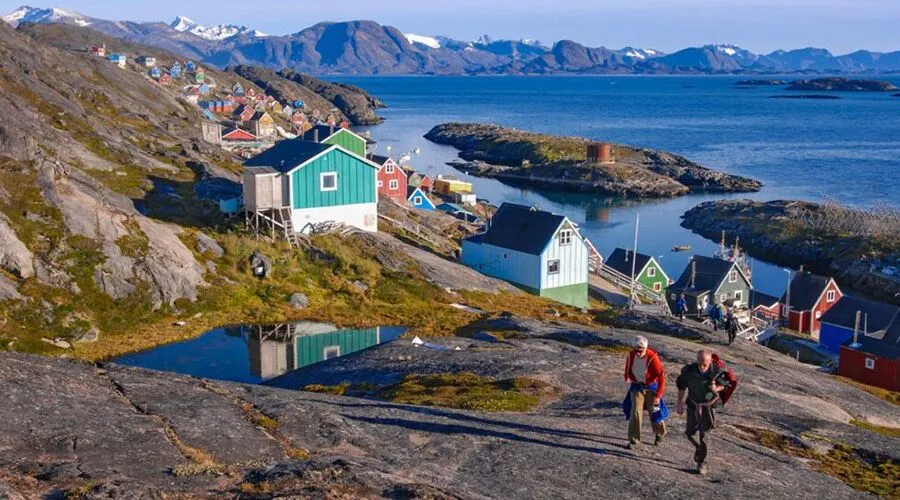
The only settlement in this region, Ittoqqortoormiit is among the most remote communities on Earth. While the establishment of the town by Danish authorities in 1925 was challenging, residents continue a subsistence hunting lifestyle, essential when supply ships arrive only once or twice per year. Ittoqqortoormiit is a town with a strong sense of community and traditional culture, hosting an excellent museum, a beautiful traditional church, and locals often welcome visitors wearing colourful traditional costumes. Ittoqqortoormiit is the perfect introduction to the culture and lifestyle of Greenland.
Day 10
Expedition Scoresbysund
Venturing deep into the maze of fjords and islands that comprise Scoresbysund, it is easy to see why this region is spoken of with awe by even experienced explorers! The exact locations we visit in Scoresbysund will be dictated by Mother Nature â this far north, all human activity is subject to wind, sea, and ice conditions. Options include the Bjørne Islands, a labyrinth of skerries which trap vast icebergs in their rocky net, the sweeping basalt mountains of Cape Brewster, and the abandoned remains of European and Inuit settlements. Wherever we visit in the depths of Scoresbysund, adventure is guaranteed!
Day 11
Blosseville Coast
The Ocean Albatros will sail south along Greenlandâs Blosseville Coast, a rugged landscape shaped by volcanic activity around 50 million years ago. First surveyed by explorer Ejnar Mikkelsen, this area has long been navigated by the Inuit. If conditions allow, we may land in this now-uninhabited region of breathtaking beauty.
Day 12
At Sea, En Route to Reykjavik, Iceland
During our time at sea approaching Reykjavik, relax and reflect on your thrilling Arctic adventure. Attend final lectures from the Expedition Team, relive your adventure at the voyage slideshow, and celebrate your voyage with new friends at the Captainâs Farewell Cocktail Party.
Day 13
 Reykjavik, Iceland
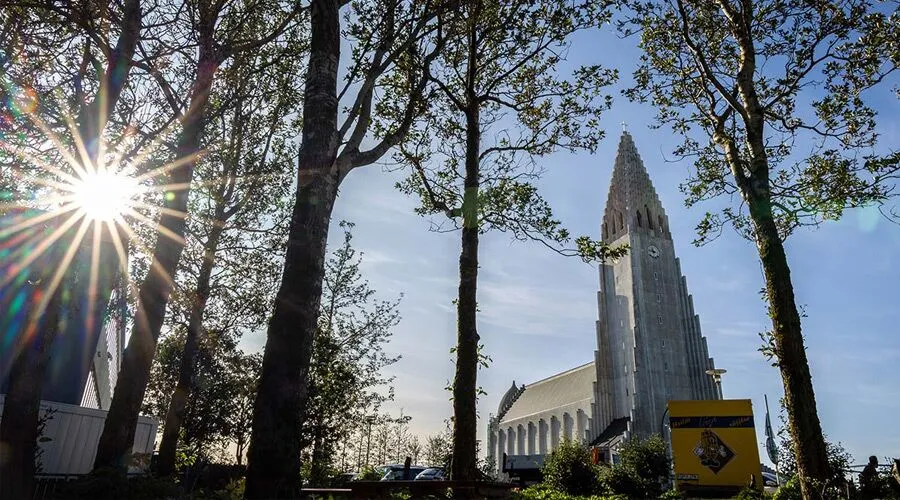
HallgrÃmskirkja Church towers over Reykjavik, a vibrant city known for Nordic cuisine, unique museums, and excellent shopping. Such a bustling capital may feel strange after the remote wilderness of the Arctic! After a hearty breakfast, it is time to bid a fond farewell to the Crew and Expedition Team, and descend the gangway back to dry land with memories of the voyage of a lifetime.
History and culture visiting Caribbean jewels
Cruise Line: Ponant Cruise
Ship: Leponant
Travel Period: Jan 23 2027 - Mar 20 2027
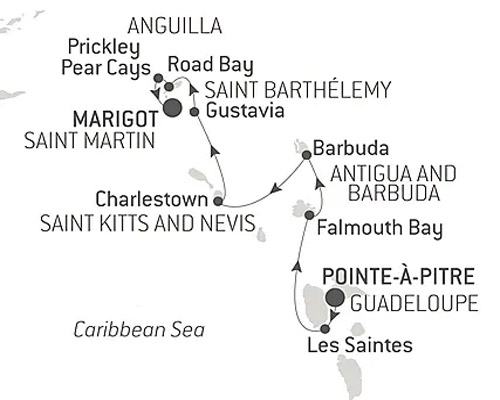
Port: Marigot(Saint Martin) to Pointe-a-Pitre (Guadeloupe)
Duration: 8 Days
History and culture visiting Caribbean jewels
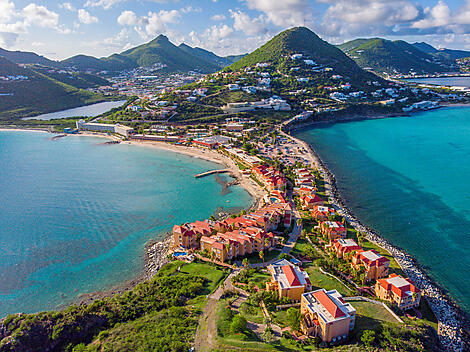
Day 1 - Philipsburg
The capital of the Dutch part of Saint-Martin, in the south of the island, Philipsburg is bordered by a 3-km (1.9-mile) long expanse of sand. Following a stroll along Front Street and Back Street, the lively streets edged with houses with colourful facades, take a break on a lounger opposite the calm and turquoise sea of Great Bay. Sint Maarten Museum will immerse you in the past of the Arawaks, an indigenous people of the West Indies. You will also be able to admire the view from Fort Amsterdam, the first fort constructed by the Dutch in the 17th century.
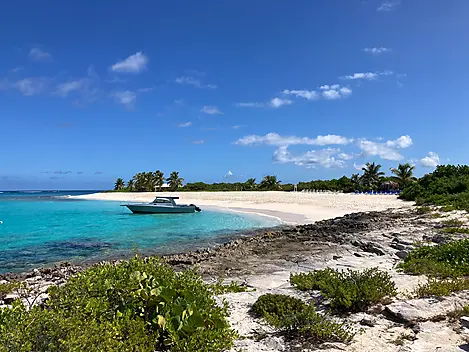
Day 2 - Prickley Pear Cays
Located 5 miles north of Anguilla, the twin islands of Prickly Pear East and West are separated by a narrow channel. Prickly Pear East consists of a huge white sandy beach and rocky outcrops offering excellent snorkelling possibilities. Behind the main beach, there is a small pool where the black-necked stilt comes to feed. The harder-to-access Prickly Pear West has a small beach of low limestone cliffs dotted with bushes. The waters surrounding the cays of Prickly Pear are protected by the Anguilla Marine Park. Green and Hawksbill sea turtles, endangered species, nest on these beaches. The island is also home to an indigenous iguana population as well as a colony of Anguilla laughing gulls. As you sail around Prickly Pear West, it will be easy to observe many birds along the cliffs, including red-billed tropicbirds, brown noddies, brown boobies and little terns. This is also where the only colony of brown pelicans nesting in Anguilla can be found: it is a species of regional importance.
2 available excursions
Exploring the island with the anguilla National Trust, Beach on prickley Pear cays
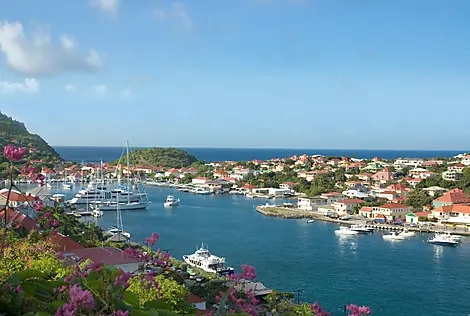
Day 3- Gustavia
Lovers of this island call it Saint-Barth. This French island in the Lesser Antilles was discovered by Christopher Columbus in 1493. Ever since, this tiny mountainous volcanic gem with its unspoilt nature has been enchanting visitors. You will enjoy the beauty of its large paradisiacal beaches, plus the charm and refinement of its old wooden houses and its sumptuous colonial manors. Although, as you saunter through the rues de Gustavia or Saint-Jean, youâll come across jewellers, top fashion boutiques and fine restaurants, there is also a simplicity that money canât buyâ¦
2 available excursions
Ernest's island tour, Boat & snorkelling tour
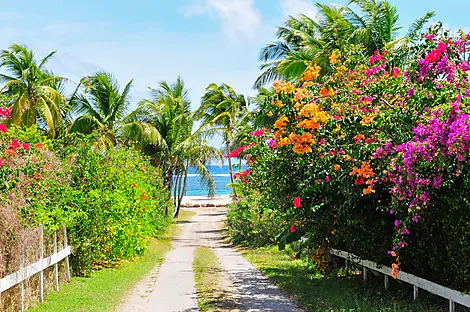
Day 4 - Charlestown, Nevis
Opposite Saint-Christopher island, Nevis will win you over by its more easy-going rhythm than its neighbour, and by its tranquil atmosphere. Go ahead and explore the rich history of this island, admire its Georgian architecture in Charlestown and smell the wonderful scent of the tropical flowers in Nevisâs botanical garden. The sumptuous landscapes that adorn this volcanic island offer you pleasant hiking opportunities at the foot of Nevis peak. And to cool down, youâll enjoy taking a dive into the turquoise waters, so characteristic of the Caribbean...
2 available excursions
Museums and gardens on Nevis, Relax on Pinney's beach
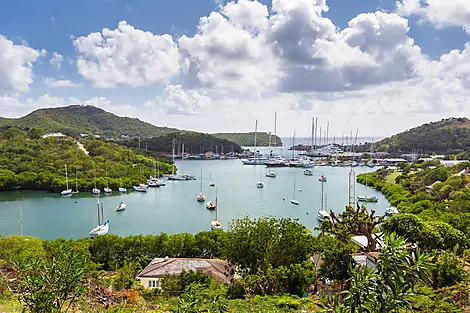
Day 5 - Falmouth Bay
Located to the south of the island of Antigua and Barbuda, Falmouth Bay is home to a marina that is the perfect starting point for visiting Nelsonâs Dockyard, where the former naval base and former home of the British Admiral Horatio Nelson can be found. This village was built in 1725 to act as a base for the squadrons of ships that used to patrol the waters of the West Indies to ensure British naval supremacy. It is the last naval dockyard of the Georgian period to be so well preserved and still active. This UNESCO World Heritage Site includes a collection of buildings and port facilities surrounded by a fortified compound.
3 available excursions
Sunset at Nelson's Dockyard, Snorkeling from the beach at Pigeon Point Beach, Zodiac cruise at Pillars of Hercule
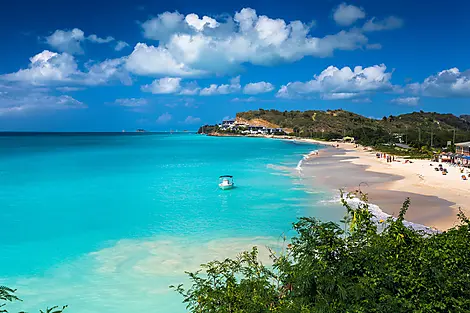
Day 6 - Barbuda
During your port of call in Barbuda, an island influenced by British culture in the north of the Lesser Antilles, youâll discover idyllic beaches of white powder-like sand bathed by turquoise waters of striking intensity. The very British colonial atmosphere of English Harbour, a former Royal Navy base, mixes with creole culture in a happy union. This Eden, which has managed to stay calm and intimate, is brimming with very wild fauna and flora. Arts and crafts are present in the markets and shops, where youâll find wooden statuettes, printed fabrics and very good rum produced in the islandâs distilleries.
1 available excursions
The frigatebirds of Barbuda
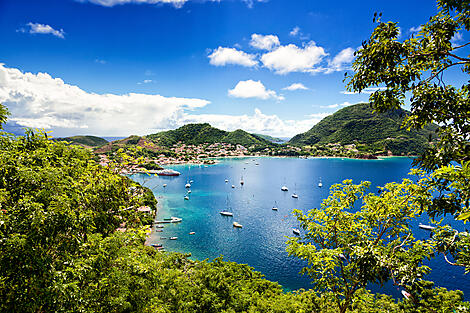
Day 7 - Les Saintes
During the feast of All Saints in 1493, Christopher Columbus discovered this archipelago of nine islands that he named "The Saints". Today, only two of them are inhabited. Terre de Haut, in the east, is dominated by the Morne Mire hill; at the summit stands Fort Napoleon, paying homage to the islands' history. In the heart of the botanical garden, shared by iguanas and cacti, there is an exceptional view of the Baie des Saintes, one of the most beautiful in the world. The long shady beach of Pompierre, where it is forbidden to drop anchor, is a peaceful place for a swim, while Pain de Sucre Beach offers wonderful opportunities for snorkelling. On the island, donât forget to taste the local speciality, the âtourment dâamourâ, a cake made with coconut.
Day 8 - Pointe-a-Pitre
At the crossroads of cultures, where European influence mingles with the richness of the Caribbean and the diversity of indigenous traditions, Pointe-Ã -Pitre promises a unique experience. Here, nestled on the southern coast of the island of Grande-Terre in Guadeloupe, in the heart of the Caribbean Sea, you will fall in love with the heavenly landscapes that reveal themselves to you, including white-sand beaches, verdant mountains, and lush tropical forests. Along the bustling streets of the city, you will discover Creole authenticity through the colourful markets, the traditional wooden houses, and the warm hospitality of the locals.
Celebrating New Year's in Antarctica

Cruise Line: Polar Latitudes Expeditions
Ship: Ocean Albatros
Travel Period: Dec 27 2027
Port: Ushuaia to Ushuaia
Duration: 11 Days

Celebrating New Year's in Antarctica
Day 1
Arrive and explore in Ushuaia
After a friendly welcome at the airport and a transfer to the luxurious Arakur Ushuaia Resort & Spa, take some time to unwind or explore the southernmost city in the world, Ushuaia. (In the unlikely event that you can't be accommodated at the Arakur, you'll unwind at another of Ushuaia's top luxury hotels.)
Our optional evening briefing is your opportunity to ask questions and meet some of your fellow explorers.
Day 2
All Aboard!
Spend your morning relaxing at the hotel, visiting a museum, or exploring the shops in Ushuaia, before our mid-afternoon escort to the ship. Our Expedition Team and ship staff will welcome you on board and get you settled in, followed by a safety and orientation briefing and our Captainâs welcome dinner. Weâre on our way to Antarctica!
Day 3-4
Drake Passage
Join our Polar Experts as they share their vast knowledge of Antarctica, from its enchanting wildlife to its bold history. Participate in our pioneering Citizen Science program or sit back and take in this fabled journey while catching glimpses of rarely seen wildlife. Keep your binoculars handy to identify the many seabirds that escort our ship as we cross the Antarctic Convergence into Antarcticaâs waters and noticeably cooler temperatures.
Day 5
Antarctic Sound and Weddell Sea
We maneuver through the mysterious channels and wildlife-rich waters of the Antarctic Sound and Weddell Sea, the perfect place to ensure an unforgettable holiday adventure. The Antarctic Sound is well known for its huge tabular icebergs, and the Weddell Sea offers a unique geography unlike anywhere else on earth. Here weâll take in the abundant wildlife such as Adélie penguins and seals as we keep on the lookout for hunting Orca.
Day 6-7
Happy New Year, Antarctica!
Time to put our explorerâs spirit to full use. Antarctica offers astounding landscapes and wildlife encounters at every turn, as the last truly unspoiled place on earth, populated only by its original wild inhabitants. Prepare yourself to encounter numerous species of penguins, seals, and whales, who will be there to share the holidays with us along the rugged coastlines and in the sea. Weâll also take full advantage of every opportunity to visit some of the several active scientific bases and historic landing sites on the peninsula. And as we cross over from 2026 to 2027, weâll raise a glass to the last truly wild place on the planet.
Day 8
South Shetland Islands
Over time, the volcanic activity of the South Shetland Islands has created a geology unlike any other. Here, you can expect a spectacular display of mountains, glaciers, and wildlife, including Chinstrap and Gentoo penguins, and itâs not uncommon to share the waterâs edge with Elephant and Fur seals. Whales are often spotted as well. So, weâll settle into our Zodiacs and spend most of our day exploring. And kayakers, itâs time to get your first taste of gliding just inches off the pristine Antarctic water. Whether on land or sea, in Zodiac or kayak, be prepared for a fully immersive introduction to this incomparable part of the world.
Day 9-10
Drake Passage
We leave this magical place and make our way north, once again heading across the Antarctic Convergence and the Drake Passage. We have one last hurrah as we celebrate the conclusion of our expedition with a special slideshow and a final meal together.
Day 11
Ushuaia Disembarkation
With huge smiles on weary, content faces, we disembark in the morning, letting you catch a flight to Buenos Aires or stay in Ushuaia for more sights and adventure.
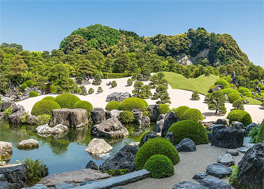
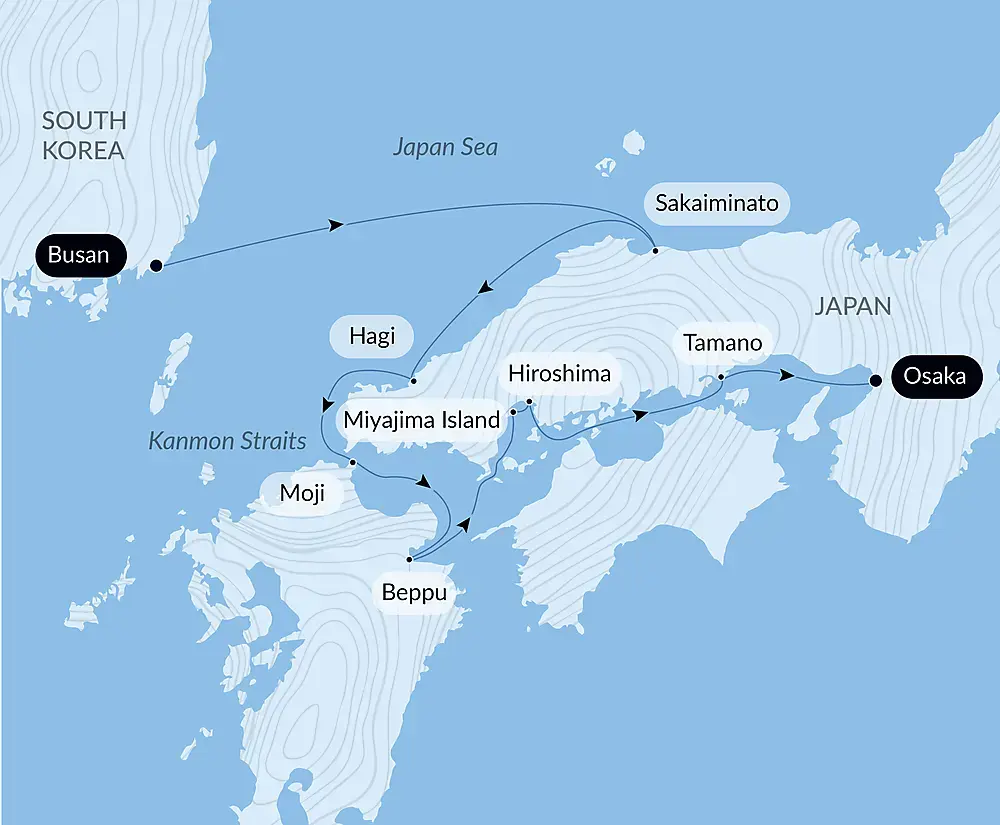
Treasures of Japan and South Korea by Sea - with Smithsonian
Cruise Line: Ponant Cruise
Ship: Le Soleal
Travel Period: May 01 2027 - Apr 02 2028
Port: Busan to Osaka
Duration: 9 Days
Treasures of Japan and South Korea by Sea - with Smithsonian
Day 1-2 - Busan
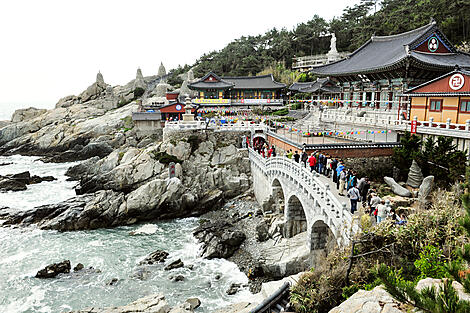
With around four million inhabitants, Busan is the second largest metropolis on South Korea, after Seoul. This dynamic harbour city, located in the south-east, surrounded by the warm waters of the Sea of Japan, benefits from a mild, pleasant climate. Youâll find delightful simply to stroll around the lively streets and explore the cityâs outstanding cultural heritage of art galleries, museums, and Buddhist sites, such as the Haedong Yonggungsa temple, which elegantly sits on the waterfront. Rich too in magnificent beaches and superlative natural landscapes, Busanâs peaceful atmosphere will win you over, as will its inhabitants, whom youâll have the pleasure of meeting.

Day 3 - Sakaiminato
Located on the south-west coast of Honshu Island, the busy fishing port of Sakaiminato celebrates the comic writer and artist Shigeru Mizuki, who was born here. As well as a museum a dedicated tourist route leads through streets and squares that feature 134 bronze statues representing his beloved characters. This isn't the only thing Sakaiminato has to offer; try some local seafood specialities and enjoy the stunning views of Mt Daisen and the Yumigahama peninsula.
Day 4- Hagi
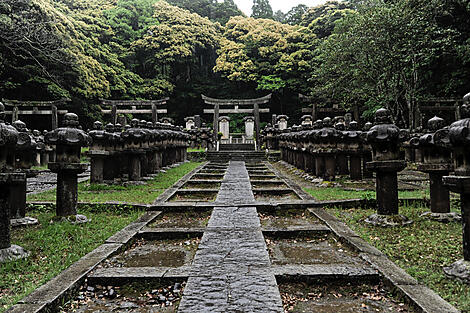
In the south of Honshu island, surrounded by mountains, Hagi is a city of water. For good reason; it was built on the delta of the Abu-gawa river. Its castle was built in the 17th century and its outer walls remain in the lovely Shizuki Park. The old town was one of the cradles of the Meiji revolution. You will discover its rich past in streets lined with old houses and samurai manors, or within the walls of the many museums and Hagi-yaki ceramics workshops.
Day 5 - Moji, Kitakyushu
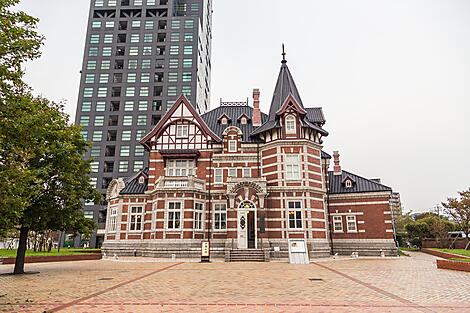
At the mouth of the Kanmon Straits lies Mojiko, the northernmost port of Kyushu, one of Japanâs four main islands. For many years, Mojiko was the gateway to the island. Today, the old boats are gone, but as you stroll around the picturesque streets you will discover a well-preserved architectural heritage that evokes traditional Japan from the first Meiji era of the late 19th century. From the heights of the Mojiko Retro Observation Room, you can enjoy the amazing views that take in the Shinto shrine and coastal landscape like a postcard of the Land of the Rising Sun.
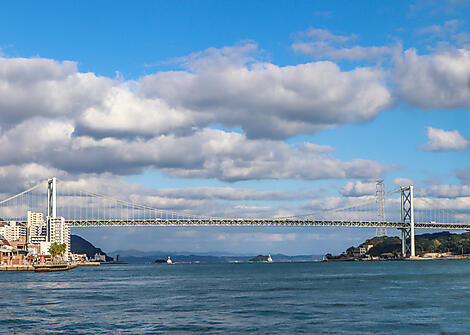
Day 5- Crossing the Kanmon Straits
Sailing in the Kanmon Straits, between the Japanese islands of Honshu and Kyushu, promises an unforgettable experience. During the crossing of this emblematic maritime passage linking the Sea of Japan to the Seto Inland Sea, fall under the spell of this traditional Japan, with its charming picturesque fishing ports and its shrines built in the heart of enchanting nature, between verdant hilly peaks and captivating granite cliffs.
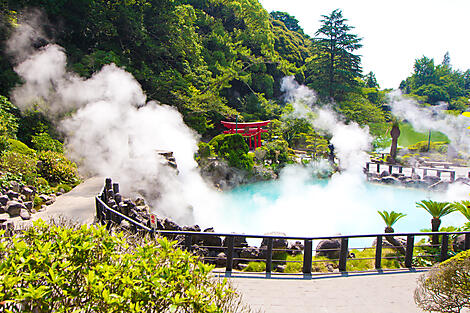
Day 6 - Beppu, Oita
A favourite destination for the Japanese, Beppu is now famous throughout the Japanese archipelago thanks to its onsen â volcanic hot springs in which people immerse themselves to relax with family or friends. From Beppu, you will set off to discover a lush, peaceful valley in which sit 60 majestic stone Buddhas carved out of the cliff face between the 12th and 14th centuries. Exuding a soothing air of serenity, the Mangetsuji site seems to have drifted off to sleep in the heart of a dense bamboo forest surrounded by rice fields. Recognised as a National Treasure of Japan, this set of sacred sculptures offers travellers a unique, wonderful experience.
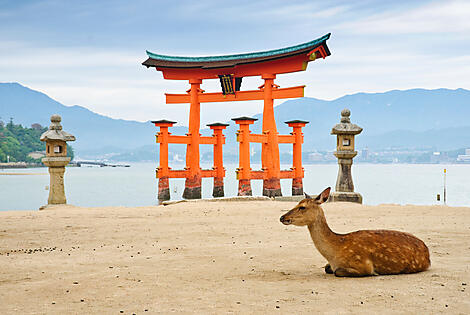
Day 7 - Miyajima Island
At the heart of the Inland Sea, Miyajima, the âisland sanctuaryâ will reveal its treasures. In the background you will see the Shinto Grand Sanctuary, whose entrance is guarded by a magnificent vermillion âToriiâ. Considered to be one of the most beautiful sites in the Japanese islands, you will be transported by the unique character and the serenity of this sacred site.
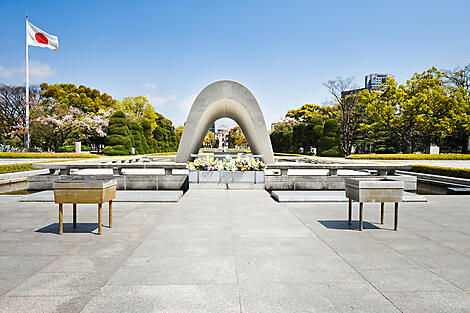
Day 7 - Hiroshima
Visiting Hiroshima is a moving experience. The town spreads along Honshu Island, along the inside coasts of Seto. While firmly focused on the future, Hiroshima doesn't forget its past, and a visit to the Peace Memorial Park and Genbaku Dome is a must. You'll enjoy the city's modern, cosmopolitan atmosphere and effervescent nightlife just as much as the peaceful stillness of its natural parkland areas such as splendid Shukkei-en, the town's historic garden.
Day 8 - Tamano
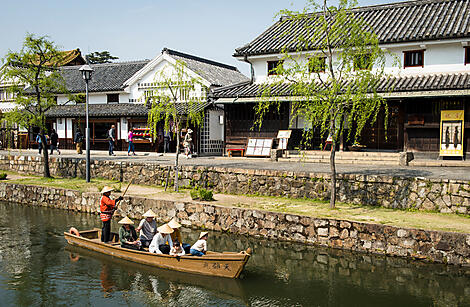
Located on the island of Honshu, hugging the banks of the Sento Inland Sea, Tamano is a popular destination thanks to its sun-drenched climate. Upon arrival, marvel at the way in which the city has been built along the coast at the foot of a deep, dark forest. In the area surrounding Tamano, stroll down the streets of Kurashiki, known as the 'white-walled city' in a nod to the pretty façades of the houses that line the streets of this ancient Edo-period trading town. Another major regional attraction is the Seto Ohashi bridge. Its 12.5 kilometres make it the world's longest double-decker bridge.
Day 9 - Osaka
Like its big sister Tokyo, Osaka is the product of ancestral traditions and amazing technological innovations. And despite its size, its location on the Pacific Ocean give it a sense of serenity. The main historic landmark is the 16th century Osaka Castle, which stands proud in the midst of majestic skyscrapers. The lively streets of Dotomburi and the bizarre Shinsekai district attract thousands of locals and visitors. A multitude of restaurants offer menus full of regional specialities: takoyaki, made with octopus, and other succulent dishes such as kushikatsu kebabs.
Ancient shores of the Mediterranean

Cruise Line: Ponant Cruise
Ship: Le-Bougainville
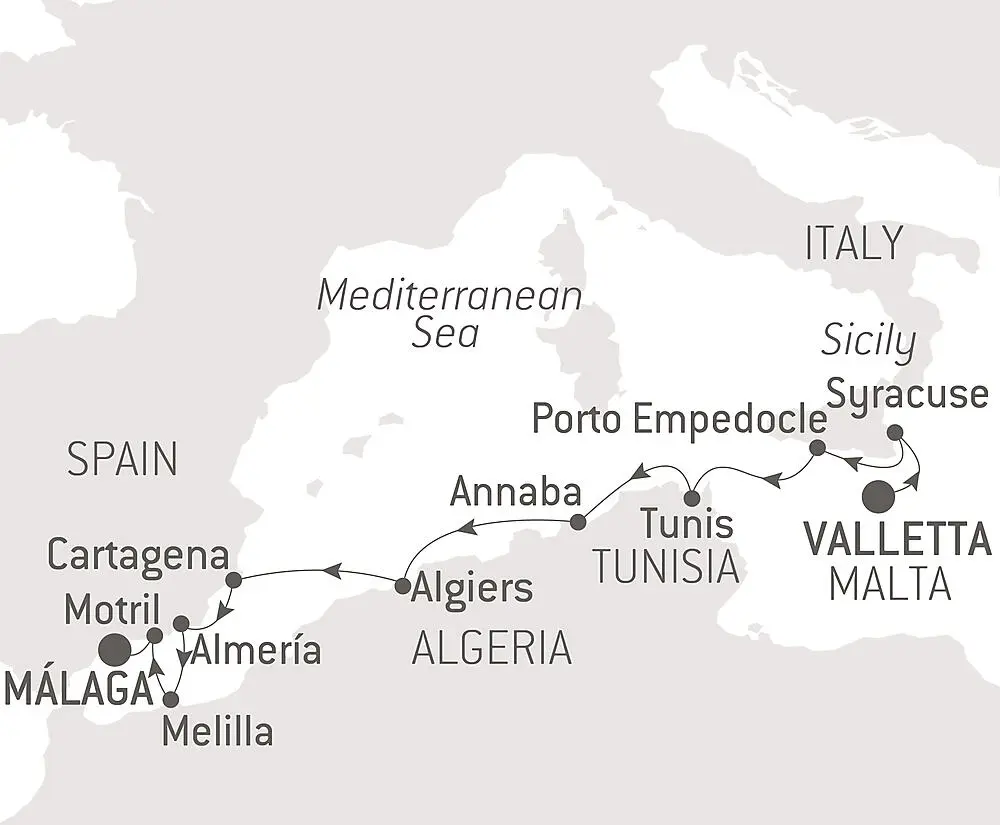
Travel Period: Oct 31 2026
Port: Valletta (Malta) - Malaga
Duration: 11 Days
Ancient shores of the Mediterranean
Day 1 - Valletta
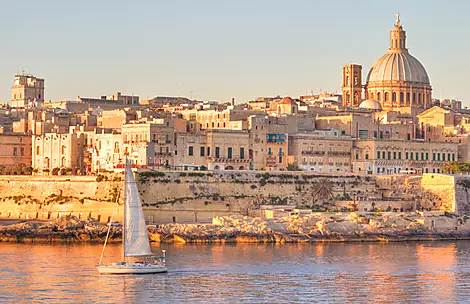
The whole of the Maltese capital Valletta is UNESCO World Heritage listed and occupies a peninsula in the north-east of the island. From the fountain of Tritons to Saint-Elme fort, there are as many majestic streets as there are narrow staircase vennels to explore. The painted loggia and carved corbels on the tall houses will accompany you in your explorations, and youâll rarely be bothered by traffic. You can visit the Grandmasters palace decorated with coats of arms and frescoes. Saint-Johnâs cathedral and the ramparts which have guarded the city since the 16th century are also among the most emblematic sites of the city. Arranged in terraces, the Barrakka Gardens will punctuate your promenade with a green and floral experience.
Day 2 - Syracuse, Sicily
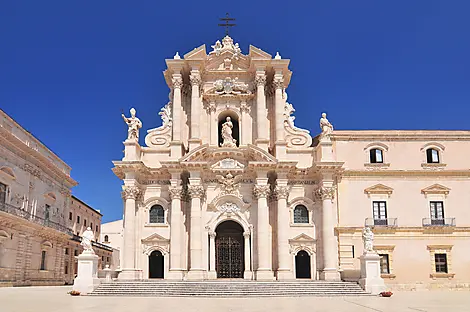
Its undulating rocky coastline, the endless sandy beaches, the menacing form of Mount Etna which surveys its island like a patriarch, the flowery gardens on the hillside... Sicily lays out its varied landscapes like a shopkeeper displays his wares. Described by Cicero as âthe most beautiful city in the worldâ, Syracuse was one of the most prestigious cities in Sicily and at her height was even a rival for Athens. A central city of Ancient Greece, it was home to a succession of civilisations, each of which has left their mark. The blend of Arabic, Roman, Norman, Byzantine and Spanish cultures makes Syracuse a town that is extraordinarily rich in fragrances, colours and flavours.
2 available excursions
Archaeological site & Ortygia, Noto, Baroque Town
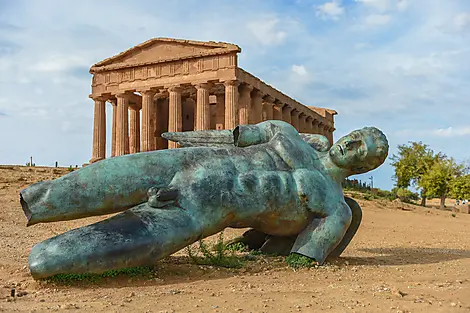
Day 3- Porto Empedocle, Sicily
Huddled on the south-western coast of Sicily, Porto Empedocles bears the name of the philosopher Empedocles, who lived in the region in the 5th century BC. An age-old city offered up to sun and sea, this is your doorway to the exceptional archaeological site of Temple Valley, a high place of Greek civilisation listed as a UNESCO World Heritage site. You can admire the remains of many temples dedicated to Zeus, his wife Hera and Hephaestus. Make sure you take in the magnificent Italian countryside, with its olive orchards that cover the hillsides.
1 available excursions
Valley of the Temples and Casa Barbadoro
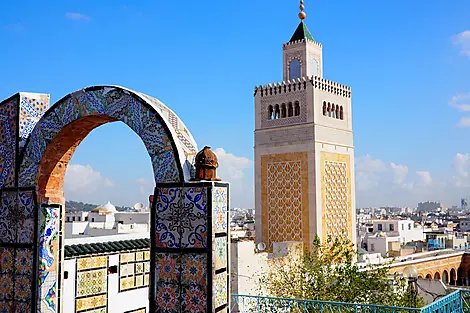
Day 4 - Tunis
At the crossroads of civilisations, the capital of Tunisia is rich in cultural discoveries. The ruins of Ancient Carthage, a UNESCO World Heritage Site and particularly well preserved, testify to the splendour of this city that was once Romeâs great rival. The hill of Byrsa, the former fortified citadel of the Phoenician port and one of the presumed burial places of Saint Louis who died there during the Eighth Crusade, offers spectacular views over the Gulf of Tunis. In the Bardo National Museum, you will be able to admire one of the worldâs finest Roman mosaic collections, including the magnificent portrait of the poet Virgil.
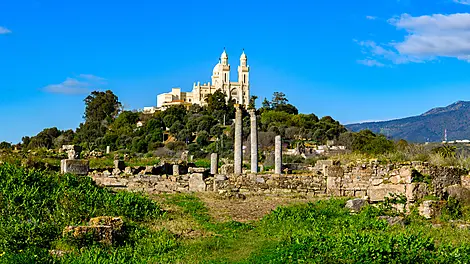
Day 5 - AnnabaÂ
Annaba, a coastal town in eastern Algeria, is the country's fourth largest city. It contains many heritage treasures, including the ancient site of Hippo, the largest Roman forum in Africa. From the Cap de Garde lighthouse, you get a splendid and varied panoramic view with mountains and sea, while the basilica of Saint Augustine, the bishop of Hippo in the 4th century, overlooks the city with its majestic white dome. A stroll along the Corniche and the Cours de la Révolution will introduce you to the lively, elegant town that inspired numerous artists and writers.
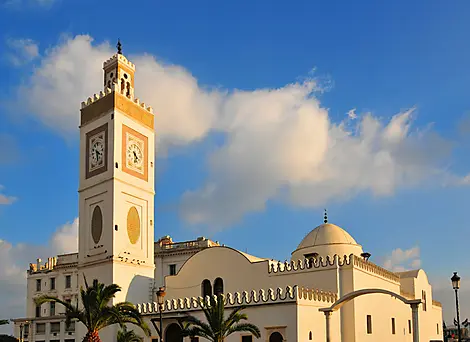
Day 6 - Algiers
The beauty of the Bay of Algiers offers travellers arriving by sea an unforgettable view. The Casbah houses cascade down to the Haussmann-style buildings and the hustle and bustle of the Mediterranean city creates a unique atmosphere. Algiers the White proudly bears the traces of its history with its magnificent Casbah, listed as UNESCO World Heritage, its tropical garden called Jardin dâEssai, its Martyrâs Memorial, its imposing Basilica of Our Lady of Africa, and its lively city centre with its Grande Poste (main post office) and French quarter. Seventy kilometres (43 miles) away, you will have the possibility of visiting Tipaza, one of the most extraordinary archaeological complexes of the Maghreb, listed as World Heritage by UNESCO. Once a trading post of the Carthaginians and later the Romans, the ancient city is home to the Royal Mausoleum of Mauretania, a funerary monument providing precious evidence of what was once the Punic world.
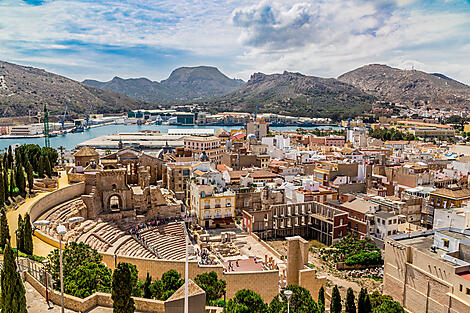
Day 7 - Cartagena
Surrounded by hills, the natural site of the Bay of Carthagena presided over the fate of this former fortress which has been home to the greatest European civilisations. Today, these Phoenician, Roman, Carthaginian, Moorish and Christian influences form a rich architectural heritage. Its Roman theatre is one of the most significant and best conserved in Spain. You will also be able to cross the landscapes of vines and citrus groves stretching endlessly towards Murcia, to visit this dynamic regional capital.
1 available excursions
Horses of Spain, Cartagena & Roman theater
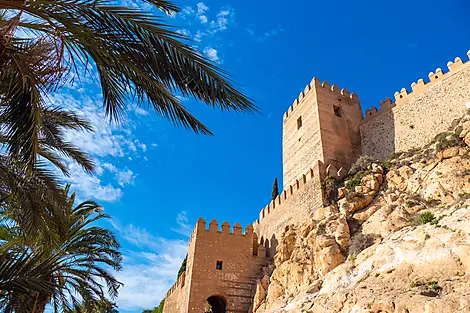
Day 8 - Almeria
On the Mediterranean shore, the easternmost Andalusian capital, the legendary AlmerÃa (from the Arab Al-Mariy-yat, meaning watchtower), has a coastline of preserved beaches with an interior characterised by its typical desert ecosystem. In the past an important port for the Caliphate of Córdoba, AlmerÃa has a remarkable citadel and a cathedral whose imperious structure stands in the very centre of the old town. This old town, with its narrow streets, will charm you with its lime washed walls and its rich historical and cultural heritage.
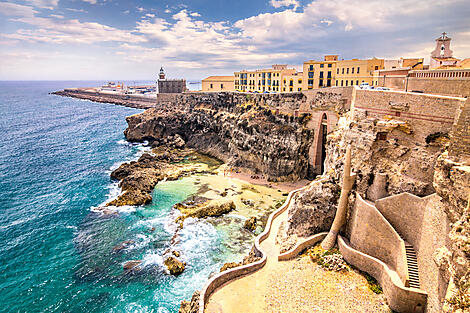
Day 9 - Melilla
An autonomous city of Spain on the North African coast, Melilla and its citadel sit on the edge of Cape Three Forks, between Morocco and the Mediterranean Sea, offering breathtaking views of this blue expanse. A perfect blend of history and modernity, the city boasts charming cobbled streets, imposing ramparts and a number of historic sites that are well worth a visit, including the Baluarte de la Concepción and the Hospital del Rey. In contrast to these vestiges of the city's military past, the Art Nouveau curves of the Palacio de la Asamblea, Casa Melul, the Reconquista building and Plaza Menéndez Pelayo reflect the influence of Gaudi's student Enrique Nieto, who lived here, and the great Catalan Modernist period. After Barcelona, Melilla has the largest number of buildings in this style.
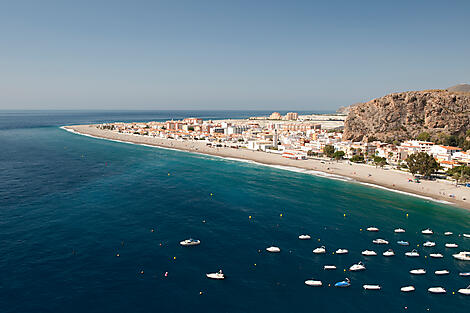
Day 10 - Motril
On the shores of the Mediterranean, Motril enjoys a special place on the Costa Tropical. Sheltered from the cold northerly winds thanks to the mountains that surround this Andalusian city, the city benefits from an ideal micro-climate.
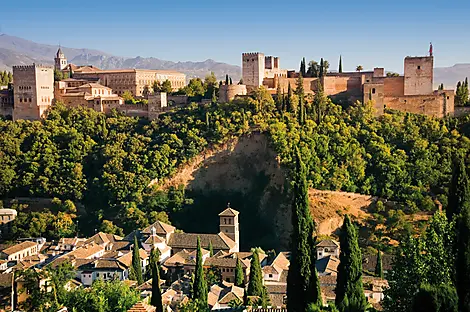
Day 11 - Malaga
A historical and festive town, Malaga is located in Andalusia, on the Costa del Sol. Between the marina and the beaches, the seaside promenade of La Farola offers an ideal setting for strolling and relaxing. Set slightly further back, the Malagueta bullring is one of the emblematic sites of the city. From the hill overlooking the old town, one can see Gibralfaro castle and the Alcazaba, two fortified ensembles rising out from the cypresses and maritime pines. To visit Pablo Picassoâs birthplace, you will go first to the courtly plaza de la Merced. A few streets back from here, you can explore the museum dedicated to the artist, in the Buenavista palace.
Iceland Voyage: Land of Fire and Ice - with Smithsonian Journeys
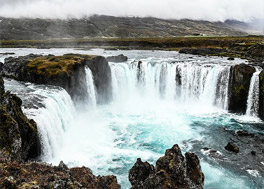
Cruise Line: Ponant Cruise
Ship: Le-Bellot
Travel Period: Jun 03 2027 - Jun 01 2028
Port: Reykjavik (Iceland) to Reykjavik (Iceland)
Duration: 8 Days
toIceland.webp "Iceland Voyage: Land of Fire and Ice - with Smithsonian Journeys")
Iceland Voyage: Land of Fire and Ice - with Smithsonian Journeys
Day 1 - ReykjavÃk
Icelandâs capital stretches along the edge of a vast bay in the west of the country. Perlan, the âPearl of ReykjavÃkâ, a museum located on âOskjuhlið hill, offers a panoramic view of the lush, green landscapes. A little further, one can easily spot the signpost showing the way to the evangelical HallgrÃmskirkja church, and to the historical centre where one can stroll along the SkólavördustÃgur and the Laugavegur, two lively streets with charming small shops. For some relaxation just outside of the city, visitors have the opportunity to visit the Reykjanes peninsula and its famous thermal lagoons of the Blue Lagoon.
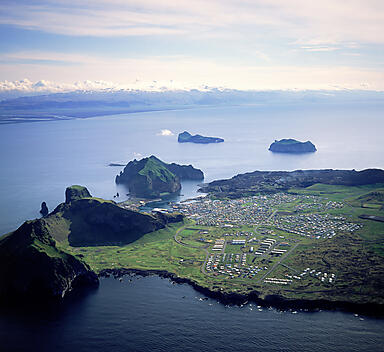
Day 2 - Sailing in the Vestmannaeyjar
The Westman Islands were formed from a succession of underwater eruptions and consist of 15 islands and around 30 islets. As you will discover, Heimaey has a rich history and captivating landscapes. Dominated by the Eldfjall, itâs the only island in the chain that is inhabited. This exceptional site has a very pronounced relief taking in vertiginous cliffs, reefs, sea caves, and surf. Raise your eyes and you will be able to admire the spectacular dives of the Gannets.
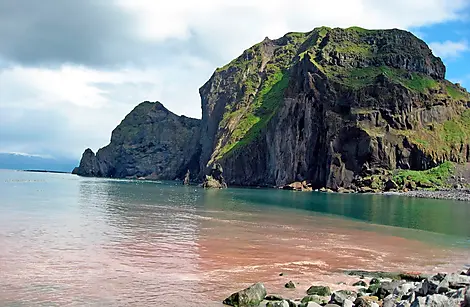
Day 2 - Heimaey, Vestmannaeyjar
This land seated off the southern coast of Iceland is the largest of the Vestmann islands, and is the only inhabited island in the archipelago. The steep Edfell volcanoes and the green prairies of Herjólfsdalur offer rich contrast of nature. On the Stórhöfði road, look out over grey sand beaches and cliffs carved out by the Arctic ocean. From here, you can also see the bronze landscapes of the mountaintops. You could visit Eldheimar, an ultra-modern and interactive museum which traces the volcanic eruption has experienced Heimaey in 1973.
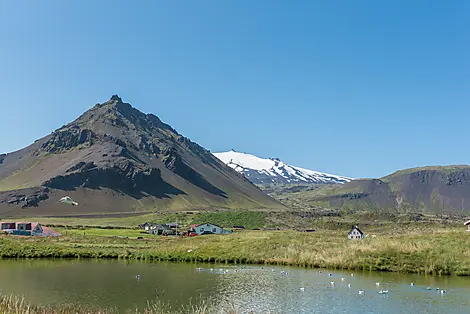
Day 3 - Grundarfjordur
This secret boreal hideaway is located at the foot of the Kirkjufell, on Snaefellsnes peninsula. Arriving by boat means you will get a closer view of the lava-stone rock standing like a sentinel at the entrance to the bay; Grundarfjörður lies sheltered behind this cone-shaped rock. A stoneâs throw from the jetty, crystal clear waters, tundra and beaches give onto the cerulean waters of Breiðafjörður. Scattered with its emerald-coloured lawns, this town, with its buildings that merge into the surrounding countryside, will most certainly win your favour.
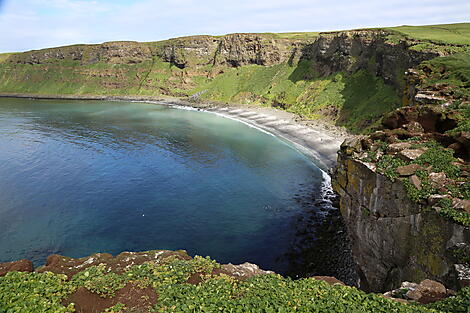
Day 4 - GrÃmsey
GrÃmsey is the northernmost island of Iceland surging from the Arctic ocean, with the Arctic circle running through the island. Its contrasted contours are surprising. From GrÃmseyjarhreppur, the islandâs only town located on the west coast, then heading due south, you can take in the beauty of the hillsides, lushly carpeted with moss and grass. On the rest of the coastline, imposing basalt cliffs inhabited by sea birds stand proud.
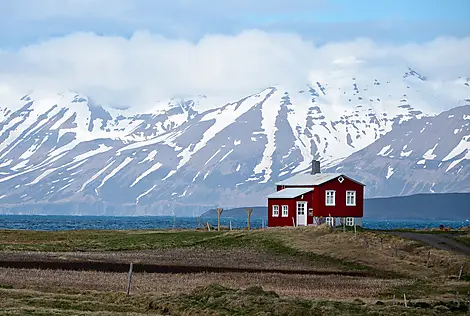
Day 5 - Akureyri
The elegant city of Akureyri is located very close to the Arctic circle, tucked away in the Eyjafjörður fjord. It displays a stunning palette of colours: blue waters in the harbour, bronze mountain ash on the squares and brightly-coloured houses in the historical centre. As you walk along the cobbled streets, you will come across rows of terraces with wooden furniture. A vast stairway cut into the hillside leads up to the emblematic feature of the town, namely the Akureyrarkirkja church. The very beautiful botanical garden made possible by a microclimate offers the opportunity to discover the Icelandic flora as well as plants from all over the world.
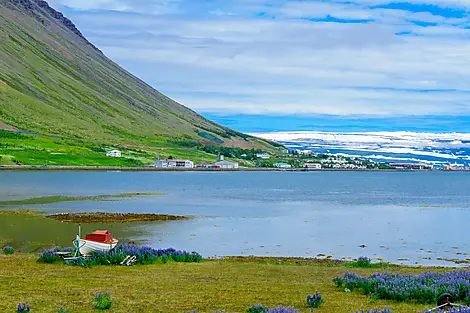
Day 6 - Isafjordur
Your ship will take you to the heart of the fjords of North-West Iceland, a wild land of lost valleys and steep cliffs, where man struggles to survive. In this very isolated region we find the Isafjörður fjord, undoubtedly one of the most beautiful in the country, mainly for its relief, forged by many very ancient basaltic flows. The town of Isafjörður, which nestles at the back of its fjord, between imposing mountains, is a delightful little town that lives exclusively from fishing. The capital of the Western fjords, its old wooden houses bear witness to its past as a major fishing port.
Day 7-8 - Reykjavik
Icelandâs capital stretches along the edge of a vast bay in the west of the country. Perlan, the âPearl of ReykjavÃkâ, a museum located on âOskjuhlið hill, offers a panoramic view of the lush, green landscapes. A little further, one can easily spot the signpost showing the way to the evangelical HallgrÃmskirkja church, and to the historical centre where one can stroll along the SkólavördustÃgur and the Laugavegur, two lively streets with charming small shops. For some relaxation just outside of the city, visitors have the opportunity to visit the Reykjanes peninsula and its famous thermal lagoons of the Blue Lagoon.
A Voyage Along the Great Lakes - with Smithsonian Journeys
Cruise Line: Ponant Cruise
Ship: Le-Bellot
Travel Period: Aug 13 2027
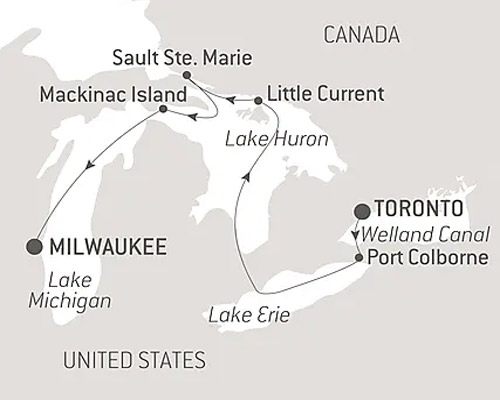
Port: Toronto - Milwaukee
Duration: 9 Days
A Voyage Along the Great Lakes - with Smithsonian Journeys
Ports of Call & Excursions
Day 1 - Toronto
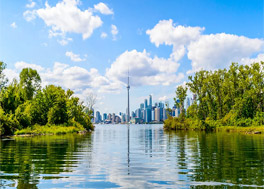
The largest city in Canada and capital of the province of Ontario, Toronto fascinates as much by its incredible diversity as by its size. Make sure you visit the CN Tower, the tallest tower in the western hemisphere, as well as the St. Lawrence Market whose stalls reflect the multicultural wealth of this city known as the global city. Not far from there, the historic Distillery District unveils its brick-paved streets imbued with romantic charm and its myriad of small restaurants, cafés, boutiques, theatres and art galleries. The Royal Ontario Museum and its impressive collections devoted to the worldâs natural and cultural history will also be an unmissable stop during this port of call.
Day 2 - Going through the Welland Canal locks
Day 3 - Port Colborne
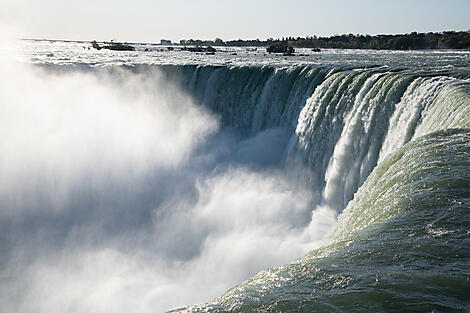
Port Colborne is a small port city located in southern Ontario, at the mouth of the Welland Canal. It is well-known for one of the longest locks in the world: measuring 420Â metres, this lock, the 8th in the canal, has an observation footbridge and marks the final transit point before the Erie Canal. In addition to the discovery of this tremendous hydraulic infrastructure, this port of call will be your privileged access point to the famous Niagara Falls, renowned all over the world for their spectacular beauty. Located on the river of the same name, which means âwater thunderâ in Amerindian language, these wonders of nature are among the most powerful waterfalls in the world.
Day 3 - Sailing Lake Erie
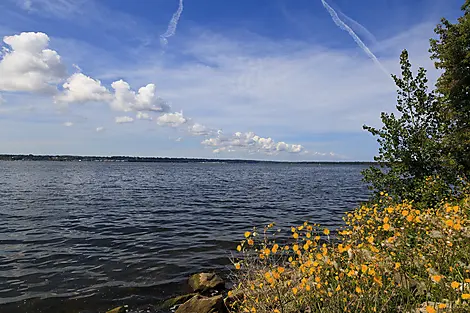
Located to the south of Lake Huron and connected to Lake Ontario by the Welland Canal, Lake Erie, which owes its name to one of the Amerindian tribes which peopled its banks before the arrival of the French in the 17th century, is remarkable for its unique ecosystem. Its shallow fish-filled waters make it an excellent fishing spot, while its banks, famous for their many migratory birds, attract photographers and ornithology enthusiasts.

Day 4 - Sailing through Detroit
During your navigation along the Detroit River, an important commercial waterway linking Lake Erie and Lake St. Clair to Lake Huron, you will sail along the largest city in Michigan. Youâll then enjoy panoramic views over the skyscrapers of the former Motor City, jewel of the automotive industry, Fordism and Motown music in the 20th century. Youâll also be able to admire the Ambassador Bridge, which spans the river and enables access to Windsor, on the Canadian shore of the river. This steel suspension bridge, over two kilometres long, was constructed in 1929. This bridge alone carries over 25% of trade between the United States and Canada.

Day 5 - Sailing Lake Huron
A natural border between the American State of Michigan and the Canadian province of Ontario, Lake Huron is one of the five American Great Lakes and one of the largest freshwater lakes in the world. Comprising the main lake, Saginaw Bay, the North Channel and Georgian Bay, and home to around 30,000Â islands, it offers varied coastal landscapes and unique views. From your ship, youâll thus be able to admire the wild beauty of the wooded and at times craggy coastline of Manitoulin Island, or the spectacular cliffs of the Bruce Peninsular.
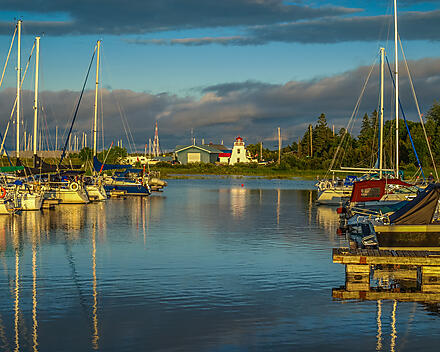
Day 5 - Little Current
A small port town located along the North Channel of Lake Huron, Little Current is considered to be the gateway to Manitoulin Island, the largest freshwater island in the world. The townâs emblematic construction, the Little Current Swing Bridge built in 1913, provides the only land access to the island, peaceful lands whose name means âthe island of spiritsâ in the local dialect. A real haven of peace, sheltering wild nature and some hamlets, the place is ideal for outdoor activities such as horse-riding and hiking.
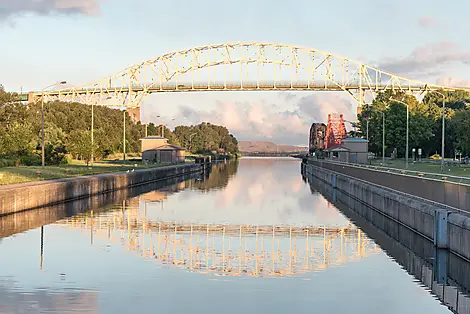
Day 6 - Sault Ste. Marie
Located to the east of the Upper Peninsula of Michigan, Sault Ste. Marie is one of the oldest cities in the United States. Separated from its Canadian twin city by St. Marys River, it is famous among other things for its locks, known as either the Sault Locks or the Soo Locks, which enable ships to travel the metres in change in elevation between Lake Superior and the lower Great Lakes. These locks, which date back over 160Â years, are considered the most important in the world due to their shipping traffic. Make sure you visit the Museum Ship Valley Camp where you can visit the interior of a former freighter that sailed on the Great Lakes for more than 50 years.
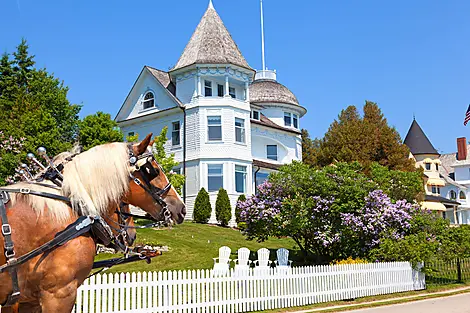
Day 7 - Mackinac Island
Close to the banks of Lake Huron in the State of Michigan, Mackinac Island promises a real journey through time. Originally inhabited by Amerindians, then occupied by French and British colonists, this small island measuring only a few km² still retains an atmosphere of yesteryear today, with its Victorian-style buildings and elegant horse-drawn carriages. Fort Mackinac, on the heights of the island, is a reminder of the conflicts that punctuated the history of this strategic place, a former fur trade centre. In addition to this scenery from the past, the island offers magnificent fine sandy beaches and is home to one of the oldest National Parks in the United States.
Day 7 - Sailing Lake Michigan
You will sail the United Statesâ largest freshwater body, which gave its name to Michigan, one of the four states that border this lake measuring 500 km long and 200 km wide. The first colonists settled in the south at the end of the 17th century, on the site of the current megalopolis of Chicago. Wild landscapes of forests with sparkling colours, cliffs, golden sandy beaches and dunes as far as the eye can see stretch along its 2,600 km of shoreline. In the north, magnificent wind-swept islands rise out of the lakeâs emerald waters. At 8 km long, the Mackinac Bridge, which spans the straits between Lake Michigan and Lake Huron, is one of the worldâs longest suspension bridges.Â
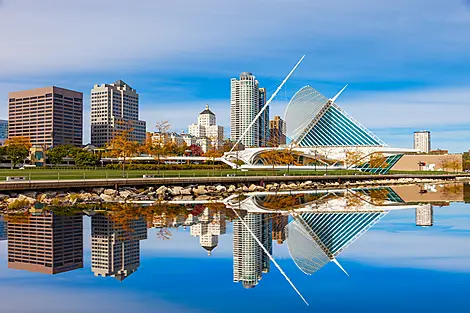
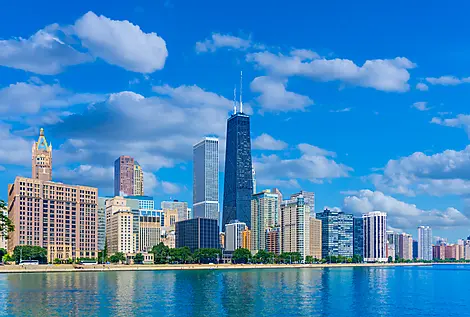
Day 8 - Milwaukee
Nested on the shores of Lake Michigan, Milwaukee, the largest city in the State of Wisconsin, harmoniously combines tradition and modernity. Industrial long ago, the city, known as Brew City because of its old breweries renowned all over the world, is experiencing a certain renaissance. While warehouses have given way to restaurants, bars, theatres and art galleries in the city centre, the district still retains traces of its manufacturing past. Further south lies Chicago, the economic centre of the Midwest, with an interesting mix of natural and urban landscapes: its immense skyscrapers, diverse architecture, many parks and magnificent beaches make the city a popular destination.
*Prices are per person in a shared DBL/TWN cabin. Cruise taxes and Port Fees included. Pricing and availability subject to change without notice. STIC Travel Group reserves the right to refuse or honor any prices / sailings that are erroneously printed or quoted. Terms & Conditions apply.

We Accept: 
Secured By: 
Copyright © STIC GSA Services Pvt. Ltd. All rights reserved