

Central America - Ponant Cruises
Central America Jewels & Panama Canal
Cruise Line: Ponant Cruise
Ship: Le-Laperouse | Le-Bellot
Travel Period: Nov 07 2026 - Dec 27 2027
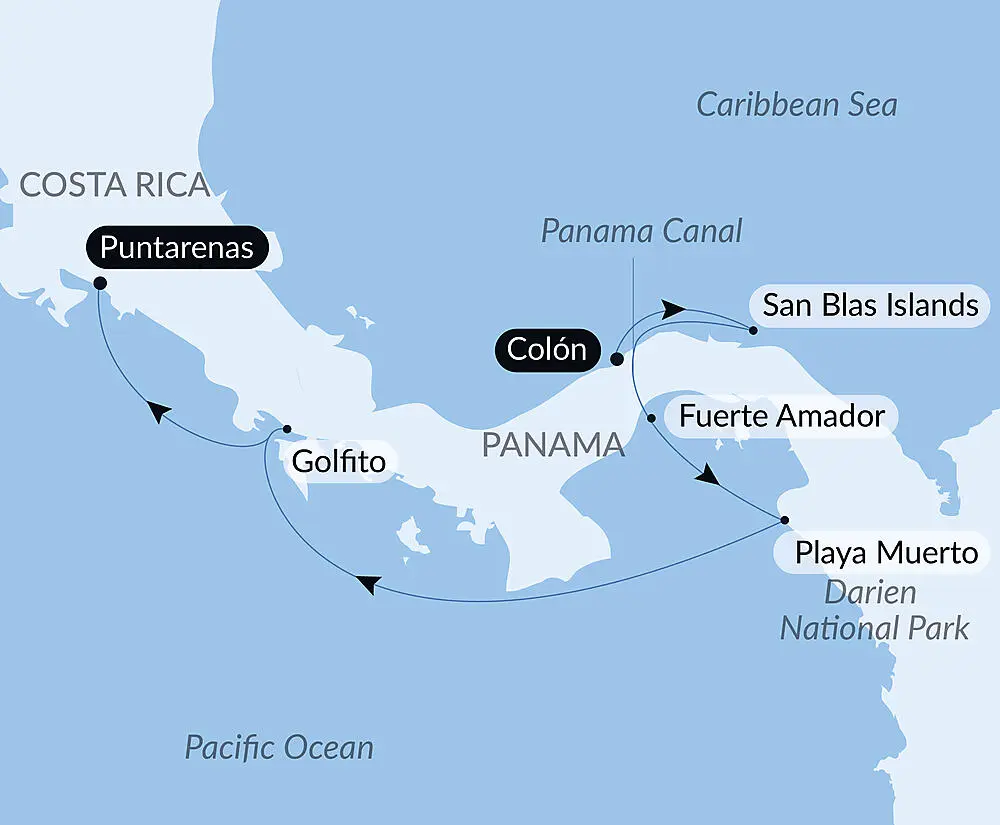
Port: Colon - Puntarenas
Duration: 8 Days
Central America Jewels & Panama Canal
Ports of Call & Excursions
Day 1 - Colon
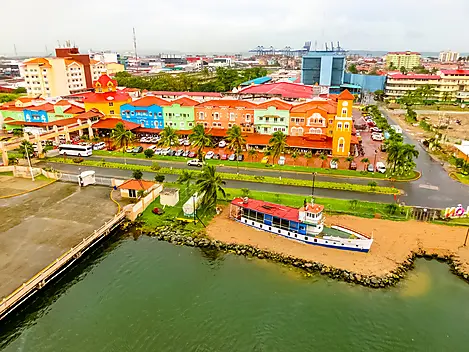
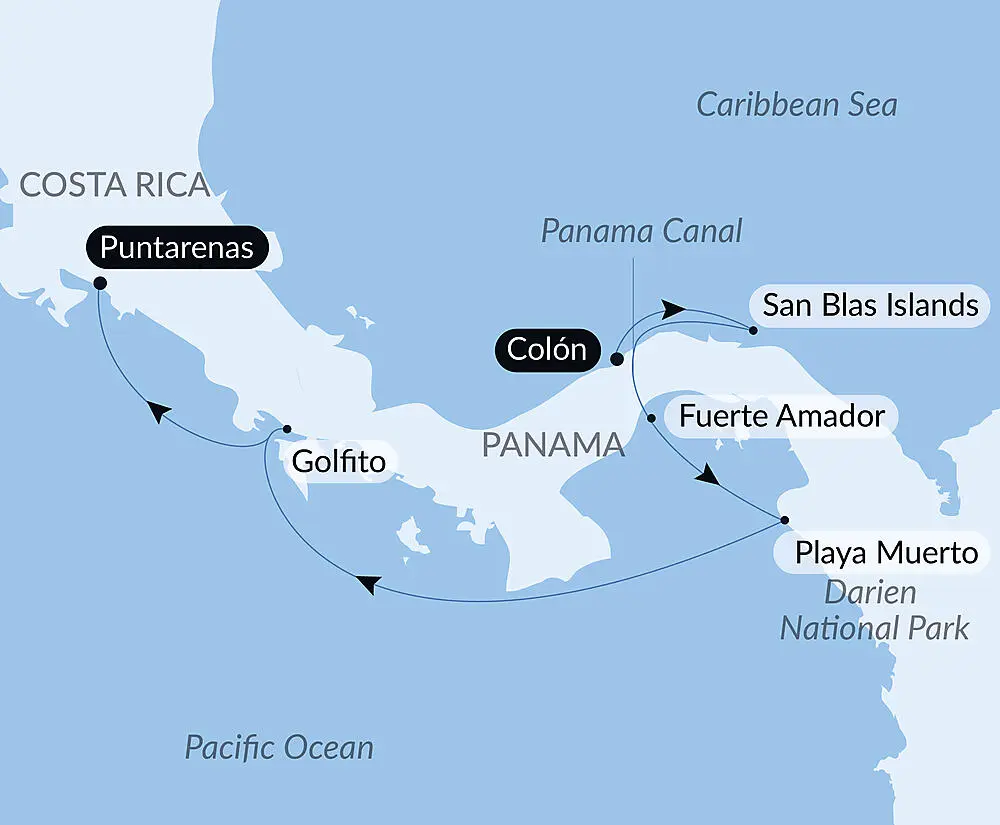
Colón is the second largest city in Panama, at the Caribbean entrance of the Panama Canal. Colón is today an important port, and the free trade zone created in 1953 contributed greatly to the development of the city. Colón was founded in 1850 by Americans working on the Panama railroad connecting the Atlantic and Pacific coasts through the isthmus of Panama; the city rapidly overshadowed the older Caribbean ports of Panama when the canal opened.
Day 2 - San Blas Islands
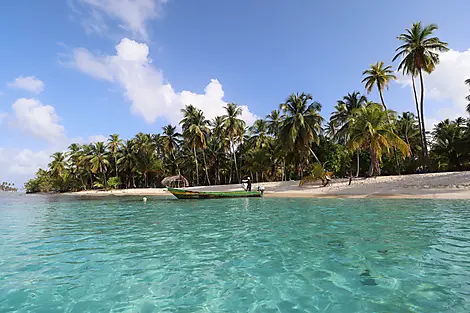
Located on the north-east coast of Panama, the San Blas archipelago is a string of coral islands in the heart of the Caribbean Sea. More than 300 islands and cays cover an area of 300 square kilometres offering travellers a multitude of treasures. Sheltered behind a long coral reef, the San Blas Islands are full of enchanting anchorages. The long sandy white beaches bound by crystal-clear waters will allow you to relax and enjoy incredible marine fauna before engaging with the Kunas Indian community. Still subsisting on hunting and fishing, they will welcome you in their villages of bamboo houses gathered near the beaches.
Day 3 - Crossing the Panama Canal
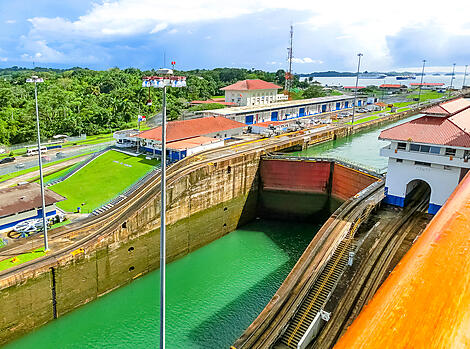
Aboard your ship, experience something unique, that has inspired the imagination of numerous adventurers in the 20th century: sailing the Panama Canal. Its construction started in 1880 under the direction of Ferdinand de Lesseps. Abandoned then resumed, this marvel of engineering was completed by the United States and opened in 1914. The canal crosses the Isthmus of Panama and links the Atlantic to the Pacific. Including three levels of locks and by raising ships to the level of Lake Gatun, almost as if the water was a lift, it allows them to avoid having to round Cape Horn.
Day 4 - Fuerte Amador, Flamenco Island
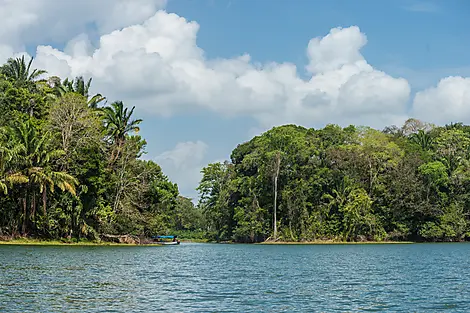
An artificial peninsula situated at the Pacific entrance to the Panama Canal, Fuerte Amador is the gateway to several noteworthy sites. Right near there, the impressive Miraflores Locks are a shining example of the engineering feats deployed during the construction of the Panama Canal. Further north, in villages nestling amid dense vegetation, lives the Embera tribe, guardian of the forest and of the Chagres River. This proud people have successfully preserved their traditions and their ancestral way of life, which predate the colonisation of the region by the Spanish.
Day 5 - Playa Muerto, Darien National Park
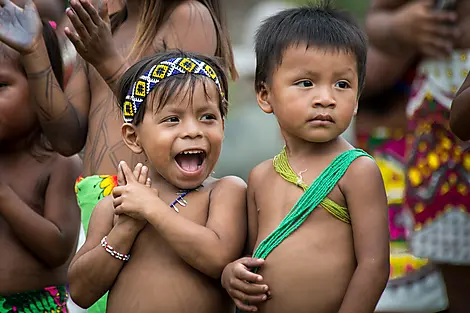
The most remote and least developed region of Panama, the province of Darien is an unspoilt land with an extremely rich variety of flora and fauna. Listed by UNESCO as World Heritage, Darien National Park offers its extraordinary scenery of rocky coastlines, mountain ranges, mangroves, rivers and creeks. Discover Playa Muerto, a tiny coastal village home to the Emberas Amerindian community. You will visit the village, attend traditional songs and dances of the locals, and admire beautiful local craft.
Day 6 - At sea
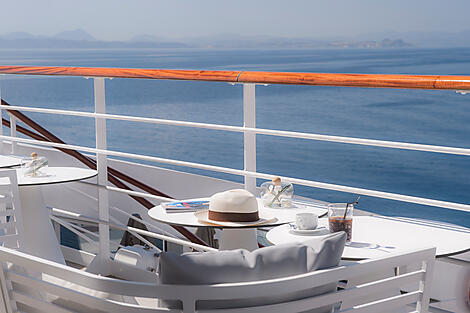
During your journey at sea, make the most of the many services and activities on board. Treat yourself to a moment of relaxation in the spa or stay in shape in the fitness centre. Depending on the season, let yourself be tempted by the swimming pool or a spot of sunbathing. This journey without a port of call will also be an opportunity to enjoy the conferences or shows proposed on board, depending on the activities offered, or to do some shopping in the boutique or to meet the PONANT photographers in their dedicated space. As for lovers of the open sea, they will be able to visit the shipâs upper deck to admire the spectacle of the waves and perhaps be lucky enough to observe marine species. A truly enchanted interlude, combining comfort, rest and entertainment.
Day 7 - Golfito
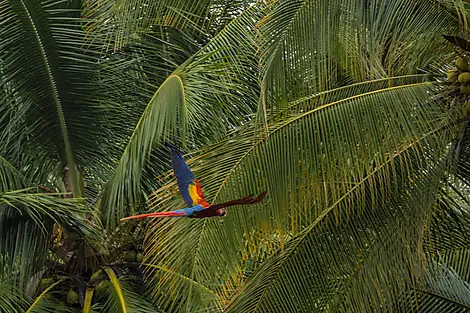
The town of Golfito lies on the Pacific coast of Costa Rica, in the province of Puntarenas, one of the most humid regions in the world. It was occupied by the indigenous Bruncas tribe during the Pre-Columbian era. Once specialised in the export of bananas, Golfito has today become the starting point for visitors who want to reach one of the largest primary tropical rainforests in Central America. Meanwhile, the beaches of Golfo Dulce are some of the most beautiful in Costa Rica, with the lush forest, home to many tropical birds and monkeys as well as a variety of rare species of plants, as their backdrop.
Day 8 - Puntarenas
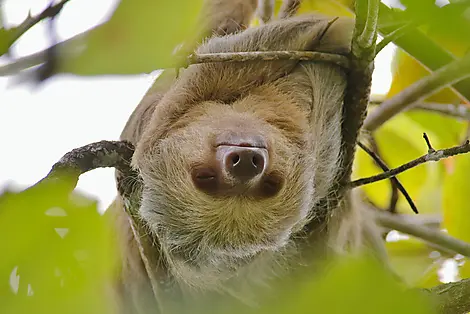
The capital of the eponymous province, Puntarenas is sometimes called âthe pearl of the Pacificâ, for its unique charm. It sits on the Pacific coast of Costa Rica, along the Gulf of Nicoya, lined with long expanses of wild natural environments. Further inland, among the countless natural wonders to be found in the generous rainforest of the Costa Ricaâs national parks, Poas and Arena volcanoes towers up in all their majestic glory. In this luxuriant natural setting, Costa Rica protects one of the planetâs richest biodiversity: monkeys, sloths, tropical birds, iguanas, crocodiles, waterfalls, canyons, and more than ten thousand species of tropical plants.
Central America Jewels & Panama Canal
Cruise Line: Ponant Cruise
Ship: Le-Bougainville
Travel Period: Nov 14 2026 - Mar 03 2027
Port: Puntarenas - Colon
Duration: 8 Days
Central America Jewels & Panama Canal
Day 1 - Puntarenas
The capital of the eponymous province, Puntarenas is sometimes called âthe pearl of the Pacificâ, for its unique charm. It sits on the Pacific coast of Costa Rica, along the Gulf of Nicoya, lined with long expanses of wild natural environments. Further inland, among the countless natural wonders to be found in the generous rainforest of the Costa Ricaâs national parks, Poas and Arena volcanoes towers up in all their majestic glory. In this luxuriant natural setting, Costa Rica protects one of the planetâs richest biodiversity: monkeys, sloths, tropical birds, iguanas, crocodiles, waterfalls, canyons, and more than ten thousand species of tropical plants.
Day 2 - Golfito
The town of Golfito lies on the Pacific coast of Costa Rica, in the province of Puntarenas, one of the most humid regions in the world. It was occupied by the indigenous Bruncas tribe during the Pre-Columbian era. Once specialised in the export of bananas, Golfito has today become the starting point for visitors who want to reach one of the largest primary tropical rainforests in Central America. Meanwhile, the beaches of Golfo Dulce are some of the most beautiful in Costa Rica, with the lush forest, home to many tropical birds and monkeys as well as a variety of rare species of plants, as their backdrop.
Day 3 - At sea
During your journey at sea, make the most of the many services and activities on board. Treat yourself to a moment of relaxation in the spa or stay in shape in the fitness centre. Depending on the season, let yourself be tempted by the swimming pool or a spot of sunbathing. This journey without a port of call will also be an opportunity to enjoy the conferences or shows proposed on board, depending on the activities offered, or to do some shopping in the boutique or to meet the PONANT photographers in their dedicated space. As for lovers of the open sea, they will be able to visit the shipâs upper deck to admire the spectacle of the waves and perhaps be lucky enough to observe marine species. A truly enchanted interlude, combining comfort, rest and entertainment.
Day 4 - Playa Muerto, Darien National Park
The most remote and least developed region of Panama, the province of Darien is an unspoilt land with an extremely rich variety of flora and fauna. Listed by UNESCO as World Heritage, Darien National Park offers its extraordinary scenery of rocky coastlines, mountain ranges, mangroves, rivers and creeks. Discover Playa Muerto, a tiny coastal village home to the Emberas Amerindian community. You will visit the village, attend traditional songs and dances of the locals, and admire beautiful local craft.
Day 6 - Fuerte Amador, Flamenco Island
An artificial peninsula situated at the Pacific entrance to the Panama Canal, Fuerte Amador is the gateway to several noteworthy sites. Right near there, the impressive Miraflores Locks are a shining example of the engineering feats deployed during the construction of the Panama Canal. Further north, in villages nestling amid dense vegetation, lives the Embera tribe, guardian of the forest and of the Chagres River. This proud people have successfully preserved their traditions and their ancestral way of life, which predate the colonisation of the region by the Spanish.
Day 6 - Crossing the Panama Canal
Aboard your ship, experience something unique, that has inspired the imagination of numerous adventurers in the 20th century: sailing the Panama Canal. Its construction started in 1880 under the direction of Ferdinand de Lesseps. Abandoned then resumed, this marvel of engineering was completed by the United States and opened in 1914. The canal crosses the Isthmus of Panama and links the Atlantic to the Pacific. Including three levels of locks and by raising ships to the level of Lake Gatun, almost as if the water was a lift, it allows them to avoid having to round Cape Horn.
Day 7 - San Blas Islands
Located on the north-east coast of Panama, the San Blas archipelago is a string of coral islands in the heart of the Caribbean Sea. More than 300 islands and cays cover an area of 300 square kilometres offering travellers a multitude of treasures. Sheltered behind a long coral reef, the San Blas Islands are full of enchanting anchorages. The long sandy white beaches bound by crystal-clear waters will allow you to relax and enjoy incredible marine fauna before engaging with the Kunas Indian community. Still subsisting on hunting and fishing, they will welcome you in their villages of bamboo houses gathered near the beaches.
Day 8 - Colon
Colon is the second largest city in Panama, at the Caribbean entrance of the Panama Canal. Colón is today an important port, and the free trade zone created in 1953 contributed greatly to the development of the city. Colón was founded in 1850 by Americans working on the Panama railroad connecting the Atlantic and Pacific coasts through the isthmus of Panama; the city rapidly overshadowed the older Caribbean ports of Panama when the canal opened.
Panama and Costa Rica by Sea: The Natural Wonders of Central America - with Smithsonian
Cruise Line: Ponant Cruise
Ship: Le-Bougainville
Travel Period: Jan 12 2028
Port: Colon - Puntarenas
Duration: 8 Days
Panama and Costa Rica by Sea: The Natural Wonders of Central America - with Smithsonian
Day 1 - Colon
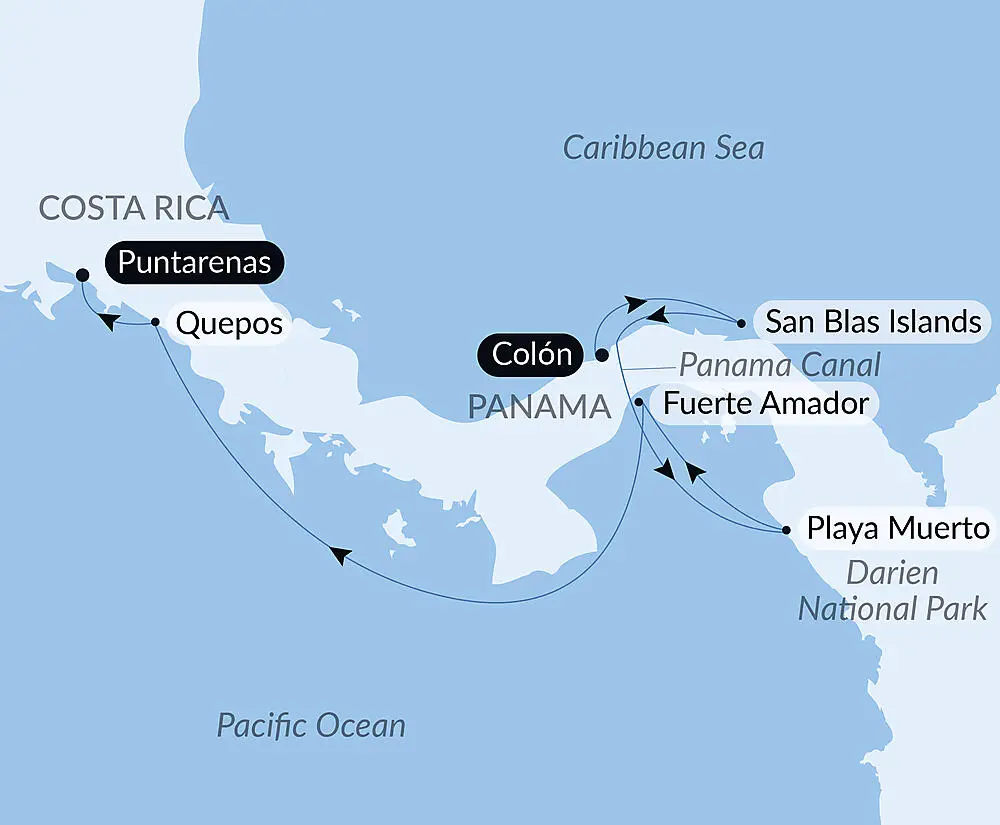
Colon is the second largest city in Panama, at the Caribbean entrance of the Panama Canal. Colón is today an important port, and the free trade zone created in 1953 contributed greatly to the development of the city. Colón was founded in 1850 by Americans working on the Panama railroad connecting the Atlantic and Pacific coasts through the isthmus of Panama; the city rapidly overshadowed the older Caribbean ports of Panama when the canal opened.
Day 2 - San Blas Islands
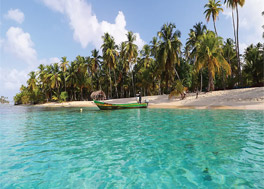
Located on the north-east coast of Panama, the San Blas archipelago is a string of coral islands in the heart of the Caribbean Sea. More than 300 islands and cays cover an area of 300 square kilometres offering travellers a multitude of treasures. Sheltered behind a long coral reef, the San Blas Islands are full of enchanting anchorages. The long sandy white beaches bound by crystal-clear waters will allow you to relax and enjoy incredible marine fauna before engaging with the Kunas Indian community. Still subsisting on hunting and fishing, they will welcome you in their villages of bamboo houses gathered near the beaches.
Day 3- Crossing the Panama Canal
Aboard your ship, experience something unique, that has inspired the imagination of numerous adventurers in the 20th century: sailing the Panama Canal. Its construction started in 1880 under the direction of Ferdinand de Lesseps. Abandoned then resumed, this marvel of engineering was completed by the United States and opened in 1914. The canal crosses the Isthmus of Panama and links the Atlantic to the Pacific. Including three levels of locks and by raising ships to the level of Lake Gatun, almost as if the water was a lift, it allows them to avoid having to round Cape Horn.
Day 4 - Fuerte Amador, Flamenco Island
An artificial peninsula situated at the Pacific entrance to the Panama Canal, Fuerte Amador is the gateway to several noteworthy sites. Right near there, the impressive Miraflores Locks are a shining example of the engineering feats deployed during the construction of the Panama Canal. Further north, in villages nestling amid dense vegetation, lives the Embera tribe, guardian of the forest and of the Chagres River. This proud people have successfully preserved their traditions and their ancestral way of life, which predate the colonisation of the region by the Spanish.
Day 5- Playa Muerto, Darien National Park
The most remote and least developed region of Panama, the province of Darien is an unspoilt land with an extremely rich variety of flora and fauna. Listed by UNESCO as World Heritage, Darien National Park offers its extraordinary scenery of rocky coastlines, mountain ranges, mangroves, rivers and creeks. Discover Playa Muerto, a tiny coastal village home to the Emberas Amerindian community. You will visit the village, attend traditional songs and dances of the locals, and admire beautiful local craft.
Day 6 - At sea
During your journey at sea, make the most of the many services and activities on board. Treat yourself to a moment of relaxation in the spa or stay in shape in the fitness centre. Depending on the season, let yourself be tempted by the swimming pool or a spot of sunbathing. This journey without a port of call will also be an opportunity to enjoy the conferences or shows proposed on board, depending on the activities offered, or to do some shopping in the boutique or to meet the PONANT photographers in their dedicated space. As for lovers of the open sea, they will be able to visit the shipâs upper deck to admire the spectacle of the waves and perhaps be lucky enough to observe marine species. A truly enchanted interlude, combining comfort, rest and entertainment.
Day 7 - Quepos
Quepos makes for a charming stop-off on the Pacific coast, just next-door to the famous Manuel Antonio National Park, an untouched tropical natural reserve lined with white sandy beaches. The town's seafront is an opportunity to stroll through market stalls touting pineapples and bananas in the shade of the manchineel trees. In this coastal town criss-crossed with tree-lined streets in bloom, admire the houses and their incredible sculpted balconies. Enjoy a spot of shopping in the many traditional boutiques: pick up some handmade cotton clothing, ceramics embellished with Costa Rican designs and home décor pieces in hand-painted wood.
Day 8 - Puntarenas
Located on the north-east coast of Panama, the San Blas archipelago is a string of coral islands in the heart of the Caribbean Sea. More than 300 islands and cays cover an area of 300 square kilometres offering travellers a multitude of treasures. Sheltered behind a long coral reef, the San Blas Islands are full of enchanting anchorages. The long sandy white beaches bound by crystal-clear waters will allow you to relax and enjoy incredible marine fauna before engaging with the Kunas Indian community. Still subsisting on hunting and fishing, they will welcome you in their villages of bamboo houses gathered near the beaches.
Panama, Colombia & Caribbean Islands
Cruise Line: Ponant Cruise
Ship: Le-Bellot | Le-Laperouse
Travel Period: Mar 12 2027 - Apr 08 2027
Port: Colon - Fort-de-France
Duration: 11 Days
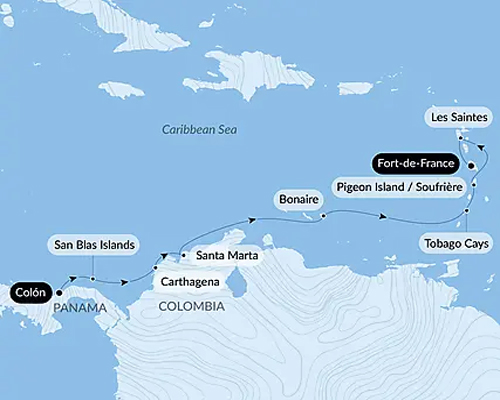
Panama, Colombia & Caribbean Islands
Day 1 - Colon
Colón is the second largest city in Panama, at the Caribbean entrance of the Panama Canal. Colón is today an important port, and the free trade zone created in 1953 contributed greatly to the development of the city. Colón was founded in 1850 by Americans working on the Panama railroad connecting the Atlantic and Pacific coasts through the isthmus of Panama; the city rapidly overshadowed the older Caribbean ports of Panama when the canal opened.
Day 2 - San Blas Islands
Located on the north-east coast of Panama, the San Blas archipelago is a string of coral islands in the heart of the Caribbean Sea. More than 300 islands and cays cover an area of 300 square kilometres offering travellers a multitude of treasures. Sheltered behind a long coral reef, the San Blas Islands are full of enchanting anchorages. The long sandy white beaches bound by crystal-clear waters will allow you to relax and enjoy incredible marine fauna before engaging with the Kunas Indian community. Still subsisting on hunting and fishing, they will welcome you in their villages of bamboo houses gathered near the beaches.
Day 3- Cartagena
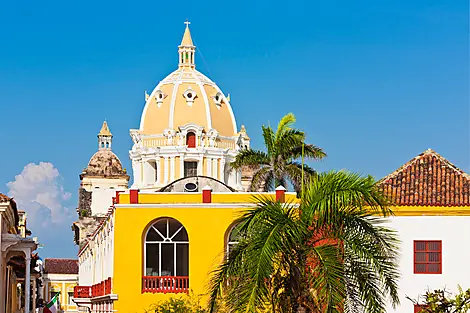
A splendid harbour city in the north of Columbia, a source of inspiration for the Columbian writer Gabriel GarcÃa Márquez, Cartagena will win you over with its well-preserved colonial architecture, and warm friendly atmosphere. You can visit the sumptuous UNESCO World Heritage fortified historical centre whose churches and houses have magnificent multi-coloured façades. A witness of Spanish domination, the San Felipe de Barajas fortress stands on top of a hill from where you can admire views over the whole city. The Las Bóvedas neighbourhood will charm you with its arcades, used as prison cells during the 19th century civil wars.
Day 4 - Santa Marta
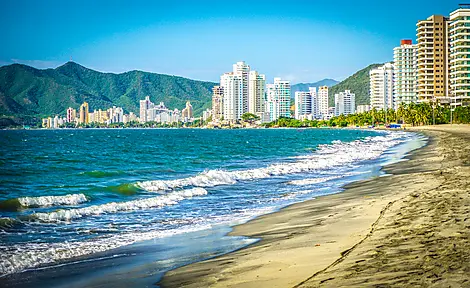
Santa Marta, located in the north of the Caribbean coast of Colombia, is a seaside town dominated by the majestic Sierra Nevada. The highest coastal chain of mountains in the world, it is listed as a Biosphere Reserve by UNESCO for the diversity of its fauna and flora. At the heart of the first Spanish colony, you will discover the heritage of the Tairona, the largest indigenous civilisation in Colombia. The eponymous national park offers you sumptuous landscapes, combining lush tropical forest and beautiful fine sandy beaches edged with crystal-clear water. The archaeological heritage and the Pre-Columbian treasures of the region are a source of endless enchantment.
Day 5 - At sea
During your journey at sea, make the most of the many services and activities on board. Treat yourself to a moment of relaxation in the spa or stay in shape in the fitness centre. Depending on the season, let yourself be tempted by the swimming pool or a spot of sunbathing. This journey without a port of call will also be an opportunity to enjoy the conferences or shows proposed on board, depending on the activities offered, or to do some shopping in the boutique or to meet the PONANT photographers in their dedicated space. As for lovers of the open sea, they will be able to visit the shipâs upper deck to admire the spectacle of the waves and perhaps be lucky enough to observe marine species. A truly enchanted interlude, combining comfort, rest and entertainment.
Day 6 - Bonaire
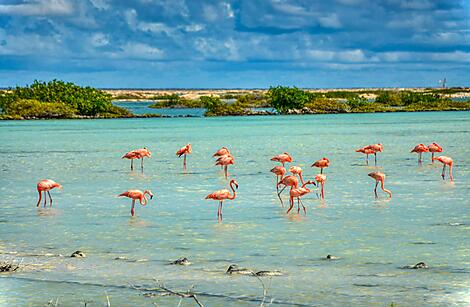
Surrounded by a barrier reef and a marine sanctuary, Bonaire is a true paradise for divers. This peaceful and preserved little island is renowned all over the world for its coral reefs, which are directly accessible from the beach, providing a unique sensation of freedom. Discover magnificent marine fauna and flora while snorkelling or diving in its turquoise waters. The Washington Slagbaai National Park in the north of the island is home to many birds. It is the most important breeding site in the south Caribbean for the pink flamingo, the islandâs emblematic animal.
Day 7 - At sea
During your journey at sea, make the most of the many services and activities on board. Treat yourself to a moment of relaxation in the spa or stay in shape in the fitness centre. Depending on the season, let yourself be tempted by the swimming pool or a spot of sunbathing. This journey without a port of call will also be an opportunity to enjoy the conferences or shows proposed on board, depending on the activities offered, or to do some shopping in the boutique or to meet the PONANT photographers in their dedicated space. As for lovers of the open sea, they will be able to visit the shipâs upper deck to admire the spectacle of the waves and perhaps be lucky enough to observe marine species. A truly enchanted interlude, combining comfort, rest and entertainment.
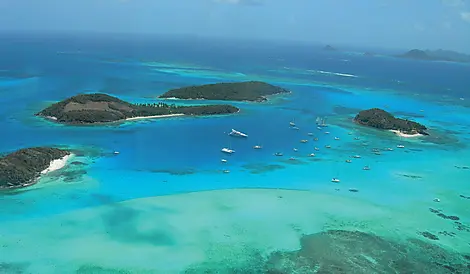
Day 8 - Tobago Cays
Scattered between St Vincent and Grenada, the Tobago Cays comprises five little islands: Petit Rameau, Petit Bateau, Baradal, Petit Tabac and Jamesby. This rosary of uninhabited cays in the southern West Indies is a marine park whose turquoise lagoons provide a home and safe haven for some outstanding marine fauna, including peaceful green turtles. Girded and united by a coral reef, these secluded islands are a peaceful paradise for divers, swimmers and snorkellers.
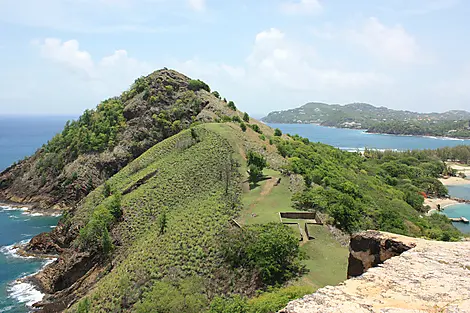
Day 9 - Pigeon Island Beach
Linked to St Lucia by a sand causeway, Pigeon Island has been a designated National Park since 1979. On this wild and pristine land, you will be inspired to take pleasant walks amid the tropical vegetation and through a magnificent tree-filled garden. You will also be irresistibly drawn to the two pretty little sandy beaches nestling on the southern side and bathed by crystal-clear waters. While snorkelling, be sure to explore the underwater world that is teeming with life, along the rocks lining this peninsulaâs coast. You will thoroughly enjoy the calm and beauty of this place, which is really conducive to simply relaxing.
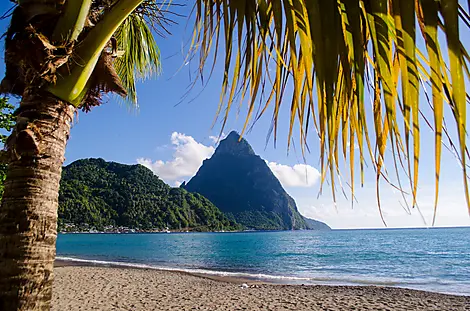
Day 10 - Soufriere
Nestled in the crook of a breath-taking bay, the former capital of St Lucia is brimming with attractions. Soufrière is famous for The Pitons, volcanic spires that tower over the entrance to the town. In the vicinity of the lush botanical gardens, you will be able to enjoy the curative powers of the Diamond Falls mineral baths. From the beach at the north end of the bay, you can set off to explore the reefs that are home to stunning gardens of sea fans at the foot of the cliffs that plunge into the sea.
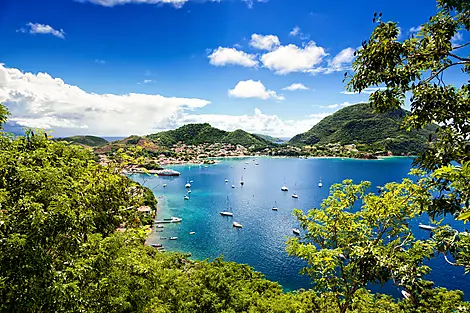
Day 11 - Les Saintes
During the feast of All Saints in 1493, Christopher Columbus discovered this archipelago of nine islands that he named "The Saints". Today, only two of them are inhabited. Terre de Haut, in the east, is dominated by the Morne Mire hill; at the summit stands Fort Napoleon, paying homage to the islands' history. In the heart of the botanical garden, shared by iguanas and cacti, there is an exceptional view of the Baie des Saintes, one of the most beautiful in the world. The long shady beach of Pompierre, where it is forbidden to drop anchor, is a peaceful place for a swim, while Pain de Sucre Beach offers wonderful opportunities for snorkelling. On the island, donât forget to taste the local speciality, the âtourment dâamourâ, a cake made with coconut.
Day 11 - Fort-de-France
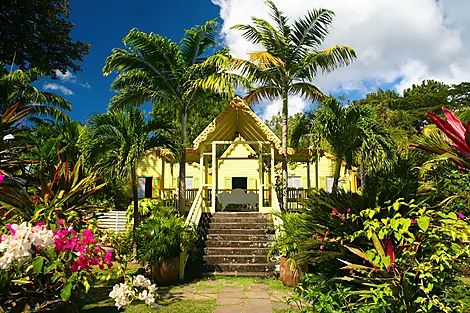
Located on the western coast of Martinique, Fort-de-France will amaze you by the splendour of its bay, a magnificent cut-out in the coastline, considered as one of the most beautiful in the world. At the harbour mouth, on its strip of land, fort Saint-Louis overlooks the capital city of Martinique. If you climb up to it, you can see some breath-taking views. Saint Louis Cathedral and the Schoelcher library bear witness to a secular history, intimately linked to the islandâs story. Why not try some fresh coconut at the colourful Grand Marché. Two really pleasant places you can take a breather in, right in the heart of the city, are the garden of Balata and the Aimé Cesaire park.
Secrets of Central America
Cruise Line: Ponant Cruise
Ship: Le-Bougainville | Le-Bellot | Le-Laperouse
Travel Period: Nov 21 2026 - Dec 25 2027
Port: Colon - Puntarenas
Duration: 11 Days
Secrets of Central America
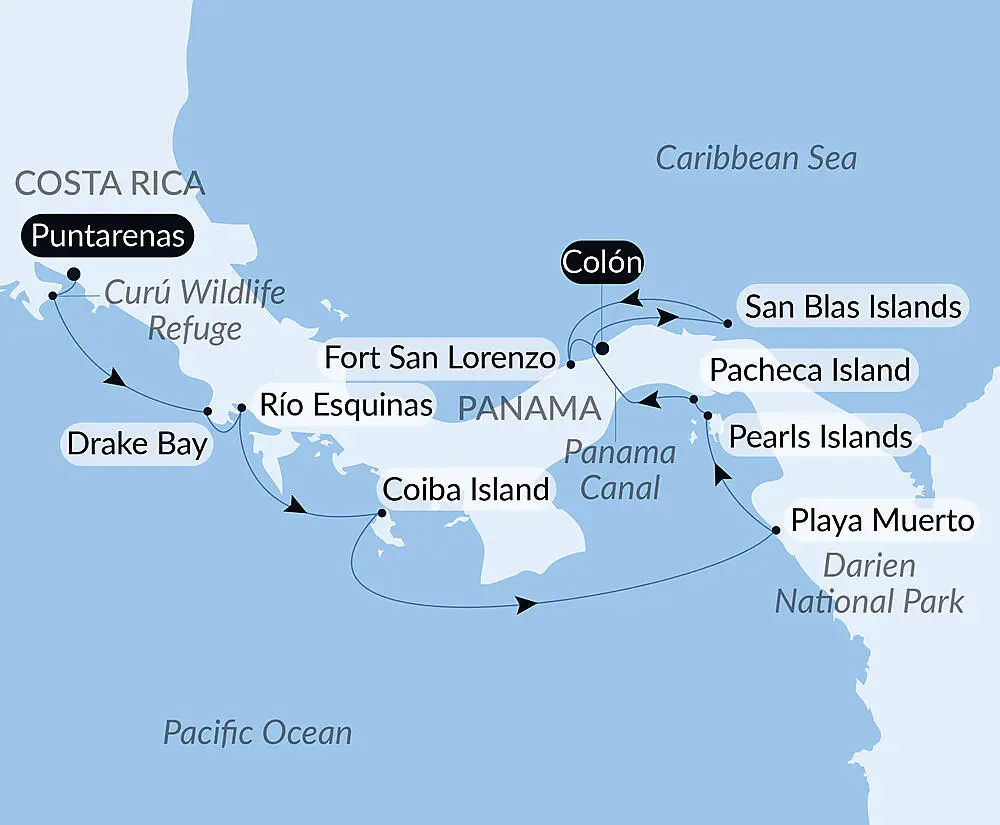
Day 1-2 - Colon
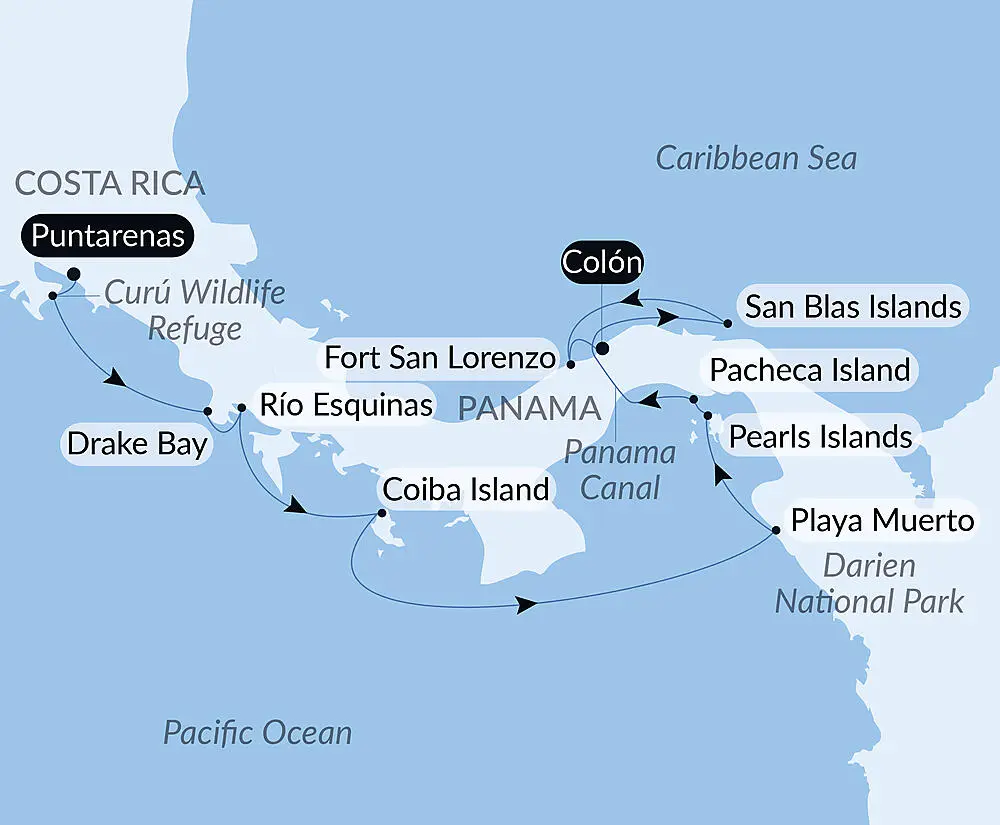
Colon is the second largest city in Panama, at the Caribbean entrance of the Panama Canal. Colón is today an important port, and the free trade zone created in 1953 contributed greatly to the development of the city. Colón was founded in 1850 by Americans working on the Panama railroad connecting the Atlantic and Pacific coasts through the isthmus of Panama; the city rapidly overshadowed the older Caribbean ports of Panama when the canal opened.
Day 2 - Fort San Lorenzo (Colon)
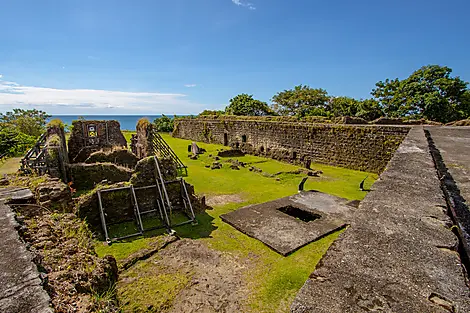
In the Colón District, Fort San Lorenzo faces the sea, its canons pointing towards the horizon as they used to under the Spanish Crown. This construction is part of a group of buildings exemplifying the military architecture of the 17th and 18th centuries along the Caribbean coast of Panama, hence its status as a UNESCO World Heritage Site. Wander along the fortâs alleyways accompanied by the melodious singing of the birds that have made the surrounding forest their home. Enjoy an unforgettable port of call combining history and walking in nature.
Day 3- San Blas Islands
Located on the north-east coast of Panama, the San Blas archipelago is a string of coral islands in the heart of the Caribbean Sea. More than 300 islands and cays cover an area of 300 square kilometres offering travellers a multitude of treasures. Sheltered behind a long coral reef, the San Blas Islands are full of enchanting anchorages. The long sandy white beaches bound by crystal-clear waters will allow you to relax and enjoy incredible marine fauna before engaging with the Kunas Indian community. Still subsisting on hunting and fishing, they will welcome you in their villages of bamboo houses gathered near the beaches.
Day 4- Crossing the Panama Canal
Aboard your ship, experience something unique, that has inspired the imagination of numerous adventurers in the 20th century: sailing the Panama Canal. Its construction started in 1880 under the direction of Ferdinand de Lesseps. Abandoned then resumed, this marvel of engineering was completed by the United States and opened in 1914. The canal crosses the Isthmus of Panama and links the Atlantic to the Pacific. Including three levels of locks and by raising ships to the level of Lake Gatun, almost as if the water was a lift, it allows them to avoid having to round Cape Horn.
Day 5 - Pearls Islands
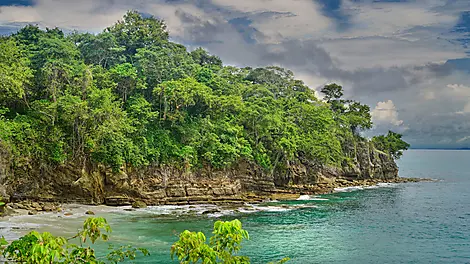
The Pearl Islands archipelago, formed by over 220 islands and islets, is named in memory of the pearl oysters present in the Gulf of Panama. In colonial times, the pearls were extracted and used as ornaments or currency. âLa Peregrinaâ was discovered in this archipelago: this pearl is famous for its perfection and for belonging to several royals and, more recently, Elizabeth Taylor. While the pearls have now disappeared from the azure waters of this paradise with its history of adventures and piracy, you can still swim from the sandy white beaches and observe shoals of multi-coloured fish performing their gracious ballet.
Day 5 - Pacheca Island
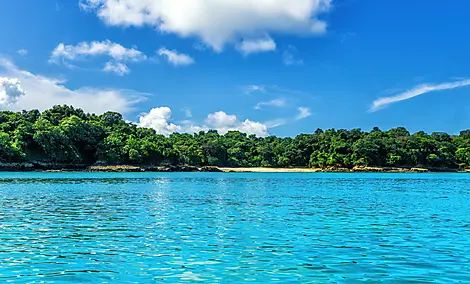
Isla Pacheca lies in the far north of the maze of more than two hundred islands composing the Pearl Islands. This small piece of uninhabited land is a special place for the numerous bird species that have taken up residence there. Among these is the unusual-looking blue-footed booby, which you might spot wandering along one of the islandâs beaches. The shore visit in a Zodiac dinghy holds the promise of an unforgettable moment spent in lush nature between white-sand beaches and verdant rainforest.
Day 6 - Playa Muerto, Darien National Park
The most remote and least developed region of Panama, the province of Darien is an unspoilt land with an extremely rich variety of flora and fauna. Listed by UNESCO as World Heritage, Darien National Park offers its extraordinary scenery of rocky coastlines, mountain ranges, mangroves, rivers and creeks. Discover Playa Muerto, a tiny coastal village home to the Emberas Amerindian community. You will visit the village, attend traditional songs and dances of the locals, and admire beautiful local craft.
Day 7 - Cebaco Island
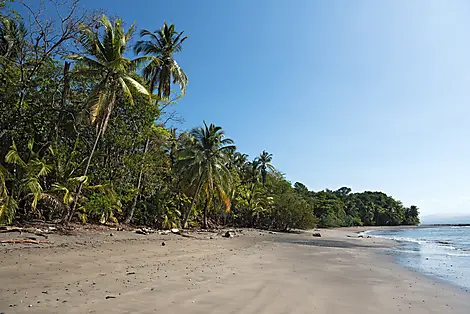
Off the Pacific coast of Panama, at the entrance to the Gulf of Montijo, Cebaco Island conjures visions of paradise lost. Covered in tropical rainforest, edged by white sandy beaches, home to exceptionally rich plant and wildlife, the island offers a number of hiking routes along which to discover its pristine natural environment. Its magnificent coral reefs, located in the outlying regions of the Coiba National Park, a UNESCO World Heritage site, are the refuge for many marine species and offer stunning underwater landscapes.
Day 8 - Rio Esquinas
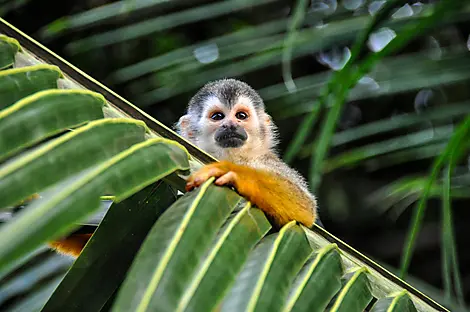
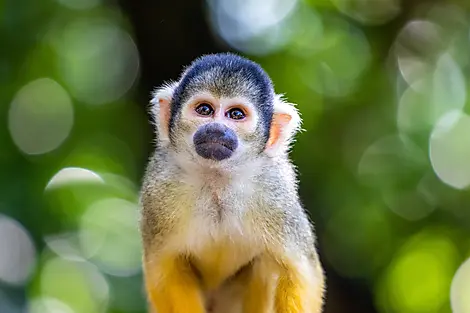
The beauty of Costa Rica and the richness of its biodiversity reveal themselves at this port of call in the heart of the mangrove. In the meanders of Rio Esquinas, a tropical corner of paradise, you will discover an incredibly dense ecosystem. Aboard your Zodiac dinghy, you will brush past the tangled arms formed by the roots of the mangrove trees. This green and lush gallery forest and its inhabitants welcome you. Watch closely: common squirrel monkeys, white ibis, Eurasian whimbrels, ospreys, toucans, snowy egrets and great blue herons can be found hiding here.
Day 9 - Drake Bay
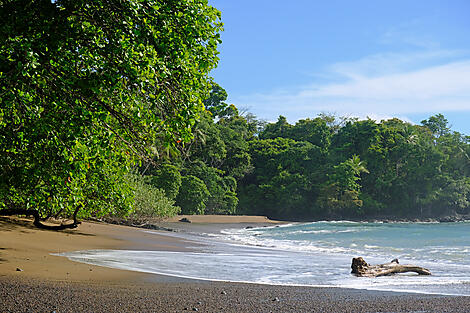
Located on Costa Ricaâs remote Osa Peninsula, Corcovado National Park covers 164 square miles, making it the countryâs largest national park, the largest primary forest on the American Pacific coast, and one of the few remaining large areas of lowland tropical rain forests in the world.
Day 10 - Curu Wildlife Refuge
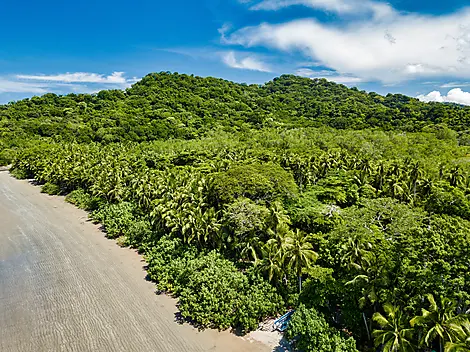
On the southern part of the Nicoya Peninsula, the small Curú Wildlife Refuge is the oldest protected park in Costa Rica. This refuge is an exemplary site in terms of ecotourism as well as a research centre for scientists from all over the world. It has been at the heart of an original conservation and sustainable development project since the 1930s. After a short zodiac trip, you will discover, via the paths that criss-cross the tropical forest and lead to magnificent beaches, the most emblematic species of Costa Rica: monkeys, iguanas and over 200 bird species. Since their recent reintroduction, the scarlet macaw and the spider monkey have thrived in this preserved environment.
Day 11 - Puntarenas
The capital of the eponymous province, Puntarenas is sometimes called âthe pearl of the Pacificâ, for its unique charm. It sits on the Pacific coast of Costa Rica, along the Gulf of Nicoya, lined with long expanses of wild natural environments. Further inland, among the countless natural wonders to be found in the generous rainforest of the Costa Ricaâs national parks, Poas and Arena volcanoes towers up in all their majestic glory. In this luxuriant natural setting, Costa Rica protects one of the planetâs richest biodiversity: monkeys, sloths, tropical birds, iguanas, crocodiles, waterfalls, canyons, and more than ten thousand species of tropical plants.
Secrets of Central America
Cruise Line: Ponant Cruise
Ship: Le-Bougainville
Travel Period: Dec 08 2026 - Apr 01 2028
Port: Puntarenas - Colon
Duration: 11 Days
Secrets of Central America
Day 1-2 - Puntarenas
The capital of the eponymous province, Puntarenas is sometimes called âthe pearl of the Pacificâ, for its unique charm. It sits on the Pacific coast of Costa Rica, along the Gulf of Nicoya, lined with long expanses of wild natural environments. Further inland, among the countless natural wonders to be found in the generous rainforest of the Costa Ricaâs national parks, Poas and Arena volcanoes towers up in all their majestic glory. In this luxuriant natural setting, Costa Rica protects one of the planetâs richest biodiversity: monkeys, sloths, tropical birds, iguanas, crocodiles, waterfalls, canyons, and more than ten thousand species of tropical plants.
Day 2-3 - Curu Wildlife Refuge
On the southern part of the Nicoya Peninsula, the small Curú Wildlife Refuge is the oldest protected park in Costa Rica. This refuge is an exemplary site in terms of ecotourism as well as a research centre for scientists from all over the world. It has been at the heart of an original conservation and sustainable development project since the 1930s. After a short zodiac trip, you will discover, via the paths that criss-cross the tropical forest and lead to magnificent beaches, the most emblematic species of Costa Rica: monkeys, iguanas and over 200 bird species. Since their recent reintroduction, the scarlet macaw and the spider monkey have thrived in this preserved environment.
Day 3- Drake Bay
Located on Costa Ricaâs remote Osa Peninsula, Corcovado National Park covers 164 square miles, making it the countryâs largest national park, the largest primary forest on the American Pacific coast, and one of the few remaining large areas of lowland tropical rain forests in the world.
Day 4 - Rio Esquinas
The beauty of Costa Rica and the richness of its biodiversity reveal themselves at this port of call in the heart of the mangrove. In the meanders of Rio Esquinas, a tropical corner of paradise, you will discover an incredibly dense ecosystem. Aboard your Zodiac dinghy, you will brush past the tangled arms formed by the roots of the mangrove trees. This green and lush gallery forest and its inhabitants welcome you. Watch closely: common squirrel monkeys, white ibis, Eurasian whimbrels, ospreys, toucans, snowy egrets and great blue herons can be found hiding here.
Day 5- Cebaco Island
Off the Pacific coast of Panama, at the entrance to the Gulf of Montijo, Cebaco Island conjures visions of paradise lost. Covered in tropical rainforest, edged by white sandy beaches, home to exceptionally rich plant and wildlife, the island offers a number of hiking routes along which to discover its pristine natural environment. Its magnificent coral reefs, located in the outlying regions of the Coiba National Park, a UNESCO World Heritage site, are the refuge for many marine species and offer stunning underwater landscapes.
Day 6 - Playa Muerto, Darien National Park
The most remote and least developed region of Panama, the province of Darien is an unspoilt land with an extremely rich variety of flora and fauna. Listed by UNESCO as World Heritage, Darien National Park offers its extraordinary scenery of rocky coastlines, mountain ranges, mangroves, rivers and creeks. Discover Playa Muerto, a tiny coastal village home to the Emberas Amerindian community. You will visit the village, attend traditional songs and dances of the locals, and admire beautiful local craft.
Day 7 - Pearls Islands
The Pearl Islands archipelago, formed by over 220 islands and islets, is named in memory of the pearl oysters present in the Gulf of Panama. In colonial times, the pearls were extracted and used as ornaments or currency. âLa Peregrinaâ was discovered in this archipelago: this pearl is famous for its perfection and for belonging to several royals and, more recently, Elizabeth Taylor. While the pearls have now disappeared from the azure waters of this paradise with its history of adventures and piracy, you can still swim from the sandy white beaches and observe shoals of multi-coloured fish performing their gracious ballet.
Day 7 - Pacheca Island
Isla Pacheca lies in the far north of the maze of more than two hundred islands composing the Pearl Islands. This small piece of uninhabited land is a special place for the numerous bird species that have taken up residence there. Among these is the unusual-looking blue-footed booby, which you might spot wandering along one of the islandâs beaches. The shore visit in a Zodiac dinghy holds the promise of an unforgettable moment spent in lush nature between white-sand beaches and verdant rainforest.
Day 8 - Crossing the Panama Canal
Aboard your ship, experience something unique, that has inspired the imagination of numerous adventurers in the 20th century: sailing the Panama Canal. Its construction started in 1880 under the direction of Ferdinand de Lesseps. Abandoned then resumed, this marvel of engineering was completed by the United States and opened in 1914. The canal crosses the Isthmus of Panama and links the Atlantic to the Pacific. Including three levels of locks and by raising ships to the level of Lake Gatun, almost as if the water was a lift, it allows them to avoid having to round Cape Horn.
Day 9 - San Blas Islands
Located on the north-east coast of Panama, the San Blas archipelago is a string of coral islands in the heart of the Caribbean Sea. More than 300 islands and cays cover an area of 300 square kilometres offering travellers a multitude of treasures. Sheltered behind a long coral reef, the San Blas Islands are full of enchanting anchorages. The long sandy white beaches bound by crystal-clear waters will allow you to relax and enjoy incredible marine fauna before engaging with the Kunas Indian community. Still subsisting on hunting and fishing, they will welcome you in their villages of bamboo houses gathered near the beaches.
Day 10 - Fort San Lorenzo (Colon)
In the Colón District, Fort San Lorenzo faces the sea, its canons pointing towards the horizon as they used to under the Spanish Crown. This construction is part of a group of buildings exemplifying the military architecture of the 17th and 18th centuries along the Caribbean coast of Panama, hence its status as a UNESCO World Heritage Site. Wander along the fortâs alleyways accompanied by the melodious singing of the birds that have made the surrounding forest their home. Enjoy an unforgettable port of call combining history and walking in nature.
Day 11 - Colon
Colón is the second largest city in Panama, at the Caribbean entrance of the Panama Canal. Colón is today an important port, and the free trade zone created in 1953 contributed greatly to the development of the city. Colón was founded in 1850 by Americans working on the Panama railroad connecting the Atlantic and Pacific coasts through the isthmus of Panama; the city rapidly overshadowed the older Caribbean ports of Panama when the canal opened.
Panama and Costa Rica by Sea: The Natural Wonders of Central America - with Smithsonian
Cruise Line: Ponant Cruise
Ship: Le-Laperouse
Travel Period: Feb 19 2027
Port: Puntarenas - Colon
Duration: 8 Days
Panama and Costa Rica by Sea: The Natural Wonders of Central America - with Smithsonian
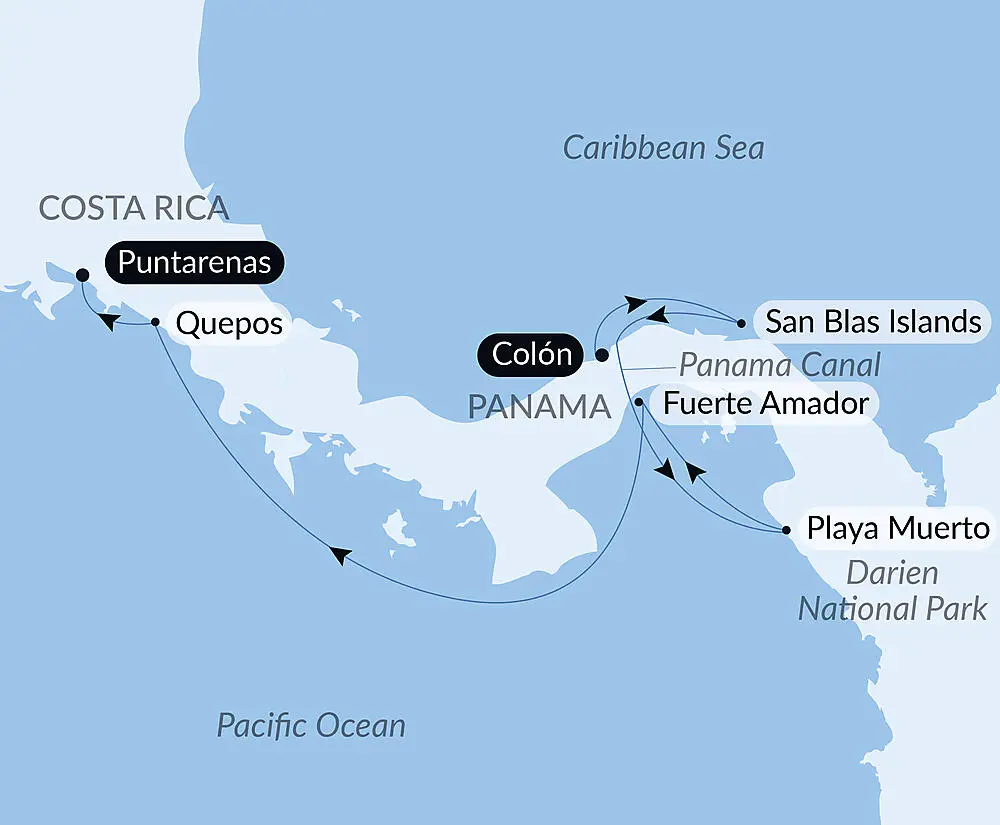
Day 1 - Puntarenas
The capital of the eponymous province, Puntarenas is sometimes called âthe pearl of the Pacificâ, for its unique charm. It sits on the Pacific coast of Costa Rica, along the Gulf of Nicoya, lined with long expanses of wild natural environments. Further inland, among the countless natural wonders to be found in the generous rainforest of the Costa Ricaâs national parks, Poas and Arena volcanoes towers up in all their majestic glory. In this luxuriant natural setting, Costa Rica protects one of the planetâs richest biodiversity: monkeys, sloths, tropical birds, iguanas, crocodiles, waterfalls, canyons, and more than ten thousand species of tropical plants.
Day 2 - Quepos
Quepos makes for a charming stop-off on the Pacific coast, just next-door to the famous Manuel Antonio National Park, an untouched tropical natural reserve lined with white sandy beaches. The town's seafront is an opportunity to stroll through market stalls touting pineapples and bananas in the shade of the manchineel trees. In this coastal town criss-crossed with tree-lined streets in bloom, admire the houses and their incredible sculpted balconies. Enjoy a spot of shopping in the many traditional boutiques: pick up some handmade cotton clothing, ceramics embellished with Costa Rican designs and home décor pieces in hand-painted wood.
Day 3- At sea
During your journey at sea, make the most of the many services and activities on board. Treat yourself to a moment of relaxation in the spa or stay in shape in the fitness centre. Depending on the season, let yourself be tempted by the swimming pool or a spot of sunbathing. This journey without a port of call will also be an opportunity to enjoy the conferences or shows proposed on board, depending on the activities offered, or to do some shopping in the boutique or to meet the PONANT photographers in their dedicated space. As for lovers of the open sea, they will be able to visit the shipâs upper deck to admire the spectacle of the waves and perhaps be lucky enough to observe marine species. A truly enchanted interlude, combining comfort, rest and entertainment.
Day 4 - Playa Muerto, Darien National Park
The most remote and least developed region of Panama, the province of Darien is an unspoilt land with an extremely rich variety of flora and fauna. Listed by UNESCO as World Heritage, Darien National Park offers its extraordinary scenery of rocky coastlines, mountain ranges, mangroves, rivers and creeks. Discover Playa Muerto, a tiny coastal village home to the Emberas Amerindian community. You will visit the village, attend traditional songs and dances of the locals, and admire beautiful local craft.
Day 5- Fuerte Amador, Flamenco Island
An artificial peninsula situated at the Pacific entrance to the Panama Canal, Fuerte Amador is the gateway to several noteworthy sites. Right near there, the impressive Miraflores Locks are a shining example of the engineering feats deployed during the construction of the Panama Canal. Further north, in villages nestling amid dense vegetation, lives the Embera tribe, guardian of the forest and of the Chagres River. This proud people have successfully preserved their traditions and their ancestral way of life, which predate the colonisation of the region by the Spanish.
Day 6 - Crossing the Panama Canal
Aboard your ship, experience something unique, that has inspired the imagination of numerous adventurers in the 20th century: sailing the Panama Canal. Its construction started in 1880 under the direction of Ferdinand de Lesseps. Abandoned then resumed, this marvel of engineering was completed by the United States and opened in 1914. The canal crosses the Isthmus of Panama and links the Atlantic to the Pacific. Including three levels of locks and by raising ships to the level of Lake Gatun, almost as if the water was a lift, it allows them to avoid having to round Cape Horn.
Day 7 - San Blas Islands
Located on the north-east coast of Panama, the San Blas archipelago is a string of coral islands in the heart of the Caribbean Sea. More than 300 islands and cays cover an area of 300 square kilometres offering travellers a multitude of treasures. Sheltered behind a long coral reef, the San Blas Islands are full of enchanting anchorages. The long sandy white beaches bound by crystal-clear waters will allow you to relax and enjoy incredible marine fauna before engaging with the Kunas Indian community. Still subsisting on hunting and fishing, they will welcome you in their villages of bamboo houses gathered near the beaches.
Day 8 - Colon
Colon is the second largest city in Panama, at the Caribbean entrance of the Panama Canal. Colón is today an important port, and the free trade zone created in 1953 contributed greatly to the development of the city. Colón was founded in 1850 by Americans working on the Panama railroad connecting the Atlantic and Pacific coasts through the isthmus of Panama; the city rapidly overshadowed the older Caribbean ports of Panama when the canal opened.
*Prices are per person in a shared DBL/TWN cabin. Prices do not include Government Fees & Taxes. Pricing and availability subject to change without notice. STIC Travel Group reserves the right to refuse or honor any prices / sailings that are erroneously printed or quoted. Terms & Conditions apply.

We Accept: 
Secured By: 
Copyright © STIC GSA Services Pvt. Ltd. All rights reserved