

Authentic Japan
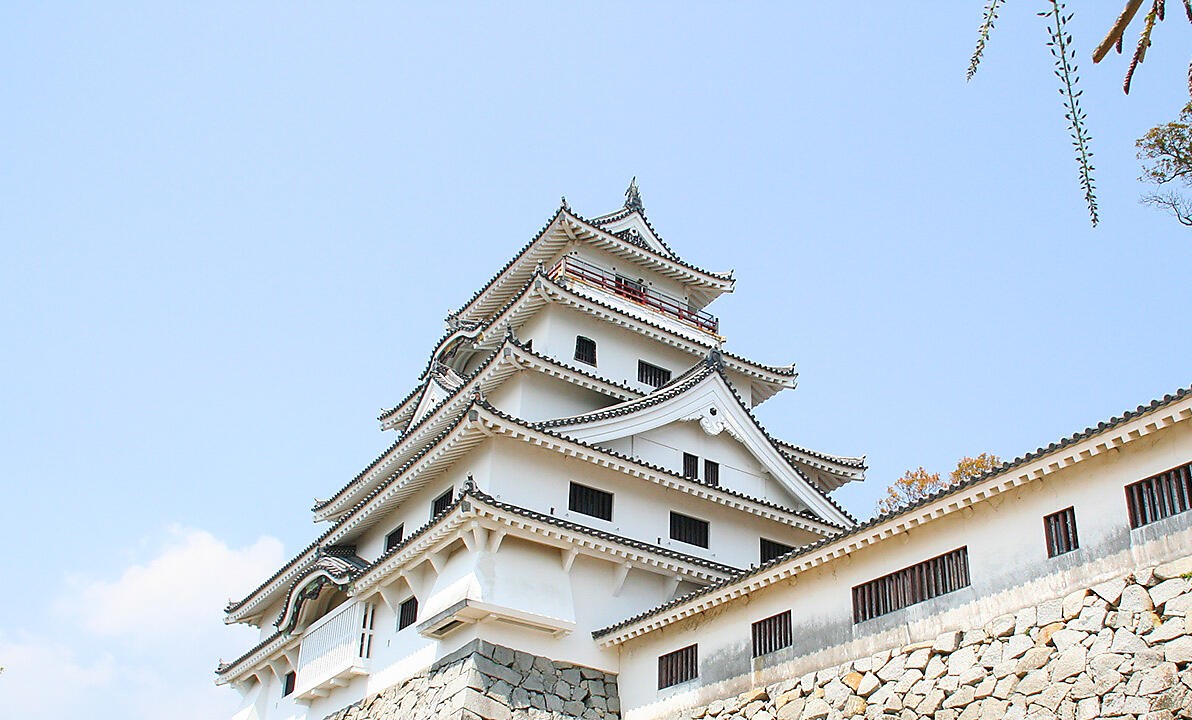
Cruise Line: Ponant Cruise
Boats: Le Soleal
Travel Period: Mar 26 2027
Route: Busan (South Korea) to Kobe (Japan)
Duration: 13 Days
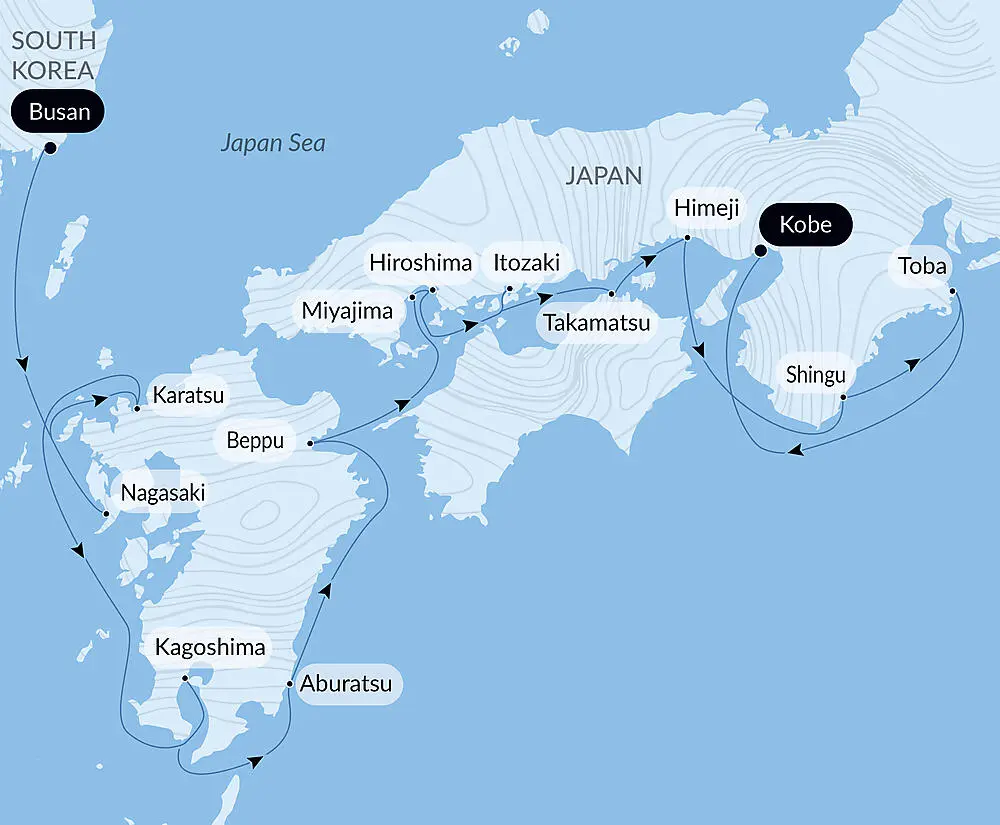
Authentic Japan
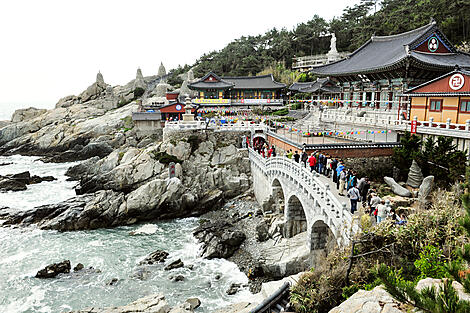
Day 1 - Busan
With around four million inhabitants, Busan is the second largest metropolis on South Korea, after Seoul. This dynamic harbour city, located in the south-east, surrounded by the warm waters of the Sea of Japan, benefits from a mild, pleasant climate. Youâll find delightful simply to stroll around the lively streets and explore the cityâs outstanding cultural heritage of art galleries, museums, and Buddhist sites, such as the Haedong Yonggungsa temple, which elegantly sits on the waterfront. Rich too in magnificent beaches and superlative natural landscapes, Busanâs peaceful atmosphere will win you over, as will its inhabitants, whom youâll have the pleasure of meeting.
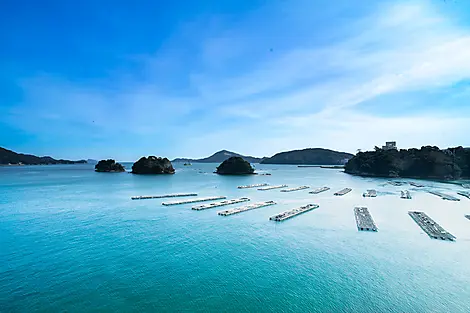
Day 2 - Nagasaki
Located on the north-west coast of Kyushu, Nagasaki will impress you by its rich heritage. Despite the destruction in 1945, you can visit several ancient sites, including the beautiful 19th-century Catholic Church of Oura and its garden, the sanctuary of Suwa Shrine or several Buddhist temples. A visit to the Atomic Bomb Museum gives you insight into the extent of the damage caused by the nuclear attack. Close by, a walk in the Memorial Peace Park leads you to a collection of objets d'art offered as a gift from Japan to the world.
1 available excursion
Ground Zero and atomic bomb museum
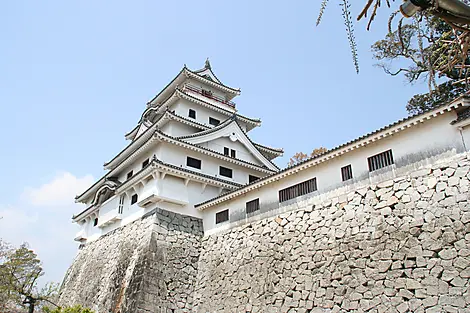
Day 3 - Karatsu
Karatsu Bay is edged with long sandy beaches and a huge pine forest that was planted over 350 years ago to protect the coast from the winds and tides of the Genkai Sea. From the top of the donjon of Karatsu Castle or Mount Kagami, you will be able to admire magnificent panoramas. In the north of the Higashi-Matsuura Peninsula, the waves have eroded the lava plateau and carved a magnificent natural site, the seven Nanatsugama Caves, out of the basalt. The city of Karatsu is famous for the quality of its pottery, which is influenced by the craftsmanship of nearby Korea. Very fine pieces are displayed in the cityâs galleries and at Karatsu Castle, alongside magnificent samurai armour.
1 available excursion
Highlights of Karatsu
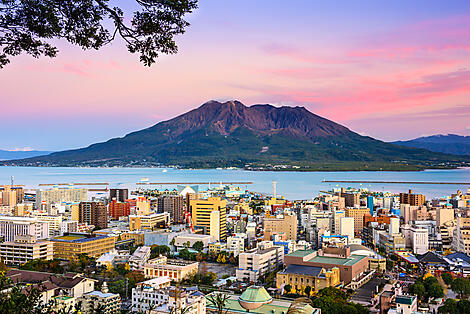
Day 4 - Kagoshima
The seaside city of Kagoshima, at the south of Kyushu Island, ï¾ is best known for Sakurajima, an active volcano that faces Kinko Bay. A visit to this busy metropolis will remind you just how much the volcano is part of the inhabitants' everyday life: in the wake of the almost daily eruptions, a delicate layer of ash settles on everything. The top of a buried torii (traditional Japanese gate) measuring three metres that was 'swallowed up' by a giant lava flow in 1914 can still be seen. The power of nature will send a shiver down your spine.
1 available excursion
A trip to Chiran
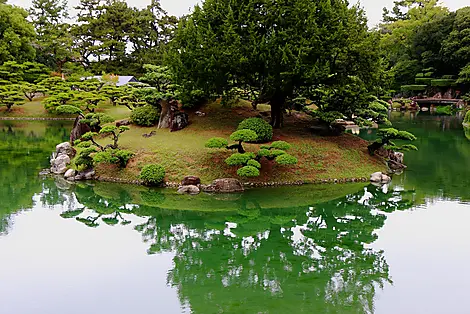
Day 5 - Aburatsu
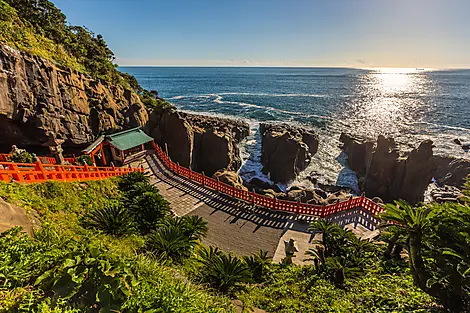
Located on the south-east coast of Kyushu island in scenic Miyazaki Prefecture, Aburatsu is a natural port, linked to the town of Nichinan. Because of its position Aburatsu has become a major maritime passage into the numerous regions of Asia. It has a serene atmosphere, typical to southern Japan, with a gentle landscape of rolling hills. On the outskirts of Nichinan, you can visit Obi Castle, dating from the Edo period. Slightly to the north of the old town, the Udo-Jingu shrine also features among the regionï¾s wonders.
1 available excursion
Udo-jingu Shrine and Obi Castle
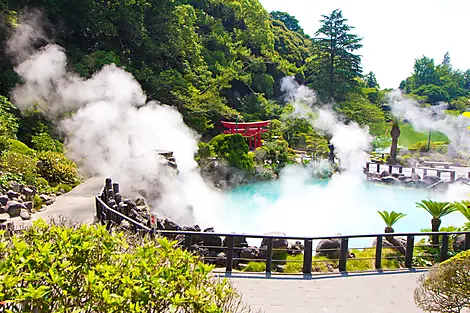
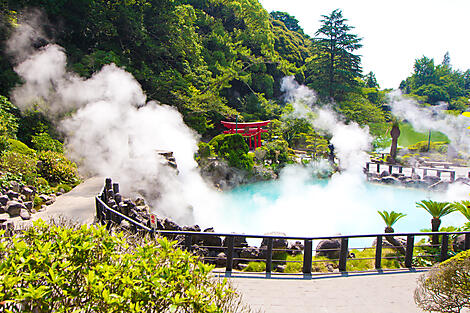
Day 6 - Beppu, Oita
A favourite destination for the Japanese, Beppu is now famous throughout the Japanese archipelago thanks to its onsen â volcanic hot springs in which people immerse themselves to relax with family or friends. From Beppu, you will set off to discover a lush, peaceful valley in which sit 60 majestic stone Buddhas carved out of the cliff face between the 12th and 14th centuries. Exuding a soothing air of serenity, the Mangetsuji site seems to have drifted off to sleep in the heart of a dense bamboo forest surrounded by rice fields. Recognised as a National Treasure of Japan, this set of sacred sculptures offers travellers a unique, wonderful experience.
1 available excursion
The Hells, Beppuâs hot springs
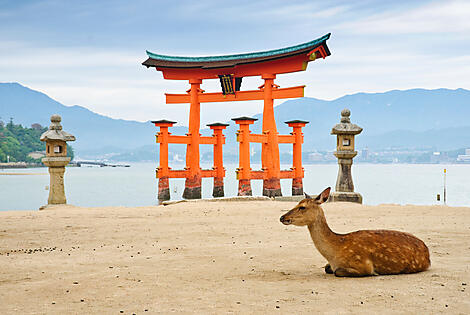
Day 7 - Miyajima Island
At the heart of the Inland Sea, Miyajima, the âisland sanctuaryâ will reveal its treasures. In the background you will see the Shinto Grand Sanctuary, whose entrance is guarded by a magnificent vermillion âToriiâ. Considered to be one of the most beautiful sites in the Japanese islands, you will be transported by the unique character and the serenity of this sacred site.
1 available excursion
Itsukushima Shrine and Omotesando Street
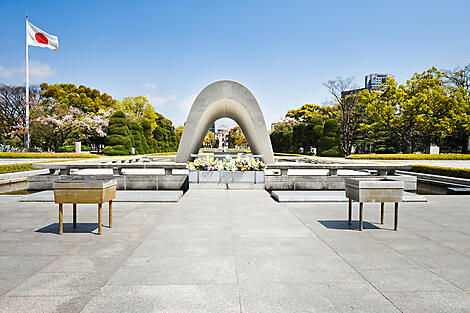
Day 7-8 - Hiroshima
Visiting Hiroshima is a moving experience. The town spreads along Honshu Island, along the inside coasts of Seto. While firmly focused on the future, Hiroshima doesn't forget its past, and a visit to the Peace Memorial Park and Genbaku Dome is a must. You'll enjoy the city's modern, cosmopolitan atmosphere and effervescent nightlife just as much as the peaceful stillness of its natural parkland areas such as splendid Shukkei-en, the town's historic garden.
1 available excursion
Hiroshima Museum and Peace Memorial Park
Day 8 - Itozaki
Jewels of the heart of Hiroshima Prefecture, Itozaki invites travelers to a timeless escape. Bordered by the Seto Inland Sea, it captivates with its landscapes blending the gentle shimmer of its waters and the silent majesty of its mountains. Itozaki is a journey into the soul of Japan, a haven where time stands still. The Japanese city will serve as the starting point for discovering, just a short distance away, the historic Onomichi, renowned for its nearly twenty temples and shrines.
1 available excursion
A walk around Onomichi
Day 9 - Takamatsu
A former fortified city, ruled over by the Matsudaira clan from the Tamamo castle with its seawater moats, the city is home to one of the most beautiful classic gardens in Japan, the Ritsurin. It was created by the barons of the city at the start of the Edo period, during which time gardening became a profession in its own right. Its landscape incorporates Mount Shiun in the background, an example of what is known as the shakkei technique, which uses the surrounding landscapes to increase the beauty of the gardens.
1 available excursion
Shikoku Mura Museum and Yashima Temple
Day 10 - Himeji
You may get the impression that youï¾ve already seen Himeji Castle, as it has been featured many times on the big screen. The feudal edifice seems to spread its wings over the town like a white heron ï¾ï¾ in fact, its nickname is ï¾the castle of the white heronï¾. Originally started in the 15th century and then rebuilt in the 17th-century, it is a UNESCO World Heritage site. At its feet lies the gorgeous Koko-en garden, which has nine different gardens designed to flourish in each of the four seasons.
1 available excursion
Himeji Castle and Koko-en Garden
Day 11 - Shingu
To the south-west of the Japanese archipelago, Shingu is a port town in the Kansai region. Founded in 1933, it belongs to the peninsula of Kii, the countryï¾s largest. Take a trip around the Kumano Sanzan religious complex dedicated to three sacred mountains and home to two Shinto temples, Kumano Hong? Taisha and Kumano Hayatama Taisha.ï¾ The latter features the famous sacred nagi tree, said to have been planted around 1159. Pilgrims flock to these two sanctuaries that feature on UNESCO's World Heritage list. Hop on a boat and journey to the Dorokyo Gorge, a natural beauty spot carved out by the emerald waters of the Kumano river.
1 available excursion
Gomagyo Experience and Seiganto-ji temple
Day 12 - Toba
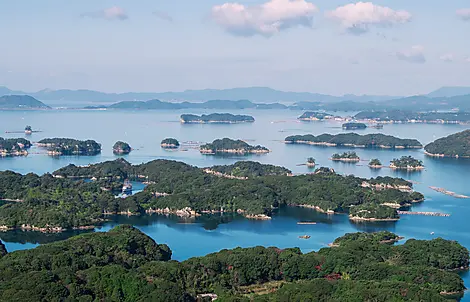
Toba is a coastal city located in Japanâs Mie Prefecture, on the shores of the Pacific Ocean. Situated in the Ise-Shima National Park, Toba has given its name to majestic bay sheltering a string of small islands, famous for the beauty of their forests and the production of cultured pearls. You will have the possibility of discovering the Ise Shrine, residence of the Imperial family and venerated by the Japanese people as the âsoul of Japanâ.
1 available excursion
Spirituality to the Grand Shrine of Ise
Day 13 - Kobe
A coastal city on the main island of HonshÅ«, Kobe is a vital Japanese port. You will be inspired by the authenticity, way of life and heritage of the capital of HyÅgo Prefecture, which is bordered by the sea. Its beef is internationally renowned, but there is much more to the cityâs attractions than this delicate speciality. As soon as you arrive, you will be welcomed by the Kobe Port Tower, located, along with the Maritime Museum, in the much appreciated Meriken Park. The Mount RokkÅ National Park is a real island of greenery in the very heart of the vibrant city. Long frequented by Shinto monks, then popular with the expatriates who flocked to Kobe during the second half of the 19th century, it is one of the symbols of the city.
Emblematic Antarctica
Travel Period: Nov 17 2026 - Feb 11 2028
Route: Ushuaia - Ushuaia
Duration: 11 Days
Emblematic Antarctica
Ports of Call & Excursions
Day 1 - Ushuaia
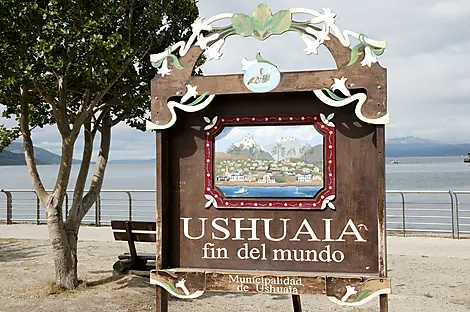
Capital of Argentina's Tierra del Fuego province, Ushuaia is considered the gateway to the White Continent and the South Pole. Nicknamed âEl fin del mundoâ by the Argentinian people, this city at the end of the world nestles in the shelter of mountains surrounded by fertile plains that the wildlife seem to have chosen as the ultimate sanctuary. With its exceptional site, where the Andes plunge straight into the sea, Ushuaia is one of the most fascinating places on earth, its very name evocative of journeys to the unlikely and the inaccessibleâ¦
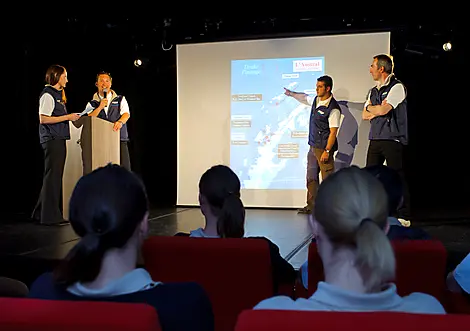
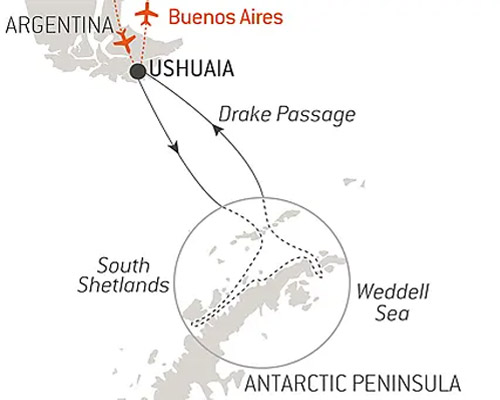
Day 2Â - Â 3 - Crossing the Drake Passage
Use your days spent in the Drake Passage to familiarise yourself with your ship and deepen your knowledge of the Antarctic. The Expedition Leader will first present the IAATO rules of conduct that must be observed during landings in the region and will explain everything you need to know about the zodiac outings. Lectures about the history and wildlife of the Antarctic will be an opportunity for you to learn more about this magical region, where every cruise is a unique experience. You will experience exceptional sailing moments on board and join the naturalist-guides on your shipâs exterior decks to look out for albatrosses, cape petrels, and other seabirds flying over the Drake Passage.
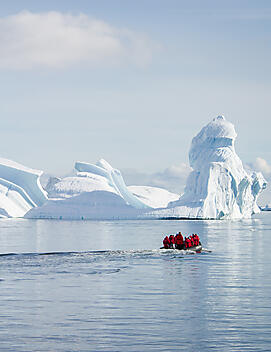
Day 4Â - Â 8 - Antarctic Peninsula
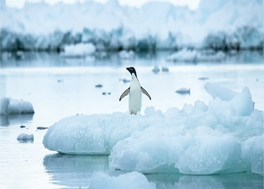
Succumb to the magic of a place unlike any other. To this day, the mythical Antarctic Peninsula still holds real fascination and promises its visitors unforgettable moments. Throughout your adventure in this icy realm, you will find yourself in the heart of a spectacular decor in subtle shades of blue and white, surrounded by exceptional wildlife. Penguins, humpback whales, seals and giant petrels are at home here, as are elephant seals, fur seals, Antarctic minke whales, and orcas. Depending on which sites you will be lucky enough to visit, you may get the chance to observe them and share with them the beauty of these extreme parts.
Each day, based on ice conditions, the Captain and the Expedition Leader will suggest zodiac outings or landings to discover the infinite riches of the Antarctic Peninsula. Glaciers, ice floe, tabletop icebergs, mountain peaks that plunge straight into the sea, volcanic beaches, research stations, enchanting bays, and vestiges of the whaling industry: these are the faces of the Antarctic that will likely reveal themselves to you, in a hushed and surreal atmosphere. You will sail in the wake of Jean-Baptiste Charcot, Adrien de Gerlache and Sir Ernest Shackleton, great Antarctic explorers who, from the 19th century, set out to conquer these remote and uninhabited lands.
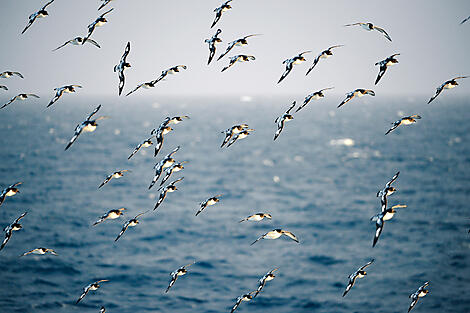
Day 9Â - Â 10 - Crossing the Drake Passage
If there is one place, one sea, one waterway dreaded by tourists, researchers and hardened seafarers alike, it is undoubtedly Drake Passage. Situated at the latitude of the infamous Furious Fifties winds, between Cape Horn and the South Shetland Islands, it is the shortest route to connect Antarctica to South America. Seasoned navigators will tell you that you must earn your visit to the White Continent! As the Antarctic convergence zone where cold currents rising up from the South Pole meet warmer equatorial water masses, Drake Passage harbours a very diverse marine fauna. Don't forget to look to the sky to catch a glimpse of elegant albatross and Cape petrels, playfully floating about in the wind around your ship.
Day 11 - Ushuaia
Capital of Argentina's Tierra del Fuego province, Ushuaia is considered the gateway to the White Continent and the South Pole. Nicknamed âEl fin del mundoâ by the Argentinian people, this city at the end of the world nestles in the shelter of mountains surrounded by fertile plains that the wildlife seem to have chosen as the ultimate sanctuary. With its exceptional site, where the Andes plunge straight into the sea, Ushuaia is one of the most fascinating places on earth, its very name evocative of journeys to the unlikely and the inaccessibleâ¦
Authentic Japan
Cruise Line: Ponant Cruise
Boats: Le Soleal
Travel Period: Mar 14 2027
Route: Osaka - Busan
Duration: 13 Days
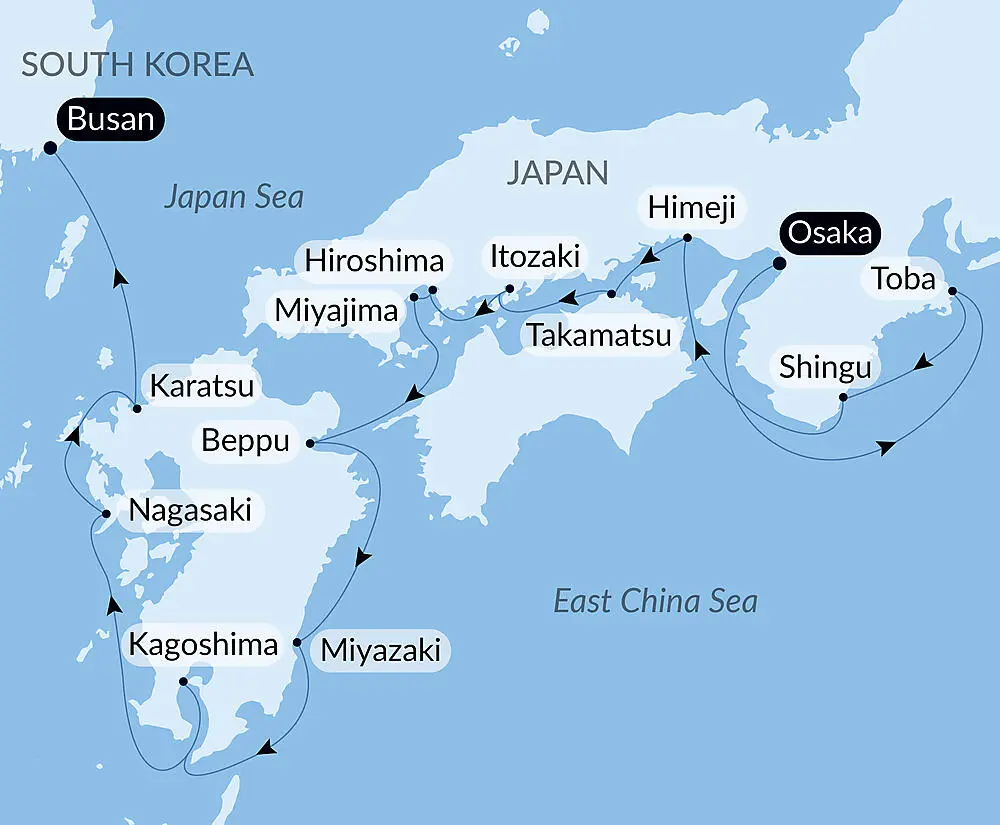
Authentic Japan
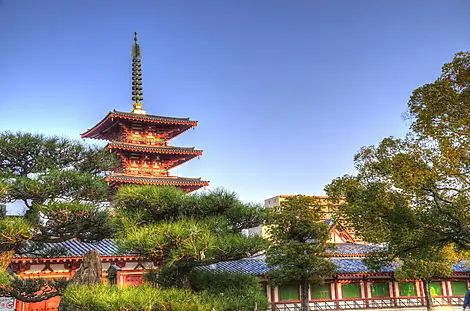
Day 1 - Osaka
Like its big sister Tokyo, Osaka is the product of ancestral traditions and amazing technological innovations. And despite its size, its location on the Pacific Ocean give it a sense of serenity. The main historic landmark is the 16th century Osaka Castle, which stands proud in the midst of majestic skyscrapers. The lively streets of Dotomburi and the bizarre Shinsekai district attract thousands of locals and visitors. A multitude of restaurants offer menus full of regional specialities: takoyaki, made with octopus, and other succulent dishes such as kushikatsu kebabs.
Day 2 - Toba
Toba is a coastal city located in Japanâs Mie Prefecture, on the shores of the Pacific Ocean. Situated in the Ise-Shima National Park, Toba has given its name to majestic bay sheltering a string of small islands, famous for the beauty of their forests and the production of cultured pearls. You will have the possibility of discovering the Ise Shrine, residence of the Imperial family and venerated by the Japanese people as the âsoul of Japanâ.
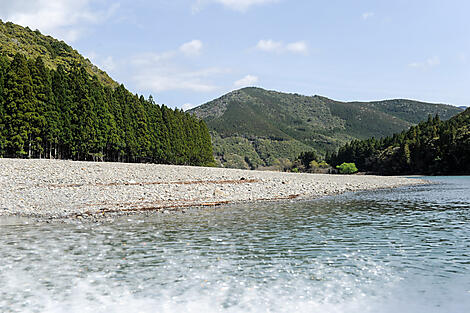
Day 3 - Shingu
To the south-west of the Japanese archipelago, Shingu is a port town in the Kansai region. Founded in 1933, it belongs to the peninsula of Kii, the countryï¾s largest. Take a trip around the Kumano Sanzan religious complex dedicated to three sacred mountains and home to two Shinto temples, Kumano Hong? Taisha and Kumano Hayatama Taisha.ï¾ The latter features the famous sacred nagi tree, said to have been planted around 1159. Pilgrims flock to these two sanctuaries that feature on UNESCO's World Heritage list. Hop on a boat and journey to the Dorokyo Gorge, a natural beauty spot carved out by the emerald waters of the Kumano river.
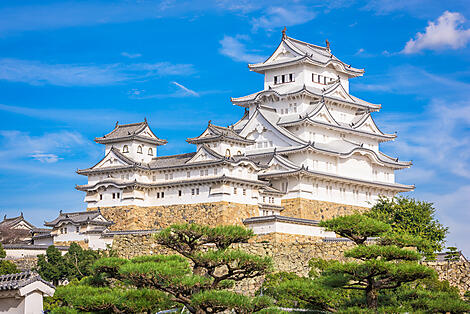
Day 4 - Himeji
You may get the impression that youï¾ve already seen Himeji Castle, as it has been featured many times on the big screen. The feudal edifice seems to spread its wings over the town like a white heron ï¾ï¾ in fact, its nickname is ï¾the castle of the white heronï¾. Originally started in the 15th century and then rebuilt in the 17 th-century, it is a UNESCO World Heritage site. At its feet lies the gorgeous Koko-en garden, which has nine different gardens designed to flourish in each of the four seasons.
Day 5 - Takamatsu
A former fortified city, ruled over by the Matsudaira clan from the Tamamo castle with its seawater moats, the city is home to one of the most beautiful classic gardens in Japan, the Ritsurin. It was created by the barons of the city at the start of the Edo period, during which time gardening became a profession in its own right. Its landscape incorporates Mount Shiun in the background, an example of what is known as the shakkei technique, which uses the surrounding landscapes to increase the beauty of the gardens.
Day 6 - Itozaki
Jewels of the heart of Hiroshima Prefecture, Itozaki invites travelers to a timeless escape. Bordered by the Seto Inland Sea, it captivates with its landscapes blending the gentle shimmer of its waters and the silent majesty of its mountains. Itozaki is a journey into the soul of Japan, a haven where time stands still. The Japanese city will serve as the starting point for discovering, just a short distance away, the historic Onomichi, renowned for its nearly twenty temples and shrines.
Day 7 - Miyajima Island
At the heart of the Inland Sea, Miyajima, the âisland sanctuaryâ will reveal its treasures. In the background you will see the Shinto Grand Sanctuary, whose entrance is guarded by a magnificent vermillion âToriiâ. Considered to be one of the most beautiful sites in the Japanese islands, you will be transported by the unique character and the serenity of this sacred site.
Day 7 - Hiroshima
Visiting Hiroshima is a moving experience. The town spreads along Honshu Island, along the inside coasts of Seto. While firmly focused on the future, Hiroshima doesn't forget its past, and a visit to the Peace Memorial Park and Genbaku Dome is a must. You'll enjoy the city's modern, cosmopolitan atmosphere and effervescent nightlife just as much as the peaceful stillness of its natural parkland areas such as splendid Shukkei-en, the town's historic garden.
Day 8 - Beppu, Oita
A favourite destination for the Japanese, Beppu is now famous throughout the Japanese archipelago thanks to its onsen â volcanic hot springs in which people immerse themselves to relax with family or friends. From Beppu, you will set off to discover a lush, peaceful valley in which sit 60 majestic stone Buddhas carved out of the cliff face between the 12th and 14th centuries. Exuding a soothing air of serenity, the Mangetsuji site seems to have drifted off to sleep in the heart of a dense bamboo forest surrounded by rice fields. Recognised as a National Treasure of Japan, this set of sacred sculptures offers travellers a unique, wonderful experience.
Day 9 - Miyazaki
The cradle of Japanese mythology, Miyazaki is a hidden treasure on the southern coast of KyÅ«shÅ«. Known for its climate, its golden beaches and its spectacular rocky formations, it is an invitation to exploration and contemplation. In the heart of the city, the Miyazaki-jingÅ« Shinto shrine stands majestically, surrounded by ancient forests and peaceful gardens, in which an atmosphere of serenity reigns. Make the most of the authenticity of this city with fascinating local culture and, during the visit of the Miyazaki Shrine, fall under the spell of the kagura, a dance and song performance by the shrineâs priests and helpers.
Day 10 - Kagoshima
The seaside city of Kagoshima, at the south of Kyushu Island, ï¾ is best known for Sakurajima, an active volcano that faces Kinko Bay. A visit to this busy metropolis will remind you just how much the volcano is part of the inhabitants' everyday life: in the wake of the almost daily eruptions, a delicate layer of ash settles on everything. The top of a buried torii (traditional Japanese gate) measuring three metres that was 'swallowed up' by a giant lava flow in 1914 can still be seen. The power of nature will send a shiver down your spine.
Day 11 - Nagasaki
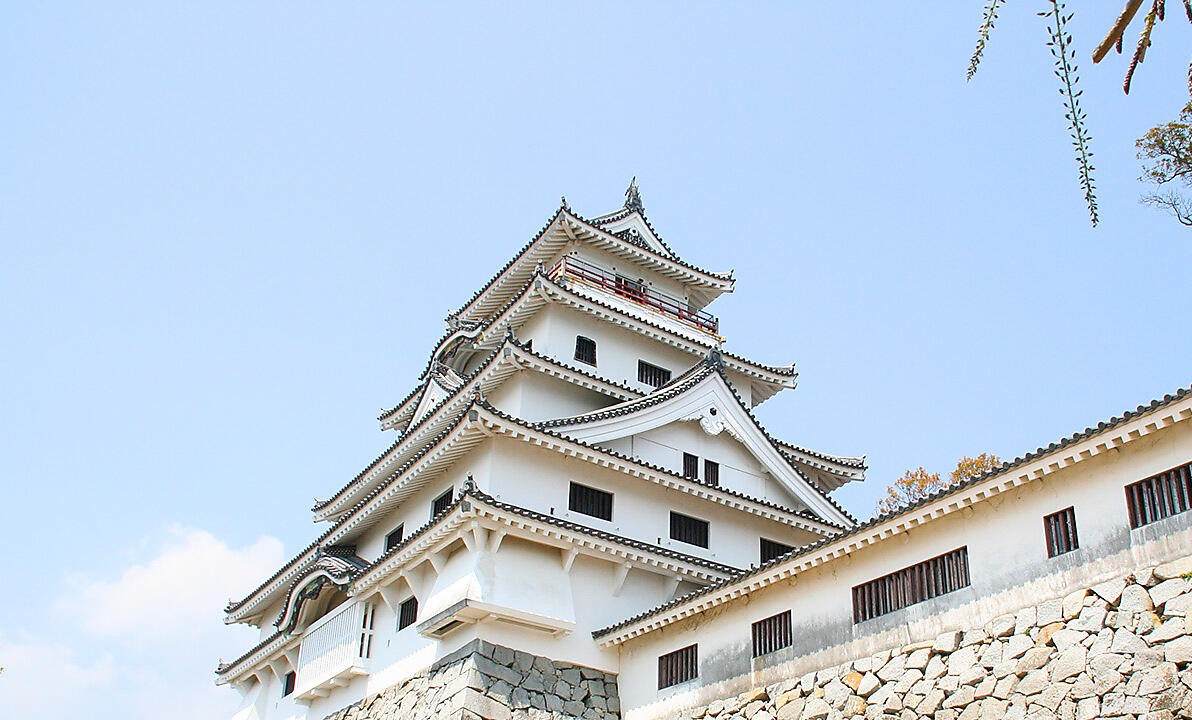
Located on the north-west coast of Kyushu, Nagasaki will impress you by its rich heritage. Despite the destruction in 1945, you can visit several ancient sites, including the beautiful 19 th-century Catholic Church of Oura and its garden, the sanctuary of Suwa Shrine or several Buddhist temples. A visit to the Atomic Bomb Museum gives you insight into the extent of the damage caused by the nuclear attack. Close by, a walk in the Memorial Peace Park leads you to a collection of objets d'art offered as a gift from Japan to the world.
Day 12 - Karatsu
Karatsu Bay is edged with long sandy beaches and a huge pine forest that was planted over 350 years ago to protect the coast from the winds and tides of the Genkai Sea. From the top of the donjon of Karatsu Castle or Mount Kagami, you will be able to admire magnificent panoramas. In the north of the Higashi-Matsuura Peninsula, the waves have eroded the lava plateau and carved a magnificent natural site, the seven Nanatsugama Caves, out of the basalt. The city of Karatsu is famous for the quality of its pottery, which is influenced by the craftsmanship of nearby Korea. Very fine pieces are displayed in the cityâs galleries and at Karatsu Castle, alongside magnificent samurai armour
Day 13 - Busan
ith around four million inhabitants, Busan is the second largest metropolis on South Korea, after Seoul. This dynamic harbour city, located in the south-east, surrounded by the warm waters of the Sea of Japan, benefits from a mild, pleasant climate. Youâll find delightful simply to stroll around the lively streets and explore the cityâs outstanding cultural heritage of art galleries, museums, and Buddhist sites, such as the Haedong Yonggungsa temple, which elegantly sits on the waterfront. Rich too in magnificent beaches and superlative natural landscapes, Busanâs peaceful atmosphere will win you over, as will its inhabitants, whom youâll have the pleasure of meeting.
Antarctica: The White Continent - with Smithsonian Journeys
Travel Period: Jan 17 2027 - Feb 13 2028
Route: Ushuaia - Ushuaia
Duration: 11 Days
Antarctica: The White Continent - with Smithsonian Journeys
Ports of Call & Excursions
Day 1 - Ushuaia
Capital of Argentina's Tierra del Fuego province, Ushuaia is considered the gateway to the White Continent and the South Pole. Nicknamed âEl fin del mundoâ by the Argentinian people, this city at the end of the world nestles in the shelter of mountains surrounded by fertile plains that the wildlife seem to have chosen as the ultimate sanctuary. With its exceptional site, where the Andes plunge straight into the sea, Ushuaia is one of the most fascinating places on earth, its very name evocative of journeys to the unlikely and the inaccessibleâ¦
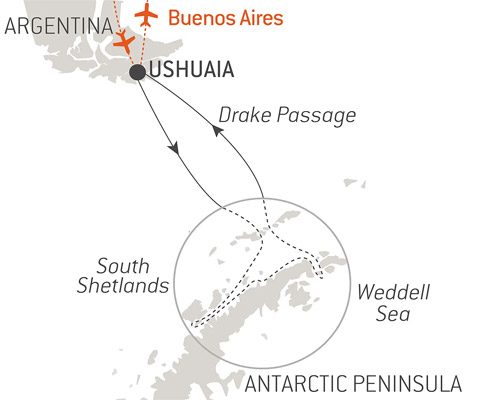
Day 2Â - Â 3 - Crossing the Drake Passage
Use your days spent in the Drake Passage to familiarise yourself with your ship and deepen your knowledge of the Antarctic. The Expedition Leader will first present the IAATO rules of conduct that must be observed during landings in the region and will explain everything you need to know about the zodiac outings. Lectures about the history and wildlife of the Antarctic will be an opportunity for you to learn more about this magical region, where every cruise is a unique experience. You will experience exceptional sailing moments on board and join the naturalist-guides on your shipâs exterior decks to look out for albatrosses, cape petrels, and other seabirds flying over the Drake Passage.
Day 4Â - Â 8 - Antarctic Peninsula
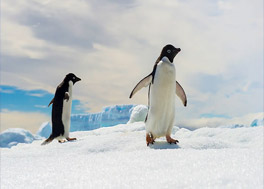
Succumb to the magic of a place unlike any other. To this day, the mythical Antarctic Peninsula still holds real fascination and promises its visitors unforgettable moments. Throughout your adventure in this icy realm, you will find yourself in the heart of a spectacular decor in subtle shades of blue and white, surrounded by exceptional wildlife. Penguins, humpback whales, seals and giant petrels are at home here, as are elephant seals, fur seals, Antarctic minke whales, and orcas. Depending on which sites you will be lucky enough to visit, you may get the chance to observe them and share with them the beauty of these extreme parts.
Each day, based on ice conditions, the Captain and the Expedition Leader will suggest zodiac outings or landings to discover the infinite riches of the Antarctic Peninsula. Glaciers, ice floe, tabletop icebergs, mountain peaks that plunge straight into the sea, volcanic beaches, research stations, enchanting bays, and vestiges of the whaling industry: these are the faces of the Antarctic that will likely reveal themselves to you, in a hushed and surreal atmosphere. You will sail in the wake of Jean-Baptiste Charcot, Adrien de Gerlache and Sir Ernest Shackleton, great Antarctic explorers who, from the 19th century, set out to conquer these remote and uninhabited lands.
Day 9Â - Â 10 - Crossing the Drake Passage
If there is one place, one sea, one waterway dreaded by tourists, researchers and hardened seafarers alike, it is undoubtedly Drake Passage. Situated at the latitude of the infamous Furious Fifties winds, between Cape Horn and the South Shetland Islands, it is the shortest route to connect Antarctica to South America. Seasoned navigators will tell you that you must earn your visit to the White Continent! As the Antarctic convergence zone where cold currents rising up from the South Pole meet warmer equatorial water masses, Drake Passage harbours a very diverse marine fauna. Don't forget to look to the sky to catch a glimpse of elegant albatross and Cape petrels, playfully floating about in the wind around your ship.
Day 11 - Ushuaia
Capital of Argentina's Tierra del Fuego province, Ushuaia is considered the gateway to the White Continent and the South Pole. Nicknamed âEl fin del mundoâ by the Argentinian people, this city at the end of the world nestles in the shelter of mountains surrounded by fertile plains that the wildlife seem to have chosen as the ultimate sanctuary. With its exceptional site, where the Andes plunge straight into the sea, Ushuaia is one of the most fascinating places on earth, its very name evocative of journeys to the unlikely and the inaccessibleâ¦
Wilderness from Greenland to the East Coast of Canada

Travel Period: Sep 19 2026
Route: Nuuk (Greenland) to Halifax (Canada)
Duration: 18 Days
toHalifax.webp "Wilderness from Greenland to the East Coast of Canada")
Wilderness from Greenland to the East Coast of Canada
Day 1 - Nuuk
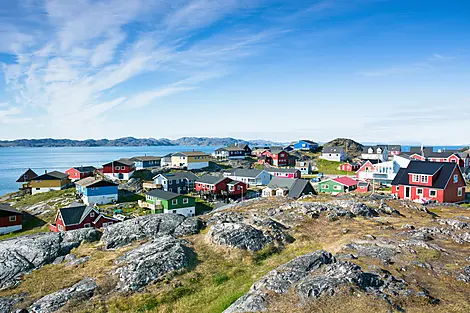
When Erik Le Rouge, the exiled Norse chief, landed on the coast of Nuuk, he found a fertile and welcoming land dotted with fjords. He settled there with a group of his former countrymen, and the Norse remained the principal inhabitants until, over a period of 500 years, their population declined and gave way to the Inuit. Nuuk is situated at the mouth of one of the largest networks of fjords in the world, where the waters never freeze. The town spreads gently out towards the Davis Strait and enjoys an historic center that is particularly rich in national heritage. The vivid reds, blues, greens and yellows of the houses are a lively contrast to the somber waters of Greenland and serve to lift the spirits of the locals during the Winter months.
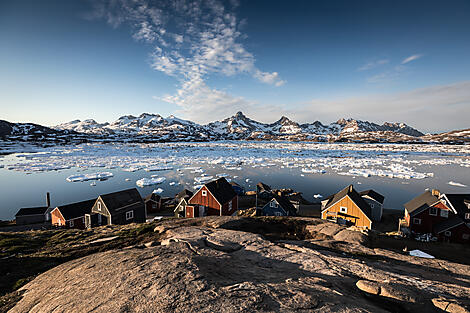
Day 2 - Qeqertarsuatsiaat
Located on the southwestern coast of Greenland, Qeqertarsuatsiaat offers an authentic immersion into the countryâs nature and traditional way of life. Surrounded by icy fjords and granite mountains, this village is a gateway to explore preserved polar landscapes and to magnificent hikes through the tundra, glacier lakes and rocky hills. Its tranquillity makes it a special site that has attracted the regionâs emblematic fauna, which you will perhaps be lucky enough to observe: whales, seals and seabirds. The inhabitants still follow the pace of nature, organising their day-to-day lives around fishing, hunting and gathering, fully demonstrating human resilience in the Arctic.
Day 3 - At sea
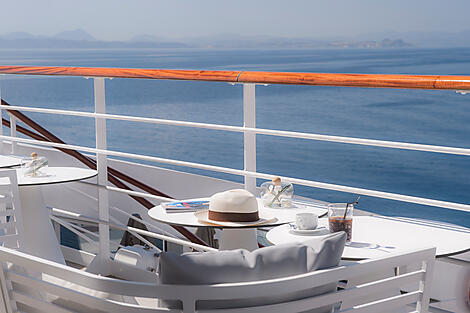
During your journey at sea, make the most of the many services and activities on board. Treat yourself to a moment of relaxation in the spa or stay in shape in the fitness centre. Depending on the season, let yourself be tempted by the swimming pool or a spot of sunbathing. This journey without a port of call will also be an opportunity to enjoy the conferences or shows proposed on board, depending on the activities offered, or to do some shopping in the boutique or to meet the PONANT photographers in their dedicated space. As for lovers of the open sea, they will be able to visit the shipâs upper deck to admire the spectacle of the waves and perhaps be lucky enough to observe marine species. A truly enchanted interlude, combining comfort, rest and entertainment.
Day 4 - Iqaluit, Nunavut
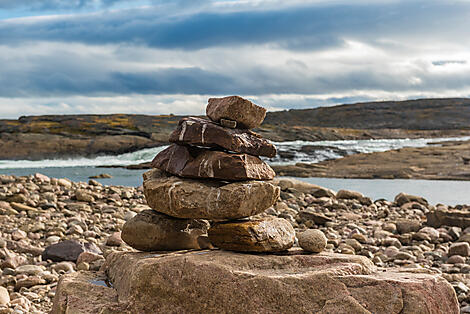
Known as Frobisher Bay in the past, before being named Iqaluit in 1987, the capital of Nunavut is the smallest Canadian capital, with 7,000 inhabitants. It is a gateway to the secret, mysterious and wild Arctic, expressing this world of silence, a majestic territory. Strongly rooted in its unique Inuit culture, it holds memories of a millennia-old presence of pre-Dorset, Dorset and Thule cultures. Discoveries indicate that it was a fishing and camping site, called qaluit (âplace of fishâ) at the time. Youâll appreciate its large ice-covered and isolated spaces steeped in Inuit culture and imbued with a unique âFar Northâ atmosphere.
Day 5 - Grinnell Glacier, Nunavut
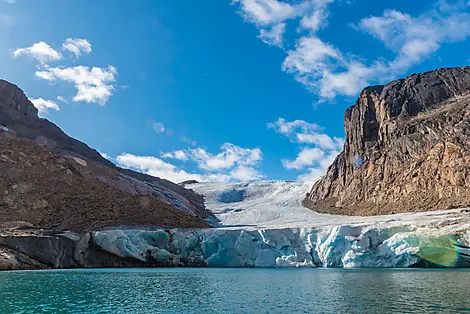
To the south of Baffin Island, at the entrance to the fjord leading to Iqaluit, the capital of Nunavut, lies the Grinnell Glacier. Iqaluitâs name is derived from the Inuktitut language; it means âplace of many fishâ, as the waters of the fjord are teeming with Arctic char. The glacier, which is approximately 800 metres (2,625 feet) high, is named after Henry Grinnell, an American philanthropist who funded several polar expeditions in the 19th century. Weather permitting, you will have the privilege of admiring the glacier front from the sea during an outing in an inflatable dinghy, before landing to walk up the valley running along the glacier, in a rocky landscape with tundra vegetation.
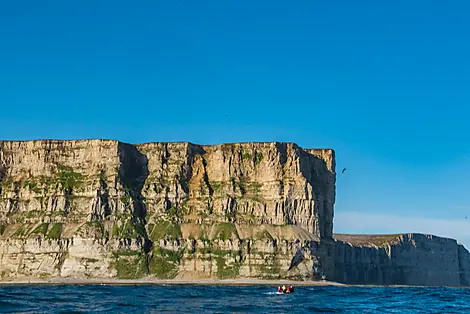
Day 6 - Akpatok Island, Nunavut
In the north-west of Ungava Bay, in Nunavut, the northernmost Canadian province, Akpatok Island reveals its chiselled coastline. Uninhabited by men, it is occupied by the thick-billed murres for which it was named (Akpat is their name in Inuit). Its cliffs, rising up to 200 metres (656 feet) high, make an ideal nesting environment for these birds. Dominated by a vast limestone plateau, the island is also surrounded by numerous beaches where walruses sun themselves in the summertime. From your inflatable dinghy, if the weather conditions allow it, you might also have the chance to glimpse some polar bears roaming along the cliffs in search of food.
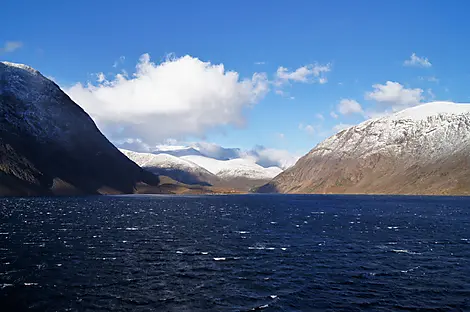
Day 7 - Nachvak Fjord, Torngat Mountains National Park
Nachvak Fjord is one of the longest fjords on the north coast of Labrador, stretching out over 20 km (12.4 miles). Steep-sided, it is 2 km (1.2 miles) wide and lined with sheer rock faces. On its western end, its two arms, Tallek and Tasiuyak, form the outlet of glacial valleys with a characteristic U shape. The Torngat Mountains, the highest points of the surrounding relief, are Labradorâs tallest. Nachvak Fjord has always been an important fishing spot for the Inuit of Labrador, and was once the northernmost trading post of the Hudsonâs Bay Company. You will be able to admire spectacular views from the shipâs exterior decks, before taking your place aboard an inflatable dinghy to get as close as possible to the coast.
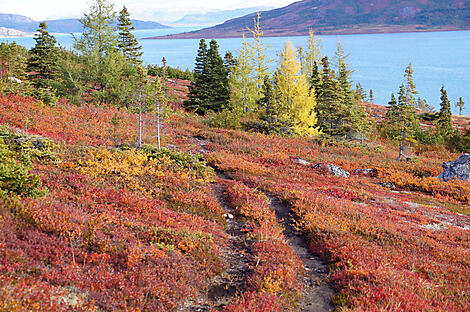
Day 8 - Nain
Nain is the northernmost permanent settlement in Newfoundland and Labrador, accessible only by air or by sea. The town was established by Moravian missionaries in 1771 and has been inhabited ever since. It now has a population of around 850, composed mainly of Inuits. Fishing is the main income-generating activity, with hunting and traditional trapping activities resuming in the winter months. Accompanied by your naturalist guides and local guides, you will have the chance to discover daily life in Nain, then set off on a hike in the surrounding hills. There, you will discover a beautiful view of the small wooded valley in which the village lies.
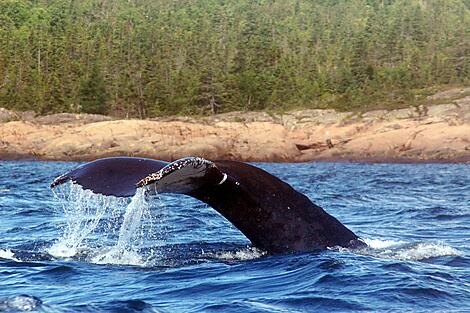
Day 9 - Rigolet
Discover the picturesque community of Rigolet, on the north coast of Labrador. The wooden promenade, looking out onto the spruce forest and the waters of Hamilton Inlet, is one of the longest in the world. The village, located very near to Lake Melville, houses a community of 300 inhabitants who are, in the main part, descendants of the Labrador Inuit and the European traders who came to settle in these parts from the 18th century onwards. During your port of call, youâll admire the beautiful pieces of local craftsmanship: weaved baskets, mats, sealskin clothing, sculptures⦠As for wildlife fans, they will not be disappointed, with the possibility of observing whales, as well as seals, orcas, bears, foxes, otters and migratory birds.
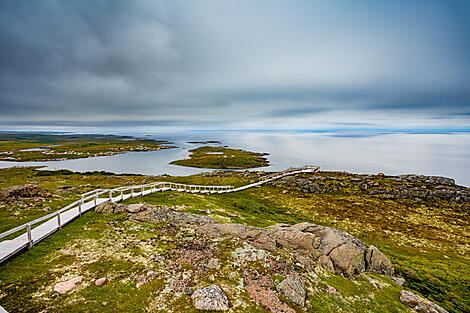
Day 10 - Red Bay, Newfoundland
A small, authentic village on the southern coast of Labrador, Red Bay immerses you in a unique atmosphere, combining wild nature, a fascinating history, and maritime culture. This UNESCO-listed heritage gem is home to one of the worldâs best-preserved Basque whaling sites. Fall under the spell of its serenity and imagine the lives of the whalers of old as you visit its museums or explore the neighbouring Saddle Island, a wind-beaten land of silence, sea spray and traces of the past.
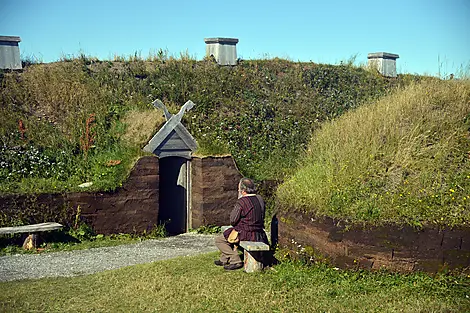
Day 11 - L'Anse aux Meadows, Newfoundland
Located at the Northern extremity of the island of Newfoundland, LâAnse aux Meadows is listed as a UNESCO World Heritage Site and is the only site known to have been established by the Vikings in North America. Its ancient vestiges provide the very first traces of European presence in the new world. The remains found on this splendid 11th century Scandinavian archaeological site are identical to those found in Iceland. Aboard your ship, cruise in the wake of those first Vikings who discovered the tip of North America 500 years before Christopher Columbus arrived on the shores of the American continent. A memorable adventure in a setting punctuated with coastal peat bogs, grass and many varieties of shrubs and lichen.
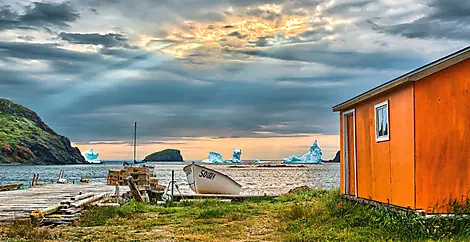
Day 12 - Twillingate, Newfoundland
In the azure setting of the Newfoundland coast, Twillingate stands like a rare jewel, with its jagged cliffs embracing the ocean. This picturesque haven, inhabited for over 3,000 years, was once the fiefdom of intrepid fishermen. The municipality now proudly shelters its secular lighthouse, an immutable sentinel facing the Atlantic. In this area, as soon as you arrive on the island, you will make the most of six walking trails in the heart of the famous Rockcut Twillingate Trails, from where you will be able to admire the striking views of local birdlife, unique geological formations and, if you are lucky, majestic northern moose. These itineraries wind their way through wild and preserved nature, providing a complete immersion in a coastal ecosystem featuring rare beauty. For those wishing to enjoy a more contemplative experience, the local museum, the historic lighthouse and the church make for very rich cultural alternatives, enabling visitors to explore the secrets of Twillingate fascinating maritime heritage, which is remarkably concentrated.
Day 13 - Trinity Bay, Newfoundland
In the northern confines of Newfoundland, Trinity Bay unfolds like an aquatic jewel set in the granitic case of the Atlantic coast. Its deep azure waters creep into the crevices of the coastline, creating a maze of fjords and inlets that provide refuge for myriad marine species. The jagged cliffs that overlook it, age-old remnants of glacial erosion, offer a splendid spectacle for the contemplative gaze. This maritime enclave, the cradle of abundant biodiversity, remains an eloquent witness to the untamed magnificence of boreal nature.
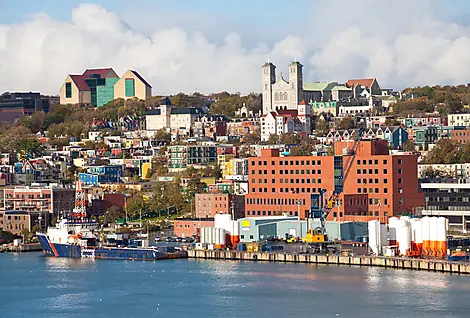
Day 14 - St. John's, Newfoundland
You will be charmed by the small multi-coloured wooden houses hanging to the side of cliffs at the entrance to the bay or edging the small steep streets of the capital of the Canadian province of Newfoundland and Labrador. Their green, blue, red and yellow colours are reminiscent of fishing boats. This quiet little port at the end of the world, the easternmost in North America, became the first English colony founded on American territory in 1497. Protected by the Gulf Stream, the climate here is relatively mild and the natural landscapes are spectacular. Youâll be able to enjoy magnificent panoramas from Signal Hill. It was at the summit of this hill that Guglielmo Marconi received the first transatlantic wireless signal in 1901.
2 available excursions
Earth's Geological Showcase, St. John's and Cape Spear
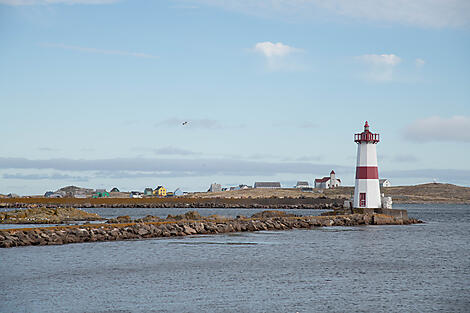
Day 15 - Saint Pierre Island, Saint Pierre and Miquelon
Off the Canadian coast, discover Saint Pierre Island, one of the two main islands of the Saint Pierre and Miquelon archipelago, the only French territory in North America. Endowed with a natural harbour, the island, whose name is a reference to the patron saint of fishermen, developed around the fishing industry and still has many traces of its past today. Whale hunting, cod fishing, alcohol smuggling during the Prohibition: all of these memories are still very much alive in the capital, Saint-Pierre. The island is also renowned for the observation of exceptional fauna including, among others, whales, fin whales, dolphins, seals, puffins and petrels.
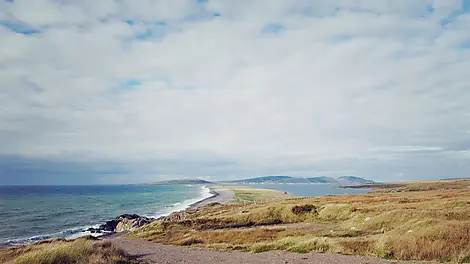
Day 16 - Miquelon Island, Saint Pierre and Miquelon
At the entrance of the Gulf of Saint Lawrence, not far from the Grand Banks of Newfoundland, Miquelon is one of the two main islands of the Saint Pierre and Miquelon archipelago and will delight those with a love of wide open space. Connected by a sand isthmus, with Miquelon in the north and Langlade to the south, this wild land is famous as the home to Franceâs only boreal forest and has sublime scenery of hills, dotted with ponds, woods and bogs, and ringed by lagoons and steep cliffs. The rich and varied wildlife will guarantee fine encounters, whether inland, which is populated with white-tailed deer and bald eagles, or on the coast, refuge to many seabirds and common seals.
1 available excursion
Hike in the Cormorandière Valley
Day 17 - At sea
During your journey at sea, make the most of the many services and activities on board. Treat yourself to a moment of relaxation in the spa or stay in shape in the fitness centre. Depending on the season, let yourself be tempted by the swimming pool or a spot of sunbathing. This journey without a port of call will also be an opportunity to enjoy the conferences or shows proposed on board, depending on the activities offered, or to do some shopping in the boutique or to meet the PONANT photographers in their dedicated space. As for lovers of the open sea, they will be able to visit the shipâs upper deck to admire the spectacle of the waves and perhaps be lucky enough to observe marine species. A truly enchanted interlude, combining comfort, rest and entertainment.
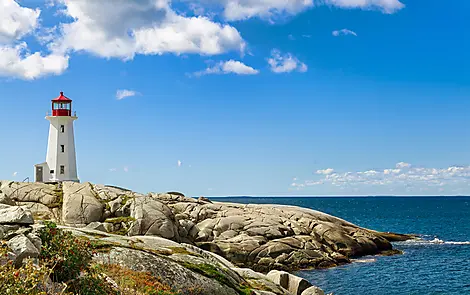
Day 18 - Halifax
A historical port city on the Canadian east coast, Halifax, surrounded by enchanting nature, stands out as the provincial capital and the cultural hub of Nova Scotia. The city played an important strategic military role in the two world wars and was also the largest Royal Navy base during the American Revolutionary War and the Napoleonic Wars. Most of the victims of the Titanic disaster were laid to rest here in the Fairview cemetery, which you will have the chance to discover. At this port of call, you will also have the opportunity to visit the picturesque fishing village of Peggyâs Cove and discover its breathtaking natural landscapes.
Baffin Bay secrets
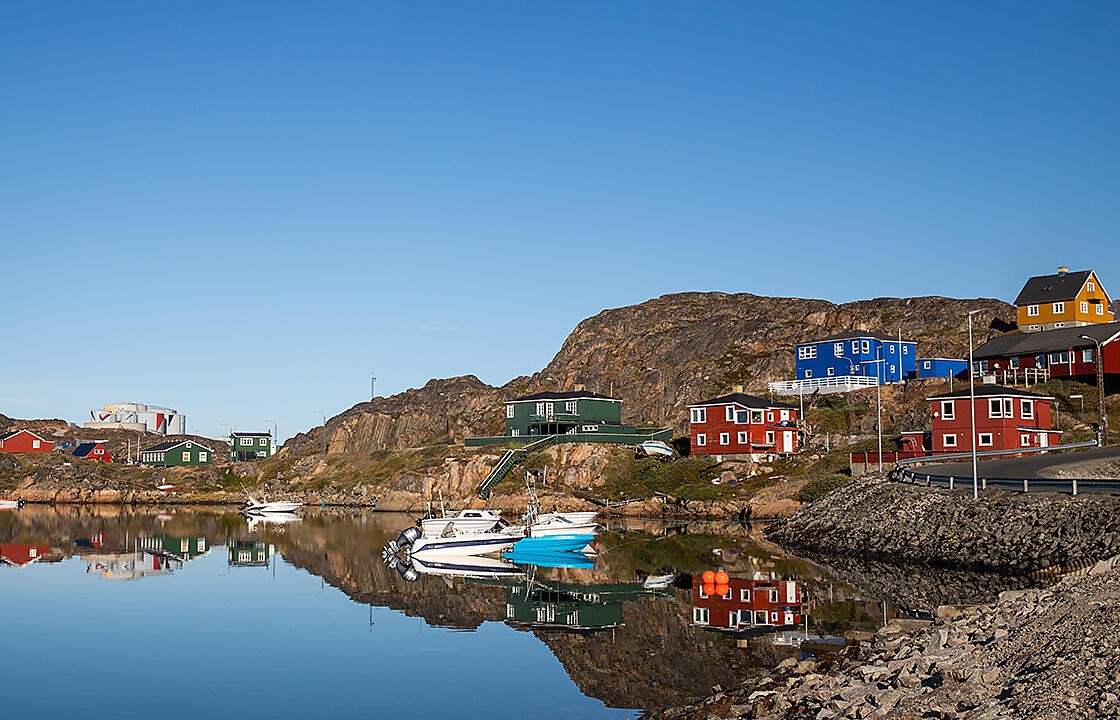
Travel Period: Aug 02 2026 - Aug 27 2026
Route: Kangerlussuaq (Greenland) to Nuuk (Greenland)
Duration: 14 Days
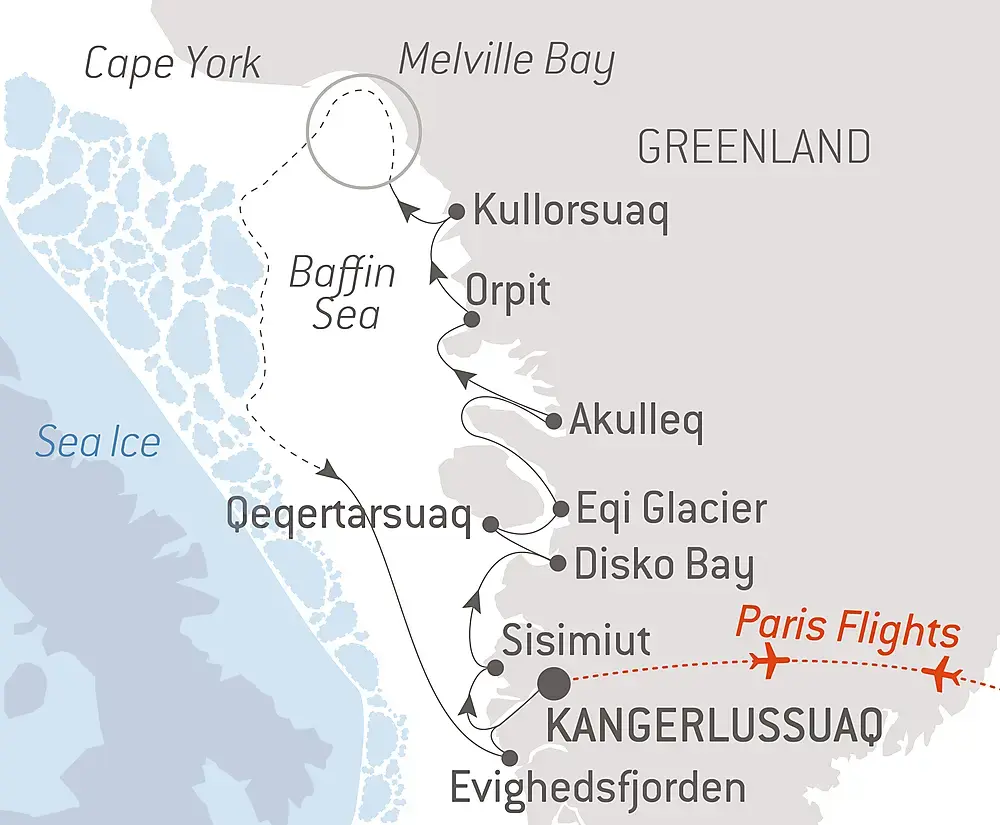
Baffin Bay secrets
Day 1 - Kangerlussuaq
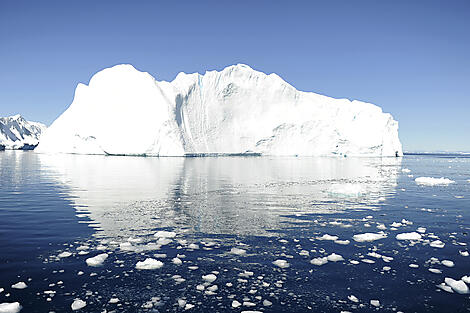
From 1941 to 1992, the town of Kangerlussuaq in Greenland was home to an American military base. Nowadays, thanks to its international airport, it has become a transit point for travellers seeking adventure in the Far North. Located to the north of the Arctic Circle, this town is the starting point of magnificent discoveries surrounded by unspoiled nature. Indeed, just a few dozen kilometres from there it is possible to get close to the Greenland ice sheet, the largest body of ice in the Northern Hemisphere. From Kangerlussuaq, admire also the superb landscapes of tundra in autumnal colours, where Arctic hares, musk oxen, Arctic foxes, reindeer, falcons and eagles live.Â
Day 2 - Sisimiut
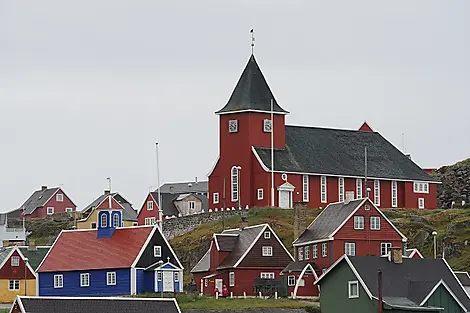
During your cruise, we invite you to discover Sisimiut, founded in 1756 and the second largest town in Greenland. This small town is typical of Greenland, boasting bewitching panoramas: here and there, colourful stilt houses dot the undulating landscape, and the small fishing port stands as the gateway to an icy realm. As for the town centre, it is home to a number of historic buildings, a small church and a museum which retraces the history of the Inuit people, as well as many craft shops. When your ship drops anchor here, you will set out to meet the locals in a typically arctic atmosphere.
Day 3 - Disko Bay
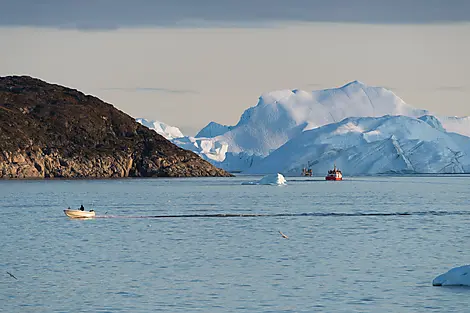
To the east of Baffin Bay, discover Disko Bay, scattered with countless icebergs produced by the Ilulissat Icefjord, a UNESCO World Heritage Site. From your ship, admire the majestic ballet of these ice giants as they slowly drift across the dark waters. This site is a natural marvel of Greenland, and is also renowned as an observation point for the regionâs many humpback whales. The encounters with wild fauna and stunning landscapes in the heart of this spectacular and fragile nature will be pure moments of wonder for you.
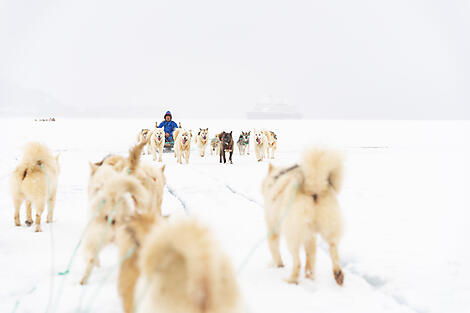
Day 4 - Qeqertarsuaq
On the southern coast of Disko Island, Qeqertarsuaq is one of just two small villages on this island the size of Corsica. Its isolation makes it an observation post popular among naturalists since the beginning of polar exploration and the set-up, in 1906, of the Arctic Centre research facility. During a zodiac cruise you will have the chance to explore the natural wonders of Greenland, meet its wildlife such as the humpback whale and contemplate the basaltic organ landscapes that offer pure moments of wonder for you. In the heart of this spectacular and fragile nature, enjoy the breath-taking views of the grandiose and varied landscapes of Disko Island and Disko Bay.
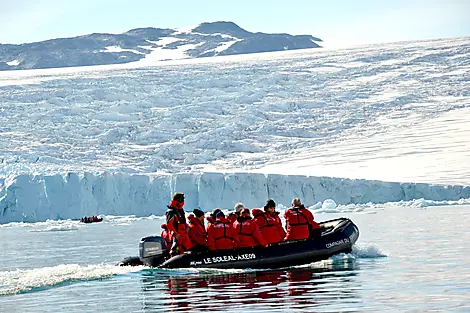
Day 5 - Paul-Emile Victor Base Camp, Eqi Glacier
"The most beautiful place in the Arctic" is how Paul-Ãmile Victor described Greenland, a land of great icebergs and of towering ice formations calved by the giant glaciers of the polar ice cap. The Eqi Glacier is one of the regionâs most impressive sights. Here, the silence is broken only by the roaring and cracking of the ice. It is impossible to know if one is shivering from cold or from the sheer thrill of being here... Imagine the vast outline of a glacier, its translucent crystals glowing with an ice-blue fire in the sunlight. Paul-Ãmile Victorâs shelter cannot be overlooked; it was from here that the French Polar Expeditionsâ anthropological and geographic explorations set off in the 1950s.Â
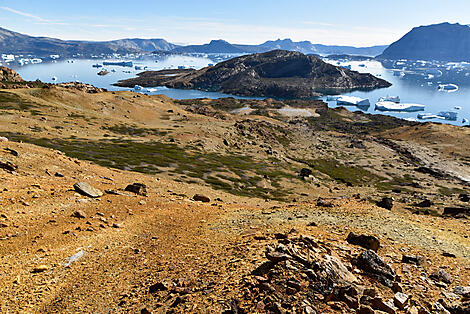
Day 6 - Akulleq
In the curve of Uummannaq Bay, opposite a narrow passage between two islands, you will discover the moonscape of the small desert island of Akulleq. The ochre yellow and orange of this mineral site look ablaze under the sunshine of the polar summer. From the islandâs summit you will be able to contemplate a panoramic view of the bayâs magical landscape and its huge icebergs with surprising shapes.
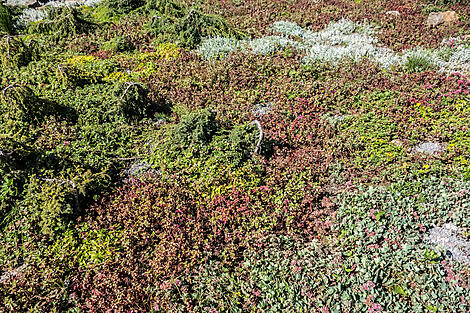
Day 7 - Orpit
To the north-west of Greenland, on the shores of Baffin Bay, Orpit will reveal itself in an exceptional environment. A jumble of fjords and islets, the rolling topography of this territory offers hiking possibilities for discovering the tundra, this unique ecosystem in the high latitudes. If conditions allow it, an outing in a zodiac dinghy will also let you explore this faraway land via the sea, getting as close as possible to the wildlife
Day 8 - Kullorsuaq
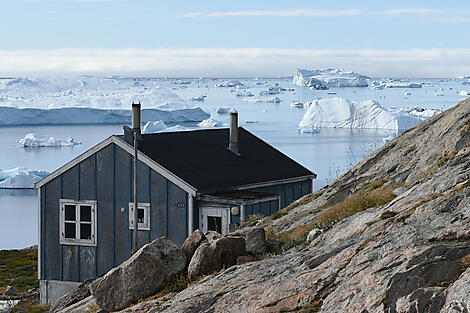
Well beyond the Arctic Circle, in the majestic landscapes of Greenlandâs Northwest, you will find the village of Kullorsuaq, the last bastion of Greenlandâs traditional hunters. Here is where you will find Greenlandâs true character⦠Vast mineral expanses, sumptuous mountains, impressive glaciers and, above all, the local population which still lives off fishing and seal or bear hunting. Hospitality and respect for nature are essential elements in the daily lives of these men, who live an austere life. When we drop anchor in this remote part of the world, set off to discover these friendly people who are also talented craftsmen, deftly sewing the furs and skins of marine mammals. This will be a unique and authentic experience.
Day 9 - Melville Bay
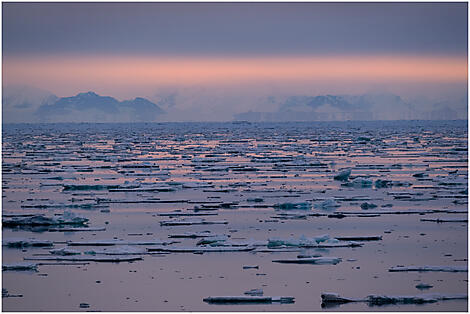
Classed as a protected area since 1977, Melville Bay â called Qimusseriarsuaq in Greenlandic â is specially dedicated to the protection of belugas, narwhals, seals and polar bears. Throughout this part of Greenland, the ice sheet reaches the sea in the form of large glaciers several kilometres wide that calve icebergs whose tip can reach a height of 50 metres (164 feet). The coast is formed by the fronts of these glaciers, which are very difficult to approach due to the sea being covered in icebergs interconnected by brash ice. From aboard your ship, admire the beauty of these extraordinary landscapes and the spectacular sight of the icebergs and the edge of the ice sheet under the midnight sun.
Day 10 - Cape York
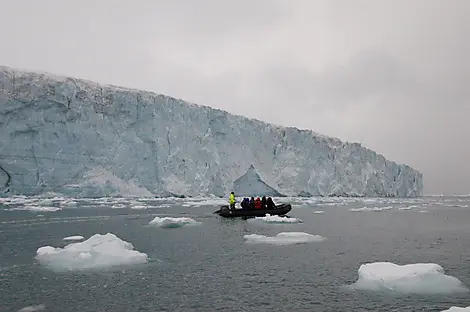
A few kilometres to the west of Savissivik, in Greenland, your ship will pass Cape York, a place that is brimming with history and marked by the conquest of the North Pole. Indeed, it is here, at the end of the 19th century, that the American explorer Robert Peary discovered fragments of one of the biggest meteorites ever found to this day. He had them sent back to the United States and later sold them to a New York museum, where they are still on display. Despite Robert Pearyâs disputed achievements and his sometimes controversial attitude towards the Inuit populations, a memorial was erected in his honour at Cape York. Constructed in the 1930s, the memorial still stands today.
Day 11-12 - Baffin Bay exploration
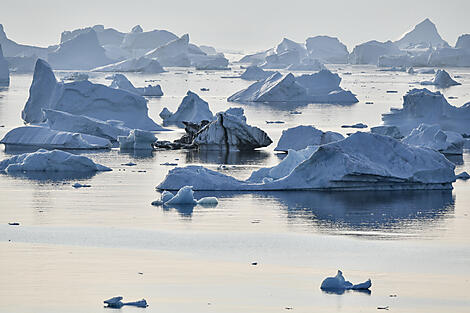
In the icy waters of Baffin Bay, you will sail into the heart of the scattered sea floe. You will be captivated by icebergs in dreamlike shapes as your ship takes you into the ice of the Far North. Everything comes in shades of white here and, if you watch closely, you may get a glimpse of the lord of this kingdom, the polar bear. This fascinating animal finds its food in the heart of the ice, so this is where you have more chances of spotting it. The polar light gives a shine to the ice floe that you sail along as you explore Baffin Bay, leaving you with memories of unforgettable moments.
Day 13 - Evighedsfjorden
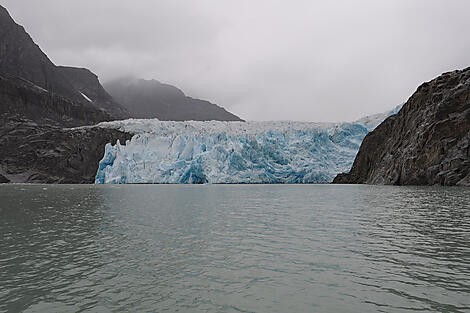
Your ship glides slowly along the water towards the west coast of Greenland, to enter Evighedsfjorden, just a few kilometres south of Kangerlussuaq. Evighedsfjorden means âthe fjord of Eternityâ, and for good reason: just when you think youâve reached the end of this stretch of sea measuring over 100Â kilometres in length, it seems to go on forever, as though to bring even more pleasure to those sailing in it. The spectacular scenery ranges from glaciers to tundra with an abundant flora, and jagged cliffs where numerous bird species have taken up residence. Take the time to observe the white-tailed eagles and the colonies of seagulls and black-legged kittiwakes flying overhead in the area.
Day 14 - Kangerlussuaq
From 1941 to 1992, the town of Kangerlussuaq in Greenland was home to an American military base. Nowadays, thanks to its international airport, it has become a transit point for travellers seeking adventure in the Far North. Located to the north of the Arctic Circle, this town is the starting point of magnificent discoveries surrounded by unspoiled nature. Indeed, just a few dozen kilometres from there it is possible to get close to the Greenland ice sheet, the largest body of ice in the Northern Hemisphere. From Kangerlussuaq, admire also the superb landscapes of tundra in autumnal colours, where Arctic hares, musk oxen, Arctic foxes, reindeer, falcons and eagles live.Â
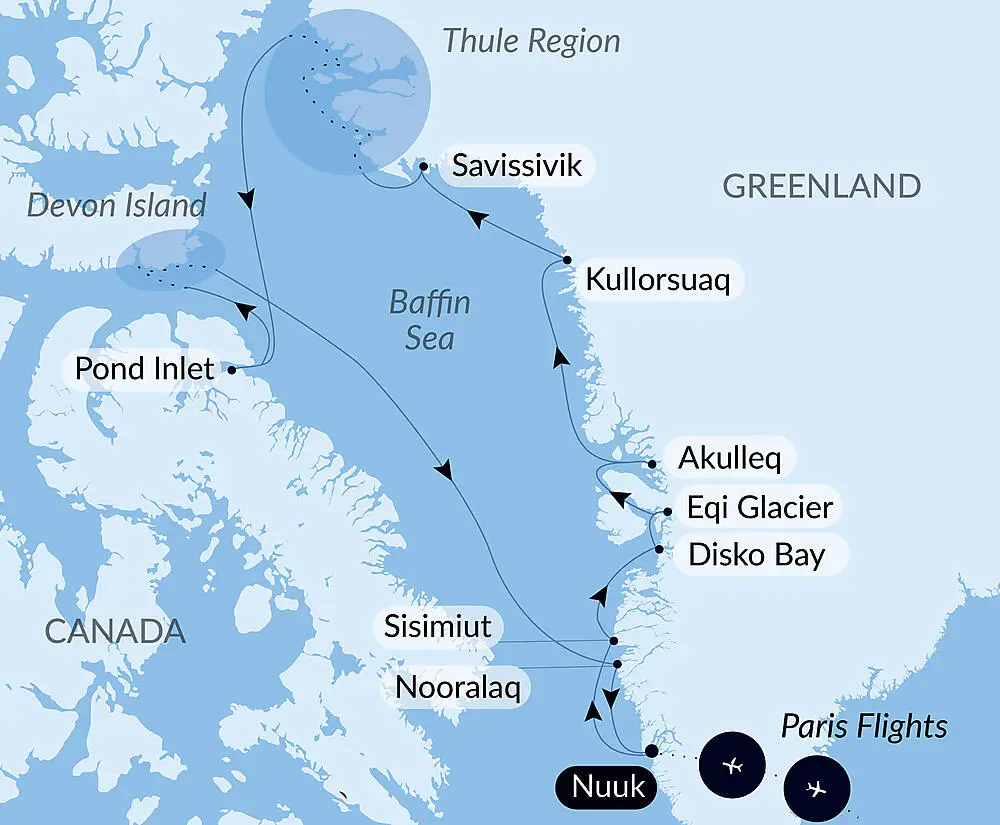
Expedition to the Thule Region
.jpg "Expedition to the Thule Region")
Travel Period: Aug 15 2026 - Aug 10 2028
Route: Nuuk (Greenland) to Nuuk (Greenland)
Duration: 17 Days
Expedition to the Thule Region
Day 1 - Nuuk
When Erik Le Rouge, the exiled Norse chief, landed on the coast of Nuuk, he found a fertile and welcoming land dotted with fjords. He settled there with a group of his former countrymen, and the Norse remained the principal inhabitants until, over a period of 500 years, their population declined and gave way to the Inuit. Nuuk is situated at the mouth of one of the largest networks of fjords in the world, where the waters never freeze. The town spreads gently out towards the Davis Strait and enjoys an historic center that is particularly rich in national heritage. The vivid reds, blues, greens and yellows of the houses are a lively contrast to the somber waters of Greenland and serve to lift the spirits of the locals during the Winter months.
Day 2 - Sisimiut
During your cruise, we invite you to discover Sisimiut, founded in 1756 and the second largest town in Greenland. This small town is typical of Greenland, boasting bewitching panoramas: here and there, colourful stilt houses dot the undulating landscape, and the small fishing port stands as the gateway to an icy realm. As for the town centre, it is home to a number of historic buildings, a small church and a museum which retraces the history of the Inuit people, as well as many craft shops. When your ship drops anchor here, you will set out to meet the locals in a typically arctic atmosphere.
Day 3 - Disko Bay
To the east of Baffin Bay, discover Disko Bay, scattered with countless icebergs produced by the Ilulissat Icefjord, a UNESCO World Heritage Site. From your ship, admire the majestic ballet of these ice giants as they slowly drift across the dark waters. This site is a natural marvel of Greenland, and is also renowned as an observation point for the regionâs many humpback whales. The encounters with wild fauna and stunning landscapes in the heart of this spectacular and fragile nature will be pure moments of wonder for you.
Day 4 - Base Paul-Emile Victor, Eqi Glacier
The most beautiful place in the Arctic" is how Paul-Ãmile Victor described Greenland, a land of great icebergs and of towering ice formations calved by the giant glaciers of the polar ice cap. The Eqi Glacier is one of the regionâs most impressive sights. Here, the silence is broken only by the roaring and cracking of the ice. It is impossible to know if one is shivering from cold or from the sheer thrill of being here... Imagine the vast outline of a glacier, its translucent crystals glowing with an ice-blue fire in the sunlight. Paul-Ãmile Victorâs shelter cannot be overlooked; it was from here that the French Polar Expeditionsâ anthropological and geographic explorations set off in the 1950s.
Day 5 - Akulleq
In the curve of Uummannaq Bay, opposite a narrow passage between two islands, you will discover the moonscape of the small desert island of Akulleq. The ochre yellow and orange of this mineral site look ablaze under the sunshine of the polar summer. From the islandâs summit you will be able to contemplate a panoramic view of the bayâs magical landscape and its huge icebergs with surprising shapes.
Day 6 - Kullorsuaq
Well beyond the Arctic Circle, in the majestic landscapes of Greenlandâs Northwest, you will find the village of Kullorsuaq, the last bastion of Greenlandâs traditional hunters. Here is where you will find Greenlandâs true character⦠Vast mineral expanses, sumptuous mountains, impressive glaciers and, above all, the local population which still lives off fishing and seal or bear hunting. Hospitality and respect for nature are essential elements in the daily lives of these men, who live an austere life. When we drop anchor in this remote part of the world, set off to discover these friendly people who are also talented craftsmen, deftly sewing the furs and skins of marine mammals. This will be a unique and authentic experience.
Day 7 - Savissivik
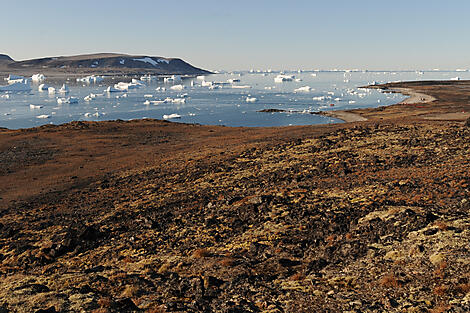
Some places in this world are so magical that their beauty cannot be described in words⦠Savissivik, a small Inuit village with less than a hundred inhabitants, is one such place. Rightly considered to be the biggest iceberg graveyard in Greenland, it is a stunning sight to behold. During your zodiac outing, you will sail between these icy giants. Once on land, you can hike to a viewpoint from which to enjoy breathtaking views over these icebergs, which come in an incredibly diverse range of shapes and colours. Photographers will love it. Savissivik Bay attracts many bears and is also known for having been the home of one of the worldâs biggest meteorites, but the latter has now been moved to a museum in New York.
Day 8-9 - Thule Region
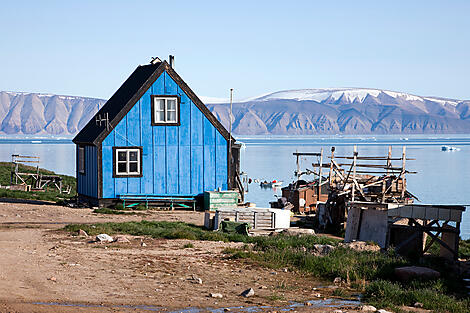
Thule, the region located to the northwest of Greenland, is the mythical name used to designate the Far North. The presence of many drifting icebergs calved from the glaciers of Greenland and sheets of ice floe can make sailing tricky - but spectacular - in this region. You will attempt to sail as far north as possible and if you are lucky enough you will perhaps observe one of the many polar bears that roam this favourable environment. Youâll perhaps visit traditional villages such as Dundas (âold Thuleâ) and Siorapaluk, Greenlandâs northernmost native settlement, where you will probably be greeted by a joyous group of children, who are always happy to welcome visitors.
Day 10 - At sea
During your journey at sea, make the most of the many services and activities on board. Treat yourself to a moment of relaxation in the spa or stay in shape in the fitness centre. Depending on the season, let yourself be tempted by the swimming pool or a spot of sunbathing. This journey without a port of call will also be an opportunity to enjoy the conferences or shows proposed on board, depending on the activities offered, or to do some shopping in the boutique or to meet the PONANT photographers in their dedicated space. As for lovers of the open sea, they will be able to visit the shipâs upper deck to admire the spectacle of the waves and perhaps be lucky enough to observe marine species. A truly enchanted interlude, combining comfort, rest and entertainment.
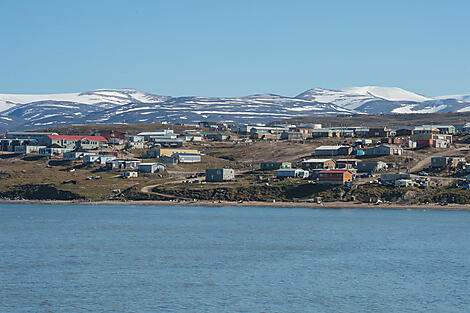
Day 11 - Pond Inlet, Nunavut
On Baffin Island, located in northern Canada at the mouth of the famous NorthWest Passage, there is a small Inuit settlement at the very bounds of infinity. To get there, cross the Arctic Circle, the imaginary line that separates man from lands of mystery and wonder. Itâs not so much the way of life that sets Pond Inletâs inhabitants apart, so much as the setting. Snow-capped mountains, fjords and glaciers combine in a dazzling natural environment that fills space and expands time. Some discoveries change you forever: this is one of them.
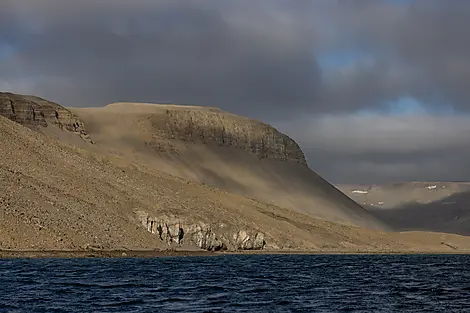
Day 12-13 - Devon Island, Nunavut
Located in Baffin Bay, Devon Island is part of the Canadian Arctic Archipelago. Robert Bylot and William Baffin were the first Europeans to sight Devon Island in 1616 but it would only be mapped two centuries later by the British sailor William E. Parry, who named it after the eponymous English region. Around 1920, the Hudson's Bay Company set up a fur-trading outpost there, until the departure of the Inuits in 1936. A new attempt to populate it was made at the beginning of the 1950s. Only a few buildings in ruins, vestiges of that time, remain today. In the heart of these Far North landscapes, keep your eyes peeled for the Arctic wildlife that populates these shores, including the Lord of the Kingdom, the polar bear, that you may be lucky enough to spot.
Day 14-15 - At sea
During your journey at sea, make the most of the many services and activities on board. Treat yourself to a moment of relaxation in the spa or stay in shape in the fitness centre. Depending on the season, let yourself be tempted by the swimming pool or a spot of sunbathing. This journey without a port of call will also be an opportunity to enjoy the conferences or shows proposed on board, depending on the activities offered, or to do some shopping in the boutique or to meet the PONANT photographers in their dedicated space. As for lovers of the open sea, they will be able to visit the shipâs upper deck to admire the spectacle of the waves and perhaps be lucky enough to observe marine species. A truly enchanted interlude, combining comfort, rest and entertainment.
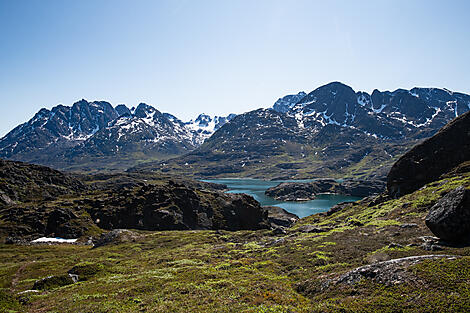
Day 16 - Nooralak
Located a few kilometres away from the Arctic Circle, the Nooralaq peninsula features raw and untamed beauty. Nature reigns supreme here, with the tundra stretching as far as the eye can see, decked out in various forms of flora and inhabited by Greenlandâs emblematic fauna â snow buntings, common ravens, reindeer, musk oxen, and the discreet Arctic fox. The heights of Nooralaq afford sublime panoramas over the Itteleq fjord, whose water reflects the moving skies of the Far North.
Day 17 - Nuuk
When Erik Le Rouge, the exiled Norse chief, landed on the coast of Nuuk, he found a fertile and welcoming land dotted with fjords. He settled there with a group of his former countrymen, and the Norse remained the principal inhabitants until, over a period of 500 years, their population declined and gave way to the Inuit. Nuuk is situated at the mouth of one of the largest networks of fjords in the world, where the waters never freeze. The town spreads gently out towards the Davis Strait and enjoys an historic center that is particularly rich in national heritage. The vivid reds, blues, greens and yellows of the houses are a lively contrast to the somber waters of Greenland and serve to lift the spirits of the locals during the Winter months.
Northeast Greenland's unexplored sea ice
Cruise Line: Ponant Cruise
Boats: Le-Commandant-Charcot
Travel Period: May 15 2027 - Jun 16 2028
Route: ReykjavÃk (Iceland) to ReykjavÃk (Iceland)
Duration: 11 Days
toReykjavík.webp "Northeast Greenland's unexplored sea ice")
Northeast Greenland's unexplored sea ice
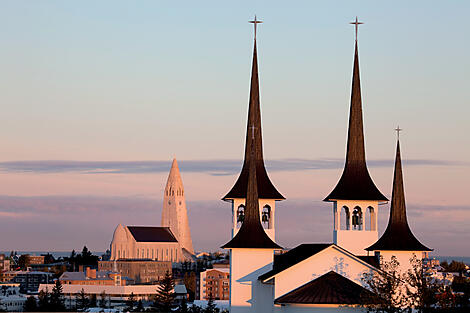
Day 1 - ReykjavÃk
Icelandâs capital stretches along the edge of a vast bay in the west of the country. Perlan, the âPearl of ReykjavÃkâ, a museum located on âOskjuhlið hill, offers a panoramic view of the lush, green landscapes. A little further, one can easily spot the signpost showing the way to the evangelical HallgrÃmskirkja church, and to the historical centre where one can stroll along the SkólavördustÃgur and the Laugavegur, two lively streets with charming small shops. For some relaxation just outside of the city, visitors have the opportunity to visit the Reykjanes peninsula and its famous thermal lagoons of the Blue Lagoon.
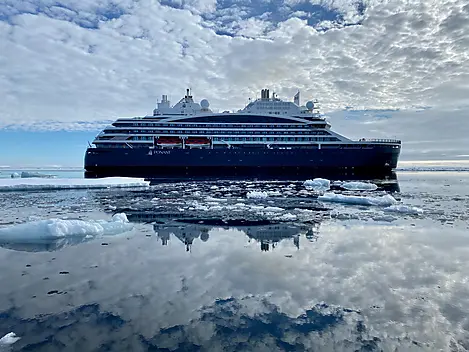
Day 2 - At sea aboard Le Commandant Charcot
Spend exceptional moments sailing aboard Le Commandant Charcot, the worldâs first luxury polar exploration vessel and the first PC2-class polar cruise ship capable of sailing into the very heart of the ice, on seas and oceans which the frozen conditions render inaccessible to ordinary ships. Le Commandant Charcot is fitted with oceanographic and scientific equipment selected by a committee of experts. Take advantage of the on-board lectures and opportunities for discussion with these specialists to learn more about the poles. Participate in furthering scientific research with PONANT and let us discover together what these fascinating destinations have yet to reveal to us.
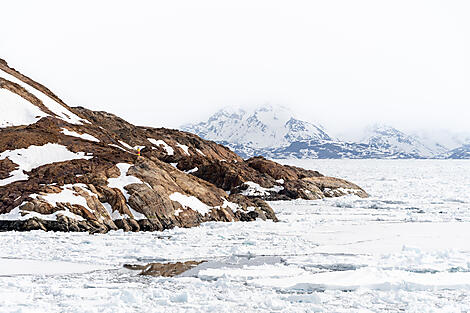
Day 3 - Exploration of Ammassalik Region
Still relatively unknown just a century ago, the east coast of Greenland remains the most authentic and majestic region in the Arctic. Explore this part of the world where the alpine mountains merge intimately with the sea and the fjords are adorned with high, snow-capped peaks and icebergs drifting or trapped in the pack ice. You will slowly immerse yourself in the heart of frozen landscapes of surreal beauty. The infinite variety of textures in the different types of ice creates an ever-changing scenery. Follow in the wake of the famous Pourquoi Pas?, the ship of Captain Jean-Baptiste Charcot who set off with his crew in 1934 to land Paul-Ãmile Victor in Ammassalik. In this fjord of raw and untamed beauty, the explorer devoted his first ethnographic mission to the Ammassalimiut, a little-known Inuit community. In this deceptively frozen landscape, the silence is broken only by the sounds of dogs and the grating of sled runners against the ice. You will receive a warm welcome in villages still protected by the fast ice. You will have the opportunity to discover the Inuit cultureâs ancestral traditions during joyous and authentic moments shared with the communities.
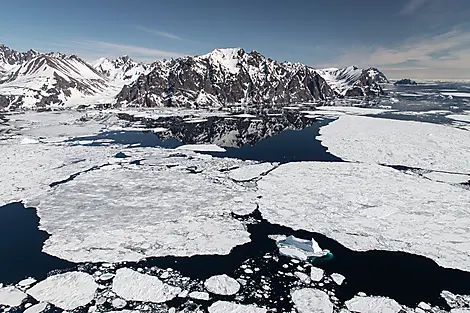
Day 4 - Exploring the Blosseville Coast
Aboard your ship, follow in the footsteps of Jules Poret de Blosseville, a French explorer and sailor. In 1833, he set off to discover this isolated and unexplored part of eastern Greenland aboard La Lilloise, an adventure with a fatal outcome. The uninhabited territory that bears his name lies to the south of Scoresby Sound. Surrounded by ice, icebergs and pack ice - thin or thick, flat or pronounced - as far as the eye can see, Blosseville Coast is a wild and distant place to which very few people have access. Exploring it means a slow immersion into the heart of a frozen, almost unreal desert, where the variations in light transform oneâs perception of the landscape. In the kingdom of the polar bears, Le Commandant Charcot, a silent ship open to the exterior, will offer exceptional moments observing Arctic wildlife, through a series of encounters.
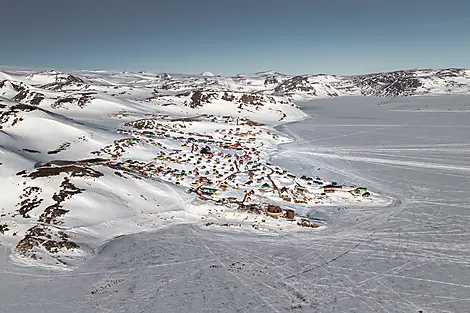
Day 5-7 - Exploration of Ittoqqortoormiit Region
On the East coast of Greenland, in the Ittoqqortoormiit region that is covered with snow and ice for nine months of the year, you will have the rare opportunity of immersing yourself in the heart of an isolated territory and exploring the beauty of its infinite polar whiteness. The high alpine mountains punctuate the sky and gradually reveal their dark rock edges beneath a coat of snow. Located at the entrance to the longest system of fjords in the world, sits the village of Ittoqqortoormiit, one of the northernmost inhabited places on the East coast. Its name means âgreat houseâ in Greenlandic and it is home to the last hunters of the polar region, whose ancestral way of life you will encounter. As soon as the thickness of the ice floe allows it, the hunters set out on the trail of walruses, seals, narwhals, musk oxen and polar bears, travelling by traditional dog sleds. On these expanses of immaculate snow, the silence is broken only by the sounds of the dogs, the grating of a sled coming back from a run or of footsteps on the ice. You will discover Inuit traditions through privileged and festive moments on the ice floe and in the village.
Day 8-9 - Exploring the Blosseville Coast
Aboard your ship, follow in the footsteps of Jules Poret de Blosseville, a French explorer and sailor. In 1833, he set off to discover this isolated and unexplored part of eastern Greenland aboard La Lilloise, an adventure with a fatal outcome. The uninhabited territory that bears his name lies to the south of Scoresby Sound. Surrounded by ice, icebergs and pack ice - thin or thick, flat or pronounced - as far as the eye can see, Blosseville Coast is a wild and distant place to which very few people have access. Exploring it means a slow immersion into the heart of a frozen, almost unreal desert, where the variations in light transform oneâs perception of the landscape. In the kingdom of the polar bears, Le Commandant Charcot, a silent ship open to the exterior, will offer exceptional moments observing Arctic wildlife, through a series of encounters.
Day 10-11 - ReykjavÃk
Icelandâs capital stretches along the edge of a vast bay in the west of the country. Perlan, the âPearl of ReykjavÃkâ, a museum located on âOskjuhlið hill, offers a panoramic view of the lush, green landscapes. A little further, one can easily spot the signpost showing the way to the evangelical HallgrÃmskirkja church, and to the historical centre where one can stroll along the SkólavördustÃgur and the Laugavegur, two lively streets with charming small shops. For some relaxation just outside of the city, visitors have the opportunity to visit the Reykjanes peninsula and its famous thermal lagoons of the Blue Lagoon.
Arctic Spring: A Journey Through Ice and Inuit Culture
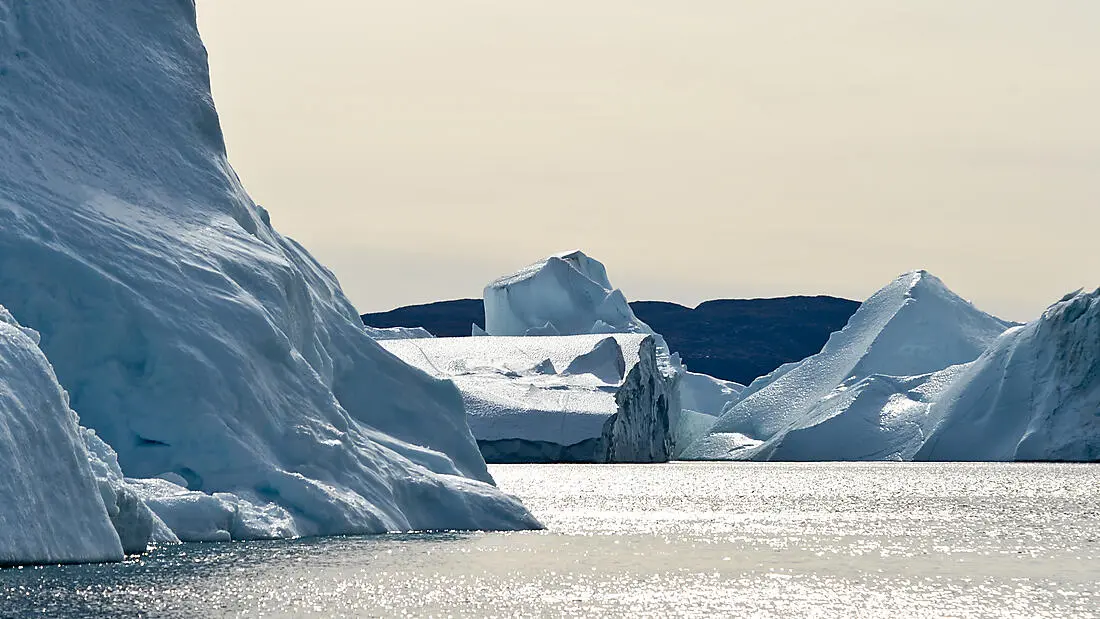
Cruise Line: Ponant Cruise
Boats: Le-Commandant-Charcot
Travel Period: Mar 27 2027
Route: Nuuk (Greenland) to Nuuk (Greenland)
Duration: 9 Days
toNuuk.webp "Arctic Spring: A Journey Through Ice and Inuit Culture")
Arctic Spring: A Journey Through Ice and Inuit Culture
Day 1 - Nuuk
When Erik Le Rouge, the exiled Norse chief, landed on the coast of Nuuk, he found a fertile and welcoming land dotted with fjords. He settled there with a group of his former countrymen, and the Norse remained the principal inhabitants until, over a period of 500 years, their population declined and gave way to the Inuit. Nuuk is situated at the mouth of one of the largest networks of fjords in the world, where the waters never freeze. The town spreads gently out towards the Davis Strait and enjoys an historic center that is particularly rich in national heritage. The vivid reds, blues, greens and yellows of the houses are a lively contrast to the somber waters of Greenland and serve to lift the spirits of the locals during the Winter months.
Day 2 - At sea aboard Le Commandant Charcot
Spend exceptional moments sailing aboard Le Commandant Charcot, the worldâs first luxury polar exploration vessel and the first PC2-class polar cruise ship capable of sailing into the very heart of the ice, on seas and oceans which the frozen conditions render inaccessible to ordinary ships. Le Commandant Charcot is fitted with oceanographic and scientific equipment selected by a committee of experts. Take advantage of the on-board lectures and opportunities for discussion with these specialists to learn more about the poles. Participate in furthering scientific research with PONANT and let us discover together what these fascinating destinations have yet to reveal to us.
Day 3-4 - Disko Bay
To the east of Baffin Bay, discover Disko Bay, scattered with countless icebergs produced by the Ilulissat Icefjord, a UNESCO World Heritage Site. From your ship, admire the majestic ballet of these ice giants as they slowly drift across the dark waters. This site is a natural marvel of Greenland, and is also renowned as an observation point for the regionâs many humpback whales. The encounters with wild fauna and stunning landscapes in the heart of this spectacular and fragile nature will be pure moments of wonder for you.
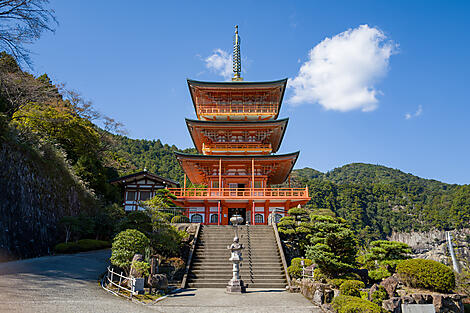
Day 5 - Disko Island
Disko Island, called Qeqertarsuaq in Greenlandic, is one of the most spectacular jewels of the west coast of Greenland. It is crossed by an ice cap, which gives rise to small coastal glaciers and to immaculately white inland landscapes. At the end of the winter, the island unveils a magical face, between stretching ice, crystal-clear polar light and frozen fjords, offering the perfect setting for polar exploration. At this period, the south of the island is also home to bowhead whales, one of the rarest species in the world, which spend the winter in these polar waters.
Day 6 - Baffin Bay exploration
In the icy waters of Baffin Bay, you will sail into the heart of the scattered sea floe. You will be captivated by icebergs in dreamlike shapes as your ship takes you into the ice of the Far North. Everything comes in shades of white here and, if you watch closely, you may get a glimpse of the lord of this kingdom, the polar bear. This fascinating animal finds its food in the heart of the ice, so this is where you have more chances of spotting it. The polar light gives a shine to the ice floe that you sail along as you explore Baffin Bay, leaving you with memories of unforgettable moments.
Day 7-8 - Sisimiut
During your cruise, we invite you to discover Sisimiut, founded in 1756 and the second largest town in Greenland. This small town is typical of Greenland, boasting bewitching panoramas: here and there, colourful stilt houses dot the undulating landscape, and the small fishing port stands as the gateway to an icy realm. As for the town centre, it is home to a number of historic buildings, a small church and a museum which retraces the history of the Inuit people, as well as many craft shops. When your ship drops anchor here, you will set out to meet the locals in a typically arctic atmosphere.
Day 9 - Nuuk
When Erik Le Rouge, the exiled Norse chief, landed on the coast of Nuuk, he found a fertile and welcoming land dotted with fjords. He settled there with a group of his former countrymen, and the Norse remained the principal inhabitants until, over a period of 500 years, their population declined and gave way to the Inuit. Nuuk is situated at the mouth of one of the largest networks of fjords in the world, where the waters never freeze. The town spreads gently out towards the Davis Strait and enjoys an historic center that is particularly rich in national heritage. The vivid reds, blues, greens and yellows of the houses are a lively contrast to the somber waters of Greenland and serve to lift the spirits of the locals during the Winter months.
In the heart of the Northwest Passage
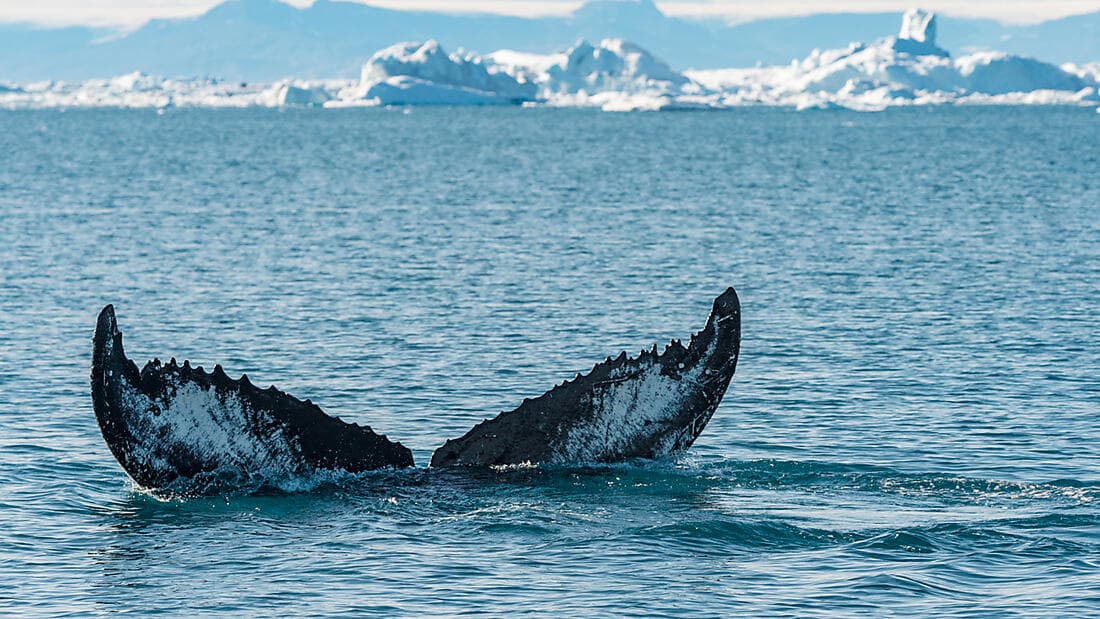
Travel Period: Aug 31 2026 - Aug 26 2028
Route: Nuuk (Greenland) to Nuuk (Greenland)
Duration: 20 Days
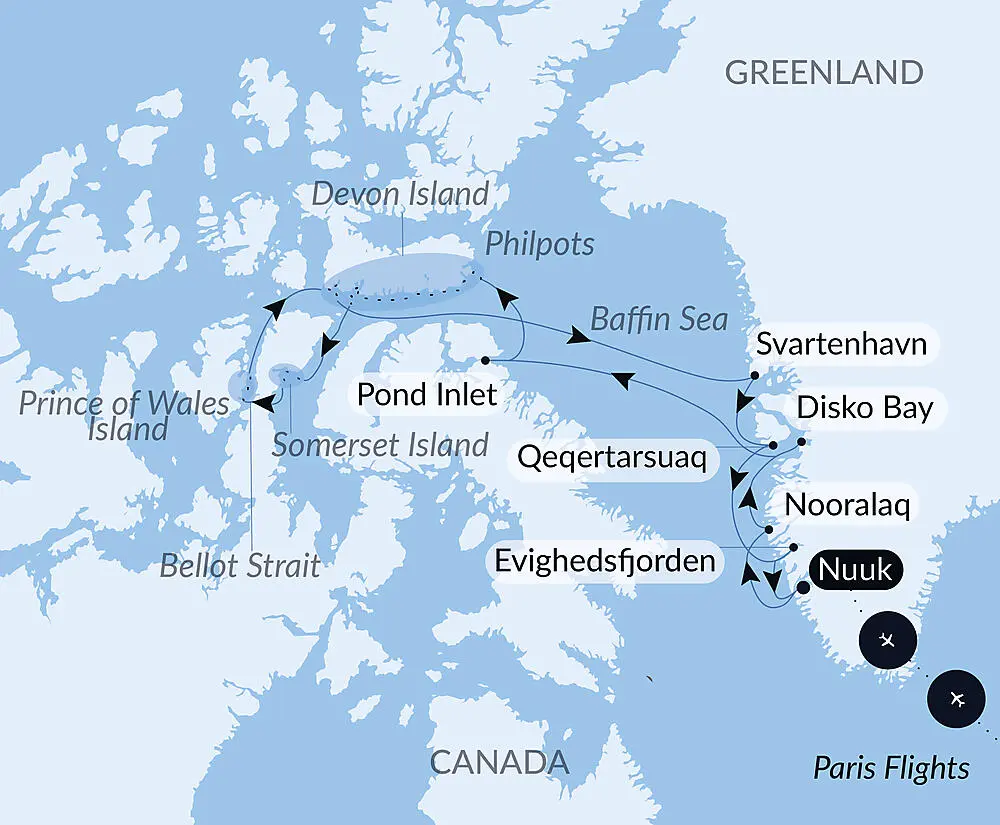
In the heart of the Northwest Passage
Day 1 - Nuuk
When Erik Le Rouge, the exiled Norse chief, landed on the coast of Nuuk, he found a fertile and welcoming land dotted with fjords. He settled there with a group of his former countrymen, and the Norse remained the principal inhabitants until, over a period of 500 years, their population declined and gave way to the Inuit. Nuuk is situated at the mouth of one of the largest networks of fjords in the world, where the waters never freeze. The town spreads gently out towards the Davis Strait and enjoys an historic center that is particularly rich in national heritage. The vivid reds, blues, greens and yellows of the houses are a lively contrast to the somber waters of Greenland and serve to lift the spirits of the locals during the Winter months.
Day 2 - Nooralak
Located a few kilometres away from the Arctic Circle, the Nooralaq peninsula features raw and untamed beauty. Nature reigns supreme here, with the tundra stretching as far as the eye can see, decked out in various forms of flora and inhabited by Greenlandâs emblematic fauna â snow buntings, common ravens, reindeer, musk oxen, and the discreet Arctic fox. The heights of Nooralaq afford sublime panoramas over the Itteleq fjord, whose water reflects the moving skies of the Far North.
Day 3-4 - Disko Bay
To the east of Baffin Bay, discover Disko Bay, scattered with countless icebergs produced by the Ilulissat Icefjord, a UNESCO World Heritage Site. From your ship, admire the majestic ballet of these ice giants as they slowly drift across the dark waters. This site is a natural marvel of Greenland, and is also renowned as an observation point for the regionâs many humpback whales. The encounters with wild fauna and stunning landscapes in the heart of this spectacular and fragile nature will be pure moments of wonder for you.
Day 5 - At sea
During your journey at sea, make the most of the many services and activities on board. Treat yourself to a moment of relaxation in the spa or stay in shape in the fitness centre. Depending on the season, let yourself be tempted by the swimming pool or a spot of sunbathing. This journey without a port of call will also be an opportunity to enjoy the conferences or shows proposed on board, depending on the activities offered, or to do some shopping in the boutique or to meet the PONANT photographers in their dedicated space. As for lovers of the open sea, they will be able to visit the shipâs upper deck to admire the spectacle of the waves and perhaps be lucky enough to observe marine species. A truly enchanted interlude, combining comfort, rest and entertainment.
Day 6 - Pond Inlet, Nunavut
On Baffin Island, located in northern Canada at the mouth of the famous NorthWest Passage, there is a small Inuit settlement at the very bounds of infinity. To get there, cross the Arctic Circle, the imaginary line that separates man from lands of mystery and wonder. Itâs not so much the way of life that sets Pond Inletâs inhabitants apart, so much as the setting. Snow-capped mountains, fjords and glaciers combine in a dazzling natural environment that fills space and expands time. Some discoveries change you forever: this is one of them.
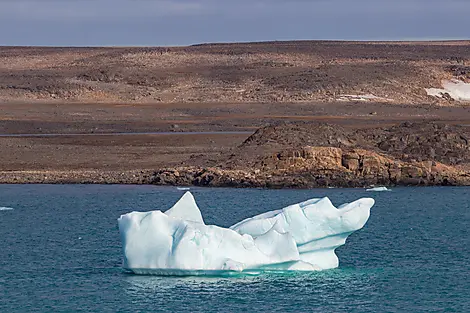
Day 7 - Philpots Island, Nunavut
Located off the eastern coast of Devon Island, in Nunavut, Philpots Island is an ideal stop for admiring the raw beauty of the Canadian High Arctic. In this remote place, the retreat of the glaciers has given way to small beaches alternating with majestic ice fronts, which you may see from the inflatable dinghies if conditions allow. The site is also a refuge for polar bears, which you may spot in the distance, while drifting icebergs provide resting places for seals and birds.
Day 8-9 - Devon Island, Nunavut
Located in Baffin Bay, Devon Island is part of the Canadian Arctic Archipelago. Robert Bylot and William Baffin were the first Europeans to sight Devon Island in 1616 but it would only be mapped two centuries later by the British sailor William E. Parry, who named it after the eponymous English region. Around 1920, the Hudson's Bay Company set up a fur-trading outpost there, until the departure of the Inuits in 1936. A new attempt to populate it was made at the beginning of the 1950s. Only a few buildings in ruins, vestiges of that time, remain today. In the heart of these Far North landscapes, keep your eyes peeled for the Arctic wildlife that populates these shores, including the Lord of the Kingdom, the polar bear, that you may be lucky enough to spot.
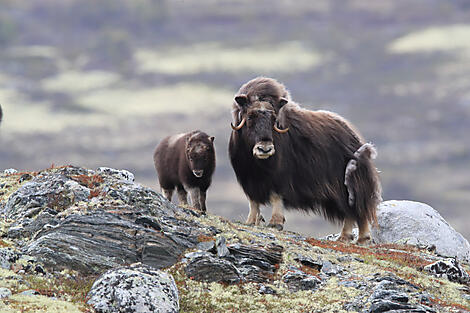
Day 10 - omerset Island, Nunavut
The Canadian Arctic Circle is home to one of the planetâs best preserved natural sanctuaries: Somerset Island. This immaculate northern desert is renowned for its phenomenal landscapes, its midnight sun and its huge tundra, where musk oxen roam. Covering 24,786 square kilometres (15,400 square miles), it is the Arctic archipelagoâs ninth-largest island. Vegetation is rare except in some hollows and lowlands, where Peary caribou are common.
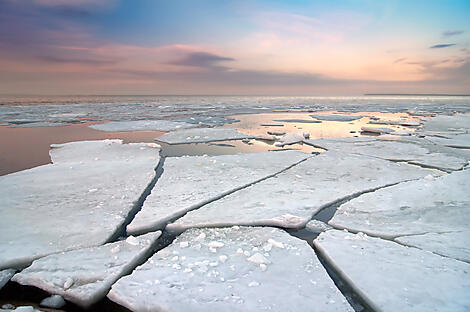
Day 11 - Bellot Strait
A key stage in the North West Passage, the Bellot Strait, crossed by strong currents, promises you an unforgettable sailing experience. The entrance to the strait is dominated by the Ross Cairn. The buildings of Fort Ross also stand not far from here. Separating Somerset Island from the Boothia Peninsula, this 2-km-wide strait was discovered in 1852 by Captain William Kennedy of the Royal Navy, and the Frenchman Joseph-René Bellot, during an expedition in search of Sir John Franklin. Discover a magnificent décor covered in snow, fragmented by large ice floes. As you sail between them, your ship will perhaps be accompanied by a few polar bears.
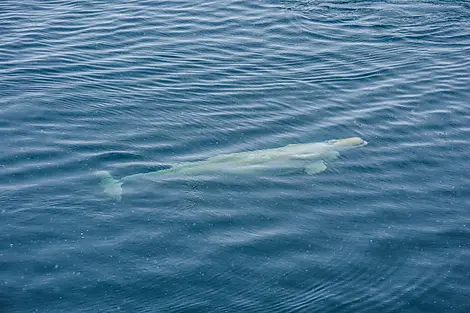
Day 11-12 - Prince of Wales Island, Nunavut
Nestling in the wild reaches of the Canadian Arctic, Prince of Wales Island, in Canadaâs Nunavut, offers a gateway to untamed nature of striking beauty. Looking out over the Arctic tundra, with its permafrost and low-lying mosses, surrender to the majesty of these vast open spaces and keep a watchful eye. In this boundless wilderness, life can appear where it is least expected. Polar bears, Arctic foxes, walruses, seals, belugas and a multitude of migratory birds, such as snowy owls, Arctic terns and eiders, inhabit this harsh yet fascinating territory.
Day 12 - Prescott Island, Nunavut
Prescott Island is located between Somerset Island and Prince of Wales Island, in the heart of Peel Sound, and its shorelines provide a perfect playground for belugas. However, the opportunity to observe and listen to these "sea canariesâ is not the only reason to scan the horizon: here, between the icebergs and the dramatic landscapes, you may also be able to spot polar bears, as well as summon up memories of Sir John Franklin, who was the first to cross Peel Sound in 1846 during his expedition in search of the Northwest Passage, followed in 1903 by Roald Amundsen, who was the first to find a route through that passage!
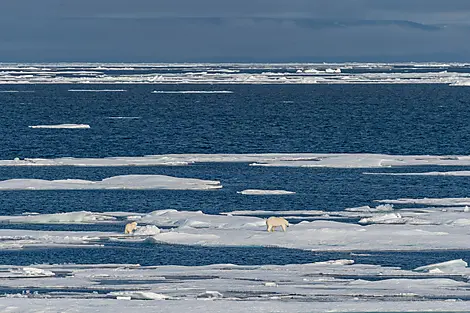
Day 13 - Sailing in the Lancaster Sound
Between Devon Island and Baffin Island, in the Canadian territory of Nunavut, Lancaster Sound forms part of the Northwest Passage, a shipping route crossing the Canadian Arctic Archipelago, along the northern coast of North America. Coveted for almost 300 years, it saw several expeditions including the fatal one led by John Franklin, seen for the last time near Lancaster Sound in August 1845. Many colonies of cetaceans, polar bears and seabirds have taken up residence in or near these nourishing waters at the confluence of the currents. Situated in Inuit territory, the Sound is the subject of plans to create a marine conservation area intended to protect this rich ecosystem and its inhabitants.
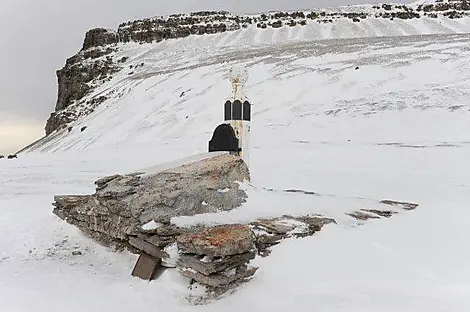
Day 14 - Beechey Island, Nunavut
Beechey Island, at the eastern end of Resolute Bay, will call to mind some of the most important moments of Franklinâs expedition. Sir John set off in 1845 in search of the mythical Northwest Passage and was forced to take shelter in Erebus Harbour for two long years, while he waited for the ice floes to recede and allow him a way through. It is a spectacular location; seeing the three wooden grave markers, bleached by the sun (indicating the burial places of at least three of Captain Franklinâs men) and visiting the memorial that has been erected in memory of Franklin and his men can only reinforce the hushed sense of reverence. If the surrounding wilderness impresses us, the ochre and yellows of the rocky desert soften the landscape.
Day 14 - Devon Island, Nunavut
Located in Baffin Bay, Devon Island is part of the Canadian Arctic Archipelago. Robert Bylot and William Baffin were the first Europeans to sight Devon Island in 1616 but it would only be mapped two centuries later by the British sailor William E. Parry, who named it after the eponymous English region. Around 1920, the Hudson's Bay Company set up a fur-trading outpost there, until the departure of the Inuits in 1936. A new attempt to populate it was made at the beginning of the 1950s. Only a few buildings in ruins, vestiges of that time, remain today. In the heart of these Far North landscapes, keep your eyes peeled for the Arctic wildlife that populates these shores, including the Lord of the Kingdom, the polar bear, that you may be lucky enough to spot.
Day 15-16 - At sea
During your journey at sea, make the most of the many services and activities on board. Treat yourself to a moment of relaxation in the spa or stay in shape in the fitness centre. Depending on the season, let yourself be tempted by the swimming pool or a spot of sunbathing. This journey without a port of call will also be an opportunity to enjoy the conferences or shows proposed on board, depending on the activities offered, or to do some shopping in the boutique or to meet the PONANT photographers in their dedicated space. As for lovers of the open sea, they will be able to visit the shipâs upper deck to admire the spectacle of the waves and perhaps be lucky enough to observe marine species. A truly enchanted interlude, combining comfort, rest and entertainment.
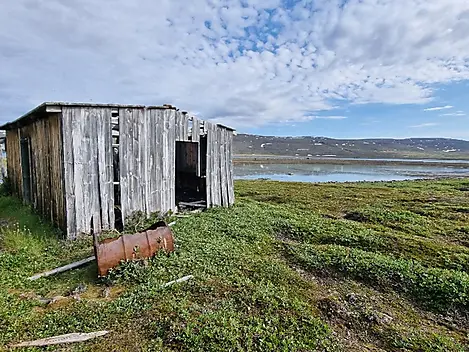
Day 17 - Svartenhavn
Nestled at the heart of a silent fjord, the small bay of Svartenhavn opens onto a wild Arctic landscape where rocky hills dotted with tundra meet calm waters. As you walk across this unspoilt land, you will be captivated by its treasures: a historic hut dating from 1920 and a wide array of wildlife, with the area providing a potential refuge for many species, including wild geese, eider ducks, musk oxen and Arctic foxes.
Day 18 - Qeqertarsuaq
On the southern coast of Disko Island, Qeqertarsuaq is one of just two small villages on this island the size of Corsica. Its isolation makes it an observation post popular among naturalists since the beginning of polar exploration and the set-up, in 1906, of the Arctic Centre research facility. During a zodiac cruise you will have the chance to explore the natural wonders of Greenland, meet its wildlife such as the humpback whale and contemplate the basaltic organ landscapes that offer pure moments of wonder for you. In the heart of this spectacular and fragile nature, enjoy the breath-taking views of the grandiose and varied landscapes of Disko Island and Disko Bay.
Day 19 - Evighedsfjorden
Your ship glides slowly along the water towards the west coast of Greenland, to enter Evighedsfjorden, just a few kilometres south of Kangerlussuaq. Evighedsfjorden means âthe fjord of Eternityâ, and for good reason: just when you think youâve reached the end of this stretch of sea measuring over 100 kilometres in length, it seems to go on forever, as though to bring even more pleasure to those sailing in it. The spectacular scenery ranges from glaciers to tundra with an abundant flora, and jagged cliffs where numerous bird species have taken up residence. Take the time to observe the white-tailed eagles and the colonies of seagulls and black-legged kittiwakes flying overhead in the area.
Day 20 - Nuuk
When Erik Le Rouge, the exiled Norse chief, landed on the coast of Nuuk, he found a fertile and welcoming land dotted with fjords. He settled there with a group of his former countrymen, and the Norse remained the principal inhabitants until, over a period of 500 years, their population declined and gave way to the Inuit. Nuuk is situated at the mouth of one of the largest networks of fjords in the world, where the waters never freeze. The town spreads gently out towards the Davis Strait and enjoys an historic center that is particularly rich in national heritage. The vivid reds, blues, greens and yellows of the houses are a lively contrast to the somber waters of Greenland and serve to lift the spirits of the locals during the Winter months.

We Accept: 
Secured By: 
Copyright © STIC GSA Services Pvt. Ltd. All rights reserved